film

Review: Captain Marvel

Written by Anna Boden, Ryan Fleck, Geneva Robertson-Dworet, Nicole Perlman, and Meg LeFauve and directed by Boden and Fleck, “Captain Marvel” is the 21st film of the Marvel Cinematic Universe and is the first film in the ongoing series to be led by a woman (Maybe next time Black Widow). Set during the 1990’s “Captain Marvel” is an origin story that can, at times, suffer under the weight of everything the film requires of it as a piece of the larger shared universe. Don’t fret though, the film has enough attitude and heart to appease most audience members. Since the film has to do a lot of legwork in unpacking Carol Danvers’ (Brie Larson) own story through her memory loss and the galactic war between the alien races of the Kree and the Skrulls- the pacing and smoothness of the script do suffer somewhat.

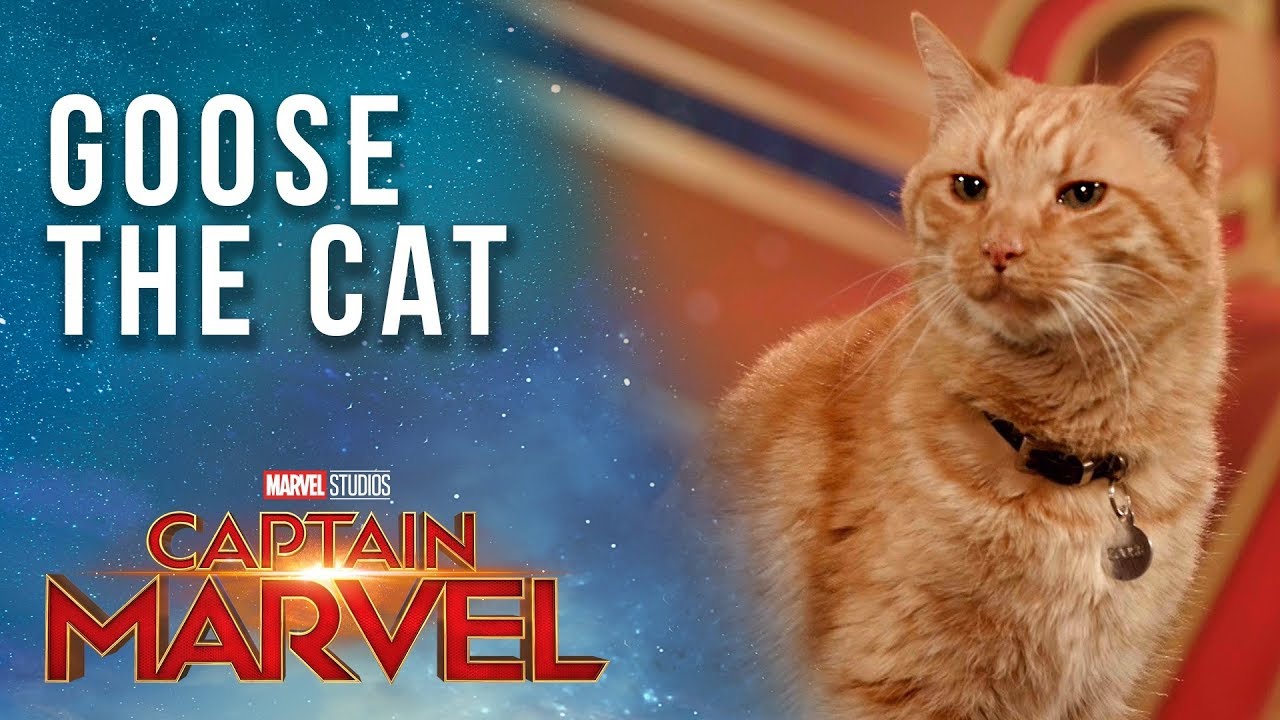
While the film overall may have a “stepping stone syndrome” I’m admittedly doubly excited after the credits rolled to see how the character of Carol Danvers will fare when thrown into the mix with the other Avengers. This film was a lot of fun though- Carol’s scenes with a younger Nick Fury (Samuel L. Jackson) was my favorite part of the whole film, the charisma and chemistry between these two was palpable! I really didn’t expect Fury to be in the film all that much given the de-aging tech required to digitally craft a believable 1990’s Sam Jackson, but it was seamless and incredibly impressive given his amount of screentime. Ben Mendelsohn almost stole the show as Talos the Skrull too, he was menacing, crafty, and far more layered than I would have expected from the shape-shifting alien race. The 1990’s setting was fun to play around in and the jokes devoted to the decade weren’t overdone thankfully. More importantly though, the hints of characterization we got of Carol from both her time as a member of Star-Force and as a pilot in the Air-Force with her friend Maria Rambeau (Lashana Lynch- who was the heart and soul of this movie!) show that her personality was singular even through her memory loss. She had attitude and a punk flair that was encouraging for the character’s future. Oh, and Goose the cat- he was pretty great too.
Okay, so, I have to mention the downsides of the film. While I may have had a good time with the superheroine’s space adventure- the film has its share of structural issues. The story at its core is fine as far as origin stories go, but the way the film was pieced together was incredibly clunky. In one of the first few scenes of the film a pair of Skrulls capture Carol and take a peek through her memories to find some information- showing us what her true past was. I get it, at 21 movies in an ongoing saga there’s a lot of pressure to consistently deliver us new content while still being familiar to what the audience loves- but giving the audience all of the information that the main character is seeking for the majority of the rest of the film (with one notable exception) keeps her distant. We get whispers of who Carol is, they tell us who she is, but as we begin the film with her being a powerful hero already- we weren’t with her when she struggled. Sure, we get a cool montage of her defying defeat and getting up from being knocked down throughout her life, but that’s not truly characterization within a story. I think there’s enough in this film to make great use of the character in future outings, but given that this is the first MCU film headed by a woman, shouldn’t she deserve more care with her story? There’s also a few other nitpicky issues I have with the movie, scenes lit too dark, direction lacking in a few fight scenes, and how Nick Fury lost his eye was kind of silly and I would have preferred him losing it in a battle with an alien- but hey that’s just me.

While “Captain Marvel” may have stumbled a bit out of the gate, she stands with excellent peers in the MCU. Tony Stark, Thor, and Bruce Banner don’t have the cleanest cinematic records here either, and that’s okay. The MCU has proven that they can take stumbles and turn them into ballets. Here’s to Carol Danvers giving Thanos a glowing fist to the face in April!

Final Score: There’s only 1 Goose!

film

Old School Review: “The French Connection” (1971)

Written by Ernest Tidyman and directed by William Friedkin, “The French Connection” is a gritty police drama based on a true story. Set mostly in New York City, but with a couple scenes in Marseilles, two NYPD detectives follow a hunch that lead them on a wild chase following suspected criminals with connections to European drug kingpins. Jimmy “Popeye” Doyle (Gene Hackman) and his partner, Buddy Russo (Roy Scheider) tail a suspicious character at a local lounge at night’s length to discover that they appear to run a simple corner store in a run-down neighborhood. The pair stick to their instincts, particularly Doyle’s, and wiretap the suspects conversations to see if they can get a bite. They finally do and begin their real case with glee.

This is, obviously, a well known film and there’s nothing truly new that I can add to the conversation other than my own personal interest in it. This academy award winner (5 wins, look ’em up) is revolutionary for its time. The car chase sequence is legendary for crafting a chaotic, frenetic, and white-knuckle chase between Doyle and his suspect on the elevated train car above. But more than that, this film was part of a turn towards nihilism in American cinema. The protagonists of the film are mean, violent, and kinda racist New York Cops who will do everything in their power to catch the greater evil that is the supplier and mastermind of the city’s imported heroin problem, Alain Charnier (Fernando Rey)- or as Hackman’s Doyle nicknames him, Frog 1. Most of the films that preceded “The French Connection” held their heroic protagonists up as outright good, or simply icons to model ourselves after. Even the poster for this film is of Hackman’s Doyle shooting a criminal in the back. The heroes of “The French Connection” are foul-mouthed and obsessive, almost destructively so. Luckily for them, that obsessive nature pays off and they’re allowed to pursue the international drug circuit.

Most of the film is a slow burn for its hour and forty-five minute runtime. We follow the two detectives on the pursuit as they follow, watch, and wait for the criminal element to slip up. In these scenes of sitting in cars and waiting, we get a window into the seemingly lost cityscape of yesteryear. Maybe large metropolitan cities are simply cleaner now, but there was an atmosphere about them that lent to the imagination. This hard-boiled crime drama wouldn’t have half of the allure that it does if it weren’t for the setting and score alone (which is bellowing and powerful, or terse and gripping when needed). The world that this film lives in is dirty, abandoned, and a desperate plane of existence- quite perfect for the story it’s telling.

The film is definitely worth a watch if you enjoy this sub-genre of police detective stories. If you appreciate similar films like “Serpico”, “Bullitt”, or the “Dirty Harry” flicks, then you’ll likely get a good time out of this one. Personally, I just enjoyed getting to see Chief Brody as a detective working with Lex Luthor.

Final Score:

film

Review Catch-Up: Hail, Caesar!

Written and directed by Joel and Ethan Coen, “Hail, Caesar!” is a love letter to postwar Hollywood in the early 1950’s when big budget epics, westerns, and musicals ruled the cinematic land. Josh Brolin leads this stunning cast of Coen Bros frequent collaborators and newcomers alike as Eddie Mannix, the head of “Physical Production” of Capitol Pictures. As the fixer of the studio’s many issues Mannix corrals wayward stars, abates the rumor mill of gossip columnists, and generally solves any and all problems that occur- sometimes with charm, other times with a bit of muscle when need be. Between all of this, Mannix is caught between an offer for the easy life at Lockheed Martin and whether or not he should stay and wrangle the many personalities and problems of Capitol Pictures.

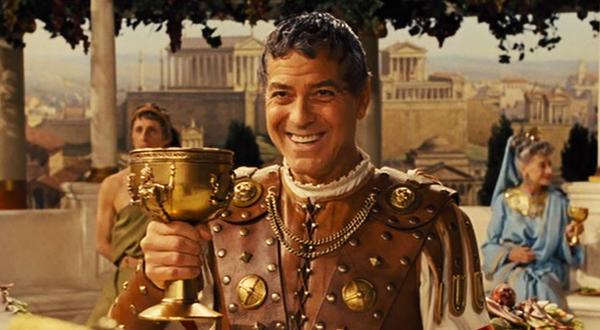
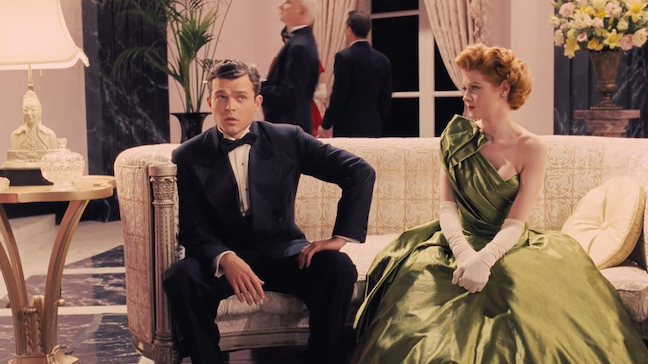
The main driving force of the film is the abduction of infamous actor Baird Whitlock (George Clooney) from the set of “Hail, Caesar!” a religious epic in the vein of “The Ten Commandments” or “Ben-Hur”. Once informed of the actor’s disappearance Mannix goes on the hunt for the lost star, but gets bogged down in internal studio affairs. Once contacted by the kidnappers, self-titled The Future, Mannix collects ransom money from the petty cash allotted by the studio and follows their orders until he can find the solution. Meanwhile other directors and crews must handle the consequences of Mannix’s decisions, like taking cowboy western star Hobie Doyle (Alden Ehrenreich) and putting him into the high-society drama “Merrily we dance” directed by Laurence Lorenz (Ralph Fiennes). What follows is easily the funniest scene of the film and a direct criticism of studios making huge moves like replacing stars just for favors to keep from worse studio secrets spilling out into the public. Hobie Doyle may be a world renowned movie star in westerns where he doesn’t have a whole lot of dialogue, but Laurence Lorenz is a stand in for the extremely precise thespian director that desires very specific line delivery. Pairing these two together, with Doyle’s thick southern accent and Lorenz soft speaking mannerisms that quickly boil over into confused agitation- was a genius comedic choice in my opinion.

In the midst of both the ‘Red Scare’ and the beginnings of the Cold War the real Hollywood of the early 1950’s was transitioning to meet the needs of this new era of paranoia and television. The Coen Brothers satirize this period with precise detail and pitch perfect comedic timing. The large studios still very much worked on the star system of the past and watching Capitol Pictures in the film work to garner attention by investing in as many westerns, musicals of synchronized swimming, and epics of religious nature is equally funny and fascinating. With the abundance of well known stars cast in the film, from Scarlett Johansson and Channing Tatum to Frances McDormand and Tilda Swinton (playing twin gossip columnists!) the film has a lot going for it simply on performances alone. The recreation of the early 1950’s pastel color palettes and huge set-pieces within the massive expanse of “studio city” is commendable in its own right as well! Roger Deakins again showcases his masterful use of lighting and camera movement as the frequent Coen cinematographer, and it’s easy to see why they collaborate as often as they have. The pairing between the three as writers, directors, and cinematographer is a cinematic dream team!

“Hail, Caesar!” was a lightweight affair when compared to other offerings from the Coens and everyone involved seems to have had a great deal of fun satirizing their industry’s golden age. As is often true with most Coen bros films, it may not be for everyone, but it is crafted by skilled people who are truly invested in the art form. Joel and Ethan Coen, and Roger Deakins, give a damn about the movies they choose to make, and this riff on the industry’s earlier era is full of winks, nods, and references to that time and the films that came out of the studio-orchestrated chaos. It is a pastiche of the gilded age of cinema crafted with great panache, and I definitely recommend giving it a watch!

Final Score: 10 Communist Writers and 1 Dolph Lundgren (seriously keep an eye out for him, easy to miss!)

film

Review: Thunder Road

Written and directed by Jim Cummings, “Thunder Road” is a comedic-drama about the worst week of officer Jim Arnaud’s life. In a small Texas town the film opens in a church with the funeral proceedings of our lead character’s mother having just passed away. For context’s sake, this powerful opening scene was essentially lifted beat for beat from Cumming’s award-winning Sundance short film of the same name. A couple of years later Cummings opened that story up to it’s current feature length and expanded on the existential devastation that Cummings’ Arnaud goes through.

The single shot, 10 minute, opening eulogy that Jim gives is the solid foundation that the remainder of the film rests upon. In it he runs through the gamut of scrambled emotions that can befall someone when losing a loved one. He shares stories, tells jokes, he even dances, all resulting in a rambling absurdist confessional that feels more akin to a bad American Idol outtake than how most films would handle such a scene. Which is exactly why this film is so memorable. Jim Cumming’s performance is littered with so much nuance that informs the audience about his character’s state of mind, past, and psychology that I know more about Jim Arnaud’s life than I will ever know about almost any male lead in a given feature. The vulnerability in this performance is palpable, there’s no proper or polite crying here. Jim’s anguish is a raw nerve exposed with ugly-face crying all while repeatedly trying to pull himself back from the edge in an effort to appeal to his own perception of manliness and politeness. Everything that can go wrong in this scene does, his daughter’s pink boombox that he hauls onstage to play the title track doesn’t even work- so he mimes the performance through tears and cringe-inducing embarrassment.

The rest of the film follows Jim after his public devastation, on his job as an officer of the law and in his home life as he battles for joint custody of his daughter. His ex-wife, Roz (Jocelyn DeBoer), attempts to gain sole custody of Crystal (Kendal Farr) and move out of the town. After a particularly confrontational day at work Jim seeks out his sister Morgan (Chelsea Edmundson) for familial advice and comfort, but after a scene that digs deeper into both characters’ connected past through their shared mother- Jim realizes that he must move forward on his own. From there the film exponentially accelerates the anxiety of his life at work and at home with attempts to alleviate the woes of both his daughter and the local police chief (Bill Wise).

So, this brings me to the conversation around the Academy Awards. I’ve already spoken before on my distaste for ranking, numbering, or giving out awards for art in general (as all art is subjective to the viewer’s taste)- but if we’re going to give awards out for performances, then we have to decide how we’re prioritizing the dialogue on film awards. The whole reason to give a best actor/actress award is to shine a light on a performance widely accepted as objectively good, and if that’s the case shouldn’t we focus on the lesser known performances that stand out as exceptional examples of the craft? If that’s the case then I have to admit that I’m amazed that “Thunder Road” hasn’t been mentioned in any conversation that I’ve heard concerning this year’s Oscars. Jim Cummings should be a name to keep an ear out for from this point on.

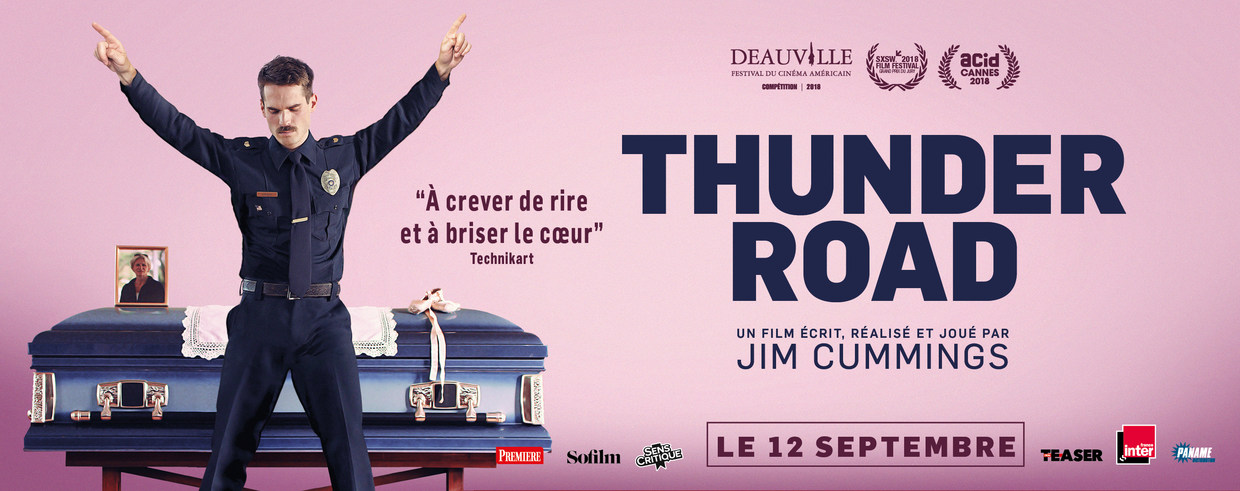
A French advertisement for the American indie hit “Thunder Road”

The acting in this film is superb and the number one reason to see it in my opinion, however, some praise should be given to how Jim Cummings and his team self distributed the film as indie filmmakers without going through the major studio/marketing system. After the film’s success at the South by SouthWest film festival Cummings and his team fought through the red tape of the major market distribution and instead used social media, kickstarter, got a few investors, invested in the film themselves some too, and before you knew it the film was a box office hit in France of all places. I highly encourage giving the links below a read-through to get more into the details of how they made this film and got it out to audiences in a variety of creative solutions. *(I don’t even know if the film has a physical copy release on DVD or BluRay, but I “rented” the film on YouTube and I’m glad I did!)

Final Score: 1 pink children’s boombox

*Check out the links below to get more in-depth information about how Jim Cummings and his team self distributed this film.*

https://www.indiewire.com/2018/09/thunder-road-jim-cummings-sundance-self-distribution-french-theatrical-1202005318/

https://www.forbes.com/sites/risasarachan/2019/01/03/independent-filmmaker-jim-cummings-on-how-filmmakers-can-create-and-distribute-without-help/#5c16d6e54543

film

Review: Velvet Buzzsaw

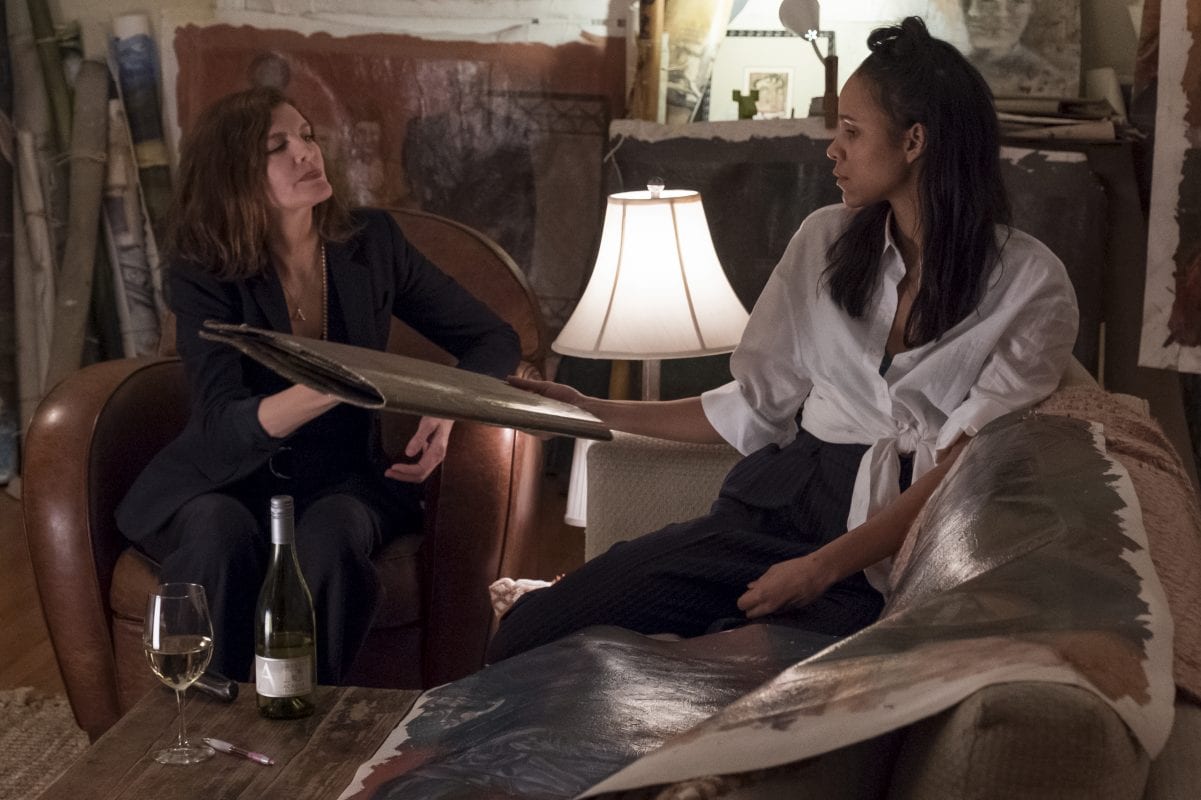
Written and directed by Dan Gilroy, “Velvet Buzzsaw” is a new mystery/horror film currently available to stream on Netflix. Dan Gilroy, Jake Gyllenhaal, and Rene Russo all reunite after the stellar film that was “Nightcrawler” in 2014. Just as “Nightcrawler” satirized the “If it bleeds, it leads” mentality of local news stations’ greedy pursuit of more eyeballs on their network- Buzzsaw tackles a similarly dark, almost comedic, satire of the Los Angeles art scene in all of its pretentious nature. Once we’re introduced to all of the major players of the story things get rolling after Josephina (Zawe Ashton) discovers the dead body of one of her neighbors in her building. She quickly discovers that the recently deceased was an undiscovered, and brilliant, artist. Being the young, green, aspiring art agent that she is, Josephina takes her discoveries home- only to be discovered later by her boss, Rhodora Haze (Rene Russo), a ruthless and successful art collector and distributor.

Once the word is out, it isn’t long until Morf Vandewalt (Jake Gyllenhaal) catches wind of the discovery- he frequents the events that Rhodora hosts and is romantically involved with Josephina as well. Gyllenhaal portrays Morf as an ostentatious and glib-lipped art critic, he’s seen as a god among his peers- his opinions can make or break the bank of an art gallery or installation. Gyllenhaal is clearly, having a ball with the character and he was one of the best parts of the film. The cast as a whole had a lot of moving pieces and nearly every major speaking part had a role to play in moving the plot forward. Tom Sturridge and Toni Collete equally chew the scenery when given the chance as Jon Dondon and Gretchen, fellow competitors with Rhodora in the world of gallery owners and art distributors. John Malkovich also appears to be having a good time as Piers, a once promising artist who’s been considered washed-up since ridding himself of alcoholism. Even Natalia Dyer’s got a fun role as the sheepish secretary, Coco, who ends up working for all of the major art collectors in the story once things start to get bloody.

(Rene Russo and Jake Gyllenhaal appear in Velvet Buzzsaw by Dan Gilroy, an official selection of the Premieres program at the 2019 Sundance Film Festival. Courtesy of Sundance Institute | photo by Claudette Barius. All photos are copyrighted and may be used by press only for the purpose of news or editorial coverage of Sundance Institute programs. Photos must be accompanied by a credit to the photographer and/or ‘Courtesy of Sundance Institute.’ Unauthorized use, alteration, reproduction or sale of logos and/or photos is strictly prohibited.)

Which brings me to the hook of the story, there’s something weird about the artwork of Dease (Josephina’s deceased neighbor). It seems to have supernatural properties and works to kill those who profit from displaying the artwork. It’s a silly premise indeed, but the actors deliver such passionate performances within that premise that make it delightfully fun. I mean, who doesn’t enjoy the tagline of “Pretentious art critics brutally attacked by the art they critique“? If you’ve got the time and enjoy a good genre flick, I’d recommend it.

Final Score: Thousands of Dease pieces

film

Old School Review: “Nostalghia” (1983)

Written by Tonino Guerra and Andrei Tarkovsky and directed by Tarkovsky, “Nostalghia” is the first film (of his final two works) that the Russian filmmaker made outside of the Soviet Union and out from under their oppressive censorship. Though many audience members will consider this film to be an oppressive viewing from the director most known for his glacial pacing. This one was, admittedly, a difficult watch. I’ve come to truly appreciate Tarkovsky’s films, my favorites being his two strides into the science fiction genre in “Solaris” and “Stalker”, but even for me, who wanted to dive into the filmmaker’s notoriously long one shot takes and philosophical debates- I found it to be a challenge. A word to the wise, this should not be the first Tarkovsky film you watch.

The story follows Russian writer Andrei Gorchakov (Oleg Yankovsky) who travels to Italy to research the life of 18th-century Russian composer Pavel Sosnovsky who had lived there for awhile before returning to Russia where he later committed suicide. He’s guided around the Tuscan countryside and through the large metropolitan expanses by Eugenia (Domiziana Giordano), his interpreter- though he understands and can speak Italian well enough to get around. After his guide becomes disillusioned with him Andrei becomes consumed by a burdensome nostalgia and wanders the streets of an ancient village famous for it’s hot springs. Amid his maelstrom of loneliness and and existential dislocation, he cannot return to Russia for one reason or another, the muddled writer stumbles upon a sort of mad prophet in the form of Domenico (Erland Josephson). Andrei finds kinship in this fellow spurned-from-society figure and follows him through the village listening to his ramblings.

Eventually Domenico mentions of a task that he claims might possibly save the world. Domenico’s claim to fame in the village was his many attempts to cross the hot springs’ waters from end to end with a lit candle without losing its flame. He never could accomplish his goal, and he leaves Andrei his candle in the hopes that this seemingly meaningless act could be fulfilled in his stead. So while Domenico is off in Rome giving his final speech about the failures of mankind before his final act of fiery self-immolation. Andrei finally makes his way to the hot springs, but he finds it empty. Andrei commits to completing this tribute to his mad friend’s symbolic ritual anyways, and thus begins the infamous nine minute shot of Andrei walking across the pool’s floor with lit candle in hand. He fails a few times before finally reaching the other side and collapsing. Maybe I wasn’t exactly in the right mindset to appreciate the scene, so here’s a quote where Tarkovsky explains the scene’s importance to Oleg Yankovsky before production, “According to Yankovsky, when he first met Tarkovsky to discuss the filming, the director asked the actor to help him fulfill a grand idea to “display an entire human life in one shot, without any editing, from beginning to end, from birth to the very moment of death.” Tarkovsky visualized life in the form of a candle. “Remember the candles in Orthodox churches, how they flicker. The very essence of things, the spirit, the spirit of fire.” And so the act of carrying the candle across the stagnant pool was nothing less than the effort of an entire lifetime encapsulated in one gesture. “If you can do that,” Tarkovsky challenged Yankovsky, “if it really happens and you carry the candle to the end–in one shot, straight, without cinematic conjuring tricks and cut-in editing—then maybe this act will be the true meaning of my life. It will certainly be the finest shot I ever took—if you can do it, if you can endure to the end.” (https://filmmakermagazine.com/85124-tarkovskys-nostalghia-as-a-cinematic-candle/#.XFpuo1VKjcs).

So, you might be asking yourself “Why should I watch this film?”, and I have a few answers to that. This film wasn’t exactly my cup of tea, it was the least immersive of Tarkovsky’s films for me- however, it definitely has value, especially for those invested in the craft of film-making. The cinematography, direction, performances, and use of associative dream-state imagery all combine to craft a particularly fascinating film when it comes to the technical skill on display. It was just wrapped in a story that is understanding given the director’s life at the time, but there is a very specific time and mood prerequisite for viewing this film. If you’re ready to settle into a moody and laborious dive into depression, loneliness, and longing for home and familiarity- then this film will be for you.

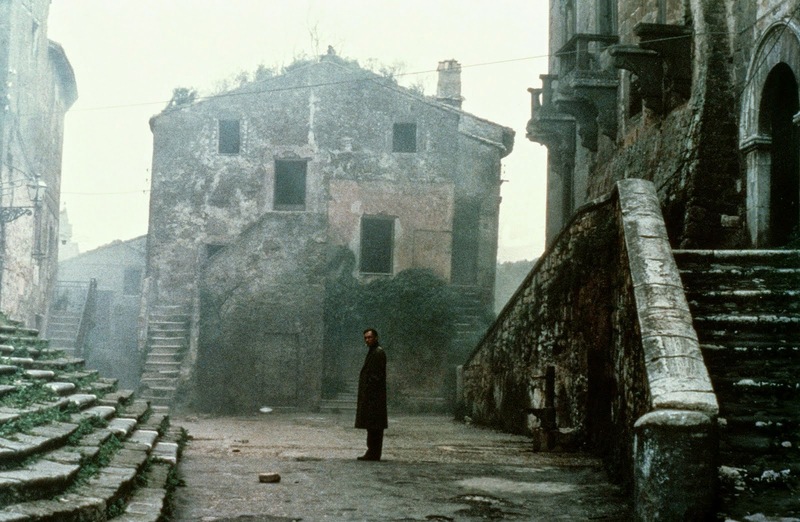
This is my favorite shot in “Nostalghia”, and the thesis of the film in my opinion. A typical Russian farmhouse nestled inside a giant Italian cathedral. Russians may leave Russia, but Russia does not leave them.

Final Score: 1 Candle in the wind

film

Old School Review: “Harold and Maude” (1971)

*Disclaimer* Given that this film is 48 years old, there will be spoilers! 

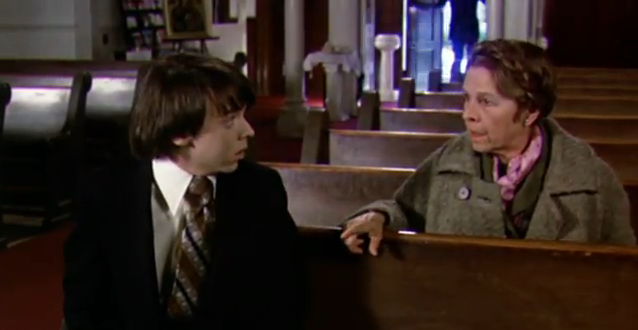
Written by Colin Higgins and directed by Hal Ashby, “Harold and Maude” is a weird little romantic dark-comedy from the early 1970’s with the spirit of the 1960’s very much still intact. The film rests on the relationship between Harold (Bud Cort), a twenty-something introvert who’s become obsessed with death and infected with a general malaise, and Maude (Ruth Gordon), a 79 year old wild woman living life on a whim without following any of the rules dictated by society. The film is a strange balance between dark humor wrapped in whimsy with an absurdist and warm-hearted tone.

Bud Cort plays Harold, the son of a wealthy family who’s become disillusioned with life. In the opening scene Harold is seen milling about the living room lighting candles and going about an unseen task, until we see him hang himself. As his mother enters the room she remains unimpressed by the hanging body of her son, makes a quick phone call and nonchalantly chides Harold on her way out of the room- this is, we soon discover, just one of many fake suicides that he performs to get a rise out of his haughty mother. Mrs. Chasten (Vivian Pickles) finds her son’s behavior unsavory and begins to set him up for several blind dates, to which he hilariously (and creatively) performs increasingly macabre “deaths” with each new attempt. Being as quietly obsessed with death as he is, Harold frequents local funerals for deceased people he doesn’t know. At one such funeral he notices an older woman similarly separated from the families and eventually they take notice of each other.

Ruth Gordon’s performance inflects Maude with the usual hippie maxims bound to the previous decade’s counterculture, but imbues them with an authenticity hinting more towards wisdom rather than the potential kookiness that the character could have been in lesser hands. As a devout outsider of societal norms Maude is a refreshing cannon blast of life-affirming philosophies for Harold. After one of their funeral visitations Maude offers to drive Harold home, he declines at this initial offer, but as she drives away one of the funeral-goers seems almost awestruck as he watches a little old lady drive off with his car. Maude’s disregard of ownership over the material world may seem like a silly character trait at first, but after a quick shot of Maude’s forearm revealing concentration camp numbering, we’re more apt to understand her ideology on the fleeting nature of material things.


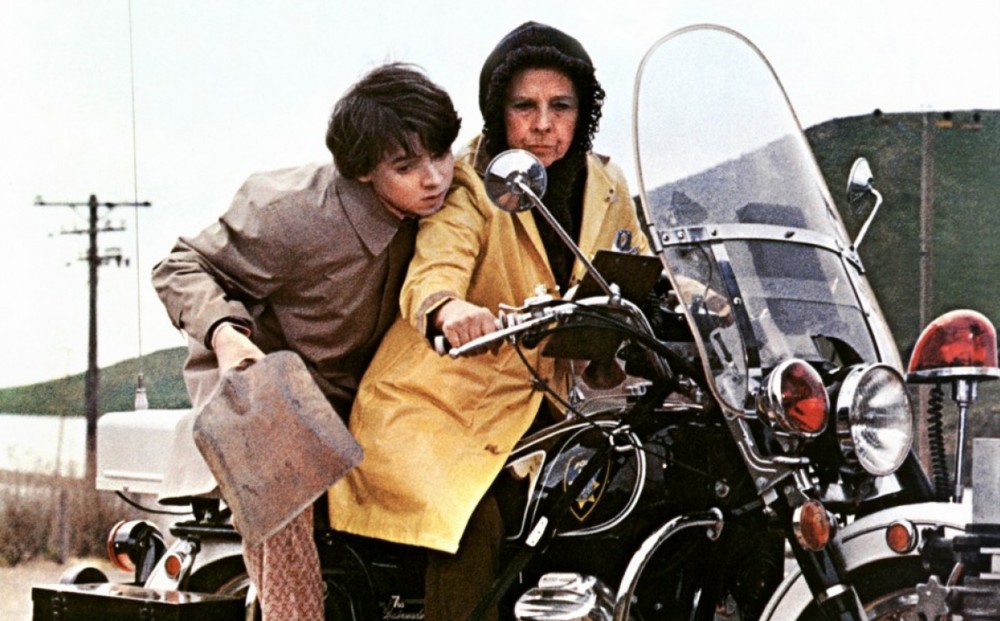
Once Harold and Maude’s relationship blooms into more of a romance than a simple mentor-to-student scale Harold informs his family of his intent to marry Maude. Which leads into one of my favorite parts of the film, where his mother, his uncle Victor (Charles Tyner portraying a dedicated Military man as a sort of one-armed comedic relief), psychiatrist (G. Wood), and the flabbergasted family priest (Eric Christmas), all lecture Harold on the woes of this decision. The film could have taken these asides as a sobering lecture on poor decision making for practicality’s sake, but instead portrays these established adults as loonier than the two leads- firmly keeping us on the side of Harold and Maude. On Maude’s 80th birthday, he asks her for her hand in marriage- but to the surprise of Harold, she had already decided to take her own life by pill minutes before. In her dying moments she’s decidedly upbeat about the notion- and Harold becomes the most animated we’ve seen him yet once faced with the death of someone he cares deeply for. Harold takes Maude’s life affirming philosophies to heart in the last scene. After Maude’s death Harold is seen ferociously speeding in his hearse towards a cliff-side. For a moment, I really though he was finally going to kill himself- but not so, he was simply stripping away his obsession with death. He then wanders off as the credits roll, strumming on the banjo Maude gave him.

Final Score: A whole soundtrack of ‘Cat Stevens’ songs

film

Review: Roma

Written and directed by Alfonso Cuarón, “Roma” follows a family through a tumultuous year in early 1970’s Mexico City. Specifically it is the story of Cleo Gutiérrez (Yalitza Aparicio), one of two maids that live with the family they clean and care for. While we follow the arc of the family’s overall storyline as the film develops, we see most things through Cleo’s perspective. She works with Adela (Nancy García García) cleaning the floors, preparing food, and watching over Sofia (Marina de Tavira) and Antonio’s (Fernando Grediaga) four children Toño (Diego Cortina Autrey), Paco (Carlos Peralta), Pepe (Marco Graf), and Sofi (Daniela Demesa).

I won’t divulge too many details, as I believe this small film benefits from a less-is-more attitude upon first viewing. The emotional core of the film lies in the parallel storylines of Cleo and Sofia, both of whom experience cycles of neglect and trauma. The first half of the film is cleverly benign. It explores the intimacy of small moments between various characters, forcing a closeness between the audience and the family onscreen so that when the dramatic events unfold, the twisting of the narrative knife is that much more painful. In an article for Variety the director speaks about the sensation of memory, about how the film isn’t meant to be a direct representation of the time and place, but informed by how he remembers it. “[Jorge Luis] Borges talks about how memory is an opaque, shattered mirror, but I see it more as a crack in the wall. The crack is whatever pain happened in the past. We tend to put several coats of paint over it, trying to cover that crack. But it’s still there.” -Alfonso Cuarón.

With “Roma”, Alfonso Cuarón demonstrates his deft handiwork and skill behind the camera, which firmly reminds us of his place in cinematic history. This passion project of Cuarón’s has his fingerprints in nearly every department of production. Not only did he write and direct the first Best Picture nominee for Netflix, but he was also behind the camera as the cinematographer and edited the film himself too! Informed by his own childhood growing up in Mexico City, Cuarón’s semi autobiographical work is dedicated to the real Cleo of his childhood, Liboria “Libo” Rodríguez. Though in a fun sidenote, there’s even a nod to the director’s other works when the family goes to the cinema to see “Marooned”- an inspiration for his own sci-fi film in the shape of “Gravity” years later.

Cuarón’s cinematography makes everyday life seem like a spectacle to behold. This works wonders in the latter half of the film when the narrative starts to weigh more, for both the audience and the characters involved. If “Roma” doesn’t sweep the Oscars with its ten nominations then it should at the very least get the cinematography award. Though admittedly, it would be a shame if Yalitza Aparicio didn’t get the Best Actress- her performance was grounded, warm, tragic and outstanding. I haven’t seen as many of the Oscar nominations as I normally do this time of year, but I’d have a hard time considering others over this performance, and the film as a whole truthfully.

What I loved most about this film was that it captured the breadth and depth of life’s circumstances. It asks how we’re supposed to wade through the vague and swirling confusion of psychological and emotional trauma that is life when we’re supposed to go about our lives and do things that are required of us, like work and the accumulation of wealth. In my humble opinion, good art makes you question life and your place in it. Really great art reaches you on a previously unseen level and makes an impact on you- but the best stuff burrows inside your mind, and it becomes a part of you, it makes you live in ITS space. Any great novel, painting, orchestra, or film can accomplish this- and it is different for everyone, but Roma was all of these things for me after the end credits had rolled.

Final Score: 4 kids, 2 maids, and 1 Borras

Check out this article (mentioned earlier in the review) about the film and the director’s complex relationship with the material from Variety: https://variety.com/2018/film/news/roma-alfonso-cuaron-netflix-libo-rodriguez-1202988695/

film

Old School Review: “The Fisher King” (1991)

Written by Richard LaGravenese and directed by Terry Gilliam, “The Fisher King” is a fantasy drama about tragedy and guilt set in New York City before the revolutionary clean up process that the city underwent before the late 90’s and into the 2000’s. Within that dirty and chaotic realm we find our protagonist Jack Lucas (Jeff Bridges) doing what he does best, delivering his fork-tongued critiques against the ‘yuppie’, high society, peoples of New York City. Think of him as a mesh between Howard Stern and Rush Limbaugh (Less invested in pushing the taboo boundaries of broadcasting than the former, but with more inherent heart behind his words than the latter). One day Jack’s crazed rants lead him to specifically naming a restaurant where the rich and so called elitist gather. One of his listeners greatly agrees with the motor-mouth-shock-jock so much so that he shows up at the establishment with a shotgun, after all, like Jack Lucas said, “It’s us against them”.

Jack hears about the shooting and becomes completely unraveled by the actions that his words inspired. Fast forward three years later and we find Jack in the midst of an alcohol fueled, self-despising, slump where he works at his girlfriend Anne’s (Mercedes Ruehl in an Oscar winning performance) video store. One night on a drinking bender, Jack contemplates suicide, even going so far as to tie cinder blocks to his feet and looking out into the Hudson river. At the last second some thugs assault Jack, drenching him in gasoline and beating him. Fortunately for Jack, Parry (Robin Williams) arrives on the scene with a few fellow homeless nomads. They swarm the thugs with lights and singing until they disperse.

After saving his life, Parry consorts with the “Forty tiny, flying, invisible, fat men” to agree that Jack is “The One”. Naturally Jack is freaked out about all of this, hangover or not. Parry then explains that he’s a knight ordained by God to find the Holy Grail, which he believes to be in the possession of a billionaire on the upper east side. Initially Jack is reluctant to help Parry, until he learns that he’s responsible for ruining Parry’s former life. Parry, once named Henry, had been a college professor and happily married before the massacre. Henry and his wife were at that restaurant, where he watched her die horrifically right in front of him triggering a psychotic break. From that psychological wreckage, Parry was born.

“The Red Knight”

Parry is driven by both love and fear. Jack discovers this after learning Parry’s true past and attempts to redeem himself by helping Parry. He does not simply want the grail though, he also sheepishly follows a young woman around the city on her daily routine. Parry has fallen in love with Lydia (Amanda Plummer), a quiet young woman who works at a book publishing house. So, Jack goes to great lengths to set them up on a dinner date with both himself and Anne. Jack also learns of Parry’s greatest fear, “The Red Knight”. The Red Knight appears whenever Parry is brushed by reality or when things seem too good to be true. After Parry has a particularly intense breakdown he’s attacked by the same thugs that accosted Jack earlier. This puts Parry into a catatonic state, which forces Jack to go search for the grail in an attempt to save Parry’s life.

There were a few specific aspects of this film that I found fascinating. Granted, Robin Williams drew me to this one as he’s probably my favorite actor of all time, so I’m always game to find another hidden gem of his work. But the film doesn’t go absolutely bananas with style over substance, if you’re familiar with Terry Gilliam’s work you can see flourishes of his guiding hand throughout the run-time. This is most obvious with the Red Knight, but also with the depiction of New York City itself. Gilliam uses framing, specific angles, and has the production dressed down in a sort of dirty and mythic fashion that transforms the feel of New York City into a place where the impossible seems optimistic and not so far away. The cinematography seems to be fairly character oriented in how it represents mood, how characters change over time, and how isolated or sociable a scene is for the characters. However, the single best aspect of the film is for me how the story treats trauma and how it can affect a person for a very long time. This aspect of Robin Williams’ performance was heartbreaking and how the filmmakers and crew decided to represent Parry’s fractured self was both tragic and it felt accurate. Paranoia and fear can strike at a moment’s notice, all emotions can run high at any time, and triggering events can be devastating.Fantasy Element. This was an interesting film from the early 1990’s and worth a watch in my opinion.

Final Score: 2 thugs and 40 tiny flying invisible fat men

film

Old School Review: “The Manchurian Candidate” (1962)

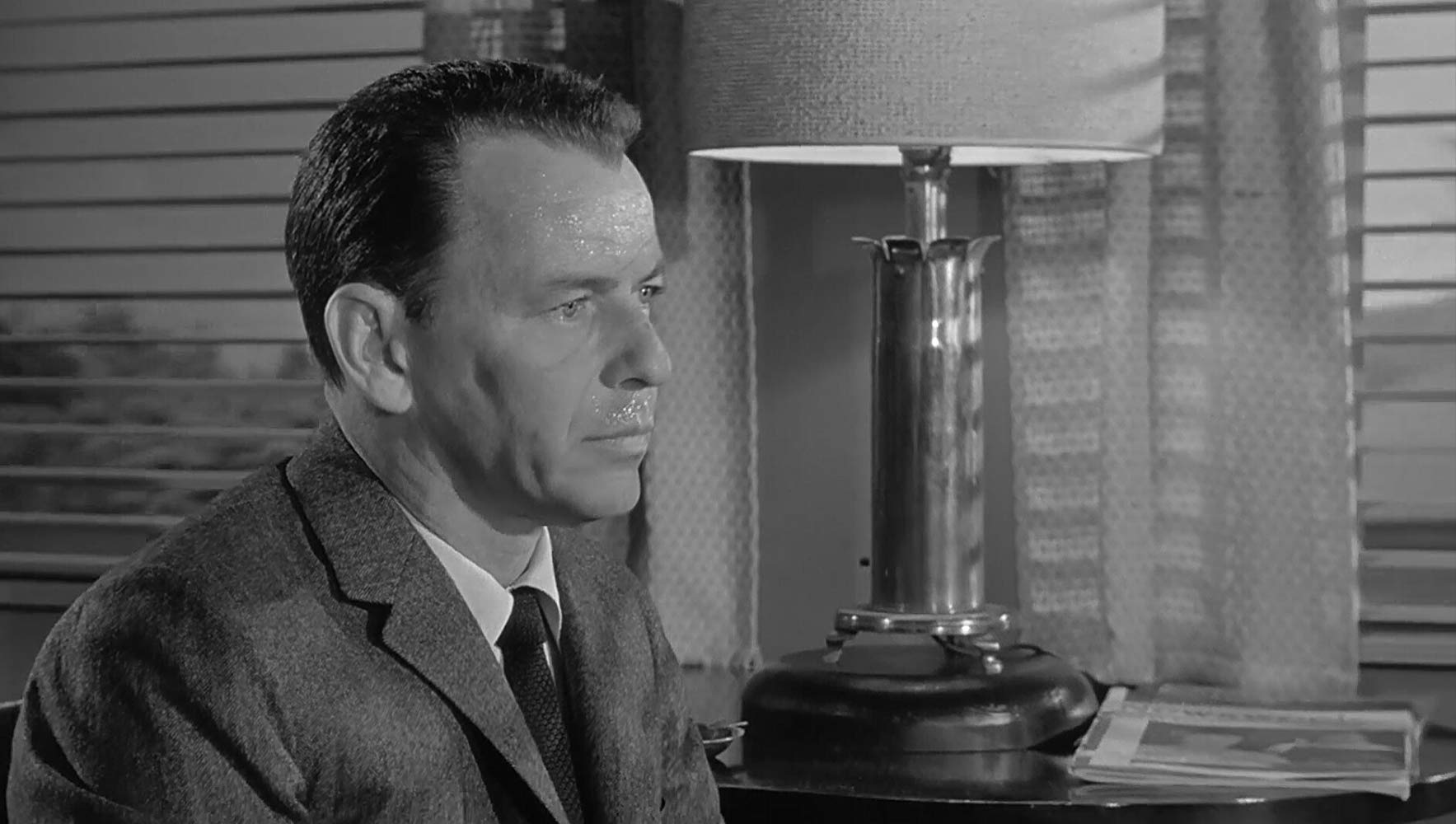
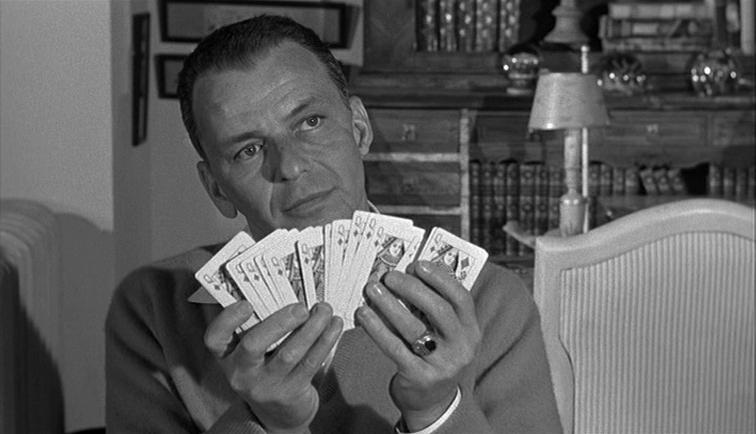
Written by George Axelrod and directed by John Frankenheimer, “The Manchurian Candidate” is a political thriller about an international conspiracy forged by communists during the Korean War to brainwash American soldiers for use as unwitting assassins. This was the first film I saw in 2019, and not knowing the general plot of the infamous film kept the tension intact as an audience member. I went into this movie with a clean slate and my viewing experience was all the better for it and I recommend seeing it that way if possible. However, this film has been around for a long time, therefore we will be covering spoilers. You’ve been warned. Frank Sinatra stars as Major Bennett Marco leading his team of soldiers through the horrors of war. After the dust settled Major Marco kept tabs on all of the men in his unit, especially after having suspiciously realistic fever dreams of their time in the war.


After returning from the war a hero, for saving his men from capture over enemy lines, Raymond Shaw (Laurence Harvey) was also experiencing an existential angst from similar nightmares. Though everyone back home seems to love and appreciate Shaw, he feels disconnected. He remembers being a more prickly and grumpy person that wasn’t particularly loved or appreciated. The film dives into the psychological profile of Shaw and how he operates as an individual, the relationships he has with those closest to him, and how he can be manipulated by emotional triggers. It then turns into a game of cat and mouse with Shaw working as an assassin for a foreign power without even realizing it, as Major Marco tracks down the clues his friend left in his bloody wake.

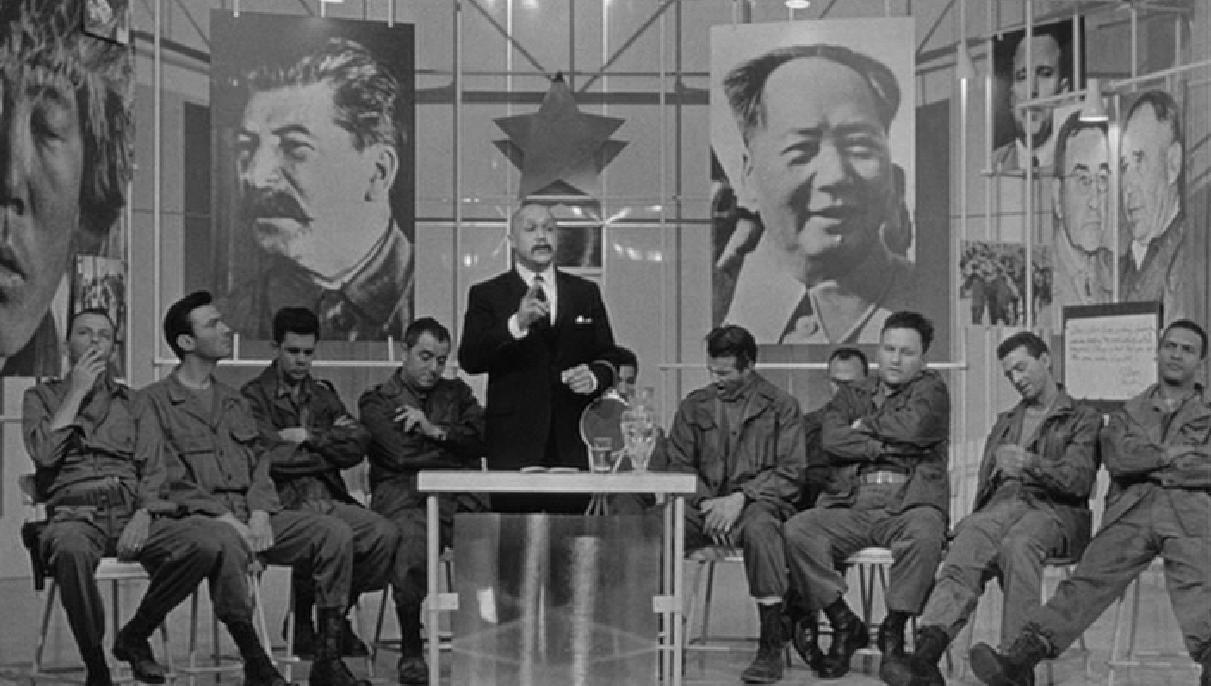
One of my favorite parts of the film were the brainwashing sequences and how the editing and cinematography inform the audience of the truth of the scene. Jumping back and forth between the perceptions of the captured soldiers and their manipulative masters was brilliant! The captured soldiers were on a stage, being presented to other potential “buyers” who were seen by the soldiers as little old grandmothers at a flower shop. I thought it was particularly clever when they switched to an African-American solder’s point-of-view where all of the grandmothers were also African-American. The performances were a lot of fun, they really pulled from the paranoia and suspicious nature of the heights of the Cold War. Frank Sinatra’s casting as Major Marco was a surprise for me, I had never looked into Sinatra’s acting history so I was unsure of his acting caliber going into the film, but he was surprisingly good for playing outside of his art medium. Khigh Dhiegh was particularly entertaining as Yen Lo, I like to think of him as the carnival barker of brainwashing experiments. Angela Lansbury portrays Raymond’s mother as a boundary crossing, overbearing, and self absorbed character with gilded power gleaming in her eyes. Alongside her is James Gregory as Senator John Iselin, Shaw’s stepfather and ‘useful bulldog’ for his mother’s manipulation. This triangle of relationships is immediately established when Shaw lands back in America only to be used for political gain by his mother for Senator Iselin’s campaign, nothing more patriotic than having a picture taken with a war hero thereby framing his support for the candidate- when in reality, Shaw despises Iselin and his mother’s authoritative political nature.

“The Manchurian Candidate” is a fascinating political thriller and a classic film that I highly recommend. If you’re looking for a snowstorm movie this winter- you can’t go wrong with this one!

Final Score: 52 Queens