film

25 days of Zatoichi The Blind Swordsman: #19 Samaritan Zatoichi (1968)

Writer/Director: Hisashi Sugiura & Kiyokata Saruwaka (2nd film)/ Kenji Misumi (5th film)

Cinematographer: Fujio Morita (I felt the need to include the Cinematographer again here because this film is gorgeous, there are some inventive shots, and the use of colors overlaid on certain shots to characterize Osode’s feelings and intentions was a fascinating choice)

Summary:

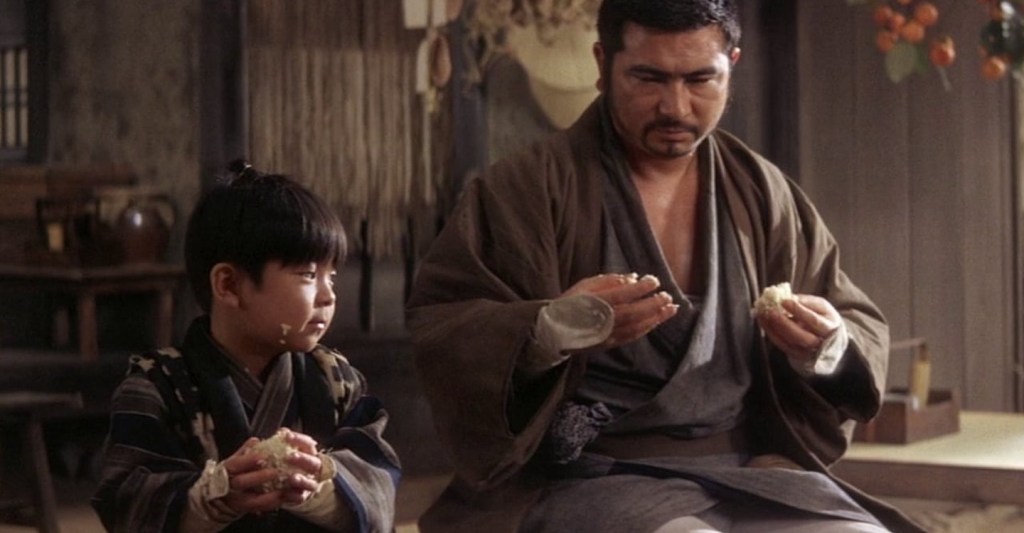
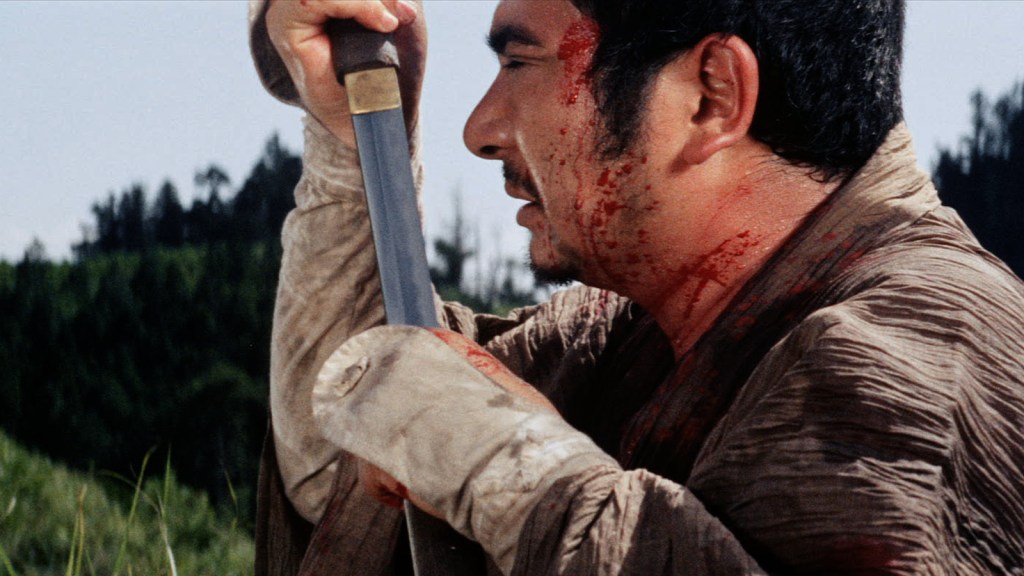
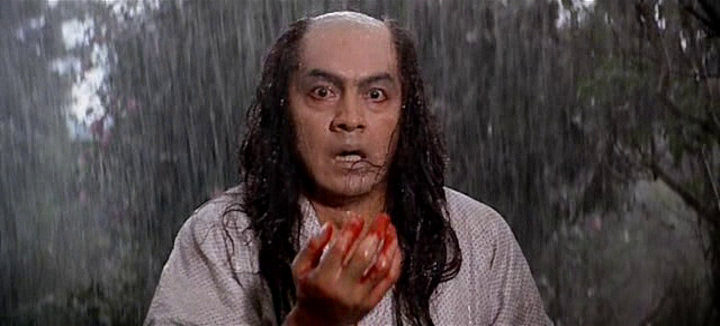
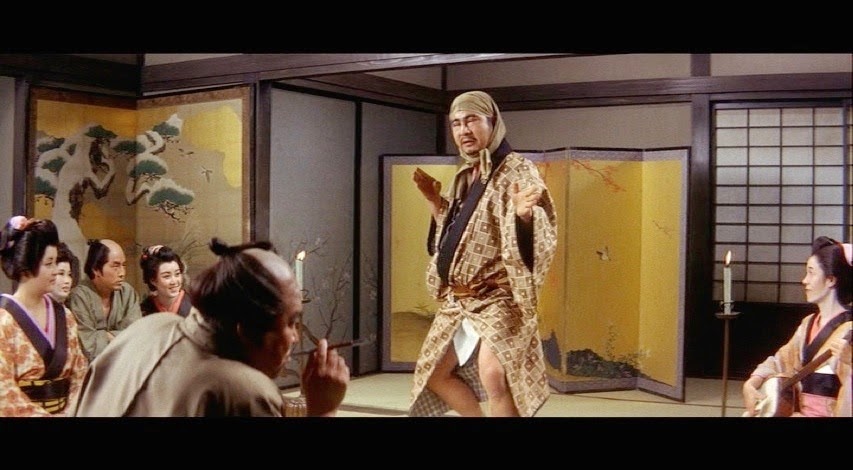
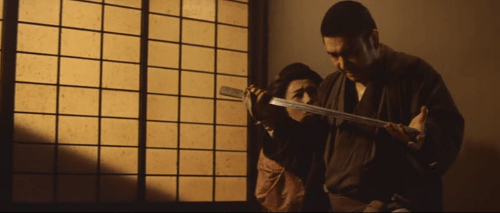
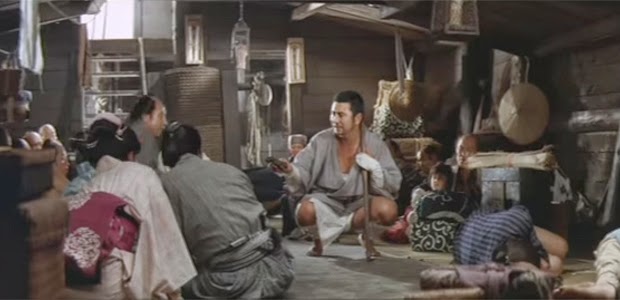
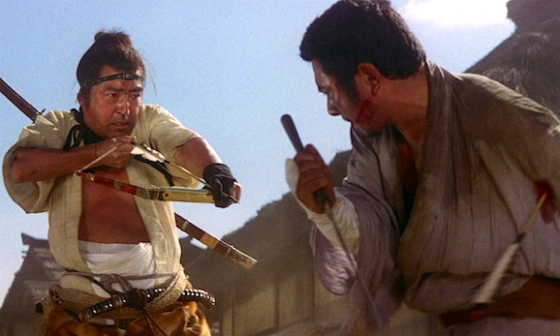
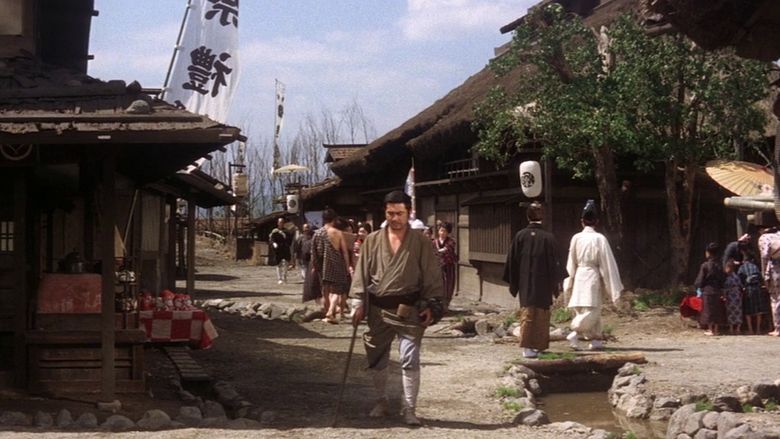
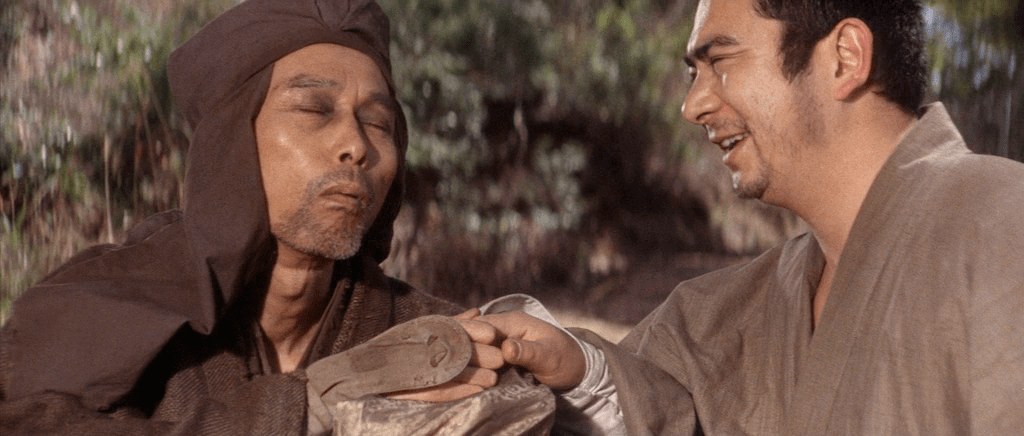
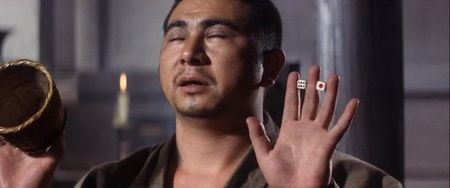
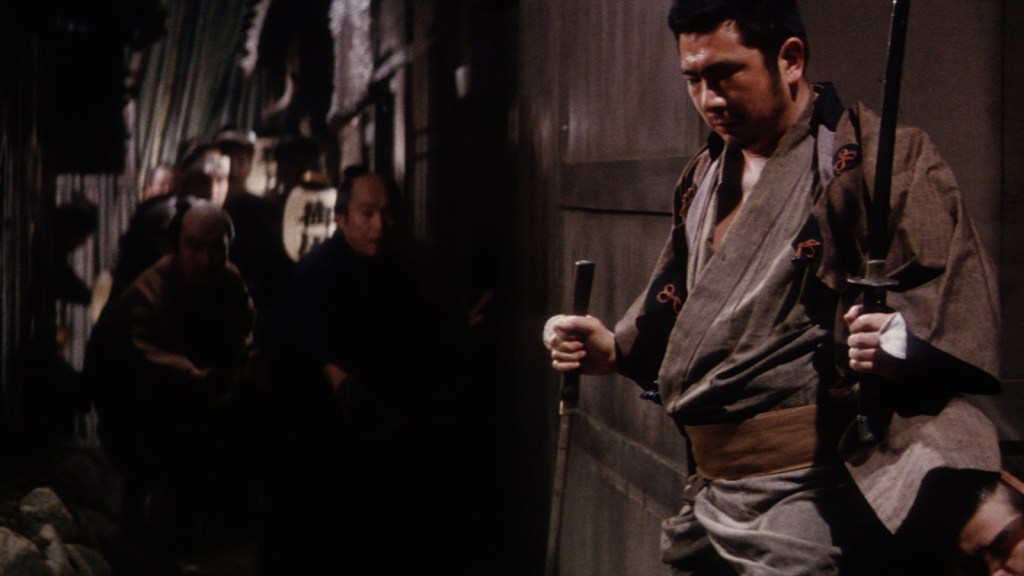
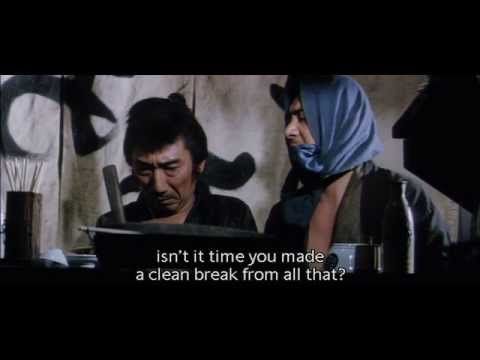
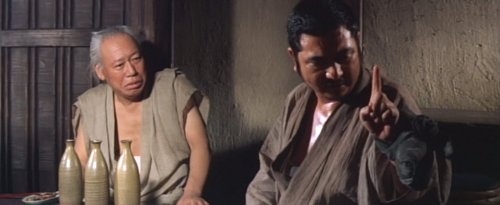
Zatoichi is hired by local Yakuza boss Kumakichi (Akira Shimizu) to “be a witness” to his men as they try to retrieve money owed by a young gambler. When Kumakichi’s men fail to kill the debtor, Zatoichi offers his assistance. Ichi even gives the man an opportunity to get out of this alive, but he rejects it, and calls out from the darkness in measured panic that if he wants to kill him, he must come and get him. Guided by the old Yakuza code, Zatoichi accepts his offer and descends into darkness, only to have the debtor streak from the shadows and be cut down by Ichi in seconds. Moments later, the debtor’s sister arrives with the money he owed for his life and Zatoichi is again met with the consequences of his violence. When Osode (Yoshiko Mita) sees her brother’s body she throws the blood money at their feet crying out that “You have your money, now give me back my brother!“. Merely a moment later when the boss’s men collect the money and grab Osode anyways, Zatoichi steps in, sensing foul play, and protects her from the local government’s grasp for the majority of the film. Throughout the film, Osode’s relationship with Zatoichi becomes more complex than usual. She sways between admiring Ichi’s skill and an urge of overwhelming grief to get vengeance for her brother. Osode knowingly admits in one scene that if it weren’t Ichi, her brother would have met the cold steel of a sword sooner rather than later anyways. However, she also tries to kill him in one scene and in another as she’s watching the blind swordsman win a challenging carnival game she has nightmarish fantasy flashes of his same quick movements transferring to how she imagines that he killed her brother. It’s a series of fascinating character choices for Osode, and I appreciated the depth they brought to her and the story as a whole. There’s also the power dynamics between boss Kumakichi and inspector Sosuke Saruya (Kô Nishimura) which brought great tension to their scenes and excellent character moments from both actors. I didn’t expect Kumakichi to be as outwardly rebellious as he eventually becomes! There’s also Yasaburo Kashiwazaki (Makoto Sato) as the ronin challenger of this film, though far more of a sociopath than the usual character archetype seen in previous films. In fact, I’d say that his fight with Zatoichi at the end is one of the best duels in the series, though the fight at the end of “Zatoichi Challenged” still ranks as the best in my opinion at this point. This is also the first time we see Zatoichi truly represented as the gangster that he’s often referred to. He’s still concerned with the greater morality of life and death scenarios, but he seems less concerned with things he used to point out to other Yakuza- like cheating at gambling with weighted dice. Though he’s probably weighed the amount of times sighted people have tried to trick or hurt him over the years and figured some light cheating for a few Ryo wouldn’t hurt.

My favorite part: Zatoichi gets a partner swordsman in the form of Shinkichi (Tatsuya Fujioka) who helps the blind swordsman protect Osode from imminent danger. It was great to see Zatoichi partake in some camaraderie without that character dying, or deceiving Zatoichi, or anything bad at all really. Shinkichi’s scenes with Zatoichi were pitch perfect blending comedy, tension, and thrilling fight sequences altogether! It was a simple friendship that bookended the film and I was happy to have it, though I was worried for Shinkichi’s life nearly the entire time he was onscreen.
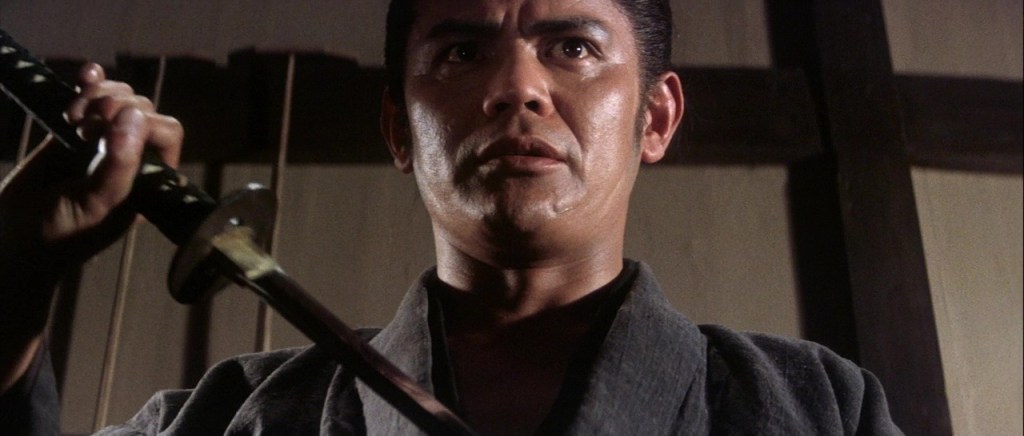
Why it’s great: This film is another excellent argument for Kenji Misumi’s incredible skill as a Samurai film director. I’m not sure if it’s just the choice of lenses, cameras, or the specific cinematographers that Misumi prefers to work with, but his films look amazing, blending intense close-ups with beautiful wides for fights and landscapes. This entry in the series continues the wonderful evolution, and in my opinion elevation, of not just the world of Zatoichi- but of the character himself. Time has waned and aged the blind swordsman several ways, he may be wiser to the trickery of everyday villains, but his mood seems to have been darkly affected as well. He’s a bit colder to people, his idiosyncratic laugh feels more knowing, and it feels earned after all this time. How could someone who’s experienced a life like Zatoichi’s, not become a bit numb to the trivial matters of life?
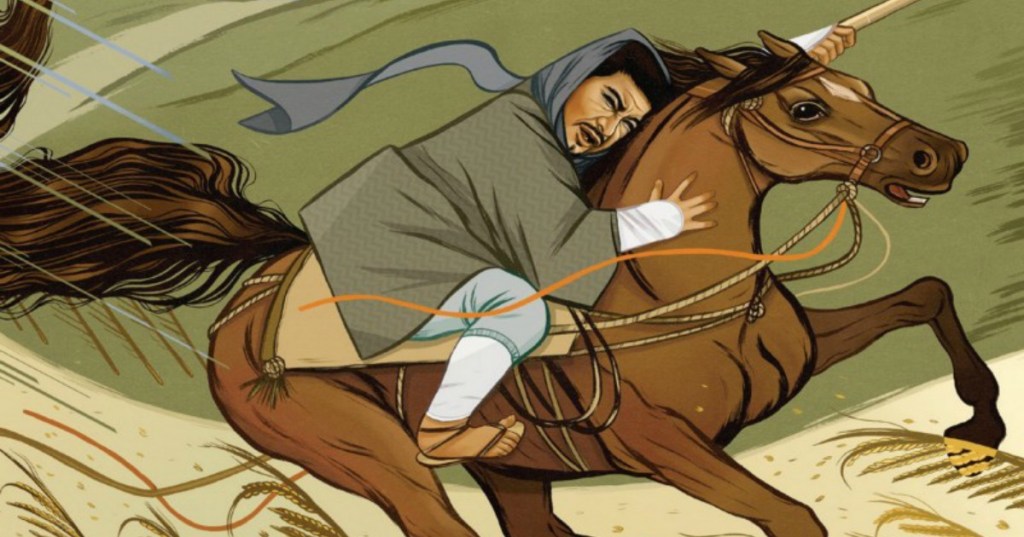
Final Score: 1 Dynamic Chase Scene on Horseback!
film

25 days of Zatoichi The Blind Swordsman: #18 Zatoichi and The Fugitives (1968)

Writer/Director: Kinya Naoi/Kimiyoshi Yasuda (4th film)

Summary: The Zatoichi films may all share a sense of tragedy among their various plots and journeys, but “Zatoichi and The Fugitives” is a particularly dark entry in the series. As it usually goes, Zatoichi happens upon a small rural town, this one with a dedicated and honest doctor working amongst the silk farmers in the form of Takashi Shimura as Dr. Junan. As you may have expected by this point, yes, there’s corruption by the local authorities here too, but with the added layer of indentured slavery in the local silk mills to pad the villain’s resume. The driving force behind the structure of servitude is Boss Matsugoro (Hosei Komatsu), who’s ongoing racket at the mill gets exponentially worse when he’s forced to incorporate the fugitives into the mix. These villains were great throughout the film, initially Zatoichi bumps into them at the inn he’s staying at, the owners request his masseur services for a rowdy bunch and it turns ugly quickly. These villains aren’t even Yakuza, just a bunch of heathens who were almost slaughtered early on. Luckily enough for them, Ogano (Kyosuke Machida) stepped in and urged Zatoichi to leave. His comrades defiantly brush aside his warning that they’d be dead if he hadn’t arrived just then- for he had witnessed Ichi’s skill earlier on the road. This happens a couple more times before Zatoichi is given full justification to unsheathe his sword. Both Zatoichi and the fugitives leave the inn that night, but while Zatoichi is invited to stay with Dr. Junan, the fugitives pressure Boss Matsugoro to let them hide out until the provincial inspector passes through. Knowing that he’s got quite the illegal setup going, they use this information to persuade Matsugoro to let them stay until the coast is clear. While a few of the fugitives have personal scores to settle with Zatoichi, he had killed two blood brothers at the beginning of the film when they harassed him on the road, Ogano keeps them from getting themselves killed more than once. One of the fugitives is skilled with throwing knives and he offers some of the more unique clashes with Ichi because of this- thankfully for him, the one time Ogano wasn’t around Zatoichi was feeling a bit grateful and only embarrassed him greatly. Eventually, after Zatoichi has freed a young girl from the mill and shamed Boss Matsugoro in front of his men, Ogano reveals his importance to the story. He had picked this small town in particular, not only to hide from the inspector’s eye, but also to come home and see his sister Oshizu (Kayao Mikimoto) and his father, the good doctor Junan. This scene was easily one of the most powerful in the whole movie and it brought any notions of a ‘larger than life’ narrative and shrunk it down to something eminently relatable, the familial drama. Outside of the country doctor’s household, tensions begin to mount. Matsugoro, feeling the need to reinstate his power due to his bruised ego, steps up his brutality on the townsfolk and cracks down on a local cocoon market. When the village headman defends the rights of his people and vocally challenges the boss by saying he’ll go above Matsugoro’s jurisdiction and take this issue straight to the magistrate, the embattled Matsugoro calls in his favor from the fugitives to kill the headman. The fugitives don’t just kill the headman, but the entirety of his household in a bloody massacre. Things continue to escalate until Zatoichi’s put into a desperate situation when all six of the fugitives attack him at once with a variety of weapons, he barely escapes back to the doctor’s house, but there’s one fugitive who knows where a wounded warrior would go in desperation. In one of the more climactic endings, at least since the second film in my opinion, Zatoichi fights Ogano to the death just outside the doctor’s home. With his cane sword sheathed and Dr. Junan looking on in shock and horror, Zatoichi wanders off, bloodied and battered.

My favorite part: This film is a particularly dark one. It’s got Zatoichi at his most desperate (so far), when he’s shot by one of the Fugitives! He even digs out the bullet with the tip of his blade like so many American action stars would do roughly fifteen years after this. This film has to be the bloodiest one of the bunch that I’ve seen, we even get a limb sliced off an unfortunate villain. The villains here are so dastardly that the film wastes no tears for their fate, enslaving a small town in their silk mills and refusing to let the besieged rest when they’re ill- yes, the fugitives and local government definitely got what was coming to them. There’s also the added dramatic weight of Zatoichi describing how he forgot what colors were like to him, initially a sacred memory to pull from, but eventually they too faded into darkness. Drawing out further, crushing, pain for the blind swordsman is what this series thrives on.

Why it’s great: “Zatoichi and The Fugitives” is a great expansion on the evolution that began with “Zatoichi the Outlaw”. This entry in the series wisely narrows the focus on a small country doctor and his family, while avoiding unnecessarily complicated side stories. This allows for the story reveals to hold more narrative power, and the danger that Zatoichi must stand against in the face of injustice to be that much more resonant. The presence of Takashi Shimura, known for his many roles in the films of Akira Kurosawa, does wonders for the film’s emotional weight, the “Ikiru” actor knows how to play emotionally and psychologically battered men to great effect. Seeing the man convey deep sorrow with class and subtlety adds a great deal to Shintaro Katsu’s oeuvre of Zatoichi films.

Final Score: 1 surprise snake

film

25 days of Zatoichi The Blind Swordsman: #17 Zatoichi Challenged (1967)

Writer/Director: Ryozo Kasahara (2nd film)/ Kenji Misumi (4th film)

Cinematographer: Chikashi Makiura (He worked on a number of Zatoichi films and all of the films that Kenji Misumi directed in the Lone Wolf and Cub series as well. I felt the need to point his name out in this review as the film is a knockout visually, and that deserves credit)

Summary: Once again Zatoichi is the guardian of a small child- but this time it’s a six year old that can walk and talk back to him. If you enjoyed “Fight, Zatoichi, Fight!”, then I’d imagine you’ll likely love this entry in the Zatoichi canon. It’s basically an upgraded version of Kenji Misumi’s earlier work, though “Fight!” had a more carefree Zatoichi in his demeanor and how he reacted to people and the world around him. Now, nine films later, Zatoichi’s a bit more apt to be somewhat curmudgeonly. Granted, he’s been through a lot in that time and seen the range of humanity from true, noble, and kind to hypocritical, greedy, and self serving. Zatoichi’s journey begins when he arrives at a crowded inn and stays with a sickly mother and her young child. When the mother unceremoniously dies in Zatoichi’s arms, it’s up to him to deliver the child to the father he never knew. On his journey to the father’s hometown, Zatoichi and Ryota encounter a mysterious ronin-like figure on several occasions, one that reveals nothing about himself or his mission, but delights in getting details from Zatoichi several times. Neither knew that they would end up fighting to the death over Ryota’s father, Shokichi’s (Takao Ito), life. Once Zatoichi finds evidence of Shokichi’s location, he’s surprised to find that Shokichi isn’t simply neglecting his child (he didn’t even know he had fathered a child), or trying to further his own selfish goals. Because Shokichi has artistic talent, he’s been forced to pay off his gambling debts by painting illegal erotica- which carries a heavy fine in this period of Japan’s history.

Notably, this film showcases real skill when it comes to the art of filmmaking. The film production crafted beautiful cinematography, gorgeous compositions, bold colors, and an excellent combination of wide landscape shots and intense close-ups. There’s also the surprise sprinkling of two musical sequences in which melodramatic vocals play over a couple of traveling montages. Kenji Misumi really pulled some beautiful performances out of his actors this time, notably, in smaller moments that allow time for the characters to process, react, and even show their true feelings about the situation at hand a few times which feels revelatory for this series. This turned out to be my favorite Zatoichi film, so far, and I’m happy to be proven wrong in the near future.

My favorite part: Besides the gorgeous cinematography by Chikashi Makiura and excellent direction from Kenji Misumi, my favorite part of this film was the villain. From the opening scene of the film until the end battle, he’s wisely spread around the plot with his true intentions only known far into the story. After Zatoichi slays several combatants in the opening scene, Akazuka (Jushiro Konoe) witnesses the blind swordsman’s skill and heartily compliments him. Zatoichi happens to bump into him on several occasions well before they cross blades, where they respect each other’s skill and are cordial enough with each other. Akazuka may seem like the usual ronin figures that accompany a lot of these films, but he’s got stone cold conviction and he’s a far more dangerous combatant than most of Zatoichi’s enemies. I had heard that this film had one of the best Samurai fight scenes of all time, and I have to say that I was impressed. It was visceral, beautifully shot against falling snow, and it was the first real time I had any real concern for Zatoichi in a fight. The way story and deep character moments are inserted into the fight, I mean, you can’t get much better than that.

Why it’s great: This film is the epitome of why the blind swordsman concept works. “Zatoichi Challenged”, out of the films in the series that I have seen this far, is the best example of the character and the film series as a whole. Everything about this film is perfect for it’s aim. If you don’t enjoy this film, you probably won’t find much else in the series that works for you.

Final Score: 1 AMAZING Samurai Fight

*For fun, check out this re:View by Red Letter Media in which they analyze this Rutger Hauer starring movie that was supposedly a loose adaption of “Zatoichi Challenged”:

film

25 days of Zatoichi The Blind Swordsman: #16 Zatoichi The Outlaw (1967)

Writer/Director: Kiyokata Saruwaka, Takehiro Nakajima, & Koji Matsumoto/ Satsuo Yamamoto

Summary: Get ready, because “Zatoichi The Outlaw” is a film that breaks free from the formula of past Zatoichi films to offer one of the most complex and subversive entries in the series. This time around when Zatoichi enters yet another small town, he encounters a swordless ronin who dispatches a group of attackers with ease- and without killing anyone. Ichi also hears the rice paddy farmers singing tunes that border on hymnal, reciting the ronin’s teachings to reject the vices of life and instead lead just and simple lives. When he finally finds a gambling establishment, he partakes, but soon realizes that the losers are systematically kidnapped and submitted to debt oriented slavery. When Zatoichi discovers that a rival establishment in the next town over is paying these unfortunate patrons debts and freeing them, he’s astonished at the Yakuza boss’s altruism. When the blind swordsman is pinned for the death of two henchmen, he agrees to take the boss’ tainted money on the road and return in a year, confidant in his benevolence. Months later, word gets back to Ichi that everything in those two towns aren’t as good as he had hoped for, and heads back early when evidence to the truth begins to snowball. The benevolent boss had not been as kind as Zatoichi has initially assumed. In truth, he had guided Zatoichi into killing his rival and laid the groundwork for a particularly brutal money grabbing scheme. Eventually, Zatoichi teams up with the ronin and the townspeople to stop the madness, and enact real change- through some damn entertaining swordplay.

My favorite part: This film in particular had a “punchy” energy to it. I loved the grit and messy nature of this one, and it isn’t just the sense that this film had something to prove- it definitely did, as leading star Shintaro Katsu’s film production company, Katsu Productions, chose to make this film their first. Throw away your old assumptions within the series, because this film doesn’t want them. Here we have the usual ronin figure, but he harbors no sword, is no villain for Zatoichi himself, and he counsels the locals to lead lives free from the trappings of alcohol, gambling, and prostitution.

Why it’s great: “Zatoichi The Outlaw” is an excellent entry in the film series because of the way it shook up the formula that had dictated most of the films up until this point. There’s still the corruption of authority figures, Zatoichi catching cheating gambling establishments, and some blood splatter- but this entry in the series marks the beginning of a fascinating and highly entertaining evolution for Zatoichi.

Final Score: 2 Yakuza Bosses

film

25 days of Zatoichi The Blind Swordsman: #15 Zatoichi’s Cane Sword (1967)

Writer/Director: Ryozo Kasahara/Kimiyoshi Yasuda (3rd film)

Summary: Around the usual gangsters and corruption ruining the locals lives, “Zatoichi’s Cane Sword” peels back another layer of Zatoichi’s day to day life, his cane sword. After some scenes familiar to the series, Zatoichi partaking in the ever popular dice gambling, cutting down any resentful gamblers that would come after him for winning too much, and after such an incident the blind swordsman astonishes a fellow patron of a noodle stand. After Zatoichi slashes at two attackers and accidentally cuts the noodle stand in half, the old man sitting next to Ichi pleads with him to come back to his shop. There the old man, Senzo (Eijiro Tono) asks to see Zatoichi’s blade, for he’s a blacksmith and he’d like to see if his eye for swords is still intact. His suspicions confirmed, Senzo claims that the sword was made by his mentor, and, after close inspection, he points to a hairline fracture near the handle warning the blind swordsman that the blade has maybe one last fight in it before it breaks. At this news, Zatoichi takes stock of his life, and decides to leave the sword with Senzo as a memento of his master’s work. Senzo gives Zatoichi a fresh walking cane and a referral to a local inn where Ichi can work and live as a masseur. While there, Ichi hears of the upcoming visit by the provincial inspector, and once arrived, he hears more of the dynamic between upper government and the Boss Iwagoro (Tatsuo Endo). Senzo is mentioned by one of the underlings in the inspector’s crew as working on the sword once again, so Zatoichi pays him a visit. Senzo reveals that he’s the father of Oshizu (Shiho Fujimura), the woman at the center of all the drama taking place at the inn where Zatoichi works. Shamed from his descent from master blacksmith to drunken gambler, Senzo had given his daughter to the local boss at the time so that she could lead a better life. When things get dicey with Iwagoro and his underling Monji, instead of giving up the sword he had worked on for ten years, Senzo defended his blade, but lost his life to the scuffle. After Senzo dies in Zatoichi’s arms, he vows vengeance and retrieves his cane sword, knowing he only has one kill left. As the machinations of the gangs, ronin, and government officials all move towards total domination, Zatoichi eventually faces off against Iwagoro, invigorated by the theft of Senzo’s master work. Though when blades clash it isn’t Zatoichi’s cane sword that breaks, but Iwagoro’s stolen sword. It’s then that Zatoichi realizes that Senzo had switched the blades and put his greatest sword in his cane sword and Ichi’s old blade in the hilt that he knew would be stolen.

My favorite part: With this being the fifteenth film in the series, I was glad to see the filmmakers dive into the details behind another infamous aspect of the blind swordsman. There have been a few movies after Zatoichi’s killed dozens upon dozens of enemy Yakuza when even I have thought, “Wow, it’s amazing that his cane sword’s held up for so long.” so it’s kinda nice to see thought given to that.

Why it’s great: I consider “Zatoichi’s Cane Sword” to be the end of the first half of the films, not just due to it’s place near the numerical center of the film series, but because the films that follow it have a noticeably different shift in style and direction. Whereas the first fifteen films have a certain flow and sense of familiarity from film to film, the ones following seem unbound by the same formula to a certain degree. While the overall structure is similar, the series seems far more likely to take big swings after “Zatoichi’s Cane Sword”. The next film in the Zatoichi saga is also the first endeavor by Shintaro Katsu’s own film production company, “Katsu Productions” where the actor produced many of the following Zatoichi films, and maintained almost complete artistic freedom.

Final Score: 10 years

film

25 days of Zatoichi The Blind Swordsman: #14 Zatoichi’s Pilgrimage (1966)

Writer/Director: Kaneto Shindo/Kazuo Ikehiro (3rd film)

Summary: “Zatoichi’s Pilgrimage” begins aboard a ferry, with an over confidant thief losing a hand by Zatoichi’s blade (the first visible limb removal for the series I think, with a prop hand gripping a hanging lantern). Once offshore, the blind swordsman climbs the stairs of a temple and prays that he won’t have to kill any more people while attempting to visit and pray at each of the eighty-eight temples of Shikoku. After departing, he’s followed by a man on a horse and he eventually dismounts and meets face to face on a bridge asking if he’s Zatoichi and giving his name “I’m Eigoro from Serigazawa” before engaging in a battle that results in them both being knocked over the guardrail and into the river. As he drags Eigoro from the river he continues to talk to him, but realizes that the fall must have killed him once he doesn’t respond ashore. As Eigoro’s body drifts away in the river, his horse begins to follow Zatoichi as he leaves. At a crossroads some time later, the horse chooses a diverging path, and Zatoichi decides to follow the animal a while longer before saying goodbye to the beast once they enter the outskirts of a town. Though he follows the horse a bit further as it seemingly knows where its going and enters a house with stables inside. After a short burst of grief and confusion the woman that greets Zatoichi and the Horse (Taro) grabs a sword and slashes at Zatoichi’s arm- shocked by the surprise attack, though she does bandage his wound following the encounter. Okichi (Michiyo Okusu) then informs Zatoichi that she was Eigoro’s sister, and that while foolish, Eigoro had a good heart- which Zatoichi had also suspected.

When a farmer comes to hear what happened to Eigoro Zatoichi hears that this is all the fault of a neighboring Boss named Tohachi (Isao Yamagata) from the next valley over. Apparently his influence has corrupted many men, and he plans on expanding his control to all the farms and fields of Serigazawa. Just when Zatoichi plans to greet this power hungry bully, he comes to Eigoro’s house to let Okichi know that since Eigoro’s dead, his debt has been paid, and that Serigazawa is now under his protection (control). Tohachi claims that the village headman’s watermelon field will be the latest field to come under his protection, whether they like it or not. The meek headman tries to persuade Tohachi, but the only thing that does is further cement the bully’s intentions. Zatoichi does some more information gathering to see exactly what this Tohachi is all about, the archer barbarian might be reasoned with. However Zatoichi quickly discovers that this is nigh impossible and questions the farmers in the village to see if he can rouse them to defend themselves. Their pleas fall on deaf ears though, and when Tohachi and his men come, Zatoichi stands alone. As he fights Tohachi’s horde Okichi runs from house to house pleading with the farmers, trying to guilt them into fighting for their homes and livelihoods. Only the young Yasuzo, wracked by guilt and shame, runs out to fight by Zatoichi’s side, though he’s immediately hit in the heart by one of Tohachi’s arrows. Empowered by Yasuzo’s attempt to do the right thing, Zatoichi cuts down the remainders of Tohachi’s men until it’s just him and Zatoichi left. The Blind Swordsman rushes the archer barbarian, takes an arrow in his other arm, before defeating the would-be lord of Serigazawa. As he’s departing, Okichi says goodbye one last time before Zatoichi walks off.

My favorite part: “Zatoichi’s Pilgrimage” is one of the films in the series that stuck to a more streamlined plot, and those always seem to have a more well rounded story. It may be simpler in some ways to the more complex plots of past Zatoichi films, but when cut down to the core motivations of the character as a righter of wrongs, fighting against institutional injustices, and generally standing up for the little guy- the film retains a greater sense of powerful storytelling. The villain this time around was brash and bold, no scheming this time around, Tohachi tells you he’s going to rule over you before he tries to do so, and that made for an entertaining antagonist for the series.

Why it’s great: While this film isn’t necessarily a knockout within the series, it is memorable and it provides satisfying entertainment value. It’s shot with engaging cinematography, and it’s a more melancholy entry where Zatoichi takes his time in unsheathing his cane sword. He may have started this story out wanting not to kill while on his journey, but after witnessing the extreme tactics of Tohachi, eventually he relents and chooses to take the gang out. This film, not unlike “High Noon”, had a villain that was rotten to the core and enforced the protagonist into a pressured timeline, making for a simplistic- but fun film amongst the series’ best middling entries.

Final Score: 88 Temples of Shikoku

film

25 days of Zatoichi The Blind Swordsman: #13 Zatoichi’s Vengeance (1966)

Writer/Director: Hajime Takaiwa/Tokuzo Tanaka (3rd film)

Summary: “Zatoichi’s Vengeance” opens with him stumbling onto a murder scene when he stops a group of men robbing a man dying on the road. When they object to his morality check, they attack, and are swiftly defeated. The blind swordsman kneels to the dying man who gives his name when Zatoichi asks, Tamekichi (Gen Kimura), but more importantly he pleads with his dying breathe to give a pouch of money to Taichi. These are the only clues Zatoichi has at the outset of this journey. Though after a quick stop for lunch the next day he finds a weighted die in the bag with the money, concluding that Tamekichi must have been caught cheating at a gaming house- which is why he was being pursued in the dead of night. After awhile he encounters a blind priest (Jun Hamamura) that hasn’t eaten in some time, and they share a meal together as the stranger drops some wisdom on Zatoichi before heading off to Ichinomiya, at which point Zatoichi decides to check out the local festival as well. There he quickly encounters a raucous small child chasing a group of fellow children that responds to his grandmother calling out, “Taichi! Look at the dirt on that Kimono! Get inside this minute!” Zatoichi then meets with the grandmother and tells them a white lie about Tamekichi rather than offload the heartbreaking truth. He also learns that the town’s no longer the idyllic dream that it had been. Gonzo, the corrupt local official has stormed into the area recently and implemented incredibly harsh financial extortion to all of the merchants in Ichinomiya. Only three of the shop owners have survived the onslaught so far, many having to pay 100 ryo or more to buy back their shops.

From there, Zatoichi does his usual thing, but as always this film has a slight variant to it’s tale. Yes there’s the usual fight against injustices and standing up for the every day people, but this time his tactics come with a cautionary warning from his fellow blind traveler. After witnessing Zatoichi perform amazing feats of swordplay against some hecklers from the crowd at the thunder drums performance (more on that later), the blind priest counsels Zatoichi that by displaying such masterful swordplay in front of Taichi, he may have corrupted the boy and sent him on a path towards violence. He tries to reason with Gonzo’s men, but it only results in him being humiliated by them in front of Taichi and his innkeeper family. Zatoichi eventually storms in when the men return to force payment and he cuts down a dozen or so of them in the street, to which the blind priest chastises him, “Alas, now you have killed, and in front of Taichi too.” The blind swordsman retorts with “What else could I do?” as the priest replies with more vague wisdom, “One hour’s cold will spoil seven years of warming.” There’s also a B story running throughout the film surrounding Ocho (Mayumi Ogawa), the leader of a brothel recently built in the wake of advancing corruption. She’s the former wife of the Samurai Kurobe (Shigeru Amachi), the man hired to kill Tamekichi at the beginning of the film. He tries to win her heart back, but after being abandoned three years ago she’s become disillusioned and numb to the world, and she rejects him outright. Even through rejection, Kurobe meets with Ocho’s boss and seeks to pay off her debt so that she may seek happiness and swears to have the fifty ryo for her release within two days. Thus in the third act we have a villain with great motivation for a fight. He immediately goes to Gonzo’s establishment and demands fifty ryo for any job they require. After a quick rejection Kurobe displays his prowess with a blade and is hired on the spot. Once he hears who his target is, Kurobe had witnessed Zatoichi’s skills when he attacked Gonzo’s men in the street, he raises the required payment because “Fifty ryo is too little for killing him“. Gonzo’s men actually have a good idea for their attack on Zatoichi, to use the town’s thunder drums to disorient him with overwhelming noise. They fight him at night on a bridge, and the silhouette sequence is pretty cool visually, after he overtakes them Kurobe strides up complimenting him on his skill. Kurobe then informs Zatoichi that he must kill him for fifty ryo and that there is no other way, Zatoichi warns him that he may die as a result, but after Ocho’s rejection, Kurobe seems a bit disillusioned with life anyway and he only has the finality of a worthy opponent. After their duel, Zatoichi goes straight to Gonzo’s place and demands the seven merchants’ money back, and the fifty ryo that Kurobe was promised, and three more ryo to repay Tamekichi’s mother for the few lunches he paid for out of the money. With the money returned, Zatoichi tries to tell Taichi’s grandmother about Tamekichi’s true fate- but she stops him, saying that she knew the truth the moment he came to them. Ocho has her debt repaid but is too hungover and depressed to notice, Taichi peers longingly into the distance, and Zatoichi wanders off once more.

My favorite part: The Biwa playing blind priest was a nice touch. Zatoichi’s never really been challenged by a character more moral than him in such a way before. In their last encounter, the priest plays his Biwa and sings to mark their departure. During the song, the Biwa priest breaks a string and likens this to Zatoichi’s moral predicament. “You cannot play Biwa if you just depend on the strings. And if you depend only on your hidden sword, you will not live long

Why it’s great: This film is unique and has lasting impressions for Zatoichi as it has the clarity to question it’s own morality, and the series as a whole. Does it need to be so violent to meet its ends? Judging by the evolution that the series undergoes after “Zatoichi’s Cane Sword”, that answer is yes. After this film, the series wanders with this notion of questioning morality for a while longer. The foundation of the next film ponders the question even further with Zatoichi seeking the purifying cleanse of his violent past with a spiritual pilgrimage.

Final Score: 50 Ryo

film

25 days of Zatoichi The Blind Swordsman: #12 Zatoichi and The Chess Expert (1965)

Writer/Director: Daisuke Ito/Kenji Misumi (3rd film)

Summary: “Zatoichi and The Chess Expert” begins with Zatoichi being pursued by henchmen from previous films still holding a grudge. Zatoichi boards a ferry to Honshu island, leaving his pursuers on the mainland to take the long way around. While on the boat Zatoichi decides to make a bit of money through some dice gambling among the passengers aboard. As expected he employs some expert sleight of hand tricks to see if they’d take advantage of a blind man if the dice fell outside of the cup, the raucous group were all too eager to exploit the blind man’s weakness and Zatoichi let them build their expectations up before pulling the rug out from under them- resulting in a large sum of winnings (Though later we see Zatoichi legitimately lose at dice, a first for the series). While aboard the ship Zatoichi finds a fast friend in the samurai going by the name of Jumonji (Mikio Narita). Impressed by Zatoichi’s skill in dealing with a couple of the resentful gamblers aboard, he accepts Ichi’s request for a game of Shogi Chess, and is again nearly caught off guard by the blind swordsman’s skill- even in intellectual games. Later, on the island, the aggrieved gamblers track him down and set a trap for the blind masseur by having him massage the local Yakuza boss that they happen to be in touch with. While they do get the jump on Zatoichi at first by pinning him to the ground, he escapes their grip and in the scuffle he dropkicks one of the men out the 2nd story window resulting in a young girl getting a broken foot. Once outside, Zatoichi attempts to help, feeling profound guilt as her injury was an unexpected consequence of his brawl. When the girl’s aunt, who she’s traveling with, can’t afford the medicine required, Zatoichi heads out to make enough money with his usual gambling tricks, and after some trial and error, he returns with the medicine in hand with some help from Jumonji. The four of them then decide to travel to the hot springs not far from their location to further heal Miki.

Once there the group meet new guests at the inn and hot springs, a young lord named Sagawa (Gaku Yamamoto), his retainer Roppei (Tarô Marui), and the lord’s sister Kume (Chizu Hayashi) dressed as man (to avoid unwanted suspicions on the road). The trio are on a fact finding mission to track down the murderer that killed their father, who had been cut down over a heated game of shogi chess. When Roppei turns up dead at a nearby temple with evidence of strangling, Zatoichi is perplexed- until some children bring back a lure found in the pond near the scene of the crime. After the facts begin to build Zatoichi’s suspicion grows. He, Otane, Miki, and Jumonji all head out on the road as planned, and to pass the time Jumonji suggests a verbal game of Shogi Chess. Each move between them seems to ratchet up the tension until Zatoichi lets Jumonji win thereby confirming his guilt as the killer with his known tell of scratching his nose and snapping his fingers. With that single action Zatoichi reveals his knowledge by showing Jumonji the red lure and engaging in battle. He only wounds Jumonji before Lord Sagawa and Kume arrive with swords to finish the job and secure their vengeance. At the same time the henchmen from the beginning of the film sneak up and kidnap Miki and run off with her, which prompts a fun one versus five end fight sequence in which Zatoichi skillfully slays them all before walking off into the distance once more.

My favorite part: With the Zatoichi series, a great villain can always spice up the familiar ingredients, and that’s exactly the case with “Zatoichi and the Chess Expert”. Jumonji was a clever and calculating villain- and one of the few enemies that seemed to be an ally to the blind swordsman for most of the film’s runtime. The performance by Mikio Narita was charming, sly, and cold blooded- perfect for a Zatoichi villain.

Why it’s great: Kenji Misumi is starting to become one of my new favorite Japanese directors with this series. His work on the “Lone Wolf and Cub” film series in the early 1970s paired with his films within the Zatoichi series strike a tone that resonates with me deeply. I know I’m getting ahead of myself here but I’ve been watching far ahead in the film series so I can always be ahead of the next quick review, but Misumi’s next film in the series is “Zatoichi Challenged” and it might be my favorite film of the bunch. Misumi seems to be very invested in stories where young children are protected by powerful swordsmen, and that element is very present in this film. While Zatoichi isn’t exactly on the road as the sole protector of Miki, her safety and health is at the core of his concern for this film. This one ranks higher for me than the last few films, good character development with a clear narrative can do wonders for this formula of popular genre film.

Final Score: 5 Ryo

film

25 days of Zatoichi The Blind Swordsman: #11 Zatoichi and The Doomed Man (1965)

Writer/Director: Shozaburo Asai (4th film)/Kazuo Mori (2nd film)

Summary: “Zatoichi and the Doomed Man” opens with Zatoichi imprisoned for illegal gambling and getting fifty lashes for the offense. While in his cell, the only other prisoner, Shimazo (Koichi Mizuhara), pleads for Zatoichi to help as he’s been wrongfully imprisoned for crimes he claimed he did not commit. Zatoichi hears the man’s pleas, but once freed he ultimately decides not to pursue the request, he’s gotten into too much trouble in the past for involving himself in such situations. When he happens upon a small town he impresses a young man named Hyakutaro at a game house where he effortlessly wins the archery challenge gaining a large sum of winnings. Afterwards, the muscle from the gaming house tries to strong arm their money back, but Zatoichi slays them all, stunning Hyakutaro who only seemed interested in profits and the reliability of a good scam. Thus he convinces Zatoichi to let him travel with him for awhile. While on the road they run into a wounded man in trouble, and in need of a hasty solution to keep his restaurant nearby open for business. Hyakutaro offers to help by delivering the wounded man’s documents while Zatoichi helps him travel there at a slower rate. By the time Zatoichi arrives with the wounded man, it’s dark and the waiting party tells Zatoichi that they already “paid that guy called Zatoichi a large enough sum for the both of you“. Obviously, Hyakutaro had run off, pretending to be Zatoichi, and absorbing the spoils of life at the expense of those in need- and darting once he’s needed! This obviously rubs Zatoichi the wrong way, and once he finds out where he is, Zatoichi makes sure the charade is ended, though Hyakutaro continues to follow the blind swordsman to his displeasure. In-between all of this Zatoichi had inadvertently come to the town that the doomed prisoner Shimazo told him of and due to an alternate scam run by the local Boss, he earned a meeting with the local official that confirmed what Shimazo had said. There’s a lot of over-explaining that can go on at times with these plots, but the root of the issue is that Shimazo was too popular as the right hand man of Yakuza Boss, and that Boss feared a mutiny led by Shimazo, so he worked with another town’s boss to set up Shimazo for the death penalty to secure his power.

My favorite part: The idea that there would eventually be a false Zatoichi running around claiming to be the living legend himself is a fun concept. The performance from Kanbi Fujiyama as Hyakutaro (the usurper) was cheeky, he played the lovable scoundrel part well and his arrogance paired with complete ineptitude was a joy set against Zatoichi’s stern, but humble, morality. I also really appreciated the impact of discovering that Hyakutaro was Shimazo’s son.

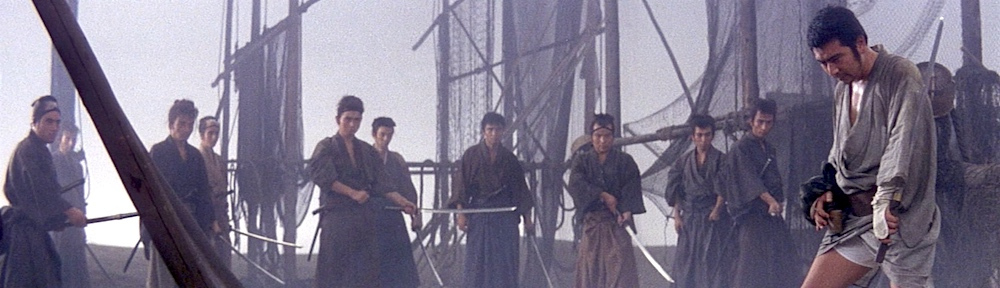
Why it’s great: While the pacing, plot, and performances were all on point and fairly enjoyable throughout the film, there wasn’t anything particularly excellent that stood out to me. The end fight sequence set in a foggy seaside town was visually interesting with visceral kills and lots of tension, but aside from that the composition, framing, and cinematography overall was good, but a bit workman-like for the series at this point. I’m pretty sure this was the first time Zatoichi had ever been to the ocean as well, and having a child explain the enormity of the ocean to him was a nice moment for the character.

Final Score: 1 Doomed Man and his son

film

25 days of Zatoichi The Blind Swordsman: # 10 Zatoichi’s Revenge (1965)

Writer/Director: Minoru Inuzuka (6th film)/ Akira Inoue

Summary: “Zatoichi’s Revenge” may have the darkest plot points of the series, definitely of the first half of films, though I haven’t quite finished the series yet. This one’s fairly compelling, though it’s another example of more of the same ingredients from past films- but with a few new variations. It’s another case of corrupt government officials working with criminals to satiate their lust for money and power. As the film opens Zatoichi realizes that he’s near the village where he underwent his masseur training and decides to pay his sensei, Master Hikonoichi, a visit. Upon arrival he discovers that his old sensei had just recently been killed while traveling on the road nearby. Even worse yet, Hikonoichi’s daughter Sayo had been forced into prostitution! When searching for Sayo in order to free her, it’s revealed to Zatoichi that almost all of the daughters of the town have been forced into sexual slavery as well. The three main villains of this film are Tatsugoro, the local businessman that worked up financial crimes that preyed upon the lenders, his boss the corrupt Intendant Isoda overseeing the whole process, and Koheita Kadokura, the ronin samurai in town working as a blade for hire. Eventually through the usual information gathering process of rooting out corruption in gambling houses and intimidation through feats of swordplay skill, Zatoichi finds out who the culprits are and seeks them out. Pretty standard stuff for the series at this point.

My favorite part: Honestly, the ongoing fight sequences that litter the second half of the film are very entertaining. They’re well shot, captivatingly choreographed, and thrilling to watch. It also helps that all of the unfortunate fodder for Zatoichi’s blade are despicable people working to enforce the massive prostitution ring in the town. Good stuff!

Why it’s great: One of the great story beats of this film centers on Zatoichi’s friendship with the local dice dealer Denroku. The skilled dice dealer never wanted to cheat players, he admits to Zatoichi that he’s under the thumb of Tatsugoro and Isoda’s oppression, and Zatoichi forgives him. Later when the villains are starting to get uneasy about Zatoichi’s snooping around, they order Denroku to steal the blind swordsman’s cane sword or submit his own daughter, Tsuru, to one of the local brothels. When Tsuru overhears this, she steals the blade herself and hands it to her father, who finds his impression on her to commit such acts that he gets incredibly drunk and wanders the town in a funk. After awhile he stumbles into a noodle stand and openly bemoans his situation. To his surprise the proprietor of the noodle shop isn’t a normal noodle chef- but Zatoichi himself. Ichi encourages Denroku to give up the criminal life and to lead a better life for Tsuru’s sake, at which point the dice dealer acknowledges his mistakes, and hands the cane sword back to its owner.

Final Score: 1 Cane Sword versus dozens of henchmen