film

Rapid Fire Reviews #20 A Mishmash of Movies!

After the Holidays I settled into a steady stream of random films, we may still be in the midst of a global pandemic- but some things never change, and January is still the dumping grounds of all major movie studios. Thus, I’ve taken to the Criterion Collection for a good chunk of the month’s film watching. In fact, of the ten films listed below, only one isn’t from the collection. It’s also the newest film to date by a wide margin, with only a streaming exclusive documentary getting near it. These films have no connective tissue other than the fact that I’d never seen them before and needed to fill in some of my film history gaps. Hopefully you’ll find something worthy of a watch for you, I enjoyed most of the following films.

Vertigo (1958)

Written by Alec Coppel and Samuel A. Taylor, based on the novel by Pierre Boileau and Thomas Narcejac, and directed by Alfred Hitchcock, “Vertigo” is one of Hitchcock’s most well known thrillers of the 1950’s. “Vertigo” deals with obsession, fear of heights as the title implies, and an amalgamation of other more burrowing fears that emerge from our main character over the course of the film. While this one doesn’t rank as my favorite Hitchcock film that I’ve seen so far, it’s still pretty damn good. James Stewart stars as Scottie, a detective in San Francisco that’s retired early after a harrowing rooftop chase. In the opening scene Scottie’s in pursuit of a criminal on foot with another officer, but looses his balance and barely holds onto the ledge, the other officer attempts to reach out and save him- but falls to his death instead. This opener sets the tone for the rest of the film. Scottie carries his guilt with him, but soldiers on. An old colleague of Scottie’s calls him up after he’s mostly recovered from injuries related to the opening scene. Gavin Elster (Tom Helmore) has a proposition for Scottie, follow his wife Madeleine (Kim Novak) and try to see what she’s up to while he’s at work and cannot keep track of her. He quickly follows up the request with a waving away of the normal assumptions, not a story of infidelity but of potential madness? Gavin is beginning to believe that a ghostly spirit of one of Madeleine’s ancestors is possessing her, perhaps towards an untimely demise? So Scottie follows Madeleine, but the mystery only becomes more opaque as he collects information, and curiously, he begins to fall for her. I won’t reveal the twist of the film, granted it’s been over sixty years since it’s release but just in case you haven’t seen it as I hadn’t until just recently, it’s a good one that’s worth preserving for yourself. Hitchcock here utilizes brilliantly bold color schemes that further instill the dreamlike atmosphere of Scottie’s dilemma. His camera work is cerebral and inventive while keeping audiences guessing as to what comes next, it’s a real treat. I highly recommend this one, it’s definitely among the director’s best works.

Topaz (1969)

Written by Samuel A. Taylor, based on the novel by Leon Uris, and directed by Alfred Hitchcock, “Topaz” is a film that feels like Alfred Hitchcock’s answer to the popularity of the James Bond franchise. This Cold War spy thriller may be associated with the famed director’s “creative decline” but I think that depends on your disposition for cinema overall- and the context of Hitchcock’s time at Universal studios at this time as well. The director was boxed in by Universal’s parameters of acceptable violence and restrained sexuality at the box office, given the films he was attempting to make at the time versus what he was pushed toward adapting. I have a lot of ground to cover with Hitchcock yet, but getting to the later period of his work and understanding the position he was in as an auteur was a fascinating detour. This isn’t a bad film, it’s just nowhere near as good as Hitchcock’s best work, not an easy task to outdo yourself constantly and consistently when you’ve got hits like “Psycho”, “Vertigo”, and “North by Northwest” in your oeuvre. The plot of the film is focused on the ramifications of a Russian spy ring that has infiltrated the inner circle of Higher French Government, stealing NATO secrets and spreading disorganization across the Atlantic. While the film overall lacks a certain tension that usually runs throughout a Hitchcock thriller, there are certain sequences that showcase the British director’s firm grasp of how taut a scene can be. The opening sequence of Russian family escaping Soviet boogeymen in a ceramic shop in Copenhagen with the help of CIA operatives is certainly thrilling and memorable. As was the later scene in New York when our main character, French Spy Andre Devereaux (Frederick Stafford), enlists the help of another French colleague in Harlem to do some intelligence gathering when a group of Cuban revolutionaries are in town. I ended up watching the two hours and five minutes cut of the film with the ending that implied the villain’s death by suicide. Apparently there were multiple endings based on audience reception and the studio’s reticence towards an ending the French Government would not accept for distribution purposes and aptitude for eyeing profits over quality. While not the best Hitchcock film, it’s certainly watchable and I give it a hearty recommendation.

Rodan (1956)

Written by Takeshi Kimura and Takeo Murata, based on a story by Ken Kuronuma, and directed by Ishirô Honda, “Rodan” is the second Kaiju character from Toho studios, and the first Kaiju movie to be filmed in color! If you’re familiar with the Kaiju genre of films from Japan, a lot of the usual story beats and themes are present here as well. Presented alongside the original “Godzilla” and the standalone “Mothra” flick, “Rodan” excels in it’s own right as an entertaining story about gargantuan monsters besieging humanity. In a small mining town in southern Japan, two miners go missing. It’s well known that these two had been quarreling for some time. After the mines get flooded and one of the miners’ lifeless body is found torn to shreds, it’s not long before large burrowing insects make their way to the surface and cause more chaos forcing the mining community to flee the area. It’s later revealed that the insects were disturbed from their earthly bungalows by the mining company, and when we get the reveal of Rodan’s birth we discover that it’s nuclear testing that’s rocked the giant Pteranodon’s egg, causing the winged creature to burst forth in an underground cavern. This is witnessed by the other lost miner that had been swept away by the flooded mineshafts. The filmmakers wisely had large larva insect monsters attacking the miners early on, which gives Rodan’s birth excellent scale as the awakened Kaiju snatches up the comparatively smaller creatures to snack on. After this point the film ditches the small scale storytelling as Rodan stretches it’s wings and takes flight across the waters surrounding Japan. It isn’t long before the military are getting reports of an unidentified flying object flying at supersonic speeds all across the hemisphere. Reports of British airliners going down, buildings being torn asunder by screaming winds in China, the Philippines, and even Korea- all within mere minutes of each other. Eventually the Military forms a plan to drive Rodan to the base of Mount Aso, an active Volcano, and bury it in rubble from an assault of missiles. They also discover, quite late into the game, that there is a second Rodan that follows the first to the Mount Aso. The Military follows through with their plans but accidentally trigger an eruption from the Volcano. This works out in their favor though when the first Rodan is hit in the wing by the flying lava. The second Rodan dives into the lava, not being able to bear life without a mate. The final images in the film are kind of brutal for the Kaiju genre, especially knowing the kid friendly route that Toho studios would take a decade later. End Credits hit as the lifeless bodies of the Rodans are melting into nothingness from the lava. This one is just different enough from it’s predecessors and future titles in the Kaiju genre to make it a fun detour in an otherwise Godzilla heavy sub-genre. Recommended, but especially for monster movie fans the world over.

*For more Monster Movie goodness, check out my ranking of the entire Showa era of Godzilla films over at Films Fatale:

https://www.filmsfatale.com/blog/2021/9/27/ranked-the-showa-era-godzilla-movies-1954-1975?rq=Godzilla

Branded to Kill (1967)

Written by Hachiro Guryu, Mitsutoshi Ishigami, Takeo Kimura, Chûsei Sone, and Atsushi Yamatoya, and directed by Seijun Suzuki, “Branded to Kill” is supremely strange among the legion of Yakuza gangster films. It’s so weird and wild in fact that the Seijun Suzuki was immediately fired from the studio after submitting this oddball flick. It’s plot is fairly straightforward, but the secret spice lies in it’s execution. The main plot point is that a hitman goes on the run after botching a hit and unintentionally killing the wrong person. There’s so much more that happens beyond that though. Goro Hanada (Joe Shishido) is the third ranked Hitman in Japan, there’s a few scenes of Goro successfully murdering his targets in strange ways, usually with even weirder exit strategies, to drive that point home early on. Goro is hired by Misako Nakajô (Annu Mari), a woman obsessed with death, who wants a foreigner killed. Goro immediately falls head over heels for the uninterested Misako, she eagerly awaits her own death as well, but when the time comes to kill his target, a butterfly lands in front of the scope and he misses- killing an innocent bystander. After this transgression the number one ranked hitman in Japan sets his eyes on Goro- for he has offended the guild’s rules, and the two become entangled in a life or death cat-and-mouse scenario. The film is very experimental in nature, with absurdist story logic, animated inserts occasionally, heaps of violence and sex, and a surreal sense of time and place. There are double crosses (and I believe triple crosses if I’m remembering correctly), and everything about the production is filled with unique choices. The sound design, for example, is incredibly inventive for the time signaling certain characters without musical cues. There’s also a lot of random sex within the love triangle of Goro, Misako, and his wife, Mami Hanada (Mariko Ogawa). Goro’s also, distinctively, got a fetish for the smell of freshly boiled rice. Yep, this one’s weird, but if you’re into the history of Yakuza films from Japan, or just gangster style crime movies to a degree- it’s worth a watch. Strange indeed, but a worthwhile endeavor!

Pickpocket (1959)

Written and directed by Robert Bresson, “Pickpocket” is a stripped bare look into the life of a pickpocket, and what makes him tick. I’ll be honest, while I was impressed with several scenes showcasing the technical precision of effective pickpockets in action on heavily crowded streets, or later on a train with multiple participants- the majority of the film left me wanting. The main character of the story at hand is Michel (Martin LaSalle), a lonely type who becomes less interesting once he espouses his thief’s philosophy. In short, he essentially believes that those who take what they want when they want it are superior beings who should be respected as such. Okay, not only do I not buy his philosophy, but the way the performances are directed even Michel feels as though he’s not really in it for the ideology, but rather that it’s just something to say to feel powerful when people ask about it. I know the story is supposed to be about redemption through love, but the ending felt unrealistic for the character as he’s been shown to us. I suppose if it’s considered by many to be great, it probably is on some level- but other than the technically impressive scenes of the illicit act itself, I could care less. Not recommended from me, but feel free to give it a shot and see whether or not the film works for you.

5 Card Stud (1968)

Written by Marguerite Roberts, based on the novel by Ray Gaulden, and directed by Henry Hathaway, “5 Card Stud” is a thoroughly entertaining old school Western. Maybe it’s because I was initially becoming more acquainted with films and filmmakers through Westerns as a teenager that I always find the technicolor standard of Westerns in the 50’s 60’s and 70’s as something familiar and comfortable. That’s the case with this film as well. Even though it was a first time watch for me, the rhythms of the old west were instantly recognizable, and heartily welcomed. Here Dean Martin stars as the lead of the film in Van Morgan, a restrained, yet genial gambler who’s the only voice of reason once a cheatin’ cardshark is revealed among his usual card group. The other players have their hearts set on brutal vengeance though, and immediately drag the sorry newcomer out of town and hoist him up high. After the dust settles, one by one the members of that card game start mysteriously showin’ up dead. As the gamblers try to reckon with which card player is the killer among them, a new preacher comes to town after the gold rush starts. Rev Rudd (Robert Mitchum) has a hellfire and brimstone take on his sermons, short, sweet, and heavy on accusing the townsfolk of being derelict sinners. He’s also got a twitchy trigger finger, he’s prone to punctuating his points with bullets. The film isn’t a masterpiece by any means, but it’s a well made, professional, movie. It’s also incredibly entertaining thanks to the two leads in Martin and Mitchum, though the cast surrounding them isn’t too far off. Roddy McDowall as Nick Evers is a fun, if a bit mustache twirling at times, villainous role. Henry Hathaway had already filmed a few action Westerns by this time and knew the right ingredients for the recipe. Shootouts, an ensuing mystery, barroom brawls, and swaggering gunslingers with a penchant for walloping one-liners. This one’s a good time, and I highly recommend it.
Copshop (2021)

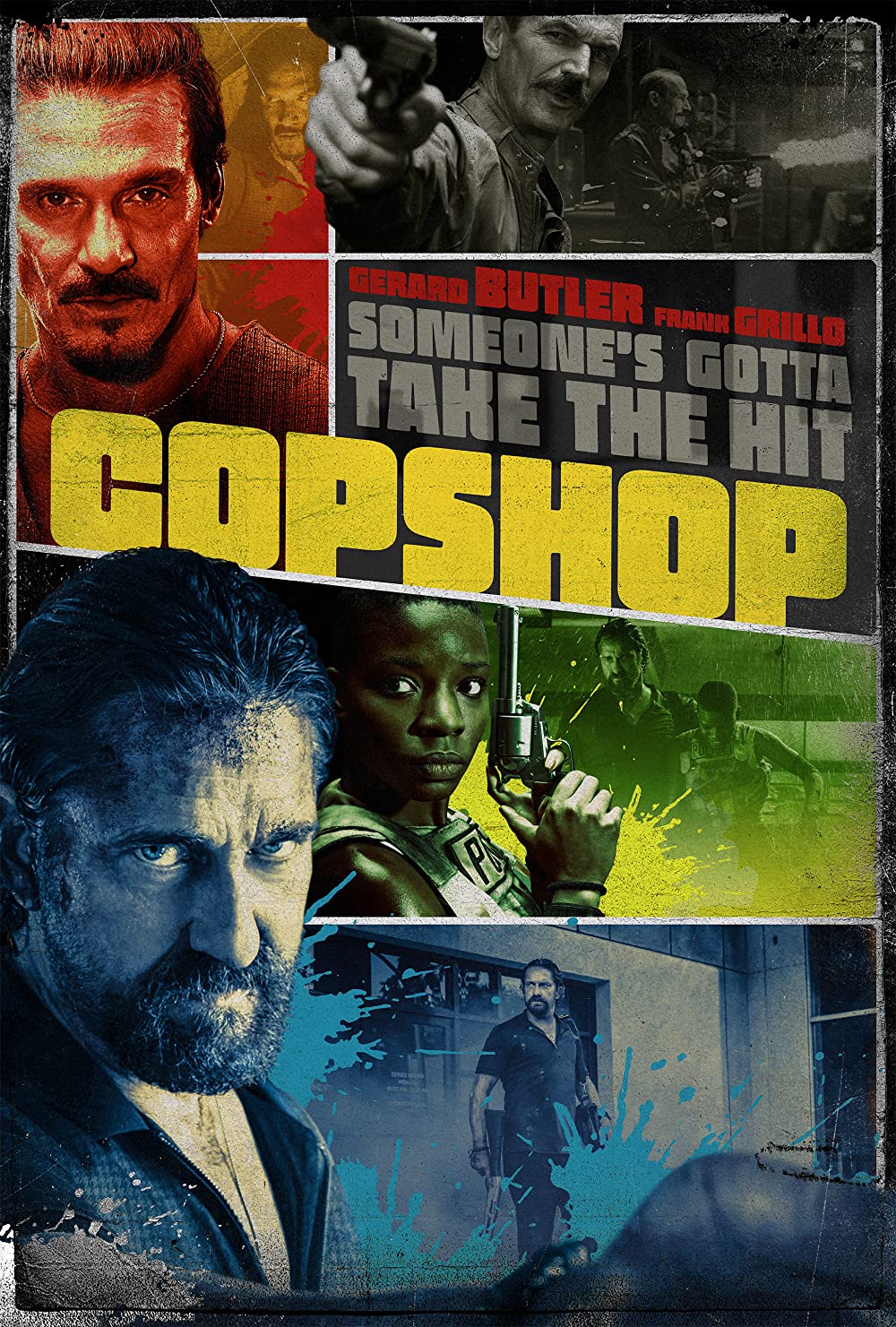
Written by Kurt McLeod and Joe Carnahan, from a story by Mark Williams, and directed by Carnahan, “Copshop” is a simple but explosively fun action thriller. This sort of film doesn’t get made all that often anymore. It’s a small, nasty, one-location shootout that evolves throughout the runtime. The hook of the film is that con artist Teddy Murretto (Frank Grillo) has a hit put out on him, so he punches a small town cop and gets tossed in their holding cell for the night. Unfortunately for him, a grumbly and cerebral, Gerard Butler appears in the cell across from him as the first hitman to find Murretto’s hiding spot. One of the best roles in the film also goes to Alexis Louder as the rookie cop on the force, Valerie Young. She holds her own against some darkly violent characters and pursues justice as best she can amongst the chaos. The surprisingly excellent role of secondary Hitman, Anthony Lamb portrayed by Toby Huss, is the shot of adrenaline that the film needed. Lamb’s skill as a Hitman is immediately showcased in his own dark and comic way, and I absolutely adored this performance. Huss plays the character as if he were a merge between the Joker and the Punisher from the big two comic publishers. He’s aces with a gun, but absolutely off his rocker and having a great time doing it. The whole film is a rough and tumble, guns-a-blazing, survival of the luckiest crackshot style romp, and I loved it. If you’re looking for a dark comedy action thriller with loads of style, Carnahan has just the film for you, and it comes highly recommended from me.

No Way Out (1950)

Written by Lesser Samuels, Philip Yordan, and Joseph L. Mankiewicz, and directed by Mankiewicz, “No Way Out” is a film about racial tensions in America and how quickly things can unravel when wrong-headed assumptions take root. After Sidney Poitier’s recent passing, I made it a point to go back and get into some of his more well known films. I have a ways to go yet, but I figured why not start closer to his beginnings than his end. Poitier stars as Dr. Brooks, one of only a few Black Doctors in the Hospital and wider city. His first day on the job brings him face to face with the very real racism of the day (We’ve gotten better since then but clearly have a looooooong ways to go) in two young white men who’ve robbed a gas station, gotten shot and caught. These scoundrels are the Biddle brothers, Ray (Richard Widmark) and George (Harry Bellaver). George seems to be worse off than his scheming loudmouth brother, and when Dr. Brooks attempts a spinal tap to assess the cause of George’s deeper pain, Ray objects. It isn’t long after this that George dies, and Ray accuses Dr. Brooks of intentionally killing him. Filled with indignant rage and a lost heart, Ray continues to make matters worse for Dr. Brooks when the Doctor asks to have an autopsy to assess what went wrong. Ray also fuels the flames of racial tensions in the area when he gets his side of the story out to the low income white community of Beaver Canal through a lip reading friend. Things escalate from there, but the film does a decent enough job for it’s time when showcasing the institutional racism and the social structures that could foster such hatred throughout the city. Eventually Dr. Brooks turns himself in amongst a literal race riot with tempers raging about, a turn that would require the Hospital to perform an autopsy which ultimately proves Dr. Brooks right. George did have a tumor that exacerbated his gunshot wounds to an untimely death. The film is most certainly of it’s time, but it attempts to rise above and tell a story about perceived assumptions and how the truth must be sought after, not merely assumed. It’s worth the watch folks!
King of New York (1990)

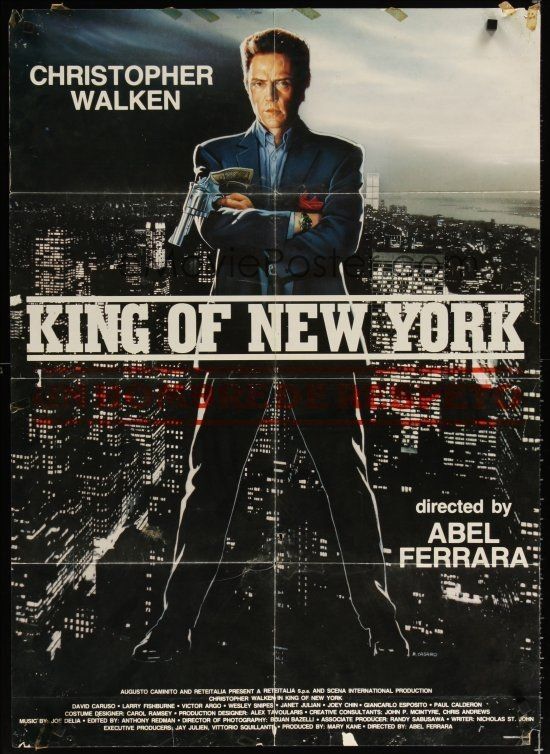
Written by Nicholas St. John and directed by Abel Ferrara, “King of New York” is a crime drama that doesn’t exactly know what it wants to be- other than “Cool”. The film has it’s fair share of fun action beats and snarling gangster criminals that pop and sizzle with memorable performances. That’s mostly due to Laurence Fishburne and Christopher Walken though. Everyone else is just kinda there. Giancarlo Esposito has a minor role, but they don’t give him anything to do within it. Walken’s role as Frank White, a big time drug kingpin who is released from prison in the film’s opening, is the anchor of the story as White and his men go about trying to take a bigger slice of New York City while also attempting to give back to the community through funneling drug money into children’s hospitals and helping the poor more generally. The film lacks precision, as the plot drunkenly wanders from cliché to cliché, and at times the gunfights and character work can be fun, but it never feels in service of the story. Moderately recommended.
The Ghost of Peter Sellers (2018)

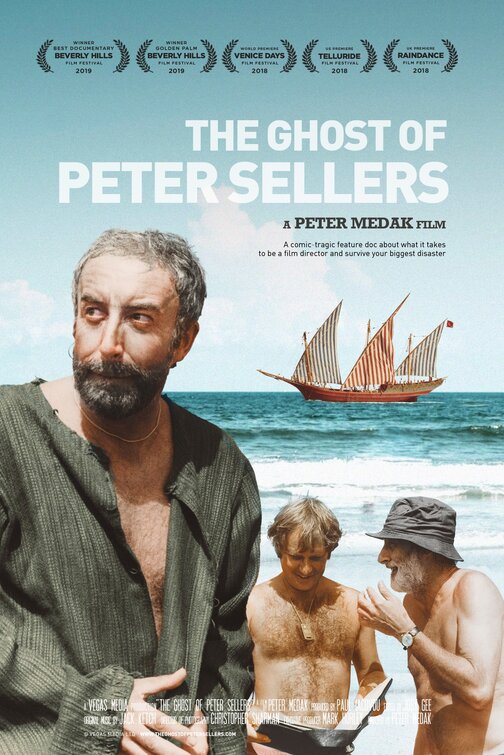
“The Ghost of Peter Sellers” was directed by Peter Medak. This documentary was a bit underwhelming if I’m being honest. It follows the production of the 1973 pirate comedy, “Ghost in the Noonday Sun”- which Peter Medak himself directed. The doc details all of the aspects of this doomed film production, from the context of pre-production to the unraveling that would come to take place late in the production. There are some interesting bits about Peter Sellers in general, and the idea of the film, but after awhile all of the ingredients seem to pile up to a fairly clear answer as to why this film didn’t work out, all while Medak is constantly venting his frustrations some forty-five years later. The director himself didn’t have a handle on the production, didn’t know the details of what he was trying to do, and had a flimsy and wandering script in which Medak simply decided to put all of his faith in the project’s success in Sellers worldwide comedic fame. Sellers at the time had just been dumped by his girlfriend Liza Minelli, this was just after his third wife had divorced him, and was entering the project in a dark state. Hardly a good footing to begin with for your major star. After a few modern scenes with Medak wandering around old shooting locations in Cyprus with one of his fellow producers of “Ghost”, one gets the impression that Medak was easily one of the major inhibitors of the project. As the director he should have had a much stronger grasp of the story, the details of the production, and to be perfectly honest, he should have better assessed his own skills as a director for such a project. He gives off the air of a stuffy history professor, someone that maybe should not have attempted a comedy. There are some bits that are worth seeing, but more often than not the doc is repetitive therapy for the director with Medak equally cursing and praising Peter Sellers, among the many other issues of the production. It was a bit dour and depressing if I’m being honest. Barely recommended.

*I’ve continued to write film criticism articles over at Films Fatale as well, here are a couple of my most recent articles from there. Show them some love and check out what Films Fatale has to offer!

https://www.filmsfatale.com/blog/2021/12/31/the-best-films-of-2021-by-cameron-geiser?rq=Cameron%20Geiser

https://www.filmsfatale.com/blog/2022/1/14/22-movies-to-see-in-2022?rq=Cameron%20Geiser

film

Rapid Fire Reviews #14 Just a heck of a lot of random movies!

Well hello there! It’s been a bit, but hey, I’ve been watching a lot of movies since the last post. In fact, this bunch is a very strange mix of new and old films. Over the last year I’ve mostly been diving into cinema’s past for my movie watching, and I’ve learned a thing or two about film, film criticism, and the history of movies here in America and internationally in that time. It’s been a crazy year to say the least! In fact, the ‘Rapid Fire Reviews’ was born out of the massive amount of films I was devouring early on in the pandemic. There were simply too many films to sit down and give a lengthy detailed review for each one, so I set out to give summarized reviews and add whether or not I recommend the film, usually with a caveat or two depending on the context. Since returning to work this last fall I have done several singular film reviews when I wasn’t watching quite as many films all at once, but here we are! These eight films are the result of trying to catch up with new films being released again, some being Oscar nominations, and others are simply older films that I’ve been meaning to absorb once I got the chance. Hopefully you’ll find something worthwhile to watch, take a chance, there’s something for everyone here!

Zack Snyder’s Justice League (2021)

Written by Chris Terrio and directed by Zack Snyder, “Justice League” (The Snyder Cut), is effectively, a “re-do” of one of the largest Superhero team-up films to date. If you don’t know the background of how this version of the film came to pass, I’ll try to make it short. Initially, during the production of the first version of this film, Zack Snyder and his family experienced tremendous loss when their daughter, Autumn (who this version of the film is dedicated to), took her own life. There was already a fractured relationship between Snyder and the Warner Brothers studio executives over audience and critical reception of “Batman vs Superman: Dawn of Justice” before Snyder respectively walked away from the production, so after the studio hired Joss Whedon to finish the film and make their release date- there were a LOT of changes implemented. Now four years later, and seventy million dollars of investment by Warner Brothers to finish Snyder’s cut of the film and launch it on HBO Max, their streaming service, the film is out and finally available to watch and compare to the 2017 version of the film. So, firstly, the question of the day is; was it worth it? From a storytelling perspective alone- the answer is a resounding yes. Granted, the film is four hours and two minutes long, so it’s a heck of a time investment. That being said, for much of the runtime, the pacing is surprisingly good. I could do without the last part titled “Epilogue” though, I found it to be unnecessarily cumbersome and a bit clunky if I’m being honest. It felt tacked on and while it did give an ounce of credibility to the deservedly maligned Jared Leto version of the Joker, I don’t think we needed it here. So, what was different? What made it better? Mainly, the tone and the respect given to each of the main characters. Plot-wise, everyone had something to do, and each character (Cyborg especially!) was given a far richer background. The mechanics of the story were smoothed out and easier to understand. There was also none of the awkward humor jokes- there was some humor and levity to the film here and there, but none of it was as painful as the jokes given to Batman and the Flash in the 2017 version. I also kind of love some of the character stuff in this version? Which was incredibly surprising because I’m one of those people that actively hated “Batman versus Superman”, I haven’t seen the “ultimate cut” given to that film, but this cut does make me reconsider giving that version a watch. There was a lot done throughout the film to give these characters a real sensation of being mythic figures, and I really dug that. Though I must say that if you really do not enjoy Zack Snyder’s style generally speaking, you might not enjoy this film as it is incredibly indulgent to his sensibilities. It’s not a perfect film by any means, but it is a gigantic improvement on the previous version. All in all, if you’re willing to give this enormous epic, and I do mean it as an Epic, a chance- it may surprise you and surpass your expectations, as that was my experience with the film. Linked below is a conversation from Red Letter Media detailing this version of the film and comparing it to the 2017 version, enjoy!

The Empty Man (2020)

Written and directed by David Prior, and based on the graphic novel of the same name by Cullen Bunn, “The Empty Man” is a surprisingly rich and atmospheric horror film that can get under your skin and make your brain itch- if you let it. First time writer-director David Prior really gave it his all with this film, and I can’t wait to see what he does next! If you’ve enjoyed films like “Annihilation” and “Hereditary”, then this will likely satisfy your horror movie needs and wants. This film would have flown past my radar entirely if YouTuber Chris Stuckmann hadn’t devoted a fifteen minute video extolling the film’s virtues (it’s linked below), but let’s get into it already! After a taught opening sequence in the mountainous country of Bhutan sets the pace for the film’s aesthetics and rules of the story’s world, we’re thrown into modern day Missouri where James Lasombra (James Badge Dale) eats a sad birthday treat and reflects on those he’s lost. Before long the former police officer is on the trail of a missing persons case, the teenage daughter of a close neighbor, Amanda Quail (Sasha Frolova). It’s here when questioning Amanda’s friends, that James first hears of the Empty Man. I don’t want to indulge you with too many story details though, as I think they’re best left discovered on their own, but I will take note on how I believe the film succeeds overall. First and foremost, this film delivers excellent tension, and pairs it with an appropriately bone chilling atmosphere. I also truly appreciated the slow burn approach to the mythology of the Empty Man that was consistent and evolving throughout the film. The film throws some truly eerie and otherworldly imagery at the screen that’s increasingly unnerving as James edges closer to unraveling the truth of the Empty Man, it really kept me guessing! There’s also some praise needed for the respect given to the audience. At every opportunity the film gives you glimpses and peaks with quick cuts or clever sound mixing to put you on edge without pandering or overloading the runtime with jumpscares. In fact I think there was only one of them, and it was very effective! There’s a theme of repetition of actions in the story and the film follows through with this idea by repeating sets of imagery in subtle and fascinating ways. Keep an eye out for houses and interlocking fingers, they’re everywhere if you’re looking for them. This films also wins the David Lynch award in my book, for it has the best depiction of nightmare logic since “Mulholland Dr.”. If you’ve been looking for a smart horror film that respects its audience, I highly recommend giving this one a watch!

Nomadland (2020)

Written and directed by Chloé Zhao, “Nomadland” is a fascinating idea that straddles both narrative and documentary filmmaking styles to the film’s benefit, and detriment. Let me explain myself first though, before getting into that aspect of the film. Frances McDormand plays Fern, a widow who embarks on a journey as a wandering Nomad after her company town in Empire, Nevada shut down said company and discontinued the zip code after so many left the area. On her journey she takes any job she can while traveling and meets many people who also travel the itinerant circles along the way. Her first job is at an Amazon warehouse during the Christmas surge- a feat I will never fully understand. I’m not sure how they got access to film inside an Amazon warehouse and to showcase it with such an aggressively life draining color grading! Fern’s journey mostly consists of her meeting a variety of people and this allows her to sit and listen to their life story, to empathize with those who have lived lives both large and small. In fact, Frances McDormand and David Strathairn are the only traditional actors in the film. The rest of the characters we meet are versions of their true selves that Fern interacts with, befriends, and listens to. This is the real magic of the film, and the reason to watch it. The cinematography is in love with expansive and wide landscapes, focusing on the enormity of the West that Fern moves through. Though, after awhile, the film’s cinematic movements seem to develop a trend and it becomes rhythmic, but predictable. Huge evocative landscapes with Fern’s white van shown as but a speck against the earth encompassing her. Then there’s the “over Fern’s shoulder” walk through real camps and parks with softly playing piano in the background. Then montages of Fern doing whatever job she could find and manage in any one location for a period of time ’til she moves on to the next job, the next camp, and the next expansive wide shot. It’s beautiful- but predictable after some time. I believe the real issue with this film is that it is attempting a lot, and it can’t quite reconcile how it wants to approach the subject at hand. While we meet courageous, humanizing, and terrific people with harrowing tales of life, love, and loss- these people have far more interesting stories to tell than our Fern unfortunately. While we get some characterization near the end, it rings hollow when compared to the tales we’ve already heard around desert campfires and within earshot of those monumental corporate walls. I feel that it is this lack of commitment in either direction that’s what ultimately makes the film leave something to be desired. Either more story should have been written into Fern’s motivations, struggles, her inspirations and sorrows- or we should have given up the fictional structure of the film to give our actual heroes more of a podium to tell their deepening stories, as each one feels like looking into a bottomless well. You know it reaches farther than you can see, there is story there left to plumb, if you seek it out. None of this is to say that I think the film is bad or even pretentious– it never struck me as that. It just felt like something was missing. The last piece to a satisfying puzzle. Perhaps the best thing I can say about “Nomadland” is that it puts a lens on one part of society that has been neglected and cast aside. The fact that so many people have fled to the nomadic lifestyle not out of choice, but from an economic need points the finger at national, systemic, and endemic failures from the top on down to the penniless. If this film is eye opening for you, then it has succeeded in my opinion. I do highly recommend this one, if anything, it will perhaps open more hearts to the system that has so thoroughly failed so many of us.

Minari (2020)

Written and directed by Lee Isaac Chung, “Minari” is the story of a Korean family who moved to Arkansas in the 1980’s. The father, Jacob (Steven Yeun), has ambitions to start a small farm and grow Korean vegetables for fellow immigrants longing for a taste of home. The Mother, Monica (Yeri Han), has reservations about this change in scenery almost immediately upon seeing their newfound home, which is a double-wide trailer in the rural countryside. Though really its their children, David (Alan S. Kim) and Anne (Noel Cho), who are the true stars of the story, as this films adapts writer-director Chung’s childhood growing up in rural America. My favorite character is Monica’s mother, Grandma Soonja (Yuh-Jung Youn), who comes to stay with the family late in the first act. Grandma Soonja isn’t what the kids expect of a grandmother, She “smells like Korea“, gambles, cracks jokes, and quickly became a fan of Mountain Dew “Get me that water from the mountains” and American Wrestling. David has a weak heart, and he is the center of much concern. He’s constantly being told not to run, and it is his relationship with his grandmother, whom he strongly dislikes initially, that grows into one of love and companionship and forms the emotional anchor of the story. When David is scared one night, his grandmother holds him close and dares to crush anyone who would make her grandson afraid. It’s quite touching really. This is a slower and quieter movie than most released these days, and “Minari” relishes these quiet moments with meaningful beats of tender hopefulness. That doesn’t mean that the film shies away from the hard work of this family’s new life. Jacob is a man of quiet determination whose resilience in the face of constant setbacks reveals a familiar struggle for those that know economic hardships. There are tensions between Jacob and Monica throughout the film. From the farm that gestates during most of the runtime, to religion, to money woes, and shame from social and community standings. There is a wide gulf between what both characters are attempting to do and how they go about seeking those goals. Grandma Soonja injects a passion and zest for life once she enters the story, and it is her nose for fertile grounds that provides our title. Minari is a South Korean plant that ends up thriving in the Arkansas dirt and waterways, a nice subtle nod to the family taking root in a new home. This is a small, meditative, and contemplative story of optimism, fear, and family. It’s a good family drama that reminded me of the work of Yasujirō Ozu. I think he’d enjoy this family, this story. Definitely recommended.

The Natural (1984)

Written by Phil Dusenberry and Roger Towne, and directed by Barry Levinson, “The Natural” is one of those movies you put on at the beginning of summer. Something about it is alluring, illuminating, and intoxicating. Like emerging from winter’s grasp in late spring on a warm morning in late May, this film was a similarly exhilarating phenomenon. That may be overselling it a bit much. Especially coming from someone who has almost no emotional investment in sports whatsoever, but I’ll be damned if I didn’t get massive enjoyment from this film. I believe it has something to do with the underdog element, and the simple story of somebody that wanted to be the best at what they loved doing. A yearning for success when nobody thought you had it in you, is that not what America is all about? Robert Redford stars as Roy Hobbs, a near mythic figure when it comes to Baseball as portrayed in this film. He was shot by a rogue femme fatale type when rising the ranks of early stardom, and while I can’t even remember why he was shot- this gives us a reason to have him re-emerge years later (we assume after a tumultuous period of physical therapy) as a middle-aged nobody with a killer arm. Since nobody’s heard of him, Roy gets dumped at the feet of one of the lowest ranking Major League teams in the game, The New York Knights. It’s the perfect set-up for a redemption arc (look the movie isn’t trying to be anything other than a damn good baseball movie- even if that’s a bit predictable) as the New York Knights haven’t exactly be knocking it out of the park as of late. The coach of the team is the eternally grumpy yet hopeful Pop Fisher (Wilford Brimley), and in fact, the cast is pretty great overall. Glenn Close plays Roy’s love interest Iris Gaines, though Roy does get distracted by a corporate spy girlfriend for a little while, Memo Paris, played by Kim Basinger. There’s also Robert Duvall who plays journalist, and jester of sorts, called Max Mercy who’s intent on getting the scoop on Hobbs’ true past. Truly though, the film belongs to Robert Redford. His Clark Kent like nature and affability is only surpassed by his intense love of the game. He’s just there for his love of the sport, pure and simple. I have to acknowledge though, that if it weren’t for Youtuber Patrick H. Willems and his analysis of why “Baseball is the best movie sport”- I never would have picked up the film. Therefore, the video that got me to give “The Natural” a chance is listed below. I wandered out of my comfort zone and ironically found a comfort movie, I encourage everyone to do that with your movie watching, and obviously- I definitely recommend this one.

Alphaville (1965)

Written and directed by Jean-Luc Godard, “Alphaville” is a French New Wave Sci-fi film with an abundance of poetry amongst it’s grand ideas. This was the second film of Godard’s I’ve seen thus far (“Breathless” being the other), and I have to admit, he’s been my least favorite of the French New Wave directors thus far. I won’t give up on Godard, because despite not loving this film, there were some fascinating ideas and choices made here. In this futuristic tale, which relies heavily on your ability to suspend your belief, Lemmy Caution (Eddie Constantine) travels to the distant space city of Alphaville, the capital of the Galaxy. Which, ironically, looks a lot like 1960’s Paris. There are virtually no special effects, barely any costume-work with the exception of our lead seemingly transplanted from any classic Noir with his trench coat, fedora, pistol and tough-guy aesthetic. The story is that Lemmy has been sent to Alphaville to destroy Alpha 60, the supercomputer that runs everything in the strange city, as it has gone rogue and developed fascist ideas about potential human societies. It’s a strange place, this Alphaville, there is no concept of Love, no poetry, none of the tangled artistic notions that make people… well, Human. Lemmy defies the invisible mental and emotional stress that Alphaville seems to subtly apply to everyone in the city, most either commit suicide as they cannot handle it, or they’re targeted by the police and taken, then shot on a diving board in a pool, where five young women swim up and stab the perpetrators just to make sure they’re dead. Clearly, practicing illogical thought is a dangerous activity here. There’s a lot of random cuts in the editing, loud beeping applied throughout the film at seemingly random intervals, and then there’s the big bad itself, Alpha 60. Alpha 60 speaks in voiceover throughout the film and it sounds disgusting. It sounds as if you put a mic next to a naturally occurring tar pit as it boiled and gurgled relentlessly. The volume of the fascist supercomputer’s voice is much louder than the rest of the sound in the film and there are occasional bouts where it muses on poetry and life for far too long in my opinion. It can get hypnotic and distressing at the same time creating a strange viewing experience. I’ve heard that Alpha 60 was voiced by an older Parisian actor who had lost his larynx and spoke through an artificial voice-box, and that contributes heavily to the atmosphere of the film. Fair warning, this is a S L O W paced movie with lots of heady ideas to be considered throughout the film. You might consider it pretentious, but I think it’s worth a watch. I won’t give up on Godard, but he’s not making it easy on me!

The Asphalt Jungle (1950)

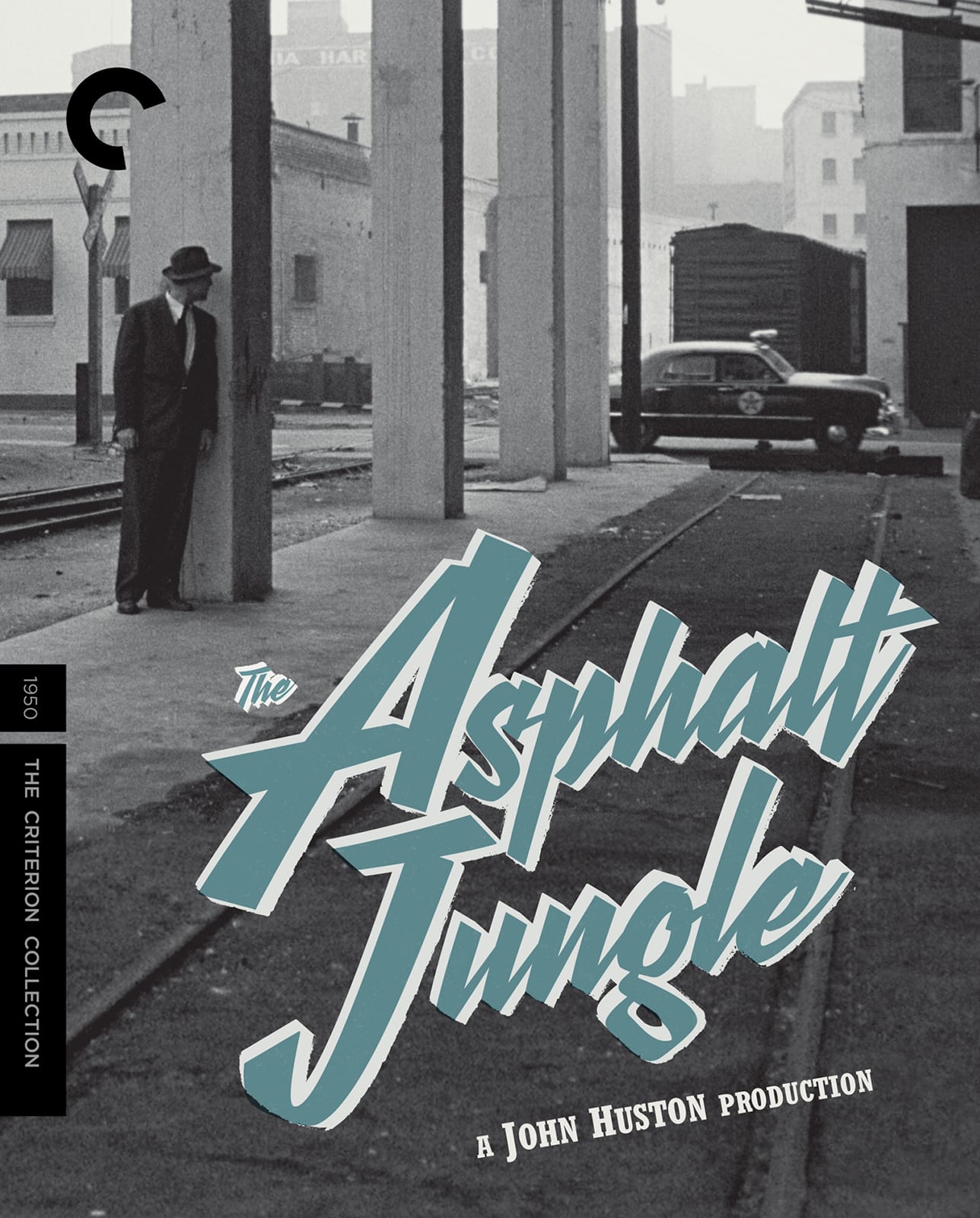
Written by Ben Maddow and John Huston, and directed by Huston, “The Asphalt Jungle” is a jewel heist film noir that still influences the genre to this day. Between this and Huston’s earlier Noir in “The Maltese Falcon”, you could say he’s become a master of the genre that he helped to forge. Here he’s taken the story from the other side of the societal coin with this film focusing more on the criminal element rather than the Detective’s side of things, as with Maltese. This film’s quality certainly confirms Huston’s legacy behind the camera, at the very least. It’s tight, well crafted, and methodical when concerned with both the crime at hand, and the characters behind it. This may be the finest example of the typical heist film set-up. First, there’s Doc Erwin Riedenschneider (Sam Jaffe), the brains behind the plan. He’s an old school criminal who was just released from prison and he’s got a plan that he’s been holding onto since being put behind bars. As soon as he’s out he heads to a club run by a well known Bookie, Cobby (Marc Lawrence), where his reputation is still known and respected. Cobby has the connections that Doc needs to set up the heist. Which leads us to the financier of the operation, Alonzo D. Emmerich (Louis Calhern), a well to-do gentlemen in town with a respectable relationship with the criminal underworld. This leads us to Dix Handley (Sterling Hayden) a Kentucky-bred farm boy who grew into a mountain of a man who’s not afraid to throw his weight around. Whose inclusion brings about the driver, Gus Minissi (James Whitmore) a punchy bar owner, and the safe cracker Louis Ciavelli (Anthony Caruso), a family man whose back in the game for one last heist. I won’t ruin the proceedings, as I highly recommend this film, but it’s a masterclass in the genre. Between dirty cops, some genuine bad luck, and a couple double-crosses, this film’s got it all. The pacing and plotting is expertly executed too! This is a film that has, and will likely continue to influence many writers and directors since it’s release, most notably the French Filmmaker Jean-Pierre Melville- I can see this movie’s influence all over his later films. This is a standout criminal noir, and I cannot recommend it enough!

The Killing of a Chinese Bookie (1976)

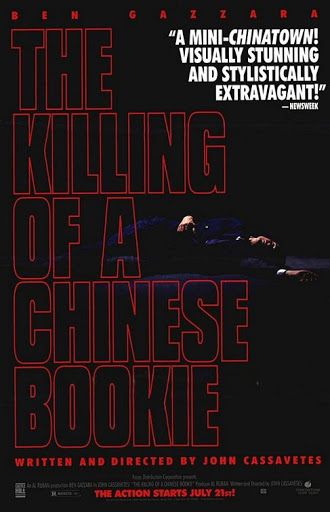
Written and directed by John Cassavetes, “The Killing of a Chinese Bookie” is a neo-noir (of sorts) wherein a less than reputable nightclub owner, Cosmo Vitelli (Ben Gazzara), is put in a precarious position when ordered to kill a mafia-protected Chinese Bookie to absolve his gambling debts. There are some aspects about the film that I found to be redeeming, mostly in some interesting character choices in the performances of the actors, but little else connected with me. Typically, I don’t enjoy lambasting a film when it appears that everyone involved certainly attempted their best efforts in crafting a story with the medium, but this one… wasn’t for me. The film feels as sleazy as it looks most of the time. There’s some questionable things taking place within the club Cosmo operates, and while there are certainly worse creatures of the night, as evident of the predicament that Cosmo finds himself in, he’s no innocent soul either. He’s a gambling drunk that does seem to legitimately be concerned with the “quality” of the nightly show he produces when he’s seen calling the club while away one night to make sure the routine is going smoothly without his guiding hand. However, one character’s good intentions does not necessarily make good plotting, immersion, or storytelling. The actual plot of the film is seemingly picked up and fumbled multiple times. The story meanders without a clear course and puts its focus on the nightclub’s song and dance sequences- which would be fine if they were entertaining…. at all. Even if there was simply a musical score to back up the bad singing and overindulgent sequences, that would help the pace of the movie significantly. In fact, I don’t recall any music at all, the result is a film that feels soulless. It’s eerily quiet for large portions of the runtime, and it saps any energy the film may have acquired when the few moments of action do occur. While we’re on the technical side of things, let’s dive in; though I must acknowledge that there’s a lot to be desired. The sound mixing is flat out bad, it makes the dialogue disappear into the miasma of foundationless filmmaking that this is. There are some truly unique cinematography choices within this film, but I personally hate all of those choices. The subject of any shot is either never focused on or the framing is off kilter and well, if I’m being honest with you, it feels like all of the wrong choices were made when concerning the role of cinematographer. The lighting is also particularly frustrating. You can have scenes set in darkness, but you have to be able to see… something- anything- within the darkness. You can shroud yourself in mystique, but if there isn’t anything to show or creatively exploit with imagery except for the void before you, then I would not recommend this artistic choice. Which brings me to my recommendation, which if you haven’t guessed, isn’t that positive. I don’t recommend this one, if you’re just rounding out a run of Indie 1970’s crime films, then sure, by all means, include it in your viewing experience, but unless academically inclined as a film student, avoid this one. It’s just not worth it.

*I also recently saw “Godzilla VS Kong”. If you’d like to see my review of that movie, check it out at : https://www.filmsfatale.com/blog/2021/4/6/godzilla-vs-kong

film

Rapid Fire Reviews #13 What I’ve been watching this year

2021 isn’t even two (full) months old yet and it already feels like it’s hellbent on telling 2020 to “hold it’s beer” based solely on the way it’s gone so far. So while things haven’t exactly been the *immediate* reversal of fortune that we’re all hoping for- there’s always more movies to pour down our eyeballs! So far this year I’ve been indulging in repeat viewings of older films, watching at least one new film, and returning to my mining of the South Korean New Wave that began in the 2000’s and has been consistently enthralling ever since. There were a few weeks where I went on another Noir binge, and it was glorious. Hopefully this directs you towards another new favorite, a thought provoking experience, or at least an entertaining way to absorb an afternoon while ignoring the outside world. Cheers, and welcome to 2021, the sequel we never wanted, but got anyways!

One Night in Miami (2020)

Written by Kemp Powers, based on the play also by Powers, and directed by Regina King, “One Night in Miami” is a theoretical film based on the question, “What if Malcolm X, Muhammad Ali, Jim Brown, and Sam Cooke were all friends and came together for a night in Miami? How would that unfold?“. The answer to that question is quite the story. The beginning of the film establishes each major character experiencing failure, or a loss, something that shakes their confidence. The young Cassius Clay (Eli Goree) comes quite close to losing a boxing match at Wembley Stadium in London while Sam Cooke (Leslie Odom Jr.) the soulful singer, experiences one of the worst sets he’s ever had for an old and cold all white audience in New York City’s Copacabana nightclub. Jim Brown (Aldis Hodge), the star NFL player, returns home to Georgia on which lies a vast plantation. Everything seems cordial enough between Brown and family friend Mr. Carlton (Beau Bridges), that is until Mr. Carlton casually reveals some deep-seated racism that rattles Brown. Then there’s Malcolm X (Kingsley Ben-Adir). At this point in his life, he’s become uncharacteristically paranoid about a cornerstone of his cause in life, The Nation of Islam, as he tells his wife of his plans to leave the group. Fast forward several months later to 1964 where all four men have landed in Miami for Clay’s title bout against Sonny Liston. Thus we have set the stage and from there the performances, and subtly exquisite camerwork, take center stage as these four legendary personalities laugh together, yell at each other, debate each other thoroughly and thoughtfully, and fully splay out the emotional range of good and lasting characterwork. I was blown away by this one. Personally, I was really only aware of Malcolm X and Cassius Clay, aka Muhammad Ali, but the choice of all four men was inspired in my opinion. This is an actor’s movie, as noted before there is some good clever camerwork, and excellent scripting, but it’s the performances I will remember most, each actor brought something memorable and unique to their role and did their due diligence in recreating the larger than life personas. This is an excellent film, and I sincerely hope you give it a watch.

Chinatown (1974)

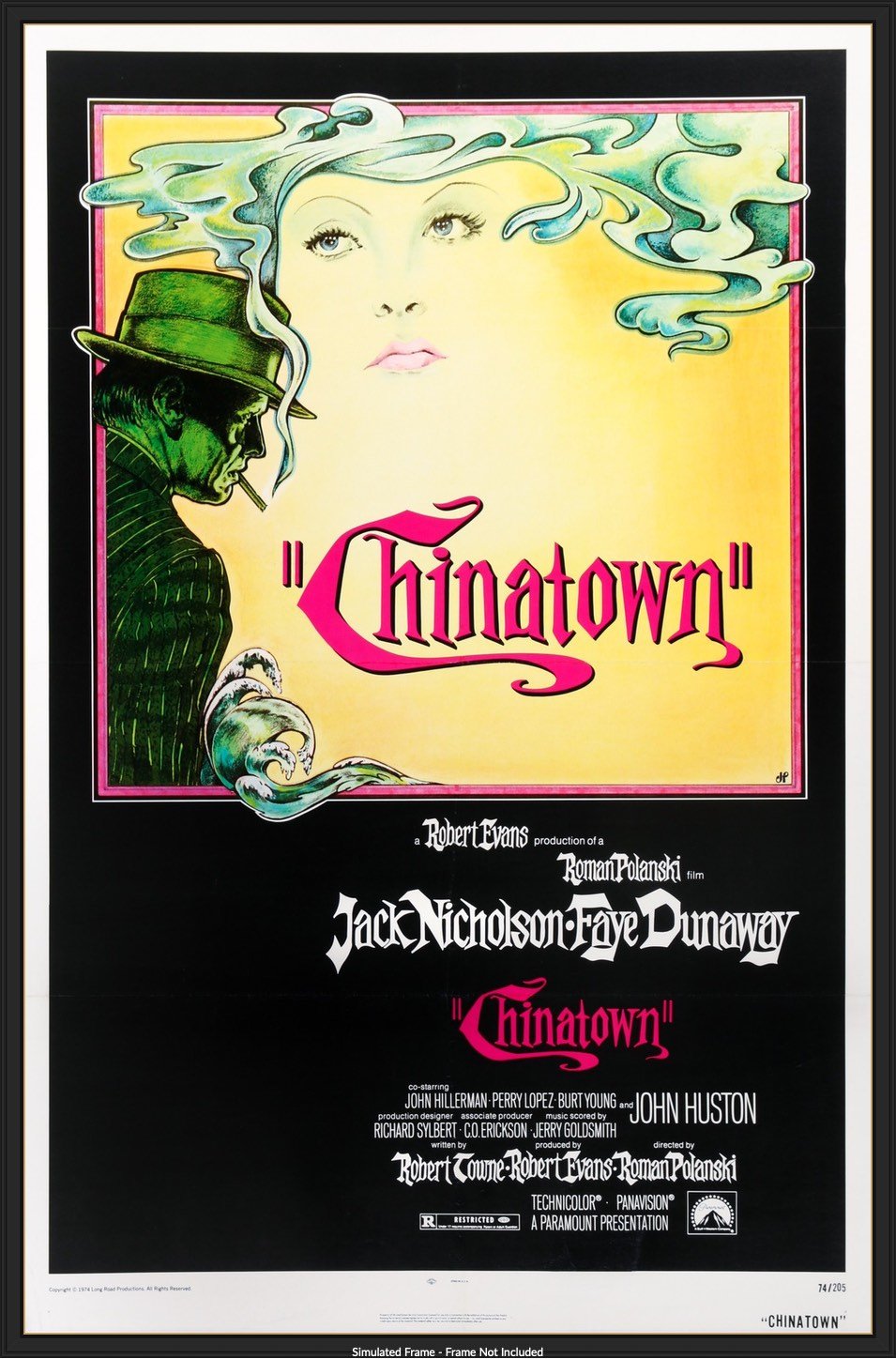
Written by Robert Towne and directed by Roman Polanski, “Chinatown” is one of the best neo-noirs of all time, with possibly the best script in the business. This film is immaculate in its execution, and if you’re a student of cinema, it’s required viewing. Jack Nicholson stars as J. J. “Jake” Gittes, a private investigator who stumbles upon a bizarre case that constantly ratchets up the intrigue and mystery at every opportunity. If you somehow haven’t seen this one yet, I’ll refrain from spoiling things, but just know that this film comes with my highest recommendation. It’s a biting, cynical, and staggering neo-noir that stands tall in American cinema’s past. Jake’s given a case early on in the film to investigate a potential affair between a married couple, as the first scene in the movie establishes, this is a common practice for private eyes. After he tails the husband, Hollis Mulwray (Darrell Zwerling), around town and takes notes on his activities, Jake believes he has enough evidence and brings the story to the newspapers, which ruins the man. However, after the story has been released, the real wife, Evelyn Mulwray (Faye Dunaway), arrives at Jake’s office informing the private eye that he can expect a lawsuit. Obviously, things are not as they seem. Gittes retraces Hollis’ steps and activities until he comes across several incongruities, like the fact that despite there being a drought in Los Angeles, Hollis was drowned. Curious. There’s so much more to the film and the layers of storytelling that are hiding in plain sight are grotesque, and gloriously rewarding as an audience member. Highly recommended.

*This is not meant to glorify Roman Polanski in any way shape or form. If you don’t know what he did, google it. I’m just here to discuss films.*

The Third Man (1949)

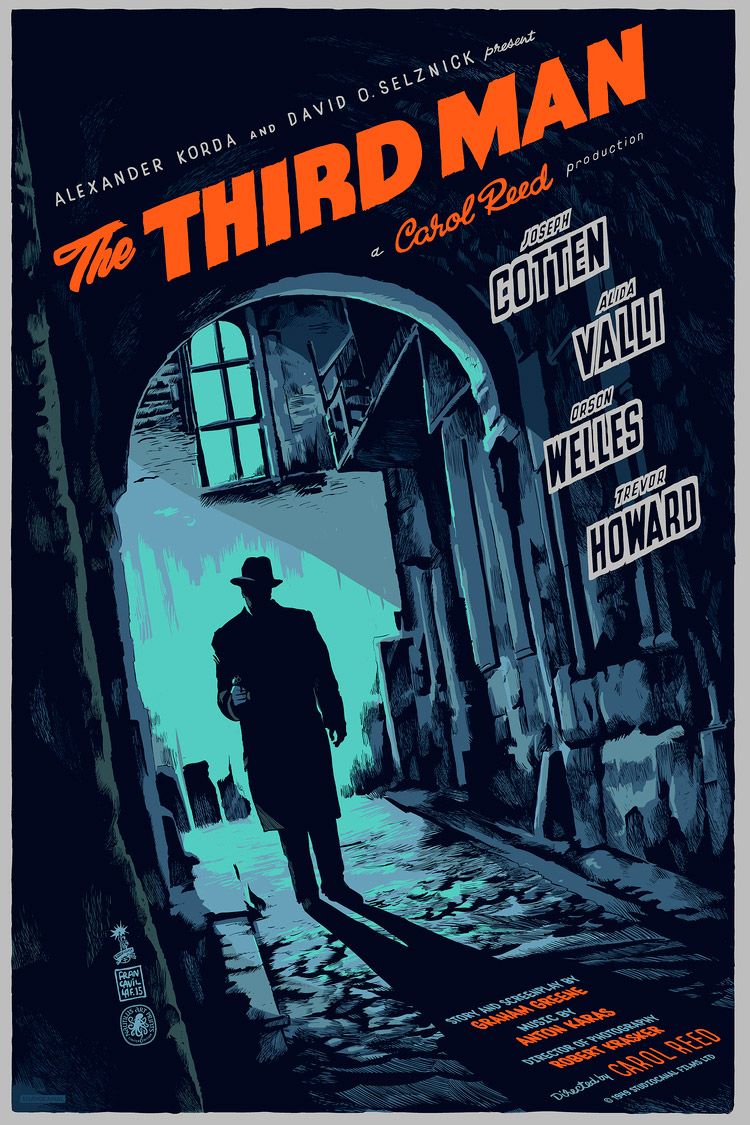
Written by Graham Greene and directed by Carol Reed, “The Third Man” is one of the finest noirs to have come from the golden age of cinema. If you’re inclined to see all of Orson Welles performances, or curious about the genre of Noirs across the board, or even just wanting to widen those international film credentials, you can’t go wrong on any of those counts with this film. Speaking of Welles, there’s a dual casting here that is one of the finest choices of cinema’s earlier eras. Joseph Cotten stars as the lead, Holly Martins, an American author of paperback Westerns who gets caught up in the crimes and mysterious nature of his old friend from their shared youth, Harry Lime (Orson Welles). Joseph Cotten and Orson Welles had worked together since the days of the Mercury Theater in New York City, since the “War of the Worlds” radio broadcast and “Citizen Kane” onward! They were longtime friends and coworkers and the fact that this film is essentially about the death of nostalgia, about the morality of doing what’s right despite your personal attachments, well that’s just brilliant emotional manipulation if you know the story of the two. The film takes place in post-war Vienna with the city being split up between the allied nations, the Americans, British, French, and Soviets. Much of the city is still in ruins and seems like it could all crumble into dust at a moments notice. Martins arrives in Vienna as he’s been given notice that his good friend Harry Lime has died, hit by a car in the street. After the funeral Martins gets acquainted in town, he’s also questioned particularly intently by Major Calloway (Trevor Howard) a member of the British Royal Military Police whom Martins mockingly calls ‘Callahan’ throughout the film. After Martins questions a couple locals who have stories that are inconsistent with the “official” details, he decides to stick around and see what comes of it. The film makes some truly unique choices, particularly for the soundtrack. The whole soundtrack is performed by one man and one instrument, the Zither played by Anton Karas. If you don’t know what that is, picture the American cartoon, “Spongebob Squarepants”. Strange right? Well, especially in the first season of that cartoon, background music was usually performed by someone with a Zither. In fact, when I was watching this film, one of my roommates returned home and had walked in from the back where he could hear the Zither music and commented before entering the living room that “Oh hey, you’re watching Spongebob?” and he was quite surprised to see a black and white noir in its place. Anyways, the cinematography and lighting also hold fascinating calibrated choices like shooting Vienna, mostly, in extreme Dutch angles, especially once the footchases of the last half of the film begin. The lighting maintains an expressionist quality that creates an atmosphere that envelopes you into the mystery as the film goes on. The back half of the film is where the best cinematography lives in my opinion. The manhunt for Harry Lime in the streets and sewers of Vienna with seemingly hundreds of pursuers feels like a fever dream. A fuller analysis of the film may be required later on at some point, but for now, trust me, it’s pretty great. Highly recommended.

Le Doulos “The Informant” (1962)

I’ve already reviewed this film on the blog but I recently picked up a physical copy and gave a it a rewatch. The first time around I remember feeling somewhat engaged and entertained, but much like my first viewing of “The Hateful Eight”, I wasn’t extremely into it based on the morality of the characters (Ironically, “Eight” is now one of my favorite Tarantino movies). Granted, now that it’s been almost exactly a year since that initial watch and review (linked below this for reference), I knew the twists that were coming, and instead got lost in how the film works perfectly at making you assume one set of events is taking place, when in reality you’re only seeing bits and pieces of the truth. I was paying much more attention this time around to the camera movements and character work on display. I hadn’t even noticed the eight and a half minute one-take shot of Silien (Jean-Paul Belmondo) being interoggated by cops that expertly displays Melville’s skill at mise en scène. This may be my favorite non-American Noir, it’s one that I will be returning to anytime a lampost glows in the fog, or when shadowy figures fade into obscuring darkness. It’s an excellent movie and I highly recommend giving it a watch!

https://spacecortezwrites.com/2020/02/20/old-school-review-le-doulos-1962/

Le Silence de la Mer “The Silence of the Sea” (1949)

Written by Jean-Pierre Melville, adapted from the short story by Vercors, and directed by Melville, “Le Silence de la Mer” is the story of an uncle (Jean-Marie Robain) and his niece (Nicole Stéphane) who must oblige an S.S. Nazi officer, Werner von Ebrennac (Howard Vernon), while under their occupation in Paris, 1941. Having seen many of Melville’s other later films, I anticipated the origins of his style that’s all over the later Noir films- but this being his first film, it was quite different from those. While Melville would often adapt literature for his films, this one was a unique choice because this story was one that was frequently passed around by French Resistance members during the occupation, and it was penned by an infamous French author known only by the pseudonym “Vercors”. As Melville was also a member of the Free French Forces during the war, he was an informed choice to say the least. Upon Werner von Ebrennac’s arrival, both L’oncle and La nièce agree to live as though he had never arrived. A vow of silence between them. Which is a really fascinating choice because of how it affects the S.S. officer over the course of the film. He considers himself an intellectual after all. He’s well read, a lover of the Parisian arts, and a firm believer in Germany’s cause- that is until he finds evidence of the cruelty being committed against the Jews, and it breaks something inside of him. It’s a unique film regarding the Nazi occupation of Paris, and I highly recommend giving it a watch.

Les Enfants Terribles “The Strange Ones” (1950)

Written by Jean Cocteau, adapted from Cocteau’s own novel, and directed by Jean-pierre Melville, “Les Enfants Terribles” is, as the translation of the title would indicate, a strange one. Nicole Stéphane returns after the incredible “Le Silence de la Mer” to play Elisabeth, one half of the film’s focus. It’s almost as if Melville offered her the role due to “the niece” only having a handful of lines in his first movie, as this role is the exact opposite in tone. Paul (Edouard Dermithe) and Elizabeth are indeed strange, they spend most of their time in their room with each other inventing all sorts of mind games, pranks, and a full on display of Freudian psychology at work. Elisabeth (and her brother for that matter) are constantly talking almost for the entire runtime. The two are always talking over each other, at each other, and against anyone unfortunate enough to dare walk into their den of treachery and incestuous entanglement. Yes, it’s that kind of movie. It’s uncomfortable and weird, but hey, if you’re a Melville purist, it IS worth a watch for the camerawork at the very least. Out of all Melville’s films that I’ve seen so far, this one was the hardest to sit through. Not recommended.

L’aîné des Ferchaux “Magnet of Doom” (1963)

Written and directed by Jean-Pierre Melville, based on the novel by Georges Simenon, “Magnet of Doom” is a road movie of sorts that has it’s merits, but was ultimately one of Melville’s lesser films for me. The film can be painstakingly slow at times, and while that’s a criticism that could be leveled at most of Melville’s work if you’re an impatient film watcher, I always felt as though his other films could get away with it purely out of their inherent mystery, intrigue, and atmosphere. This films stars Jean-Paul Belmondo, who always makes interesting choices as an actor, and Charles Vanel, a prominent French actor and director who appeared in over 200 films during his 76 year career. In the film, Belmondo plays Michel Maudet, a failed Boxer who’s broke and penniless looking for work. Which just so happens to be perfectly timed for the role of personal secretary for Dieudonné Ferchaux (Vanel) a senior executive of a large bank in Paris whose criminal past has come back to haunt him. Thus he’s in a rush to ensconce to South America by way of North America. So Michel’s hired on the spot and they fly out to New York, with Michel leaving his girlfriend behind without telling her goodbye, or even acknowledging her. Both men seem to be of dubious morals. The two just need to make a stop at Ferchaux’s New York City bank to withdraw the rest of his funds and then off to Venezuela! Obviously, it’s not going to be that easy. The bank can’t move that much money immediately so Ferchaux gets antsy and they decide to drive to New Orleans in the meantime where they will have the money wired to them, not wise to stick around for an extradition when you know it’s coming. Thus we get an American road trip with these two prominent French actors of their time. The movie has value in how the audience is given an outsider’s perspective on American culture, scenery, and variety of lifestyles. The film also pays homage to “Citizen Kane”, “The Set Up”, and the road movie genre overall. When it ended with one character nonchalantly disregarding the dying words of the other, I was almost glad it was over. That might seem harsh, but this one did not engage me as much as I would have expected from seeing many of Melville’s other films. Not entirely recommended.

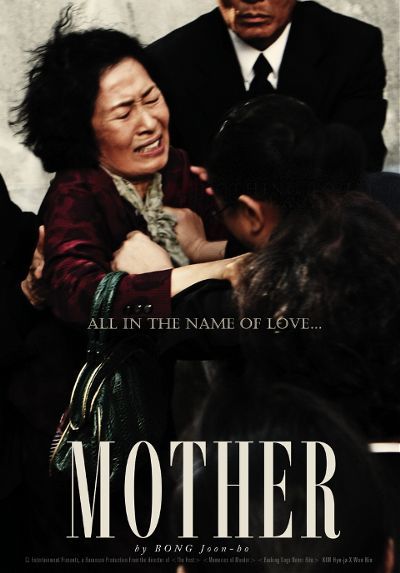
Mother (2009)

Written by Eun-kyo Park and Bong Joon Ho, from a story by Bong Joon Ho, and directed by Bong Joon Ho, “Mother” is a superbly deceptive thriller that toys with your expectations in brilliant fashion. In a town near the countryside in South Korea, a watchful Mother (Hye-ja Kim) runs a small herb shop while keeping her adult son, Yoon Do-joon (Won Bin), safe and out of trouble as much as possible. Do-joon isn’t exactly ‘all there’ when it comes to mental capacity though, which is exactly how he ends up getting wrapped up in a murder mystery as the main suspect. He’s obviously taken advantage of by the local police who seem pre-occupied with moving on to their next case rather than doing the hard investigative work to find the real killer of Moon Ah-jeong (Hee-ra Mun), an exceptionally unlucky young schoolgirl. With the local police content with their passive scapegoat who signed his own confession early on citing, “Well, if I really did it, shouldn’t I be held responsible?” Thus once our titular Mother feels she has exhausted all legal and formal methods of uncovering the truth, she sets out on her own to solve the murder mystery and absolve her son of his alleged crimes. I’ve seen several of Bong Joon Ho’s films now, and while I’ve generally enjoyed his work, this is the only film besides “Parasite” (https://spacecortezwrites.com/2020/01/30/review-parasite/) that has struck me so profoundly. I still have yet to see “Memories of Murder”, which is considerably harder to track down in physical form than his more recent films (Fret not, a physical edition from the Criterion Collection is on the way! https://www.slashfilm.com/memories-of-murder-re-release/ ), but this is far closer in tone and quality to “Parasite” than his work with American actors in “Snowpiercer” and “Okja”- both of which were enjoyable and solid films, though this rises above them. Highly recommended.

I Saw The Devil (2010)

Written by Hoon-jung Park and directed by Jee-woon Kim, “I Saw The Devil” is an extremely violent revenge tale that masterfully tackles genre sensibilities with a mind for the consequences of revenge and what it does to body, mind, and soul. This film was recommended to me as a “South Korean revenge movie” and while that may have been accurate at base level, because it certainly IS about revenge, it’s also so much more than that. I did not expect this movie to grip me so viscerally. I have to say right away that if you are not a fan of bloody violence, of eye-covering, wincing-while-watching violence, this one may not be for you. Admittedly, I’ve never been a fan of that sort of thing unless it’s gloriously over the top in it’s depiction of violence, like what Quentin Tarantino does for example, or even in something as ludicrous as “Dead Alive”. Though, even I got through it because it was that engaging. That being said, the story of eye-for-an-eye violence here is eerily captivating. So, without ruining the plot for you, this movie primarily follows two men and their subsequent feud through grief, hatred, and a callous disregard for life, family, and everything that makes us human. Jang Kyung-chul (Choi Min-sik) is our villain, and you’ll know why almost immediately once the movie begins. He’s a murderous serial killer with brutal efficiency who performs disgusting rituals with his victims. His luck begins to change one day when he captures and kills the fiance of Kim Soo-hyeon (Lee Byung-Hun), an extremely capable security agent of sorts. Once he begins to track down Jang Kyung-chul, he, along with his deceased fiance’s father (who just so happens to be the Chief of Police in their area), decide not to outright kill the man but to make him suffer unspeakable pain. From there the film boomerangs between the power struggle of both men, each of whom gets increasingly more vile with their violent crusade against each other. It’s intense, bloody, and despite it’s genre trappings it actually does have something to say about revenge and what it does to us. Definitely recommended!

*If during your read of this edition of the Rapid Fire Reviews you thought to yourself “Wow, there’s a lot of old French movies in this one.” That’s because I was in the midst of reading “Jean-Pierre Melville: an American in Paris” by Ginette Vincendeau and writing a review of the book for another website called http://www.filmsfatale.com which I highly encourage you to seek out! My Melville piece should be up soon, but I’ve also already begun my writing over there with the article “What if: Jim Carrey and Adam Sandler Were in a Movie Together?” (https://www.filmsfatale.com/blog/2021/1/29/what-if-jim-carrey-and-adam-sandler-were-in-a-movie-together?rq=Adam%20Sandler) I’ll still be writing here in my free time, but give Films Fatale a look, they’ve got many, many, excellent articles and interviews on the site, check it out!

film

Old School Review: “In a Lonely Place” (1950)

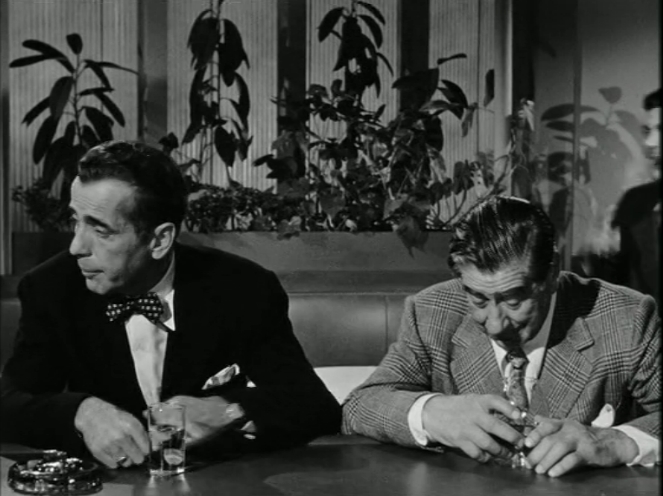
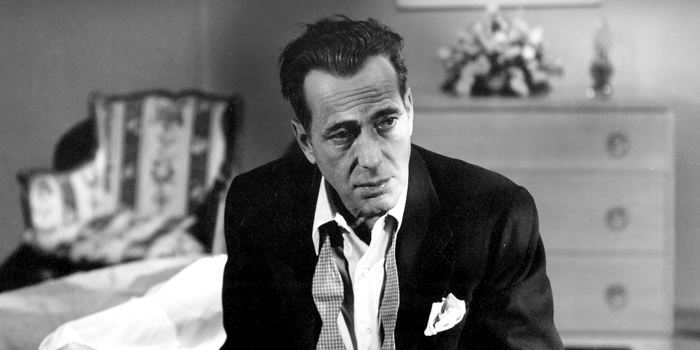
Written by Andrew Solt, based on a story by Dorothy B. Hughes, and directed by Nicholas Ray, “In a Lonely Place” is a mystery noir film that cleverly plays with audience expectations and goes against the grain when regarding Hollywood star Humphrey Bogart and his character, Dixon Steele. Having only just recently seen “Casablanca” for the first time this past summer (I know, I know..) paired with “The African Queen” and “The Maltese Falcon”, I had an image conjured up from these films of Bogart’s usual assets in acting. Namely, playing a man beaten down by the world or it’s expectations resulting in sarcasm, a dry wit, and usually with a drink in hand or nearby. He might play a cynic- but at his core the characters usually have good intentions. This film toys with that image and what we the audience may have come to expect from Bogart’s other hit films, granted, the film starts out in a very familiar place for Bogart as Steele, a washed up screenwriter with a chip on his shoulder and a drinking problem. After Steele throws a spiteful fist early on in the film however, we get an inkling that this incarnation of Bogey has more of a temper this time around. Steele is a far punchier lead than his roles in the previously mentioned films, and this only assists in the delightful second act flip, which I found to be particularly innovative for the time.

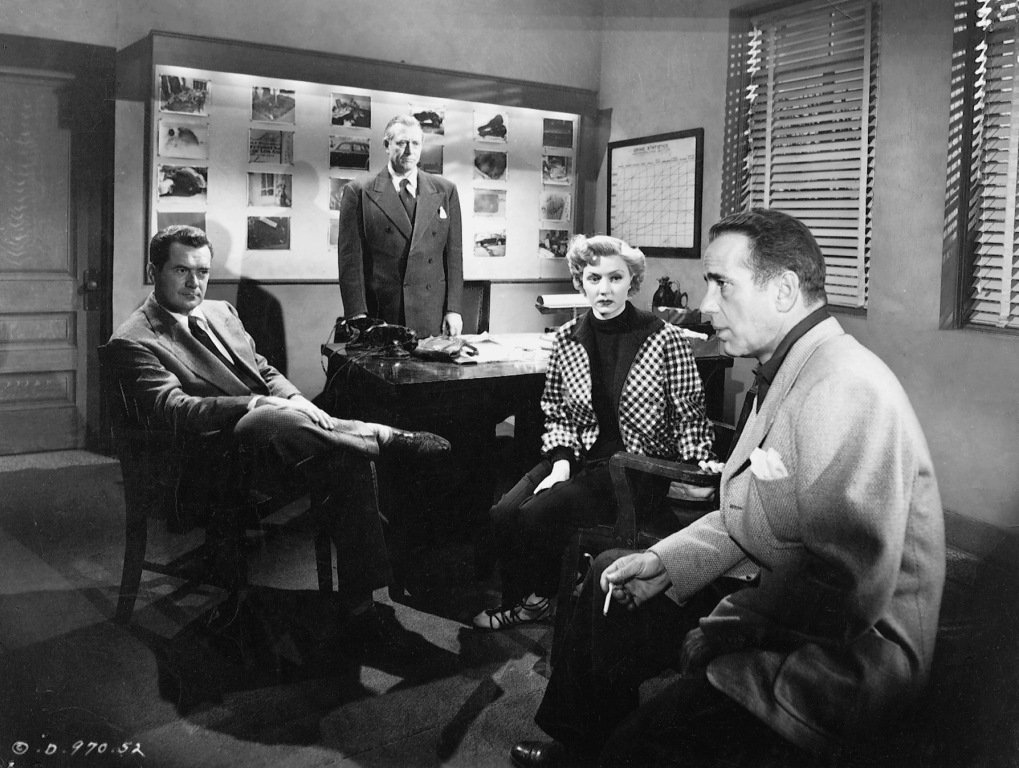
The film begins with Steele’s agent, Mel Lippman (Art Smith), a longtime friend and confidant, whose just gotten Steele the opportunity to adapt a trashy pulp novel into a screenplay. Steele can’t bring himself to read the book even though he needs the work and instead hires a hat-check girl, Mildred Atkinson (Martha Stewart), who he heard loves the book and had just finished reading it. She comes to his place that evening and ecstatically goes over the plot while he glances at a new neighbor across the way who had also noticed him earlier as well. After Steele gets the general idea of the story, which he seems to detest a bit internally, he sends Ms. Atkinson home for the night by a nearby cab station- which he pays for in addition to helping him with the pulp fiction. Early the next morning Steele’s met by L.A. Detective, Brub Nicolai (Frank Lovejoy), who had served under him during the war. He brings Steele in for questioning, and while Steele believes it’s because he got into a fight with the son of the studio head the previous day, it’s actually because he’s the prime suspect in the murder of Mildren Atkinson found dead earlier in the dark hours of the morning.

Steele doesn’t do hiumself any favors when being questioned by the police. By his nature, he’s a macabre idealist with awful self-esteem, someone who’s intentionally vague and (as a writer does) likes to exaggerate from time to time. Luckily for him his new neighbor, Laurel Gray (Gloria Grahame), did see Ms. Atkinson leave the previous night without Steele, providing him an alibi, as well as a flirtatious invitation. After awhile the two begin to fall in love, they begin to date and Steele gets back to writing after Laurel helps get him off the bottle for some time. Though Laurel and Dixon do seem to be mutually affectionate to each other, things begin to go awry when an evening at the beach turns sour and Dixon’s temper reemerges when he discovers that Laurel was brought in for further questioning by the police chief, which she didn’t tell him about as she didn’t want to interrupt his writing streak. That he’s still being followed amid uncertainty in the air of whether or not he actually did kill Ms. Atkinson sends him into a rage while on the road and he almost kills a man after a traffic altercation. This is when the film switches the perspective to that of Laurel, who’s paranoia about Dixon grows slowly at first before he starts displaying seriously questionable behavior. This is the film’s best trick, they took great effort in the first half to assuage any suspicions of Dixon as a murderer and slowly inserted moments and scenes that could be looked back on with the latter half of the film’s perspective that turn the audience against Dixon whose losing control in his life and begins to break down the closer we get to the finale. It’s a very clever notion, the film’s twisty perspective and illusory truth pair to make this one a memorable outing for both Bogart and Grahame.

While this film may not reach the heights of the other Bogart films mentioned above, it does a fine job with some fun creative twists thrown in for good measure. There are some particularly entertaining pieces of the film that I must mention before departing however. Firstly, I really enjoyed the sauced theatrics of Steele’s has-been actor buddy, Charlie Waterman (Robert Warwick), who pops up throughout the film to espouse lyrical poetry and to support his screenwriter friend. Bogart also has a few really unexpectedly funny lines throughout as well, like when he jokingly suggests another suspect was the actual killer, not him, the man replies as Dixon shakes his hand on the way out: “What an imagination. That’s from writing movies.” And Dixon turns it around on the man in a split-second with: “What a grip. That’s from counting money.” There’s a lot of sly jabs like that throughout the film. As for the downsides, the film definitely feels its age. Those turned off by depictions of toxic masculinity will probably not find much to like about Dixon Steele. That and good lord there’s a lot of smoking cigarettes- which, is expected given the time period, but it’s still jarring at times and kind of fascinating to see the wheel of time rolling ever farther from cinema’s golden age of studio controlled dramas, musicals, and epics. If you’re looking for a decent black and white mystery noir, this should do just fine.

Final Score: A Few Weeks…