film

Rapid Fire Reviews #21 Just a Bunch of Movies!

Okay, there’s really no way to categorize this oddball bunch of films that I’ve recently watched. Within these ten films there are two films from Hong Kong filmmaker Wong Kar-Wai, a recent film by Guy Ritchie, a 1990’s Sam Raimi flick, a heavily re-edited film from Orson Welles, both “Lady Snowblood” films, a couple of recent films featuring Arnold Schwarzenegger and Bruce Willis, and even the new Jackass. Yes, this edition of the Rapid Fire Reviews is a weird one, there’s some duds in here for sure, but the highpoints are truly something miraculous! There’s something for everyone in this one, enjoy!

In The Mood For Love (2000)

Written and directed by Wong Kar-Wai, “In The Mood For Love” is considered by many to not only be the Hong Kong Filmmaker’s best work, but one of the defining films of the beginning of the twenty-first century. It’s certainly one of the most well executed films I’ve seen for extracting powerful emotions from simple, and yet complex, images and performances. Mr. Chow (Tony Leung) and Mrs. Chan (Maggie Cheung) find themselves moving into the same apartment building, next door to each other, on the same afternoon. They’re each organizing what furniture and boxes go to which apartment, often sending moving men to the opposite apartment, it’s a cute scene. The spouses of Mr. Chow and Mrs. Chan are never directly seen, but we hear from them occasionally in the first act- that is, before their partners discover that there’s adultery afoot. Both Mr. Chow and Mrs. Chan pass each other in cramped hallways, brush shoulders in a concrete stairwell, and eventually begin hanging out more platonically, even if there’s a mutual growing interest in each other. Though they agree that they won’t stoop to their cheating partners’ level, it would make them just as bad. The film is both dreamlike and yet full of melancholy and sadness. The atmosphere surrounding this unrealized love is a painful romantic longing that’s perfectly pictured by Wong Kar-Wai. The director often uses songs repeated through his films, and this one is no different with sensual Nat King Cole songs like “Quizas quizas quizas”, “Perfidia”, and “Solamente Una Ves (You belong to my heart)” often playing over the two hanging out in the rain while sharing an umbrella, or as each one sits in their respective apartments leaning against the wall they share, longing for love, yet unwilling to act on that love. It’s also worth mentioning that this takes place in 1960’s Hong Kong, a different culture removed from the modern world’s stance on love and life. *Sigh* C’est la vie, this isn’t just a good film, it’s a great one, and I highly recommend giving it a watch.

The Grandmaster (2013)

Written by Haofeng Xu, Jingzhi Zou, and Wong Kar-Wai, and directed by Wong Kar-Wai, “The Grandmaster” is the famed Hong Kong Director’s adaption of the life of IP Man, the Kung Fu Master who would one day teach Bruce Lee the ways of Wing Chun. This biographical Kung Fu film is unlike any other Kung Fu film that I’ve seen, and it is likely the same for most audiences in the western world. With this film Wong Kar-Wai has made a historical epic that details the time and place that IP Man lived in, but it’s also about the smallest of details alongside the macro machinations of geopolitics and warfare. In the American cut (The only version I have seen at this point) the film’s plotting and story seem a bit all over the place, it may require a second viewing to fully grasp all of the details. However, of all the films made by Wong Kar-Wai that I have seen so far, it seems that he’s more interested in atmosphere, mood, and characters’ internal emotions more than story details anyways. Broadly the film is about IP Man’s introduction to Wing Chun in his early life, a secretive martial art known only to the privileged few among the elite class, and how he wants to make Wing Chun available for the masses. It also details the feuding provinces in the north and south of mainland China and the debate among whose Martial Arts forms are superior, and importantly, who should represent various factions or clans moving forward. There’s a small bit about the second Sino-Japanese war in the late 1930’s in which IP Man loses both of his young daughters to starvation. The story devotes a large portion of the runtime to the understated emotional connection between IP Man and Gong Er (Zhang Ziyi), the daughter of northern grandmaster Gong Yutian (Qingxiang Wang). “The Grandmaster”, at times, feels like a connective thread to some of the atmosphere seen in his earlier film “In The Mood For Love”, but it’s in his incredible detail in the fight scenes where this one stands out. The fight scenes of this film are masterfully filmed in slow motion with lighting that makes some scenes look and feel more akin to renaissance era artwork than your typical beat ’em up Kung Fu flick (which I also happen to love, no disrespect). If you’re looking for a more somber and reflective take on IP Man’s story than the crowd pleasing films starring Donnie Yen, then I highly recommend giving this one a watch. It’s contemplative yet powerful, and when a fight scene does pop up, it’s a visual treat! Watch this one folks, it’s worth your time.

The Gentlemen (2019)

Written and directed by Guy Ritchie, with story contributions from Ivan Atkinson and Marn Davies, “The Gentlemen” is a return to Guy Ritchie’s comfort zone of filmmaking, and personally, I quite enjoyed this revivification. This film is more along the lines of Ritchie’s earlier films like “Snatch” and “Lock, Stock and Two Smoking Barrels” than his more recent diversions with “King Arthur: Legend of The Sword” or “Aladdin”. That’s not to say that a filmmaker can’t, or shouldn’t, experiment with their cinematic boundaries, Ritchie’s “Sherlock Holmes” films and “The Man from U.N.C.L.E.” were delightful surprises! It’s of my opinion that Guy Ritchie seems to do much better with realism than anything fantastical or supernatural in nature. He seems to be far more connected to the real world, and the inherent drama and thrilling sequences possible within that arena. The story here, with Ritchie’s signature whiplash editing, follows an American expat in England with a criminal empire focused entirely on the procurement and distribution of Marijuana. That American is Michael Pearson (Matthew McConaughey), and he’s looking to sell his empire and live out the rest of his life in luxurious retirement. Pearson eventually finds a potential buyer in Matthew (Jeremy Strong) a secretive, and thorough, businessman that prides himself on efficiency. Obviously, things go haywire from there with several layers of storytelling from other characters’ points of view who are themselves retelling the story to other more relevant characters, like Ray (Charlie Hunnam), or Coach (Colin Farrell). The cast has excellent performances, if a bit hammy at times, though the reveals, double crosses, and surprise developments in the story were enough to keep me entertained for the runtime. It’s a return to Guy Ritchie’s cinematic stomping grounds, and I do recommend giving this one a watch!

Lady Snowblood (1973)

Written by Norio Osada, with story elements by Kazuo Kamimura and Kazuo Koike, and directed by Toshiya Fujita, “Lady Snowblood” is not only a damn fine revenge film, but it also directly inspired Quentin Tarantino’s “Kill Bill” movies. Born out of a need to seek vengeance, quite literally, Yuki Kashima (Meiko Kaji) isn’t just a female warrior bent on bloodlust, she’s an Asura- a wrathful demi-god whose desires cannot be satiated. Let’s back up a bit though, what is this warrior’s purpose? Well, her father and young brother were murdered by a small band of criminals, and three of the four raped her mother in the process. Her mother had begun her mission of revenge, killing one of the criminals but getting caught in the process and sentenced to life in prison. Yuki’s mother conceived her behind prison bars and sent her into the world with but one goal, one purpose, to become her mother’s wrath incarnate and kill those who wronged their family. We get informative flashbacks of Yuki’s training, but the majority of the film is devoted to her tracking down the remaining criminals and violently killing them. I won’t ruin any of the surprises along the way, but it’s a tightly shot and edited revenge flick, and it’s easy to see the similarities to “Kill Bill” and where Tarantino took inspiration from. The cinematography is vivid and playful, the kills are all drenched in candy-cane red blood that sprays from Yuki’s victims like fire hydrants. If you enjoy films like those from the “Zatoichi” film series, or especially the “Lone Wolf and Cub” films, you’ll find a lot to love here. Highly recommended.

Lady Snowblood: Love Song of Vengeance (1974)

Written by Kiyohide Ohara and Norio Osada, with story elements by Kazuo Kamimura and Kazuo Koike, and directed by Toshiya Fujita once again, “Lady Snowblood 2: Love Song of Vengeance” is a sequel that left me wanting the satisfaction that the first film elicited. Meiko Kaji returns as the fierce Yuki Kashima fresh off of her successes from the first film, but in hot pursuit by the authorities for her murderous actions. Eventually she’s worn down and essentially lets her self get caught, but while on the way to be hanged, she’s offered a way to avoid her capitol punishment by the Government’s secret police. Word of Lady Snowblood’s violent revenge had gotten around and the secret police decided they could use her as a spy to retrieve a vitally important document from a well known political activist, Ransui Tokunaga (Jûzô Itami). Eventually Yuki grows attached to Ransui and becomes sympathetic to his cause. She refuses to kill him and things evolve further from there, but it’s all a bit jumbled. If the political machinations of Japan’s government in the late 1800’s seems like a curious choice of story elements after the exquisitely defined, and streamlined, first film’s revenge plot- you aren’t alone. The first film is simply superior to this one. Yes, there are violent fight scenes, but none of it feels as purposeful as in the original film. It’s not exactly a “bad” film within the Samurai genre of cinema, it’s just a bit muddled and a little boring. Somewhat recommended.

Mr. Arkadin (1955) The Comprehensive Version

Written by, directed by, and starring Orson Welles as the titular Mr. Arkadin, “Mr. Arkadin”, also known as “Confidential Report”, is a fun spin on a tale with a few similarities to Welles’ most well known film, “Citizen Kane”. Guy Van Stratten (Robert Arden), a small time American smuggler in Europe with his girlfriend Mily (Patricia Medina) hear a rumor that the famous Russian Oligarch Gregory Arkadin has a dark secret, with only the name Sophie to go by. The two decide to blackmail Arkadin, but when they arrive to Arkadin’s castle in Spain, they find themselves on a different path. After Van Stratten secures a meeting with the mysterious figure, they’re understandably taken aback when he admits to knowing of them both, their criminal activity, and instead hires them to track down elements of his past. You see, Arkadin has amnesia and cannot remember anything before 1927. He awoke in a town square in Switzerland with a large amount of money on his person and not knowing a single fact about who he was or how he arrived in Switzerland. So, Arkadin wants answers and he’s willing to pay the young couple since they’re skilled enough to bring rumors to his ears and attempt a blackmail scheme on him, he thought it was cute, but it showed their mettle, so he hired them on the spot. The two decide that Van Stratten should be the one to travel abroad and track down any trace elements of the Oligarch’s true past while Mily stays near Arkadin to keep an eye on him. Van Stratten goes about finding and interviewing various people that claim to know who Arkadin was before he became Arkadin. Throughout this process Van Stratten keeps up a line of communication with Arkadin’s daughter Raina (Paola Mori)- much to Arkadin’s displeasure. Raina is the only person Arkadin seems to really care about, and once the true reasoning behind everything comes to the surface, it’s easy to see why Arkadin would want to keep his past hidden from his daughter. I’ll leave the final plotting details to those willing to seek it out, but I quite enjoyed this one from Orson Welles. It was filmed quickly and on a moment’s notice for some scenes, being a French-Spanish-Swiss co-production meant there was a lot of production juggling going on. Though throughout the film I was constantly mistaking the lead Robert Arden for Rod Sterling, the original host of the Twilight Zone, and that was mildly distracting, but my own issue. Arden was a mostly “fine” actor for the role, but his performance wasn’t anything to write home about if I’m being honest. He did the job decently enough, but he was a bit dull in the overall scheme of the film. There’s just enough of Orson Welles as Mr. Arkadin for him to be a powerful presence, but not enough to overpower the film to his hand either, which is good. I’d place this film roughly in the upper-middle of Orson Welles films, not his worst by far, but not near the heights of what he would accomplish in the filmmaking world either. Mostly recommended.

Darkman (1990)

Written by Joshua Goldin, Daniel Goldin, Ivan Raimi, Chuck Pfarrer, and Sam Raimi, and directed by Sam Raimi, “Darkman” is a comic-book film starring a character created by Sam Raimi, without the comic-book. In an interesting turn of events, Sam Raimi wanted to make a superhero movie in the 1980’s after his first two Evil Dead films, but no studio would let him near their precious IP, he had gone to bat for both “Batman” and “The Shadow”, but neither would turn out for the Horror filmmaker. So, he made his own character and the studio eventually greenlit Raimi’s film after years of negotiations. Thus we have “Darkman”, a fairly decent comic-book flick that has a handful of flaws that can be forgiven when looking at the picture as a whole. The story at hand is that Peyton Westlake (Liam Neeson) is a skilled scientist who gets caught up in the corruption racket of corporate criminal Louis Strack Jr. (Colin Friels) by way of his girlfriend and District Attorney, Julie Hastings (Frances McDormand). When Julie goes after Strack for bribing several members of the zoning commission, Strack counters by sending his goons to Westlake’s lab to retrieve a memorandum proving his guilt. When the goonsquad arrives they violently attack Westlake and trash his lab to obtain the memo, horrifically scarring Westlake in the process. Julie is led to believe that Westlake died in the attack and we now have our Darkman origin. With enhanced strength, a mutilated face and hands, unstable mental capacity, and an inability to feel pain, Darkman goes about the rest of the film trying to piece his life back together through revenge against the men that ruined his life and through attempts at rekindling the romance that he and Julie shared beforehand. One particularly memorable villain was Struck’s main henchman, Robert G. Durant (Larry Drake). His willingness to play up his villainy with heaps of ham and cheese was a delight. The only part of the film that I found to be somewhat lacking were in the two leads of Liam Neeson and Frances McDormand. Now, both are excellent actors, obviously, but I didn’t buy the supposed chemistry between them, and I honestly believe Liam Neeson was miscast at this time in his acting career. Ironically, I think he would have been perfect during his post “Taken” career, by that time he’s learned how to portray grit and a brooding menace far better than attempted here, but it isn’t a bad performance. I believe a more animated actor in the early 90’s may have been a better choice for such a manic character. He’s a little too “collected” for the role and I didn’t really believe his outbursts, perhaps someone like Robin Williams or even Harrison Ford at the time may have been more appropriate for the role- but they came with higher costs, so I understand the dilemma. It isn’t a horrible outcome for the film at all really, I could just see there being a better version of this for the lead character. Don’t let me turn you away from this one though, “Darkman” is joyful, chaotic, brimming with unabashed glee, and filled with horrific imagery. Raimi’s boundless sense of wacky and brooding tonal changes are all over this film. Something that can’t be said for something like Raimi’s “Oz The Great and Powerful”, a film that could have been made by any nameless studio director. Luckily, this film also has Bill Pope as it’s cinematographer, a name you should know if you’re looking for insanely kinetic and visually electric cinematographers. Pope’s been the cinematographer for films such as “The Matrix”, “Spider-Man 2”, “Scott Pilgrim VS The World”, “Baby Driver”, and last year’s “Shang Chi and The Legend of The Ten Rings”. His inclusion is always a great sign for a movie’s chances of being, at the very least, visually interesting. I do highly recommend this one, give it a shot!

Killing Gunther (2017)

Written by, directed by, and starring as the lead, Taran Killam (oh no… the triple threat), “Killing Gunther” is a Mockumentary style action-comedy that may have been best for a sketch on SNL- but not as a feature length film. Blake (Taran Killam) and a bunch of other contract killers are extra salty that the number one assassin in the world, Gunther (Arnold Schwarzenegger), is hogging all the business for himself. So, this band of misfits decide to work together and kill Gunther. For the majority of the film these fools try again and again, in increasingly pathetic attempts, to Kill Gunther- but he always seems to be a step ahead of them. Personally, I’m not a fan of the “staged mockumentary” as a storytelling device so you have to go the extra mile to get me engaged with this style of movie, but wow this one was painfully bad. The only saving grace is that when Arnold does finally show up in the movie, he gives it his all and he’s having a good time doing it. Unfortunately, he doesn’t arrive until about an hour and ten minutes into the movie’s hour and a half runtime. His performance is truly fun and entertaining, but it can’t make up for the slog of bad comedy and wasted time until that point. I can recommend the last fifteen minutes of the movie to you- but that’s it.

Cosmic Sin (2021)

Written by Corey Large and Edward Drake, and directed by Drake, “Cosmic Sin” is cinematic diarrhea. I’m not usually this harsh, but this is just an insult to filmmaking. First and foremost, Bruce Willis no longer cares about acting in movies. He’s clearly just there for a paycheck and to mumble his half-awake ass through some dogshit dialogue. I thought “Killing Gunther” was going to be the worst film in this edition of the Rapid Fire Reviews, but “Cosmic Sin” takes bad to a whole ‘nother level. At least in “Killing Gunther” Arnold actually seems to enjoy being the star of the film. Bruce Willis, in this movie at least, is insufferably boring and dull. The plot, if you can call it that, is that in the year 2524 Humanity has colonized a couple of planets, but never encountered intelligent life in the cosmos- until now. Okay, so the logic of the story is very unclear at times, the visual geography of most scenes are sloppy and poorly depicted, and when someone does open their mouth to say anything other than “Fuck”, it’s mindless gibberish meant to mimic speech. Anyways, once General Ryle (Frank Grillo) is aware of the event of First Contact with an Alien Species that seems violent at the outset, he orders the Alliance to seek out James Ford (Bruce Willis) A.K.A. The Blood General, and seek his counsel on the situation. However, all The Blood General suggests is the exact same thing that got him the moniker Blood General to begin with. Ford had been discharged from the Earth Alliance’s Military for stamping out a rebellion of one of the colony planets by using a ‘Q-Bomb’ and killing seventy million people in the process. Those were just Humans though, imagine what he’ll do to Aliens that transfer their consciousness through a virus like Zombies. Wait… but they’re also like, towering crow humanoids with tentacles where their mouths should be? The movie doesn’t even know what’s going on, so why should I? Characters make a weak attempt at debating the morality of brutally killing the first intelligent life that Humanity has encountered, but after that brief objection they all agree that blowing them all to hell is the appropriate response after receiving no actual intelligence about these aliens whatsoever. Ugh, the future depicted here is also so drab and uninteresting. Almost nothing about the future seems to be futuristic, or even all that different from today’s world. Humans still use projectile based weapons (i.e. guns), locations look basically the same, the only difference about a bar that a few characters drink in is that the bartender is a cheaply made robot butler of sorts. It’s just awful, seemingly every choice was the wrong one in this production, most of the blame goes to Willis for taking ninety percent of the small film’s budget as income and then sleepwalking his way through it. The only person I feel bad for in this movie is Frank Grillo. He’s actually a hard working actor that gives some great performances sometimes. If you’re looking to see him in another recent film that’s actually good and worth your time, check out “Cop Shop” it came out last year, and I featured it in the last edition of Rapid Fire Reviews. I do not recommend this one, obviously.

*For more about Bruce Willis’ decline into mumbling laziness, check out this episode of Red Letter Media’s “Half in The Bag” detailing a discussion on the Phenomenon:

Jackass Forever (2022)

Directed by Jeff Tremaine (Many of the concepts for the sketches and pranks in the film were created by the usual crewmembers of all previous films; however, notably, filmmaker Spike Jonze and Comedian Eric André had a hand in crafting several of the sketches as well) “Jackass Forever” is the fourth, and likely final “Jackass” film in the franchise. By now if you’ve seen any of “Jackass” before, you know what to expect and whether or not this is for you. Johnny Knoxville, Steve-O, Chris Pontius, Wee-man- all the regulars are back in action (with the unfortunate lack of Bam Margera due to personal issues, everyone wishes him the best of luck in recovery), and they jump back into the fray for all the familiar gags you’ve come to expect from the “Jackass” crew. There are some delightful, and disgusting, surprises along the way as the gang goes balls out *quite literally* to make each other, and you, laugh til they’re blue in the face. So, what I can tell you is that this one made me laugh, made me wince with empathy, and a few stunts did leave my jaw dropped at the comedic insanity of it all. Was it gross? Oh yes. Was it stupid? Most certainly. Did I have a great time watching it? Yes, yes I did. Highly recommended for those who know what they’re getting themselves into.

film

Rapid Fire Reviews #13 What I’ve been watching this year

2021 isn’t even two (full) months old yet and it already feels like it’s hellbent on telling 2020 to “hold it’s beer” based solely on the way it’s gone so far. So while things haven’t exactly been the *immediate* reversal of fortune that we’re all hoping for- there’s always more movies to pour down our eyeballs! So far this year I’ve been indulging in repeat viewings of older films, watching at least one new film, and returning to my mining of the South Korean New Wave that began in the 2000’s and has been consistently enthralling ever since. There were a few weeks where I went on another Noir binge, and it was glorious. Hopefully this directs you towards another new favorite, a thought provoking experience, or at least an entertaining way to absorb an afternoon while ignoring the outside world. Cheers, and welcome to 2021, the sequel we never wanted, but got anyways!

One Night in Miami (2020)

Written by Kemp Powers, based on the play also by Powers, and directed by Regina King, “One Night in Miami” is a theoretical film based on the question, “What if Malcolm X, Muhammad Ali, Jim Brown, and Sam Cooke were all friends and came together for a night in Miami? How would that unfold?“. The answer to that question is quite the story. The beginning of the film establishes each major character experiencing failure, or a loss, something that shakes their confidence. The young Cassius Clay (Eli Goree) comes quite close to losing a boxing match at Wembley Stadium in London while Sam Cooke (Leslie Odom Jr.) the soulful singer, experiences one of the worst sets he’s ever had for an old and cold all white audience in New York City’s Copacabana nightclub. Jim Brown (Aldis Hodge), the star NFL player, returns home to Georgia on which lies a vast plantation. Everything seems cordial enough between Brown and family friend Mr. Carlton (Beau Bridges), that is until Mr. Carlton casually reveals some deep-seated racism that rattles Brown. Then there’s Malcolm X (Kingsley Ben-Adir). At this point in his life, he’s become uncharacteristically paranoid about a cornerstone of his cause in life, The Nation of Islam, as he tells his wife of his plans to leave the group. Fast forward several months later to 1964 where all four men have landed in Miami for Clay’s title bout against Sonny Liston. Thus we have set the stage and from there the performances, and subtly exquisite camerwork, take center stage as these four legendary personalities laugh together, yell at each other, debate each other thoroughly and thoughtfully, and fully splay out the emotional range of good and lasting characterwork. I was blown away by this one. Personally, I was really only aware of Malcolm X and Cassius Clay, aka Muhammad Ali, but the choice of all four men was inspired in my opinion. This is an actor’s movie, as noted before there is some good clever camerwork, and excellent scripting, but it’s the performances I will remember most, each actor brought something memorable and unique to their role and did their due diligence in recreating the larger than life personas. This is an excellent film, and I sincerely hope you give it a watch.

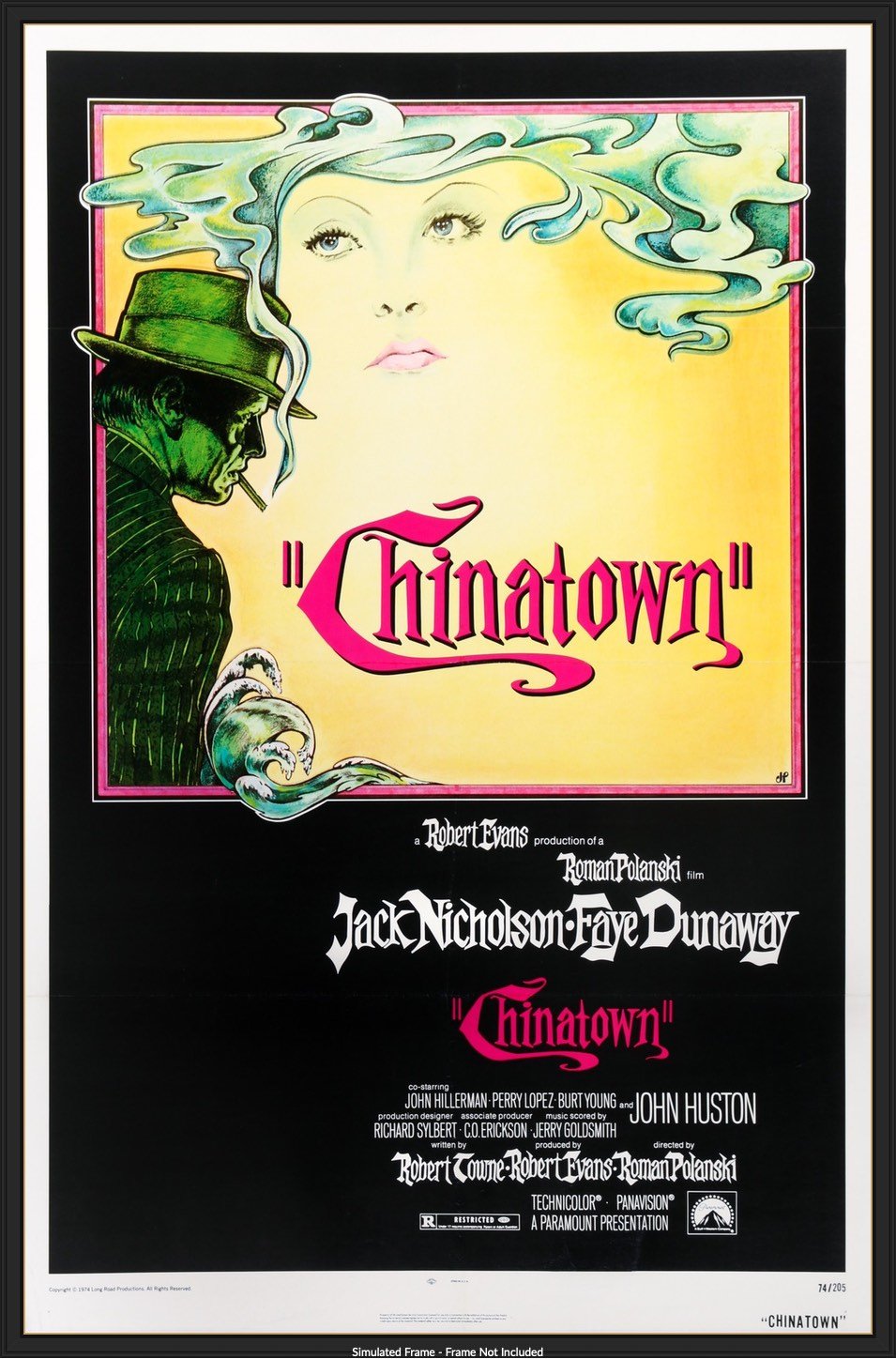
Chinatown (1974)

Written by Robert Towne and directed by Roman Polanski, “Chinatown” is one of the best neo-noirs of all time, with possibly the best script in the business. This film is immaculate in its execution, and if you’re a student of cinema, it’s required viewing. Jack Nicholson stars as J. J. “Jake” Gittes, a private investigator who stumbles upon a bizarre case that constantly ratchets up the intrigue and mystery at every opportunity. If you somehow haven’t seen this one yet, I’ll refrain from spoiling things, but just know that this film comes with my highest recommendation. It’s a biting, cynical, and staggering neo-noir that stands tall in American cinema’s past. Jake’s given a case early on in the film to investigate a potential affair between a married couple, as the first scene in the movie establishes, this is a common practice for private eyes. After he tails the husband, Hollis Mulwray (Darrell Zwerling), around town and takes notes on his activities, Jake believes he has enough evidence and brings the story to the newspapers, which ruins the man. However, after the story has been released, the real wife, Evelyn Mulwray (Faye Dunaway), arrives at Jake’s office informing the private eye that he can expect a lawsuit. Obviously, things are not as they seem. Gittes retraces Hollis’ steps and activities until he comes across several incongruities, like the fact that despite there being a drought in Los Angeles, Hollis was drowned. Curious. There’s so much more to the film and the layers of storytelling that are hiding in plain sight are grotesque, and gloriously rewarding as an audience member. Highly recommended.

*This is not meant to glorify Roman Polanski in any way shape or form. If you don’t know what he did, google it. I’m just here to discuss films.*

The Third Man (1949)

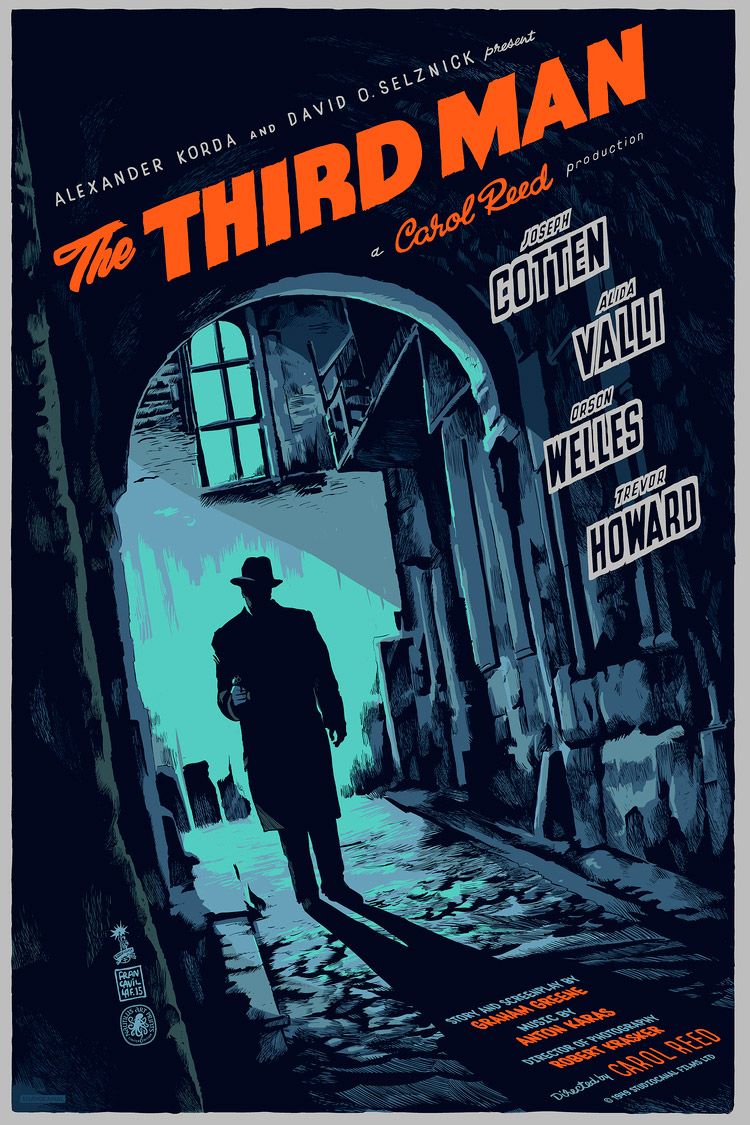
Written by Graham Greene and directed by Carol Reed, “The Third Man” is one of the finest noirs to have come from the golden age of cinema. If you’re inclined to see all of Orson Welles performances, or curious about the genre of Noirs across the board, or even just wanting to widen those international film credentials, you can’t go wrong on any of those counts with this film. Speaking of Welles, there’s a dual casting here that is one of the finest choices of cinema’s earlier eras. Joseph Cotten stars as the lead, Holly Martins, an American author of paperback Westerns who gets caught up in the crimes and mysterious nature of his old friend from their shared youth, Harry Lime (Orson Welles). Joseph Cotten and Orson Welles had worked together since the days of the Mercury Theater in New York City, since the “War of the Worlds” radio broadcast and “Citizen Kane” onward! They were longtime friends and coworkers and the fact that this film is essentially about the death of nostalgia, about the morality of doing what’s right despite your personal attachments, well that’s just brilliant emotional manipulation if you know the story of the two. The film takes place in post-war Vienna with the city being split up between the allied nations, the Americans, British, French, and Soviets. Much of the city is still in ruins and seems like it could all crumble into dust at a moments notice. Martins arrives in Vienna as he’s been given notice that his good friend Harry Lime has died, hit by a car in the street. After the funeral Martins gets acquainted in town, he’s also questioned particularly intently by Major Calloway (Trevor Howard) a member of the British Royal Military Police whom Martins mockingly calls ‘Callahan’ throughout the film. After Martins questions a couple locals who have stories that are inconsistent with the “official” details, he decides to stick around and see what comes of it. The film makes some truly unique choices, particularly for the soundtrack. The whole soundtrack is performed by one man and one instrument, the Zither played by Anton Karas. If you don’t know what that is, picture the American cartoon, “Spongebob Squarepants”. Strange right? Well, especially in the first season of that cartoon, background music was usually performed by someone with a Zither. In fact, when I was watching this film, one of my roommates returned home and had walked in from the back where he could hear the Zither music and commented before entering the living room that “Oh hey, you’re watching Spongebob?” and he was quite surprised to see a black and white noir in its place. Anyways, the cinematography and lighting also hold fascinating calibrated choices like shooting Vienna, mostly, in extreme Dutch angles, especially once the footchases of the last half of the film begin. The lighting maintains an expressionist quality that creates an atmosphere that envelopes you into the mystery as the film goes on. The back half of the film is where the best cinematography lives in my opinion. The manhunt for Harry Lime in the streets and sewers of Vienna with seemingly hundreds of pursuers feels like a fever dream. A fuller analysis of the film may be required later on at some point, but for now, trust me, it’s pretty great. Highly recommended.

Le Doulos “The Informant” (1962)

I’ve already reviewed this film on the blog but I recently picked up a physical copy and gave a it a rewatch. The first time around I remember feeling somewhat engaged and entertained, but much like my first viewing of “The Hateful Eight”, I wasn’t extremely into it based on the morality of the characters (Ironically, “Eight” is now one of my favorite Tarantino movies). Granted, now that it’s been almost exactly a year since that initial watch and review (linked below this for reference), I knew the twists that were coming, and instead got lost in how the film works perfectly at making you assume one set of events is taking place, when in reality you’re only seeing bits and pieces of the truth. I was paying much more attention this time around to the camera movements and character work on display. I hadn’t even noticed the eight and a half minute one-take shot of Silien (Jean-Paul Belmondo) being interoggated by cops that expertly displays Melville’s skill at mise en scène. This may be my favorite non-American Noir, it’s one that I will be returning to anytime a lampost glows in the fog, or when shadowy figures fade into obscuring darkness. It’s an excellent movie and I highly recommend giving it a watch!

https://spacecortezwrites.com/2020/02/20/old-school-review-le-doulos-1962/

Le Silence de la Mer “The Silence of the Sea” (1949)

Written by Jean-Pierre Melville, adapted from the short story by Vercors, and directed by Melville, “Le Silence de la Mer” is the story of an uncle (Jean-Marie Robain) and his niece (Nicole Stéphane) who must oblige an S.S. Nazi officer, Werner von Ebrennac (Howard Vernon), while under their occupation in Paris, 1941. Having seen many of Melville’s other later films, I anticipated the origins of his style that’s all over the later Noir films- but this being his first film, it was quite different from those. While Melville would often adapt literature for his films, this one was a unique choice because this story was one that was frequently passed around by French Resistance members during the occupation, and it was penned by an infamous French author known only by the pseudonym “Vercors”. As Melville was also a member of the Free French Forces during the war, he was an informed choice to say the least. Upon Werner von Ebrennac’s arrival, both L’oncle and La nièce agree to live as though he had never arrived. A vow of silence between them. Which is a really fascinating choice because of how it affects the S.S. officer over the course of the film. He considers himself an intellectual after all. He’s well read, a lover of the Parisian arts, and a firm believer in Germany’s cause- that is until he finds evidence of the cruelty being committed against the Jews, and it breaks something inside of him. It’s a unique film regarding the Nazi occupation of Paris, and I highly recommend giving it a watch.

Les Enfants Terribles “The Strange Ones” (1950)

Written by Jean Cocteau, adapted from Cocteau’s own novel, and directed by Jean-pierre Melville, “Les Enfants Terribles” is, as the translation of the title would indicate, a strange one. Nicole Stéphane returns after the incredible “Le Silence de la Mer” to play Elisabeth, one half of the film’s focus. It’s almost as if Melville offered her the role due to “the niece” only having a handful of lines in his first movie, as this role is the exact opposite in tone. Paul (Edouard Dermithe) and Elizabeth are indeed strange, they spend most of their time in their room with each other inventing all sorts of mind games, pranks, and a full on display of Freudian psychology at work. Elisabeth (and her brother for that matter) are constantly talking almost for the entire runtime. The two are always talking over each other, at each other, and against anyone unfortunate enough to dare walk into their den of treachery and incestuous entanglement. Yes, it’s that kind of movie. It’s uncomfortable and weird, but hey, if you’re a Melville purist, it IS worth a watch for the camerawork at the very least. Out of all Melville’s films that I’ve seen so far, this one was the hardest to sit through. Not recommended.

L’aîné des Ferchaux “Magnet of Doom” (1963)

Written and directed by Jean-Pierre Melville, based on the novel by Georges Simenon, “Magnet of Doom” is a road movie of sorts that has it’s merits, but was ultimately one of Melville’s lesser films for me. The film can be painstakingly slow at times, and while that’s a criticism that could be leveled at most of Melville’s work if you’re an impatient film watcher, I always felt as though his other films could get away with it purely out of their inherent mystery, intrigue, and atmosphere. This films stars Jean-Paul Belmondo, who always makes interesting choices as an actor, and Charles Vanel, a prominent French actor and director who appeared in over 200 films during his 76 year career. In the film, Belmondo plays Michel Maudet, a failed Boxer who’s broke and penniless looking for work. Which just so happens to be perfectly timed for the role of personal secretary for Dieudonné Ferchaux (Vanel) a senior executive of a large bank in Paris whose criminal past has come back to haunt him. Thus he’s in a rush to ensconce to South America by way of North America. So Michel’s hired on the spot and they fly out to New York, with Michel leaving his girlfriend behind without telling her goodbye, or even acknowledging her. Both men seem to be of dubious morals. The two just need to make a stop at Ferchaux’s New York City bank to withdraw the rest of his funds and then off to Venezuela! Obviously, it’s not going to be that easy. The bank can’t move that much money immediately so Ferchaux gets antsy and they decide to drive to New Orleans in the meantime where they will have the money wired to them, not wise to stick around for an extradition when you know it’s coming. Thus we get an American road trip with these two prominent French actors of their time. The movie has value in how the audience is given an outsider’s perspective on American culture, scenery, and variety of lifestyles. The film also pays homage to “Citizen Kane”, “The Set Up”, and the road movie genre overall. When it ended with one character nonchalantly disregarding the dying words of the other, I was almost glad it was over. That might seem harsh, but this one did not engage me as much as I would have expected from seeing many of Melville’s other films. Not entirely recommended.

Mother (2009)

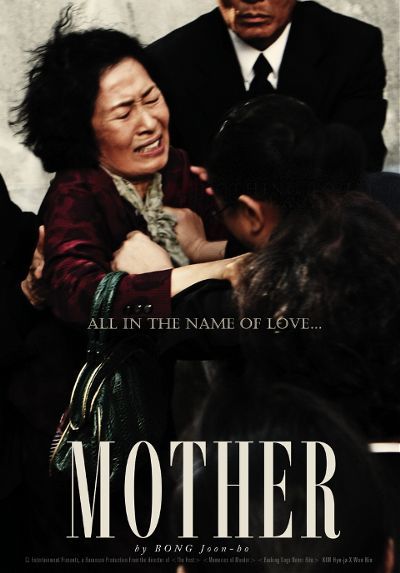
Written by Eun-kyo Park and Bong Joon Ho, from a story by Bong Joon Ho, and directed by Bong Joon Ho, “Mother” is a superbly deceptive thriller that toys with your expectations in brilliant fashion. In a town near the countryside in South Korea, a watchful Mother (Hye-ja Kim) runs a small herb shop while keeping her adult son, Yoon Do-joon (Won Bin), safe and out of trouble as much as possible. Do-joon isn’t exactly ‘all there’ when it comes to mental capacity though, which is exactly how he ends up getting wrapped up in a murder mystery as the main suspect. He’s obviously taken advantage of by the local police who seem pre-occupied with moving on to their next case rather than doing the hard investigative work to find the real killer of Moon Ah-jeong (Hee-ra Mun), an exceptionally unlucky young schoolgirl. With the local police content with their passive scapegoat who signed his own confession early on citing, “Well, if I really did it, shouldn’t I be held responsible?” Thus once our titular Mother feels she has exhausted all legal and formal methods of uncovering the truth, she sets out on her own to solve the murder mystery and absolve her son of his alleged crimes. I’ve seen several of Bong Joon Ho’s films now, and while I’ve generally enjoyed his work, this is the only film besides “Parasite” (https://spacecortezwrites.com/2020/01/30/review-parasite/) that has struck me so profoundly. I still have yet to see “Memories of Murder”, which is considerably harder to track down in physical form than his more recent films (Fret not, a physical edition from the Criterion Collection is on the way! https://www.slashfilm.com/memories-of-murder-re-release/ ), but this is far closer in tone and quality to “Parasite” than his work with American actors in “Snowpiercer” and “Okja”- both of which were enjoyable and solid films, though this rises above them. Highly recommended.

I Saw The Devil (2010)

Written by Hoon-jung Park and directed by Jee-woon Kim, “I Saw The Devil” is an extremely violent revenge tale that masterfully tackles genre sensibilities with a mind for the consequences of revenge and what it does to body, mind, and soul. This film was recommended to me as a “South Korean revenge movie” and while that may have been accurate at base level, because it certainly IS about revenge, it’s also so much more than that. I did not expect this movie to grip me so viscerally. I have to say right away that if you are not a fan of bloody violence, of eye-covering, wincing-while-watching violence, this one may not be for you. Admittedly, I’ve never been a fan of that sort of thing unless it’s gloriously over the top in it’s depiction of violence, like what Quentin Tarantino does for example, or even in something as ludicrous as “Dead Alive”. Though, even I got through it because it was that engaging. That being said, the story of eye-for-an-eye violence here is eerily captivating. So, without ruining the plot for you, this movie primarily follows two men and their subsequent feud through grief, hatred, and a callous disregard for life, family, and everything that makes us human. Jang Kyung-chul (Choi Min-sik) is our villain, and you’ll know why almost immediately once the movie begins. He’s a murderous serial killer with brutal efficiency who performs disgusting rituals with his victims. His luck begins to change one day when he captures and kills the fiance of Kim Soo-hyeon (Lee Byung-Hun), an extremely capable security agent of sorts. Once he begins to track down Jang Kyung-chul, he, along with his deceased fiance’s father (who just so happens to be the Chief of Police in their area), decide not to outright kill the man but to make him suffer unspeakable pain. From there the film boomerangs between the power struggle of both men, each of whom gets increasingly more vile with their violent crusade against each other. It’s intense, bloody, and despite it’s genre trappings it actually does have something to say about revenge and what it does to us. Definitely recommended!

*If during your read of this edition of the Rapid Fire Reviews you thought to yourself “Wow, there’s a lot of old French movies in this one.” That’s because I was in the midst of reading “Jean-Pierre Melville: an American in Paris” by Ginette Vincendeau and writing a review of the book for another website called http://www.filmsfatale.com which I highly encourage you to seek out! My Melville piece should be up soon, but I’ve also already begun my writing over there with the article “What if: Jim Carrey and Adam Sandler Were in a Movie Together?” (https://www.filmsfatale.com/blog/2021/1/29/what-if-jim-carrey-and-adam-sandler-were-in-a-movie-together?rq=Adam%20Sandler) I’ll still be writing here in my free time, but give Films Fatale a look, they’ve got many, many, excellent articles and interviews on the site, check it out!

film

Old School Review: Francis Ford Coppola’s “The Conversation” (1974)

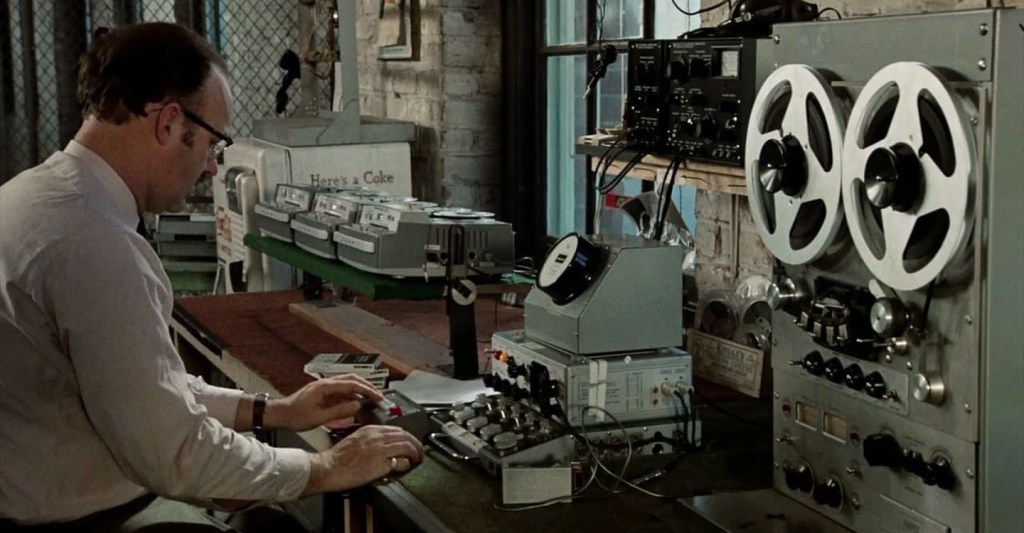
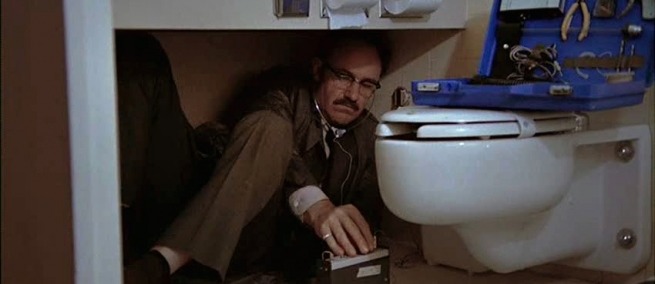
Written and directed by Francis Ford Coppola, “The Conversation” is a paranoia-thriller surrounding a man within the surveillance industry, released fittingly during the height of the Watergate Crisis. The private surveillant in question is Harry Caul (Gene Hackman), and we first encounter him in the field, covertly recording audio of a conversation between a young couple (Frederic Forrest and Cindy Williams) out for a walk. The two seem innocuous enough as they circle through the crowded plaza, we only get bits and pieces of their conversation as Harry and his small team use a variety of methods to capture their exchange. This film has a simple, but taught, premise and while it may be a slow burn as far as the pacing of the story unfolding- it is one wrought with tension, analysis, and questioning. It’s also a small miracle that this film is as good as it is because it was made and released inbetween Coppola’s first two “Godfather” films!

After Harry begins to analyze the audio back in his lab alongside his partner in the business, Stan (John Cazale), he uncovers a possible motive for his client wanting this information- with deadly implications. As a private, small time, surveillant Harry rarely knows intimate knowledge of who he’s tracking or why somebody wants them to be followed. He only knows the target and any knowledge relevant to getting information out of them through stealth and carefully applied technologies. As things escalate Harry finds himself between two sides of some high level corporate espionage, driven to prevent the murder of the young couple he was hired to tail. Harry Caul is an interesting character, especially for Gene Hackman after winning the Best Actor Oscar in “The French Connection” just two years prior. Here Hackman turns in Detective “Popeye” Doyle’s bombastic grit for a more measured and inward determination within Harry Caul. Harry’s a quieter detective, one whose problems are more internalized than Doyle’s.

Which leads me to the only real crux of an issue that I have with the film. After visiting a surveillance convention and meeting up with several acquaintances, Harry brings them back to his lab for a social drink. Up until this point in the film Harry has exhibited a very careful and fairly paranoid persona, he doesn’t let people into his life and he hides his secrets well. He’s even known by the others at the convention to be a shrewd businessman by making his own tech and never sharing his blueprints or prototypes to anyone. So, why has he invited a group of people to his working lab where his audio reels and secretive methods are hidden? After some deliberation, I’ve come to the conclusion that there are a couple beats and one earlier scene that showcase how conflicted Harry Caul really is when it comes to social interactions and the nature of his relationship with intimacy. He seems to be a character that craves camaraderie and attention, but he also seems incapable of cultivating it in his own life. This character flaw is the only reason that I can fathom as to why he would loosen his standards so far as to let an unknown woman close to him and his secrets- which she takes full advantage of. Other than this scene, the movie feels flawless in Coppola’s hands- and most of it is as far as I can tell.

“The Conversation” is an excellently poised film within Coppola’s 1970’s filmography. Squeezed inbetween his first two “Godfather” films and followed up by “Apocalypse Now” in 1979, this was an excellent decade for the director. Rarely do I recommend a film based on it’s technical aspects- but even if the plot or performances didn’t catch your eye then maybe the audio and editing skill on display will, they’re absolutely fantastic for the film’s time. As a plus, a pre-Star Wars Harrison Ford makes an appearance as a villainous corporate underling! What’s not to love about that?

Final Score: 1 Mime

film

Old School Review: The “Lone Wolf and Cub” Film Series (1972-1974)

Recently I began watching a Samurai film series from Japan made in the early 1970’s called “Lone Wolf and Cub” based on the hugely popular Manga of the same name. I’ve been slowly wading into the popular Samurai genre of Japanese films for a little while now. I started, as most Americans do, with Akira Kurosawa in “Yojimbo” and “Sanjuro”, before plunging into the famed director’s sword brandishing epic “Seven Samurai”. From there I found “The Sword of Doom” partly because that’s a great title- but also because it starred Tatsuya Nakadai (Who gave memorable character appearances in both Yojimbo and Sanjuro) as the lead, with the legendary Toshirô Mifune as a revered master swordsman in a minor, but powerful, role. All of these films have reviews here on this blog, and they left me wanting to discover more! One day after seeing a few reputable cinephiles on twitter take note that the series had landed on the Criterion Collection’s streaming service, I knew I had to check it out. It must seem as though I’m plugging this streaming service all the time- but it is only because I often find films there that I cannot find anywhere else, and as a student of the medium- I always need to see more movies. Always.

This image has an empty alt attribute; its file name is lonewulf1.jpg

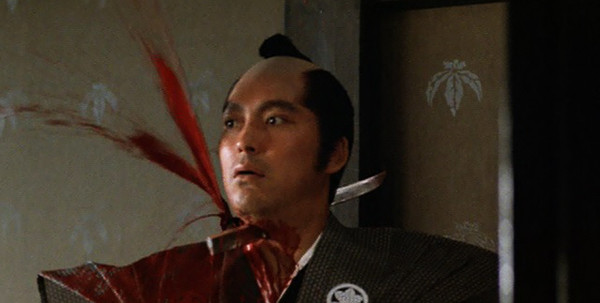
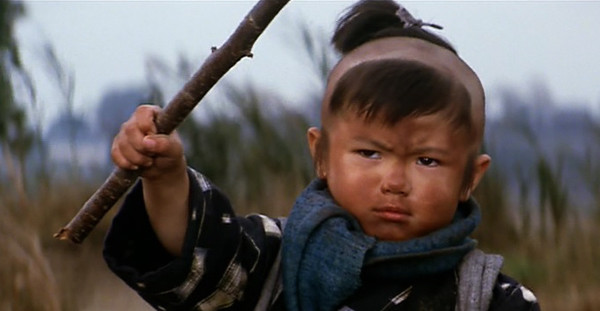
Rather than go through each film and review them individually, it made more sense to sum up the series as a whole and what made it great. Though, for your convenience I’ve listed each film’s title and year of release below this piece. Throughout these six films the most singular and significant factor that makes them stand out from the rest of the genre is the fact that Itto Ogami (Tomisaburo Wakayama) roams the vast Japanese countryside with his infant son, Daigoro (Akihiro Tomikawa) by his side. In the beginning of the first film, we see Ogami in his role as the shōgun’s executioner, mercilessly cutting down an incredibly young daimyō (Essentially a Lord in the feudal sense, a form of royalty within Japan’s Edo period. Forgive me if this is inaccurate, I’m only going by slight internet research and how this role is depicted within the films). This is important as it sets this world of cinema apart as a particularly brutal one, not even children can escape with their lives. It also serves as the assumed revenge for Ogami’s wife who was killed by three ninjas afterwards. It’s a bit more complicated than that, but it boils down to the “Shadow” Yagyū Clan framing Ittō for treason and subsequently taking over his executioner’s post. Ogami quickly gathers his son Daigoro and offers the toddler a choice to avoid the hardships of their uncertain future by death or to join his father “On the Demon path to Hell”. Which is, essentially, to wander as assassins-for-hire as they seek vengeance by hunting down all members and known associates of the Yagyū Clan. Obviously, Daigoro accepts the ronin lifestyle.

Holy Mother of Violence!

The hook of the series, for me anyway, is the absolutely insane graphic violence that is on display throughout these films. I’m fairly certain that there isn’t a film in the bunch that doesn’t have at least five severed limbs from anyone foolhardy enough to challenge Ogami. From the candy-cane red blood that sprays from the Wolf’s victims to the inventive and bizarre ways in which he has outfitted Daigoro’s baby cart for maximum carnage- the series is fundamentally soaked in blood and corpses. The villains that seek to destroy Ogami and Daigoro get cartoonishly creative with their various techniques as the films progress. From hiding in walls and stone barriers to literally writhing through the dirt and snow to pursue the Lone Wolf and Cub- these enemies can seem unending at times, though we as the audience know that Ogami’s mastery of his Suiō-ryū swordsmanship is unparalled! These films could be categorized under exploitation within the Samurai genre, and there is plenty to be said about the snap-zooms and bad guys giving whole monologues with swords jammed in their skulls, but there’s enough artistry beyond pure shock and awe that propels these films into a category all their own. What other films series so values extreme bloodletting alongside such strong familial bonds?

Silence and the poetic nature it instills

The use of sound in these films is uncannily serene at times. Depending on the scene, these films can have either a melodic score to accompany Ogami strolling with Daigoro’s baby cart, or a jazzy upbeat tempo to fit the pace. Don’t get me wrong, I love the scenes when the 1970’s funk kicks in to accompany Ogami’s blending of bad guys, but if you’re paying attention you’ll begin to notice the times that have the least noise weigh the most thematically. Below this article I’ve left a link to a video analysis of how these films utilize silence effectively, and I urge you to check it out. Often when Ogami is stoically seated at altars and shrines, the score takes a beat or two back to meditate and breathe inbetween the chaotic fight scenes. The best use of silence in each film, in my opinion, is at the beginning of Ogami’s one-on-one duels with the central villain of the film. Upon drawing swords, each warrior takes his or her stance and waits, calculating, taking only slow measured movements. It is the calm before the storm. It heightens the tension from some of the sillier one-versus-many scenes’ over the top violence and allows a moment of uncertainty to slip in. Who will strike first? Will Ogami come away unscathed? Or will he finally meet his match? The films often put a lot of technical precision, craft, and care into their fight scenes with excellent choreography, but the biggest diversion from this tactic in the series lies in the third film “Baby cart to Hades”. It’s a far slower film than the rest and focuses more on the ulterior dimensions of the warrior spirit within Ogami. Deep within the second act Ogami is forced to endure a ridiculous amount of torture that would make Mel Gibson proud. Through his restraint and self control, he defeats his enemies. These things help to elevate the film series beyond it’s grindhouse attractions.

Cinematography

From thick wooded forests to sweeping sand dunes and even snow topped mountains, the “Lone Wolf and Cub” movies put a heavy emphasis on the locations that our two assassins travel through. Visually, location is front and center where the camera is concerned. Each film does it a bit differently, but whether through differing camera techniques or inventive framing, there is always a sense that the world these characters inhabit is fully realized, if a bit fantastical. I particularly appreciate any scenes that immerse themselves in mood or when depth of landscape is considered. The fight scenes themselves are constructed for the most visceral and eye-popping blood splatter, and it’s a joy to see Ogami take on literal armies of opponents at times. Throughout all the spraying blood, dubiously performed monologues, and patient wanderings through varying landscapes, the cinematographers of these films have thoroughly earned their place in celluloid history.

The Elephant in the room…

While these films are highly entertaining and culturally significant, we must take a moment to acknowledge the sexual acts of violence against women. I am no scholar of Japanese society, especially of any time period or place, but these films do depict several instances where women are taken advantage of. Maybe it’s more off-putting as an American because what we’re shown is a bit more explicit than our legacy of films, at least in the portrayal of the sexual assault. The films explicitly exist in the pulpy and exploitative arena of cinema- so I feel that it’s just wise to know that these scenes exist and could put some viewers off from watching the rest of the films. Though, to be fair, Ogami is never the perpetrator of these violent sexual acts, the villains here tend to be the worst of society. So, maybe making them out to be monsters of every variety was the intention to get audiences on board with Ogami’s particularly violent dispatching of such vile men? So, it can get ugly at times, but, hey people are a mixed bag themselves right? If you can get past these instances of vulgarity, then I would highly recommend giving these films a watch!

Final Score: 6 films, 6 circles of Hell

*Below I’ve listed a couple links to more information on these films that I quite enjoyed and found to be rather informative. If you want to know more about these films, check it out!

https://www.criterion.com/current/posts/4287-samurai-and-son-the-lone-wolf-and-cub-saga

Sword of Vengeance(1972)

Baby Cart at the River Styx(1972)

Baby Cart to Hades (1972)

Baby Cart in Peril(1972)

Baby Cart in the Land of Demons(1973)

White Heaven in Hell(1974)