film

25 days of Zatoichi The Blind Swordsman: #23 Zatoichi At Large (1972)

Writer/Director: Kinya Naoi (2nd film)/ Kazuo Mori (3rd film)
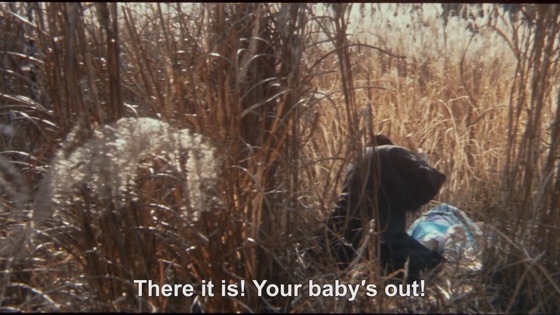
Summary: “Zatoichi at Large” begins with the blind swordsman helping a wounded woman deliver a baby. She gives him the name of the baby’s father and the village where he should be just before she dies, and at once Ichi has stepped into another familial drama that will consume most of the runtime. As Ichi heads to town he’s followed by another small boy that likes to throw rocks directly at his head. When he gets into town looking for the father, Ichi bumps into the more interesting storyline in the film (in my opinion). When a young man jokingly brings Ichi to his home for a few Mon (small currency), the young man’s father, Tobei the Deputy Constable (Hisaya Morishige) directs him to the only known relative of the newborn’s father, his sister who works at an inn. Later we discover that Tobei, now an old man, had once driven a deeply rooted Yakuza clan from their town in his heyday through humanistic methods driven by a need to help others. And when he witnesses Zatoichi handily shaming the new Yakuza threat in the form of Boss Tetsugoro (Rentaro Mikuni) and his band of ruthless underlings, the old Deputy’s eyes widen, and a smile begins to form on his face- impressed with the blind Masseur’s techniques. There’s a few moments where misinformation and hasty reactions threaten to turn everyone Ichi had helped against him, but through shear intimidation and cooler heads for some, he gains the upper hand and saves the town from Tetsugoro’s wrath! Oh! There’s also another ronin challenger in this film, though he’s unique in that he witnesses Ichi’s skill and is so impressed that he commits to fight Zatoichi in the future, no matter what. The ronin even saves Zatoichi from being bound by multiple ropes, just so he can get that fight- and he does get that fight in the final shot of the film with a quick but visceral kill. It’s a fairly standard Zatoichi film in it’s structure, but it’s executed well and has enough style and panache to merit it’s worth.

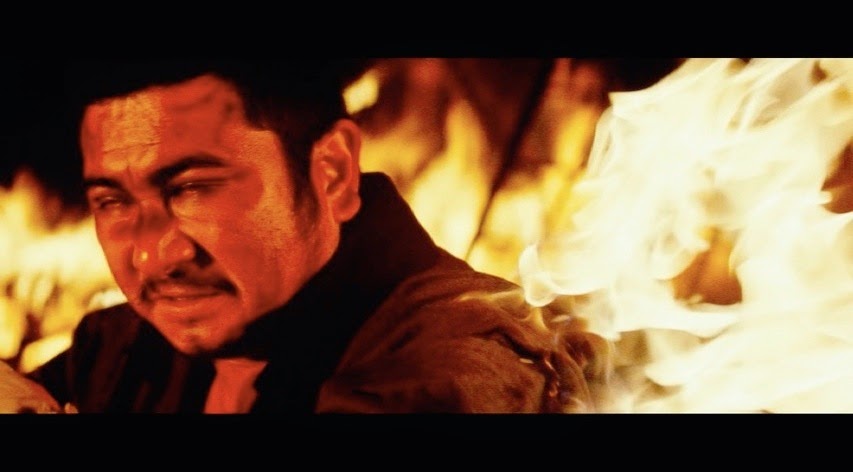
My favorite part: Honestly, my favorite parts of this film were some of the unique set-pieces and the imagery of a few scenes. The dancing monkeys in one of the villager’s rehearsals for Boss Tetsugoro to see if they qualify to perform at the local festival was silly and unique for the series. Though, admittedly my favorite visual came from the end fight sequence where Zatoichi is fighting Boss Tetsugoro’s men on a raised platform that’s been covered in lantern oil. Initially it’s a friction-less and chaotic scramble for stability while fighting, but the platform is eventually set aflame with only Zatoichi trapped amidst the fire. When he finally gets out of the blaze, he’s still on fire and smoldering with intensity as he walks towards Tetsugoro, striking demonic fear into his eyes. It was a fun visual that played well into his own previous myths about escaping from Hell just to strike down injustice.
Why it’s great: While this film wasn’t exactly a knockout within the series, it doubles down on everything that has worked in previous films, with a twist of style thrown in for good measure. “Zatoichi at Large” works because the filmmakers, production crews, and actors all know what’s proven to resonate with their audiences by now. Twenty-three films in, the bumps in the process have been mostly smoothed out by now. Though, I tend to prefer the Zatoichi films that take chances and swing big- they may not always land- but I respect them for trying something new rather than totally relying on the proven formula, even though I did rather enjoy this film.

Final Score: Two Performing Monkeys
film

25 days of Zatoichi The Blind Swordsman: #18 Zatoichi and The Fugitives (1968)

Writer/Director: Kinya Naoi/Kimiyoshi Yasuda (4th film)

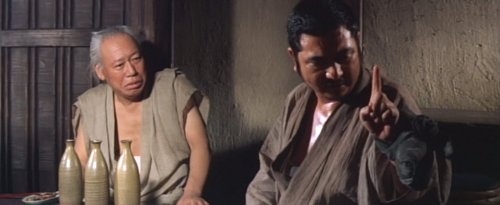
Summary: The Zatoichi films may all share a sense of tragedy among their various plots and journeys, but “Zatoichi and The Fugitives” is a particularly dark entry in the series. As it usually goes, Zatoichi happens upon a small rural town, this one with a dedicated and honest doctor working amongst the silk farmers in the form of Takashi Shimura as Dr. Junan. As you may have expected by this point, yes, there’s corruption by the local authorities here too, but with the added layer of indentured slavery in the local silk mills to pad the villain’s resume. The driving force behind the structure of servitude is Boss Matsugoro (Hosei Komatsu), who’s ongoing racket at the mill gets exponentially worse when he’s forced to incorporate the fugitives into the mix. These villains were great throughout the film, initially Zatoichi bumps into them at the inn he’s staying at, the owners request his masseur services for a rowdy bunch and it turns ugly quickly. These villains aren’t even Yakuza, just a bunch of heathens who were almost slaughtered early on. Luckily enough for them, Ogano (Kyosuke Machida) stepped in and urged Zatoichi to leave. His comrades defiantly brush aside his warning that they’d be dead if he hadn’t arrived just then- for he had witnessed Ichi’s skill earlier on the road. This happens a couple more times before Zatoichi is given full justification to unsheathe his sword. Both Zatoichi and the fugitives leave the inn that night, but while Zatoichi is invited to stay with Dr. Junan, the fugitives pressure Boss Matsugoro to let them hide out until the provincial inspector passes through. Knowing that he’s got quite the illegal setup going, they use this information to persuade Matsugoro to let them stay until the coast is clear. While a few of the fugitives have personal scores to settle with Zatoichi, he had killed two blood brothers at the beginning of the film when they harassed him on the road, Ogano keeps them from getting themselves killed more than once. One of the fugitives is skilled with throwing knives and he offers some of the more unique clashes with Ichi because of this- thankfully for him, the one time Ogano wasn’t around Zatoichi was feeling a bit grateful and only embarrassed him greatly. Eventually, after Zatoichi has freed a young girl from the mill and shamed Boss Matsugoro in front of his men, Ogano reveals his importance to the story. He had picked this small town in particular, not only to hide from the inspector’s eye, but also to come home and see his sister Oshizu (Kayao Mikimoto) and his father, the good doctor Junan. This scene was easily one of the most powerful in the whole movie and it brought any notions of a ‘larger than life’ narrative and shrunk it down to something eminently relatable, the familial drama. Outside of the country doctor’s household, tensions begin to mount. Matsugoro, feeling the need to reinstate his power due to his bruised ego, steps up his brutality on the townsfolk and cracks down on a local cocoon market. When the village headman defends the rights of his people and vocally challenges the boss by saying he’ll go above Matsugoro’s jurisdiction and take this issue straight to the magistrate, the embattled Matsugoro calls in his favor from the fugitives to kill the headman. The fugitives don’t just kill the headman, but the entirety of his household in a bloody massacre. Things continue to escalate until Zatoichi’s put into a desperate situation when all six of the fugitives attack him at once with a variety of weapons, he barely escapes back to the doctor’s house, but there’s one fugitive who knows where a wounded warrior would go in desperation. In one of the more climactic endings, at least since the second film in my opinion, Zatoichi fights Ogano to the death just outside the doctor’s home. With his cane sword sheathed and Dr. Junan looking on in shock and horror, Zatoichi wanders off, bloodied and battered.

My favorite part: This film is a particularly dark one. It’s got Zatoichi at his most desperate (so far), when he’s shot by one of the Fugitives! He even digs out the bullet with the tip of his blade like so many American action stars would do roughly fifteen years after this. This film has to be the bloodiest one of the bunch that I’ve seen, we even get a limb sliced off an unfortunate villain. The villains here are so dastardly that the film wastes no tears for their fate, enslaving a small town in their silk mills and refusing to let the besieged rest when they’re ill- yes, the fugitives and local government definitely got what was coming to them. There’s also the added dramatic weight of Zatoichi describing how he forgot what colors were like to him, initially a sacred memory to pull from, but eventually they too faded into darkness. Drawing out further, crushing, pain for the blind swordsman is what this series thrives on.

Why it’s great: “Zatoichi and The Fugitives” is a great expansion on the evolution that began with “Zatoichi the Outlaw”. This entry in the series wisely narrows the focus on a small country doctor and his family, while avoiding unnecessarily complicated side stories. This allows for the story reveals to hold more narrative power, and the danger that Zatoichi must stand against in the face of injustice to be that much more resonant. The presence of Takashi Shimura, known for his many roles in the films of Akira Kurosawa, does wonders for the film’s emotional weight, the “Ikiru” actor knows how to play emotionally and psychologically battered men to great effect. Seeing the man convey deep sorrow with class and subtlety adds a great deal to Shintaro Katsu’s oeuvre of Zatoichi films.

Final Score: 1 surprise snake