film

25 days of Zatoichi The Blind Swordsman: #19 Samaritan Zatoichi (1968)

Writer/Director: Hisashi Sugiura & Kiyokata Saruwaka (2nd film)/ Kenji Misumi (5th film)

Cinematographer: Fujio Morita (I felt the need to include the Cinematographer again here because this film is gorgeous, there are some inventive shots, and the use of colors overlaid on certain shots to characterize Osode’s feelings and intentions was a fascinating choice)

Summary:

Zatoichi is hired by local Yakuza boss Kumakichi (Akira Shimizu) to “be a witness” to his men as they try to retrieve money owed by a young gambler. When Kumakichi’s men fail to kill the debtor, Zatoichi offers his assistance. Ichi even gives the man an opportunity to get out of this alive, but he rejects it, and calls out from the darkness in measured panic that if he wants to kill him, he must come and get him. Guided by the old Yakuza code, Zatoichi accepts his offer and descends into darkness, only to have the debtor streak from the shadows and be cut down by Ichi in seconds. Moments later, the debtor’s sister arrives with the money he owed for his life and Zatoichi is again met with the consequences of his violence. When Osode (Yoshiko Mita) sees her brother’s body she throws the blood money at their feet crying out that “You have your money, now give me back my brother!“. Merely a moment later when the boss’s men collect the money and grab Osode anyways, Zatoichi steps in, sensing foul play, and protects her from the local government’s grasp for the majority of the film. Throughout the film, Osode’s relationship with Zatoichi becomes more complex than usual. She sways between admiring Ichi’s skill and an urge of overwhelming grief to get vengeance for her brother. Osode knowingly admits in one scene that if it weren’t Ichi, her brother would have met the cold steel of a sword sooner rather than later anyways. However, she also tries to kill him in one scene and in another as she’s watching the blind swordsman win a challenging carnival game she has nightmarish fantasy flashes of his same quick movements transferring to how she imagines that he killed her brother. It’s a series of fascinating character choices for Osode, and I appreciated the depth they brought to her and the story as a whole. There’s also the power dynamics between boss Kumakichi and inspector Sosuke Saruya (Kô Nishimura) which brought great tension to their scenes and excellent character moments from both actors. I didn’t expect Kumakichi to be as outwardly rebellious as he eventually becomes! There’s also Yasaburo Kashiwazaki (Makoto Sato) as the ronin challenger of this film, though far more of a sociopath than the usual character archetype seen in previous films. In fact, I’d say that his fight with Zatoichi at the end is one of the best duels in the series, though the fight at the end of “Zatoichi Challenged” still ranks as the best in my opinion at this point. This is also the first time we see Zatoichi truly represented as the gangster that he’s often referred to. He’s still concerned with the greater morality of life and death scenarios, but he seems less concerned with things he used to point out to other Yakuza- like cheating at gambling with weighted dice. Though he’s probably weighed the amount of times sighted people have tried to trick or hurt him over the years and figured some light cheating for a few Ryo wouldn’t hurt.

My favorite part: Zatoichi gets a partner swordsman in the form of Shinkichi (Tatsuya Fujioka) who helps the blind swordsman protect Osode from imminent danger. It was great to see Zatoichi partake in some camaraderie without that character dying, or deceiving Zatoichi, or anything bad at all really. Shinkichi’s scenes with Zatoichi were pitch perfect blending comedy, tension, and thrilling fight sequences altogether! It was a simple friendship that bookended the film and I was happy to have it, though I was worried for Shinkichi’s life nearly the entire time he was onscreen.
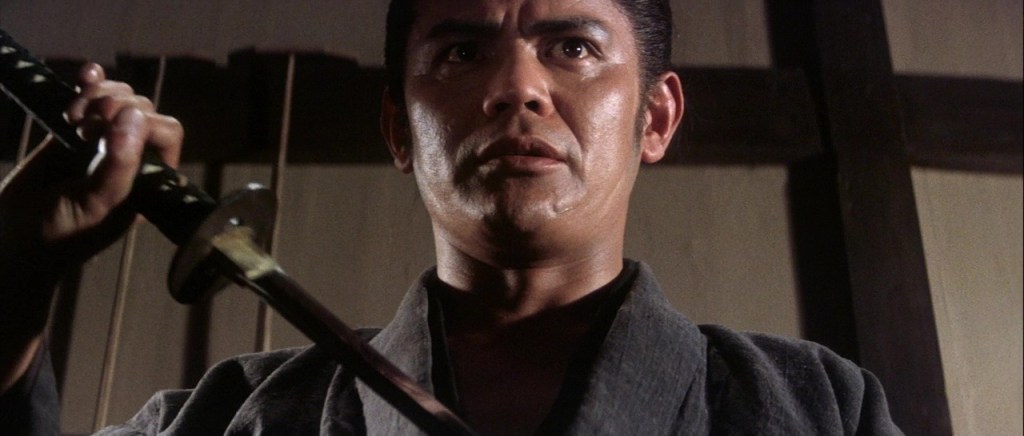
Why it’s great: This film is another excellent argument for Kenji Misumi’s incredible skill as a Samurai film director. I’m not sure if it’s just the choice of lenses, cameras, or the specific cinematographers that Misumi prefers to work with, but his films look amazing, blending intense close-ups with beautiful wides for fights and landscapes. This entry in the series continues the wonderful evolution, and in my opinion elevation, of not just the world of Zatoichi- but of the character himself. Time has waned and aged the blind swordsman several ways, he may be wiser to the trickery of everyday villains, but his mood seems to have been darkly affected as well. He’s a bit colder to people, his idiosyncratic laugh feels more knowing, and it feels earned after all this time. How could someone who’s experienced a life like Zatoichi’s, not become a bit numb to the trivial matters of life?
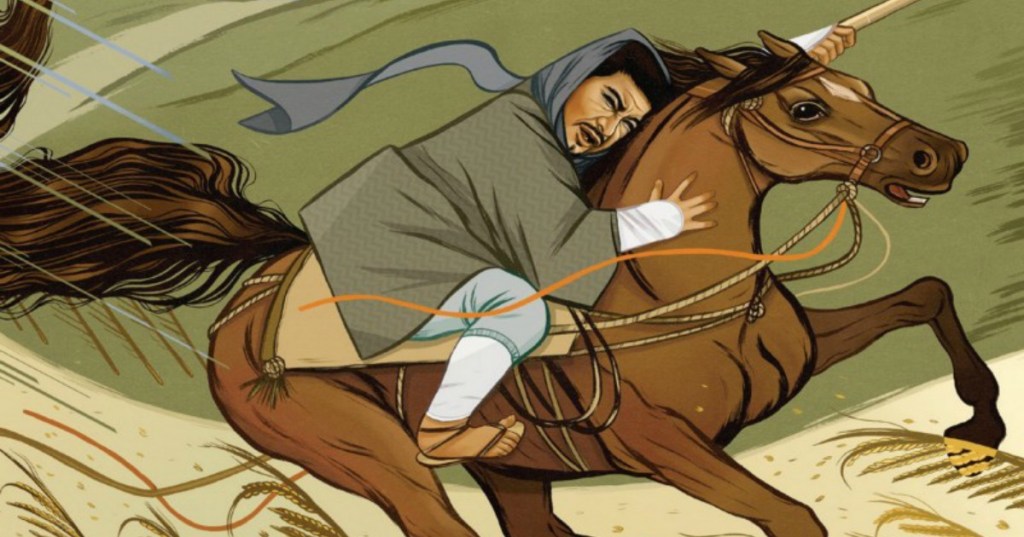
Final Score: 1 Dynamic Chase Scene on Horseback!
film

Old School Review: “The Bad Sleep Well” (1960)

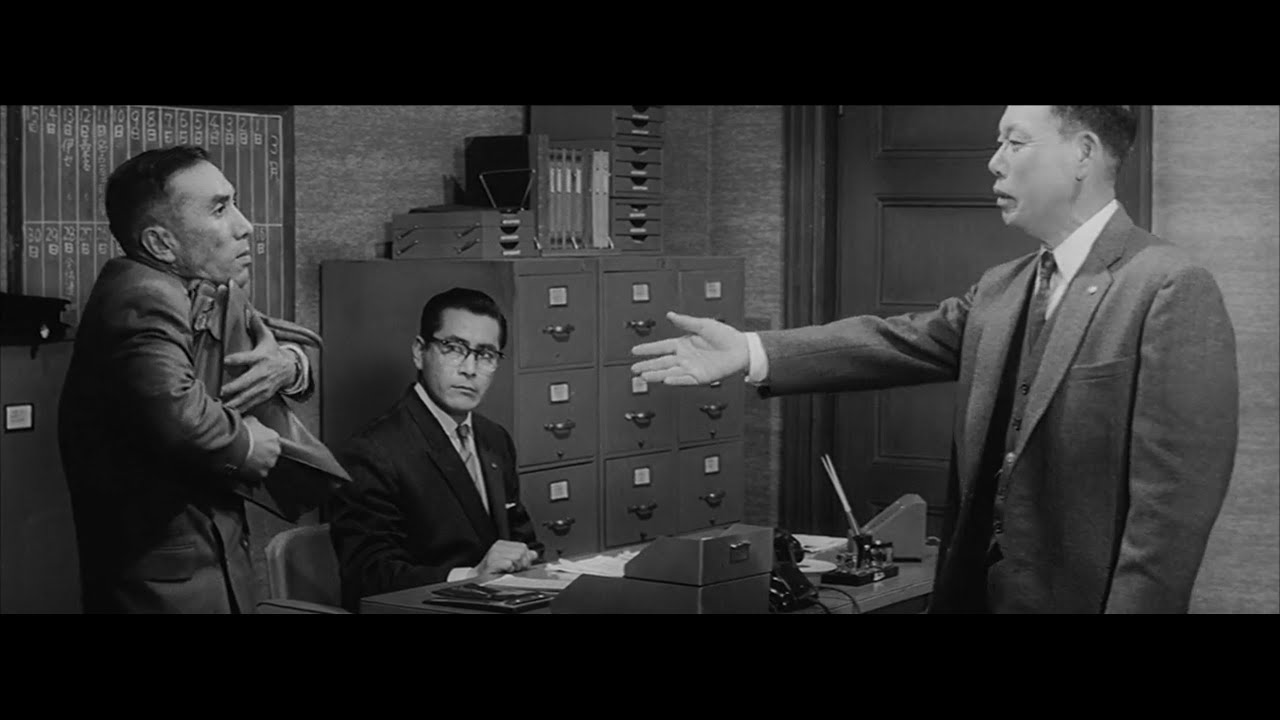
Written by Hideo Oguni, Eijirô Hisaita, Ryûzô Kikushima, Shinobu Hashimoto, and Akira Kurosawa and directed by Kurosawa, “The Bad Sleep Well” is a scintillating and scathing rebuke of the cut-throat, corrupt, climate that plagued Japan’s post-war corporations. Most of Akira Kurosawa’s films seem to fit into one of two categories, either his films take place in feudal Japan where Samurai and warring city-states engage in bloody battles, or they’re in the modern day Japan of it’s time and focus on the issues of the day, usually placing a heavy hand on the scale of morality. “The Bad Sleep Well” falls in the latter category and pulls a lot of it’s imagery and style from the American Noir crime genre. This time around, Kurosawa plays with a loose adaption of Hamlet set against the shadowy world of corporate espionage.

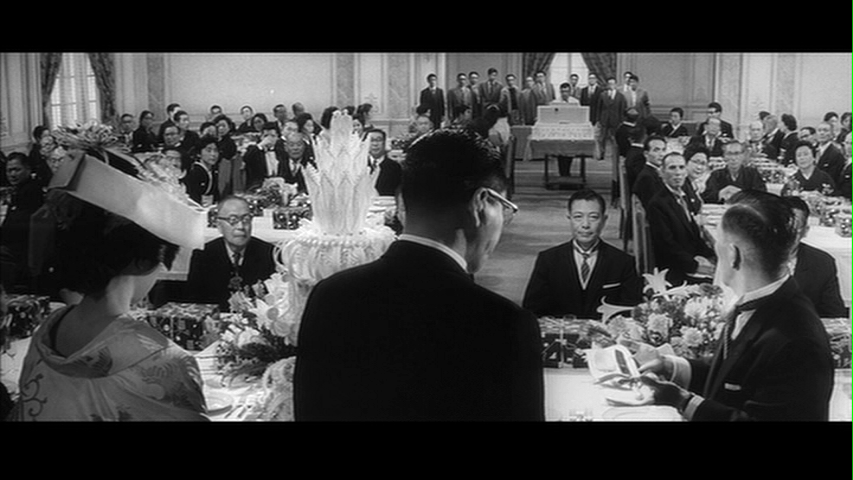
Though he may be mute for the first half hour, we’re eventually introduced to our lead in Kurosawa’s frequent collaborator, Toshirô Mifune as Kôichi Nishi. Mifune enters here with less swagger than Sanjuro or Yojimbo, but trade his usual aloofness for a pure and focused sense of revenge and Mifune’s Nishi transforms into a modern day, clean-shaven, Ronin in a three piece suit. His quest is to avenge his late father, who was forced to jump out of a window of the corporation building he worked in to safeguard his superiors and make it look as though he had committed suicide. The film opens with Nishi’s wedding with the daughter of the vice president of that same company, an unwitting innocent of collateral damage in Nishi’s shadow war against the powerful. In the wedding we’re introduced to the majority of the supporting players of the film as Nishi’s well researched scheme come to bits of fruition. Several potent accusations against leading members of the company (which lures the ravenous media to follow the high profile wedding), leads to the police arriving to take several high ranking board members in for questioning- but there’s also a large wedding cake brought in that’s an exact model of their corporate building, with a rose in the window that Nishi’s father was forced from. A perfect storm of shame and attempts at saving face for the company, which is played for comedic effect in brilliant form by Kurosawa.

It’s a good note to start out on considering the dour realities of the third act. In fact, until about the last twenty minutes of the film, it seems as though Nishi’s carefully calculated plans will have won the day. But I’m getting ahead of myself, the majority of the film is spent with three figures of the Dairyu company reacting to the scandals erupting around them as they act to diffuse and smother the growing ramifications of their destructive deeds. After the wedding, Tomoko Wada (Kin Sugai) returns from weeks of questioning by the police only to be given orders from his superiors to jump into the nearby volcano and resolve them of his misfortune, but Nishi stops him, and converts him to the side of justice. With Wada’s help, and his covert partner Itakura (Takeshi Katô), the three set forth a plan of attack consisting mostly of using the ghost of Wada to horrify and panic Shirai (Kô Nishimura), the official that held the most sensitive secret information. The next rung up on the corporate ladder belongs to administrative officer Moriyama (Takashi Shimura) a more unflappable and calculating underling of vice president Iwabuchi (Masayuki Mori), the major player of the film. Who just so happens to have Nishi as his ever present assistant, plotting the downfall of the Dairyu executives that organized his father’s killing.

Eventually, Moriyama deduces that the only factor relating to all of their troubles is Furuya, Nishi’s father. Further digging reveals Nishi’s true parentage, and while Nishi captures Moriyama for a time in the ruins of a bombed out factory from World War Two, it is too late- Moriyama had already informed Iwabuchi before being captured. There’s a bit more to the story, but that’s the essential facts of it. Nishi’s found out and killed off-screen before we even know what’s happened, and Iwabuchi restores order to the Dairyu corporation- even if it means the death of his daughter, and his own son’s rejection after discovering the truth. It is a cold reminder that fighting against the machine can be frought with peril, and sometimes, people get caught in the grinding gears. With a pensive and sobering tone, one of Nishi’s last lines after discovering his true lack of progress against the corporation was, “I guess I don’t hate them enough“…

Final Score: A 7-story plummet

*Linked below are two more sources on the subject, the first is the YouTube channel, “Every Frame a Painting”s video analysis of Kurosawa’s use of geometry concerning the blocking of Actors in the film. The second is a piece of well written analysis of the film from the Criterion Collection. Enjoy!

https://www.criterion.com/current/posts/409-the-bad-sleep-well-the-higher-depths