film

Old School Review: “The Fisher King” (1991)

Written by Richard LaGravenese and directed by Terry Gilliam, “The Fisher King” is a fantasy drama about tragedy and guilt set in New York City before the revolutionary clean up process that the city underwent before the late 90’s and into the 2000’s. Within that dirty and chaotic realm we find our protagonist Jack Lucas (Jeff Bridges) doing what he does best, delivering his fork-tongued critiques against the ‘yuppie’, high society, peoples of New York City. Think of him as a mesh between Howard Stern and Rush Limbaugh (Less invested in pushing the taboo boundaries of broadcasting than the former, but with more inherent heart behind his words than the latter). One day Jack’s crazed rants lead him to specifically naming a restaurant where the rich and so called elitist gather. One of his listeners greatly agrees with the motor-mouth-shock-jock so much so that he shows up at the establishment with a shotgun, after all, like Jack Lucas said, “It’s us against them”.

Jack hears about the shooting and becomes completely unraveled by the actions that his words inspired. Fast forward three years later and we find Jack in the midst of an alcohol fueled, self-despising, slump where he works at his girlfriend Anne’s (Mercedes Ruehl in an Oscar winning performance) video store. One night on a drinking bender, Jack contemplates suicide, even going so far as to tie cinder blocks to his feet and looking out into the Hudson river. At the last second some thugs assault Jack, drenching him in gasoline and beating him. Fortunately for Jack, Parry (Robin Williams) arrives on the scene with a few fellow homeless nomads. They swarm the thugs with lights and singing until they disperse.

After saving his life, Parry consorts with the “Forty tiny, flying, invisible, fat men” to agree that Jack is “The One”. Naturally Jack is freaked out about all of this, hangover or not. Parry then explains that he’s a knight ordained by God to find the Holy Grail, which he believes to be in the possession of a billionaire on the upper east side. Initially Jack is reluctant to help Parry, until he learns that he’s responsible for ruining Parry’s former life. Parry, once named Henry, had been a college professor and happily married before the massacre. Henry and his wife were at that restaurant, where he watched her die horrifically right in front of him triggering a psychotic break. From that psychological wreckage, Parry was born.

“The Red Knight”

Parry is driven by both love and fear. Jack discovers this after learning Parry’s true past and attempts to redeem himself by helping Parry. He does not simply want the grail though, he also sheepishly follows a young woman around the city on her daily routine. Parry has fallen in love with Lydia (Amanda Plummer), a quiet young woman who works at a book publishing house. So, Jack goes to great lengths to set them up on a dinner date with both himself and Anne. Jack also learns of Parry’s greatest fear, “The Red Knight”. The Red Knight appears whenever Parry is brushed by reality or when things seem too good to be true. After Parry has a particularly intense breakdown he’s attacked by the same thugs that accosted Jack earlier. This puts Parry into a catatonic state, which forces Jack to go search for the grail in an attempt to save Parry’s life.

There were a few specific aspects of this film that I found fascinating. Granted, Robin Williams drew me to this one as he’s probably my favorite actor of all time, so I’m always game to find another hidden gem of his work. But the film doesn’t go absolutely bananas with style over substance, if you’re familiar with Terry Gilliam’s work you can see flourishes of his guiding hand throughout the run-time. This is most obvious with the Red Knight, but also with the depiction of New York City itself. Gilliam uses framing, specific angles, and has the production dressed down in a sort of dirty and mythic fashion that transforms the feel of New York City into a place where the impossible seems optimistic and not so far away. The cinematography seems to be fairly character oriented in how it represents mood, how characters change over time, and how isolated or sociable a scene is for the characters. However, the single best aspect of the film is for me how the story treats trauma and how it can affect a person for a very long time. This aspect of Robin Williams’ performance was heartbreaking and how the filmmakers and crew decided to represent Parry’s fractured self was both tragic and it felt accurate. Paranoia and fear can strike at a moment’s notice, all emotions can run high at any time, and triggering events can be devastating.Fantasy Element. This was an interesting film from the early 1990’s and worth a watch in my opinion.

Final Score: 2 thugs and 40 tiny flying invisible fat men
film

Old School Review: “The Manchurian Candidate” (1962)

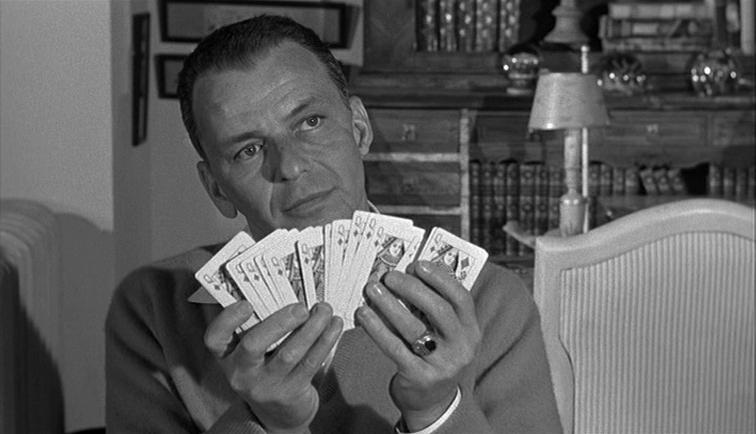
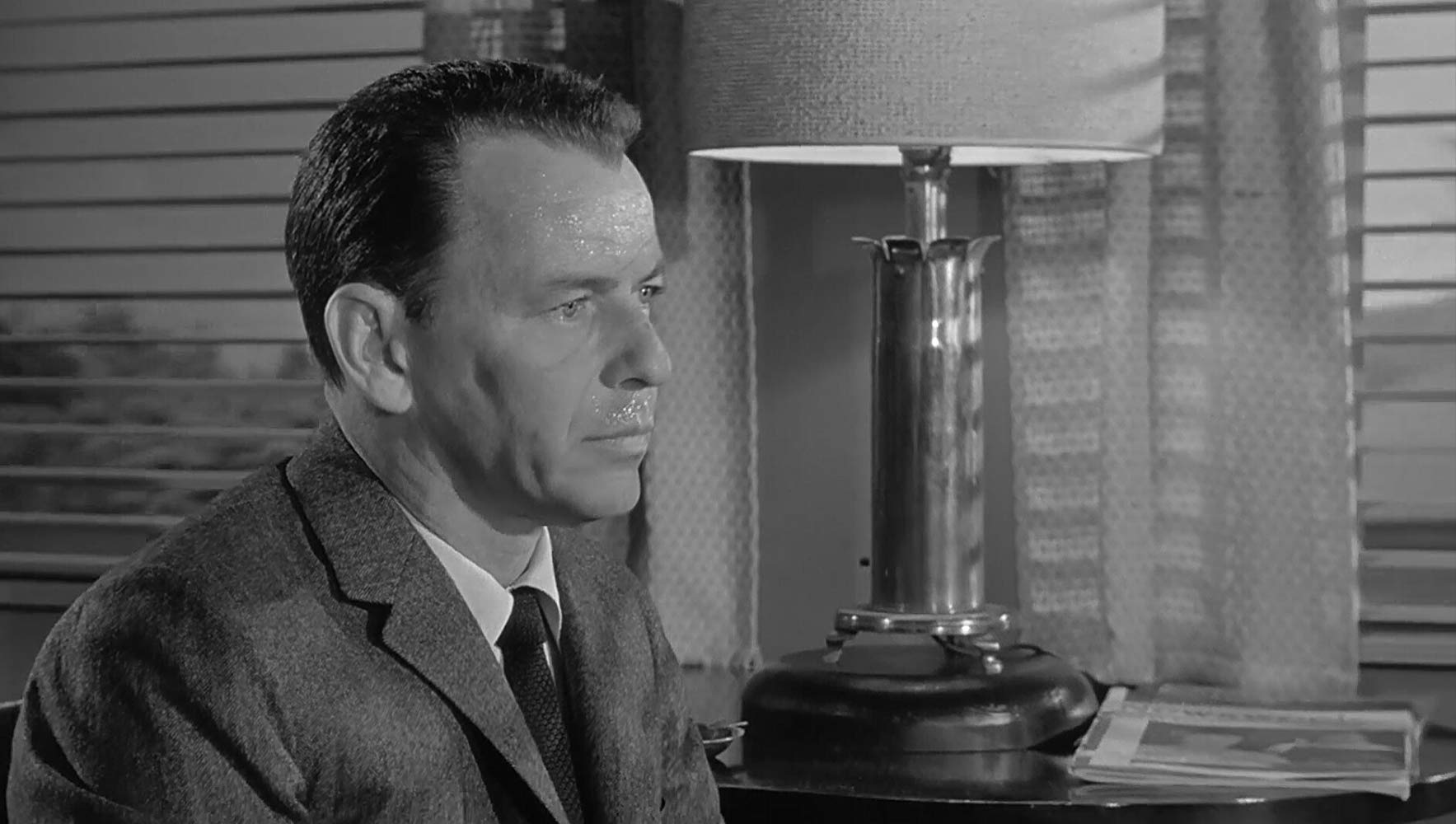
Written by George Axelrod and directed by John Frankenheimer, “The Manchurian Candidate” is a political thriller about an international conspiracy forged by communists during the Korean War to brainwash American soldiers for use as unwitting assassins. This was the first film I saw in 2019, and not knowing the general plot of the infamous film kept the tension intact as an audience member. I went into this movie with a clean slate and my viewing experience was all the better for it and I recommend seeing it that way if possible. However, this film has been around for a long time, therefore we will be covering spoilers. You’ve been warned. Frank Sinatra stars as Major Bennett Marco leading his team of soldiers through the horrors of war. After the dust settled Major Marco kept tabs on all of the men in his unit, especially after having suspiciously realistic fever dreams of their time in the war.


After returning from the war a hero, for saving his men from capture over enemy lines, Raymond Shaw (Laurence Harvey) was also experiencing an existential angst from similar nightmares. Though everyone back home seems to love and appreciate Shaw, he feels disconnected. He remembers being a more prickly and grumpy person that wasn’t particularly loved or appreciated. The film dives into the psychological profile of Shaw and how he operates as an individual, the relationships he has with those closest to him, and how he can be manipulated by emotional triggers. It then turns into a game of cat and mouse with Shaw working as an assassin for a foreign power without even realizing it, as Major Marco tracks down the clues his friend left in his bloody wake.

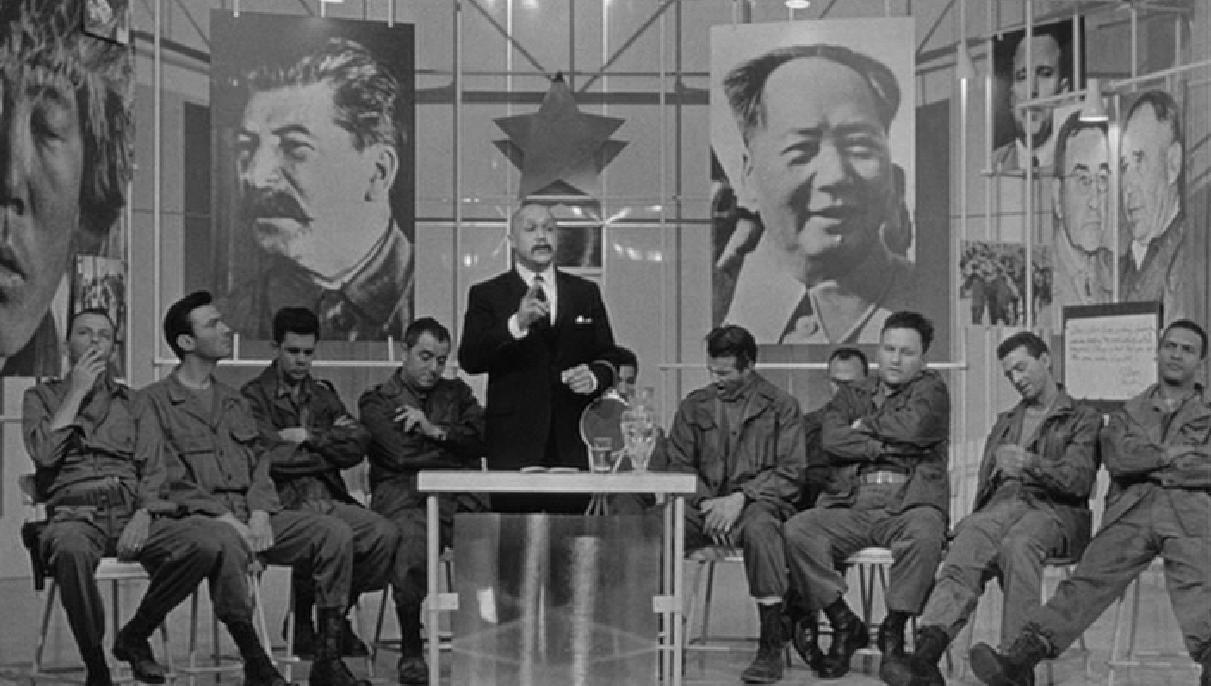
One of my favorite parts of the film were the brainwashing sequences and how the editing and cinematography inform the audience of the truth of the scene. Jumping back and forth between the perceptions of the captured soldiers and their manipulative masters was brilliant! The captured soldiers were on a stage, being presented to other potential “buyers” who were seen by the soldiers as little old grandmothers at a flower shop. I thought it was particularly clever when they switched to an African-American solder’s point-of-view where all of the grandmothers were also African-American. The performances were a lot of fun, they really pulled from the paranoia and suspicious nature of the heights of the Cold War. Frank Sinatra’s casting as Major Marco was a surprise for me, I had never looked into Sinatra’s acting history so I was unsure of his acting caliber going into the film, but he was surprisingly good for playing outside of his art medium. Khigh Dhiegh was particularly entertaining as Yen Lo, I like to think of him as the carnival barker of brainwashing experiments. Angela Lansbury portrays Raymond’s mother as a boundary crossing, overbearing, and self absorbed character with gilded power gleaming in her eyes. Alongside her is James Gregory as Senator John Iselin, Shaw’s stepfather and ‘useful bulldog’ for his mother’s manipulation. This triangle of relationships is immediately established when Shaw lands back in America only to be used for political gain by his mother for Senator Iselin’s campaign, nothing more patriotic than having a picture taken with a war hero thereby framing his support for the candidate- when in reality, Shaw despises Iselin and his mother’s authoritative political nature.

“The Manchurian Candidate” is a fascinating political thriller and a classic film that I highly recommend. If you’re looking for a snowstorm movie this winter- you can’t go wrong with this one!

Final Score: 52 Queens

film

Old School Review: “Wild Strawberries” (1957)

Written and directed by Ingmar Bergman, “Wild Strawberries” is the famed Swede filmmaker’s twenty-fourth film and one of his most humanistic and compassionate. Isak Borg (Victor Sjöström), an esteemed medical scientist in Stockholm, is to be celebrated for his contributions to the field with an honorary degree in Lund. Accompanying Isak on the 400 mile road trip is his daughter-in-law Marianne (Ingrid Thulin). During the drive Isak is disturbed by several dreams which cause him to reexamine his past for better, or for worse. They stop occasionally to stretch their legs, check on old family vacation spots, and even to pick up a few hitchhikers.

In reviewing “Wild Strawberries” I tread on well worn pathways walked upon by generations of indie art kids, collegiate film fans, and those genuinely taken by the love that celluloid gives- but also every single hipster-trash-baby looking to be perceived as “Cool” by simply being aware of the works of Ingmar Bergman. So, I get it. Reviewing old films- especially old films that reside on a litany of lists and boxes waiting for the day it can be checked off or filled in, they can come with the baggage of appearing pretentious and reeking of seeking validation. Speaking of baggage, this whole film is essentially about just that. How does one reconcile with not just the existential issues of strangers, but of close family members, or even lovers? Not to mention the baggage that comes with simply being human?

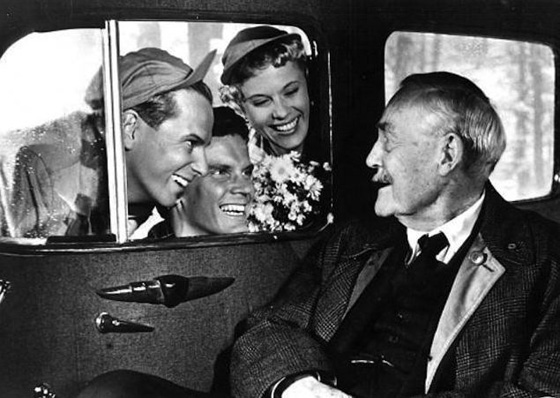
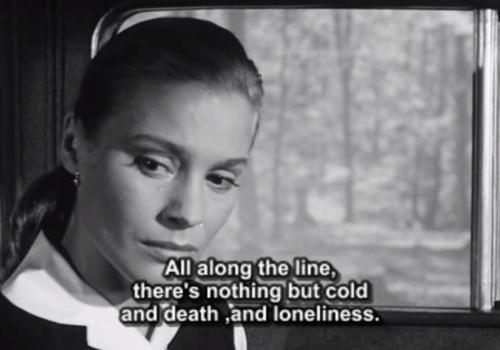
Isak Borg, being the distinguished scientist in the medical field that he is, has become cynical over the years. His dreams force him to reexamine what was and what could have been, how his regrets and mistakes have forged who he is today. These dreams, or nightmares really, coerce the doctor to question how he treats others, to ask himself whether or not he has become calloused and cold-hearted. There are two groups of hitchhikers that inspire this reevaluation of the doctor’s life. One of these groups consists of a troupe of three college-aged youths, two men with quarreling ideologies and a woman, Sara (Bibi Andersson), that has both of their hearts in her hands- who coincidentally looks exactly like Isak’s lost love- who just so happened to marry his brother instead of him. The other pair of hitchhikers are a stubbornly vicious married couple that wreck their car nearly hitting Isak and company. After awhile the married couple become so absorbed by their contempt for each other with vitriol that Marianne pulls over and leaves them to be toxic on their own time. Both groups mirror parallels in Isak’s life and continue his assessment of self as the journey carries onward.

The other parallels of the film lie not only in Isak recognizing similar patterns in his past, but also in those closest to him. In the beginning of the trip Isak and Marianne visit Isak’s elderly mother for a few minutes, and after arriving in Lund nearing the end of the film, the pair meet up with Isak’s son and Marianne’s husband Evald (Gunnar Björnstrand). Isak recognizes this same aloofness and lonliness that plagues him in both of them. He gradually accepts who he is, connecting his past self with his present, and acknowledging his time left in this world. If you haven’t seen this film, I encourage you to give it a chance. There’s a reason the name Ingmar Bergman is still relevant in the world of cinema today.

Final Score: 5 Hitchhikers and a patch of Wild Strawberries

film

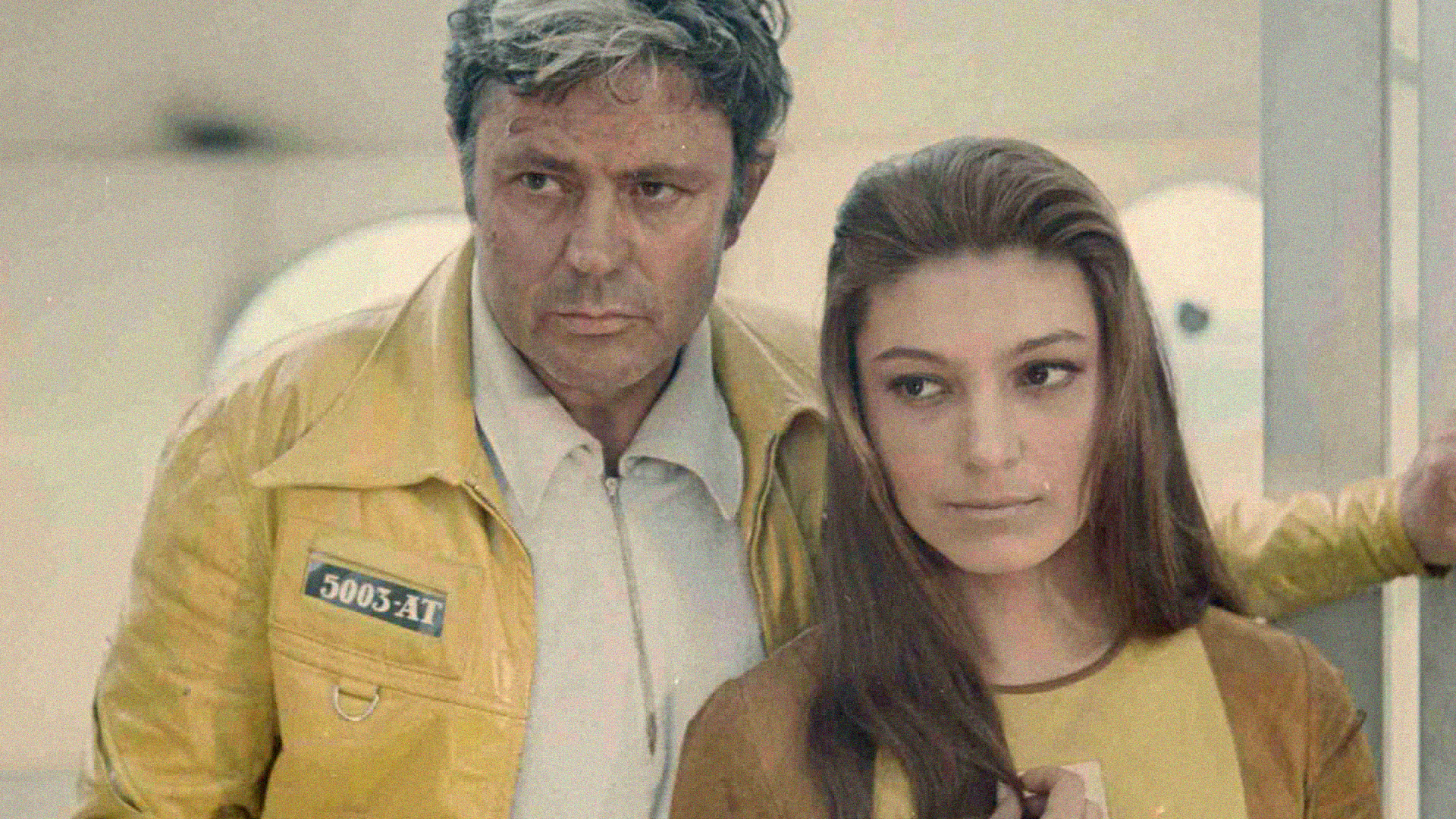
Old School Review: “Solaris” (1972)

Directed by Andrei Tarkovsky and co-written with Fridrikh Gorenshteyn, “Solaris” is a sci-fi film based off of the novel of the same name by Stanislav Lem. The opening of the film begins on Earth in a future where the Soviet Union (or Humanity in general) has achieved interstellar travel. Off in a faraway star system resides ‘Solaris’, the titular ocean planet, where an orbiting space station has been experiencing strange and mysterious phenomena. Our lead, the psychologist Kris Kelvin (Donatas Banionis), is briefed on what they know about the developing situation by cosmonaut Burton (Vladislav Dvorzhetsky), at Kelvin’s father’s home in the countryside. Once aboard the station Kelvin finds Dr. Gibarian (Sos Sargsyan) dead, while the other two scientists, Snaut (Jüri Järvet) and Sartorius (Anatoliy Solonitsyn), were distraught and deeply disturbed by the events unfolding on the space station.

“Solaris”, like all of Tarkovsky’s other films to some extent, is slow. Whether or not you have the patience to sit through the film’s very long shots, sometimes seemingly trying it’s very best to test your will to finish it, will inform your decision to attempt the film or not. While not the slowest pace among Tarkovsky’s films- there are several sequences that can test the rigor of any cinema-goer. Having spent the summer of 2017 getting acquainted with one of the last great American arthouse filmmakers in David Lynch’s third season of the series “Twin Peaks”, I’ve had time to digest the merit of slowness in cinema. I’m not always in the mood for such storytelling- but when I am there is hardly any greater filmmaker than Tarkovsky for such things. No one films the quiet humility of nature as he does, placing almost more emphasis on the environment than what’s happening within it.

It appears that when the station sent down X-rays to probe the planet for intelligent life, the planet responded to this by reflecting certain memories and perceptions of the remaining scientists’ minds into real physical forms. Kelvin is also quickly effected by the radiating phenomena as his dead wife Hari (Natalya Bondarchuk) materializes after his first night aboard the station. She is exactly as Kelvin remembers her, therefore she only has access to information that Kelvin would expect Hari to be aware of. At first he is bewildered by her presence as he expels his wife’s double into outer space in one of the escape pods. Another double of Hari appears a few hours later and Kelvin accepts this new Hari after awhile. She needs physical proximity to Kelvin’s brainwaves, and when left alone the clone punched through a steel door because she panicked and couldn’t figure out how to open the door manually. Now, that’s a bad case of monophobia!

Much like another sci-fi favorite of mine, “Blade Runner 2049”, this film debates the very notion of humanity. It asks what it means to be human, and whether or not you have to be born to be able to understand humans entirely. For Kelvin, it did not matter that this Hari was only a biological response to his literal proximity to an alien planet’s intelligence-aura. This recently formed aberration behaved as Hari would based on Kelvin’s memories of her, and the return of a departed loved one can be a powerful motivation, especially considering the circumstances of Hari’s death ten years prior. For Kelvin, this proved to be enough in the end.

After the space station goes through it’s scheduled weightlessness stage Doctors Snaut and Sartorius project Kelvin’s brainwaves towards Solaris. After awhile, the other doubles and “guests” disappear and Kelvin decides to go home. However he’s revealed to actually be on an exact copy of his father’s countryside home and estate as Solaris forms an island out of Kelvin’s memories. Now that’s a satisfactory ending!

Final Score: 2 scientists and 1 dead cosmonaut

film

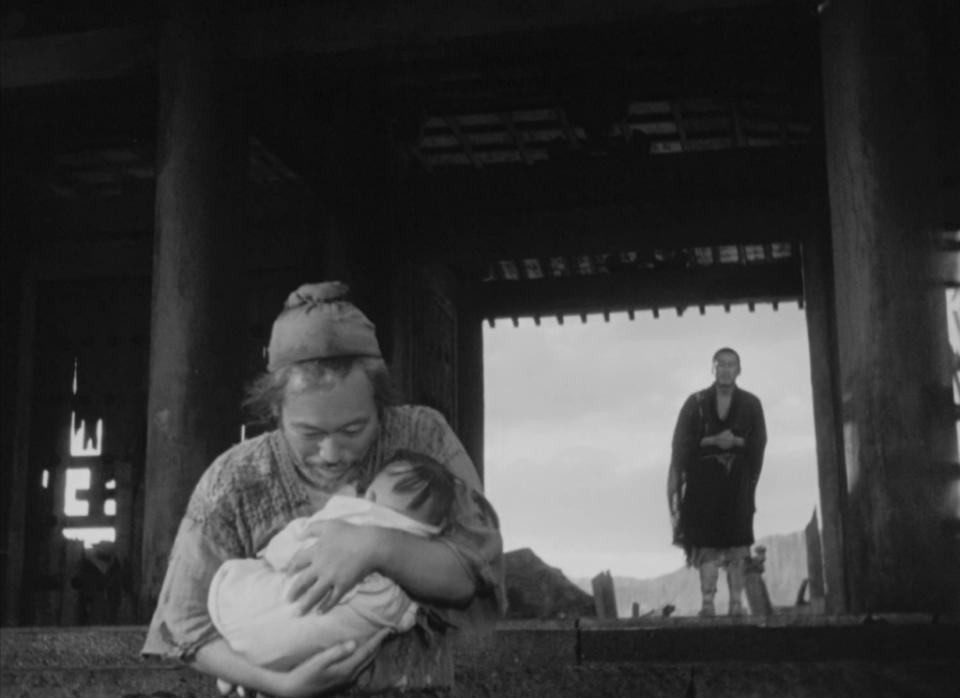
Old School Review: “Rashomon” (1950)

Written by Shinobu Hashimoto and Akira Kurosawa, and directed by Kurosawa, “Rashomon” is a film about the complexities of human nature surrounding a murder with four contradictory eye-witness accounts. In the film three men find solace from a torrent of rain under Kyoto’s Rashomon gate. In the opening a woodcutter (Takashi Shimura) and a priest (Minoru Chiaki) are discussing and processing the differing accounts of an event recently taken place nearby. A commoner (Kichijiro Ueda) comes in from the storm and joins the conversation. He’s brought up to date on the situation at hand; a samurai (Masayuki Mori) has been murdered, his wife (Machiko Kyo) raped, and a local bandit (Toshiro Mifune) is the suspect. The woodcutter happened upon the crime scene and was the first to report the incident.

What follows is a series of revolutionary flashbacks to describe the tale as each character remembers it. All retellings of the same event differ, while remaining both true and false. True in that it is how they remember the events, but false in objective truth. The only scenes that are objectively true in what they show us are the ones taking place at Rashomon. Every flashback is an amalgamation of fractured memories, every scene in the forest broke new ground by showing the audience unreliable retellings of the past. This wasn’t a new idea that “Rashomon” originated, but rather a storytelling device that the film popularized. In fact the film is so connected to the idea of contradictory interpretations of past events that they became entwined with each other until ‘The Rashomon Effect’ became part of the cultural zeitgeist.

Each suspect questioned by an unknown official, which leads into each one’s version of the truth. The bandit gives his testimonial first, then the wife, and then the dead samurai- who speaks through a spirit medium, with the woodcutter’s tale kept until the end. All claim to be guilty to varying degrees, and all describe the situation with varying representations of themselves and the others involved. The three men under the Rashomon gate have differing reactions to the events and various recollections of those involved. The commoner is the most cynical of the three, at one point he posits, “Is there anyone who is truly good? Maybe goodness is just make-believe.” The woodcutter is visually distraught by these stories as he tries to reassemble the truth of the matter, while the priest seems to be placing the weight of his faith in humanity upon the outcome of the tale.

The film ends on a high note when the fog of ambiguity is lifted by the sounds of an abandoned child crying out. The woodcutter lifts his spirits and takes on the responsibility of this orphan, proving to the priest that humanity still has hope left in its spirit. The simple act of selflessness gives the film’s end a beacon to strive towards, even if humanity is muddled, complex, and not always truthful- we still strive to be better than our worst habits.

Human beings are unable to be honest with themselves about themselves. They cannot talk about themselves without embellishing.“- Akira Kurosawa

Final Score: 1 samurai ghost, 1 over the top bandit, and 1 woodcutter

film

Old School Review: “The Wild Bunch” (1969)

Written by Walon Green and Sam Peckinpah, and directed by Peckinpah, “The Wild Bunch” is a Western following a gang of gunslingers and outlaws emerging into the twentieth century as they come to terms with the end of their era. If you’ve spent the last two months roaming the digital countrysides of “Red Dead Redemption 2” like I have, and you’re seeking more of that same grizzled cowboy violence, then “The Wild Bunch” will definitely satiate some of your old west woes. This movie shares many of the same themes and visual cues that the groundbreaking video-game western implements over it’s hours, upon hours, of storytelling.

After a botched heist devolves into a shootout in an excellent opening scene, the ragged outlaws finally reach a place to gather themselves and account for their losses. It’s here that Pike (William Holden), the gang leader, poises the terms of their next score and the core of their existential crisis, “We’ve got to start thinkin’ beyond our guns. Those days are closin’ fast.” Set during the global eve of World War One in 1913 with the modern world quickly encroaching on those tied to the ways of old, “The Wild Bunch” delivers us a nuanced and layered film that pairs its chaotic violence with real humanistic quality. It’d be an arduous task in finding a Western more concerned with tragedy and loss, or one so bathed in melancholy and savageness. The noble outlaws in this picture are exposed to some of the most uncensored violence of the day when it was initially released. While Sam Peckinpah thought the violence would shock people into the horrors of such a time, he would have no idea how much people might enjoy such cathartic carnage.

The driving force of the film lies in the pursuit of Pike’s gang by a posse led by a former outlaw and friend, Deke Thornton (Robert Ryan). Previously captured and coerced into hunting his fellow outlaws by an anonymous railroad tycoon, Deke detests the system he now works for and frequently talks down to his less than skillful hired help. Thus Pike’s gang flees to south of the border where they are plunged into another brand of chaos in the Mexican civil war as gun runners. While Deke may be coerced into tracking his former brothers, Pike’s gang has their own fair share of being forced into servitude by the Mexican army. Adherence to pressure by necessity, being forcibly made to adhere to the ways of others, is a major theme of the film as these outlaws get swept up by the progression of time.

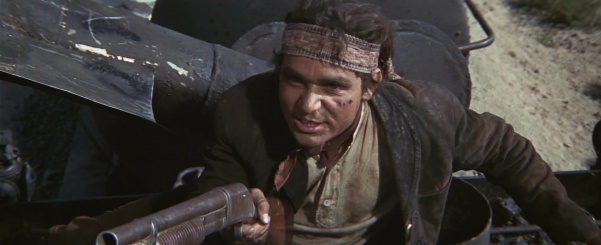
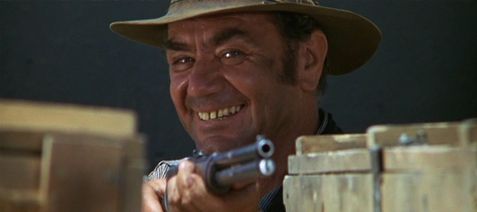
Peckinpah handles the individual gang members with such mythic, admirable, and poetic romanticism that you often forget about earlier sequences focusing on the deglamorization of warfare. It’s within this contradictory sensation of heroic admiration and frightening nihilism that Peckinpah allows his characters to shine. Angel (Jaime Sánchez), and Dutch (Ernest Borgnine [The Arthur Morgan of this film ironically]) in particular, are standouts among the gang. Dutch is one of the older outlaws and Pike’s second in command. With his wisdom from the school of hard knocks and a heart of gold to match, he pairs well with Angel’s youthful exuberance and itchy trigger finger. It’s all about balance, right?

The film is bookended by two large shootout sequences which weave chaotic violence with a romanticized nostalgia for times (and films) gone by. The film doesn’t necessarily glorify violence so much as it attempts to show the uglier and dirtier world of cinematic gunslingers. I honestly couldn’t say it better than the 1995 Chicago Tribune review of the restored director’s cut, “It’s a tale of demonic intensity, nightmare nihilism, cockeyed courage, outrageous compassion and savage grandeur.” 

Final Score: A few bags of washers and a train full of guns!

film

Old School Review: “Andrei Rublev” (1966)

Written and directed by Andrei Tarkovsky, “Andrei Rublev” is a medieval Russian epic loosely based on the real life Christianity icon painter of the same name. The Guardian (publication) ranked this film as the number one art-house film of all time, and while this film is indeed a master work by a filmmaker with an uncompromising vision- it ultimately wasn’t one that worked for me. “Andrei Rublev” is, like most of Tarkovsky’s works, a very long film. At other times this hasn’t hampered my interest in his films, and I wasn’t wholly uninterested here, but this film moves to the beat of its own drum and if you’re not tuned to its frequency then it will leave you in the dust. Tarkovsky was not one to bend, or compromise, his artistic vision for anyone and while I respect this notion, it’s made his films difficult to recommend- I do, but with a handful of asterisks attached.  

andrei-rublev-balloon

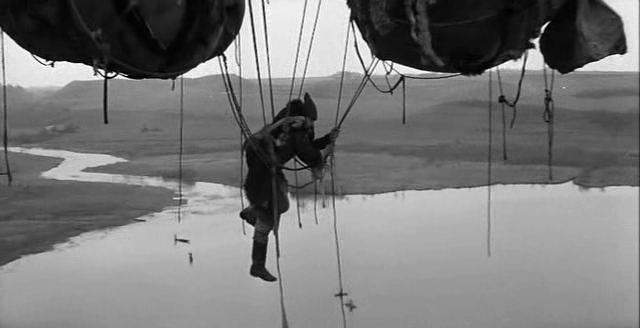
The film opens with a man trying to fly in a makeshift hot air balloon. He and a small dedicated group are stoking the flames, tightening ropes, and generally rushing to prepare this experimental pursuit. As the initial man weaves his way up to the top of the church, an angry mob forms below and actively tries to stop the men from taking flight. At the last second the man we’ve been following entangles himself in ropes hanging from the balloon and slowly soars away. He laughs as he floats above the people- but quickly crashes to the ground moments later. This scene sets the mood for the rest of the film and hints at Tarkovsky’s attitude towards the creative process in general. A few misunderstood people set out to forge dreams into something palpable, the masses don’t quite understand it and then try to quash these attempts seen as blasphemous or against the normal accepted behavior within the major established community. These misunderstood people strive for something more despite this, even if it kills them. Tarkovsky himself has spoken about the prologue with the balloon before, stating that the man in the balloon is.. “The symbol of daring, in the sense that creation requires from man the complete offering of his being. Whether one wishes to fly before it has become possible, or cast a bell without having learned how to do it, or paint an icon – all these acts demand that, for the price of his creation, man should die, dissolve himself in his work, give himself entirely.

andrei-rublev

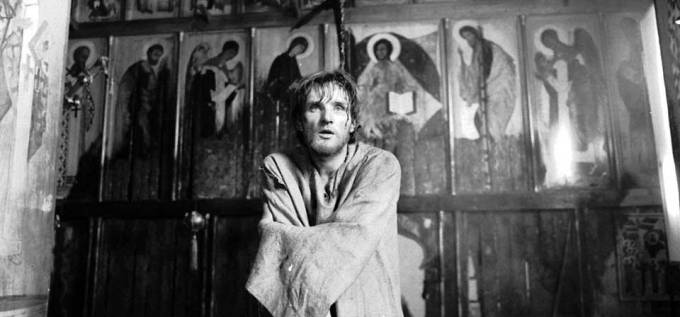
The film is separated into seven chapters in Andrei Rublev’s life, The Jester, Theophanes the Greek, The Holiday, The Last Judgement, The Raid, The Charity Winter, and The Bell. In the beginning Andrei (Anatoly Solonitsyn), Daniil (Nikolai Grinko) and Kirill (Ivan Lapikov) are three traveling monks looking for work as icon painters in the year 1400. Seeking shelter from a heavy rain, they enter a small barn full of local villagers being entertained by a jester whose sarcasm and bitter rebuke of the church and the state gets him arrested by nearby soldiers who knock him unconscious and smash his stringed instrument before carting him off. This scene in itself gets to the larger themes at hand, mainly the struggle of working as an artist under a repressive regime that cracks down on any and all dissidents. Openly exploring these ideas is most likely why it was shut down so quickly by the Soviet Union in the 1960’s.

andrei-rublev-1966-005-rublev-holding-paintings-00m-g9c

Throughout the rest of the film we get pieces of the icon painters life during different periods of his life, from his teachings under ‘Theophanes the Greek’ to his witnessing of a Tartar raid on the city of Vladimir. The Tartar raid was one of my favorite sequences in the film, partly because it showcased the madness of living at the time but also because it had some of the most active action and cinematography of the whole film. Oh and horses, Tarkovsky loves his horse imagery in film, and he uses them to great effect here. From a man being dragged by horse through a chaotic scene inside the church to the general chaos of soldier-less horses navigating wooden staircases, to their aimless wandering amongst the scenery; Tarkovsky made some unique choices here as a director that elevated the immersion for me throughout this scene. In fact, this whole sequence has essentially the only direct action that Rublev takes as a character in the whole of the film- he saves an uneducated woman from the clutches of a Tartar soldier, and even this happens just outside of the frame so that we are clued into this uncharacteristic burst of character action. Which is all well and good, but brace yourself for the return of inactivity and passivity as our main character goes on a vow of silence for a majority of the remainder of the film. 

Rublev11-1366x768

For me, “Andrei Rublev” is the least engaging film of Tarkovsky’s that I’ve seen thus far (Only “The Sacrifice” and “Nostalghia” remain), but this could be the result of many factors. At this point my favorite Tarkovsky films have been “Stalker” and “Solaris”, and I think it’s because in those films Tarkovsky uses science fiction to pose long and thoughtful debates about philosophical ideas with characters that hold well defined positions. In Rublev, Tarkovsky is more experimental, relies less on dialogue, and created a story that’s heavily steeped in Russian history- a subject with which I am terribly unfamiliar with. Which isn’t to say that any of this is bad or that the film deserves marks against it- it’s just what contributed to my personal lack of fascination with the film. Even the cinematography on display in Rublev lacks the tactile and dreamlike composure that was present in “Ivan’s Childhood” and later used to great effect in “Stalker” and “The Mirror” in particular. This may just be a film that I need to digest further and give another viewing or two to really immerse myself in the story at hand and the execution of that plot on display.

Final Score: 1 Bitter Jester & 3 Monks

film

Old School Review: “I live in Fear” (1955)

Caution: There will be spoilers..

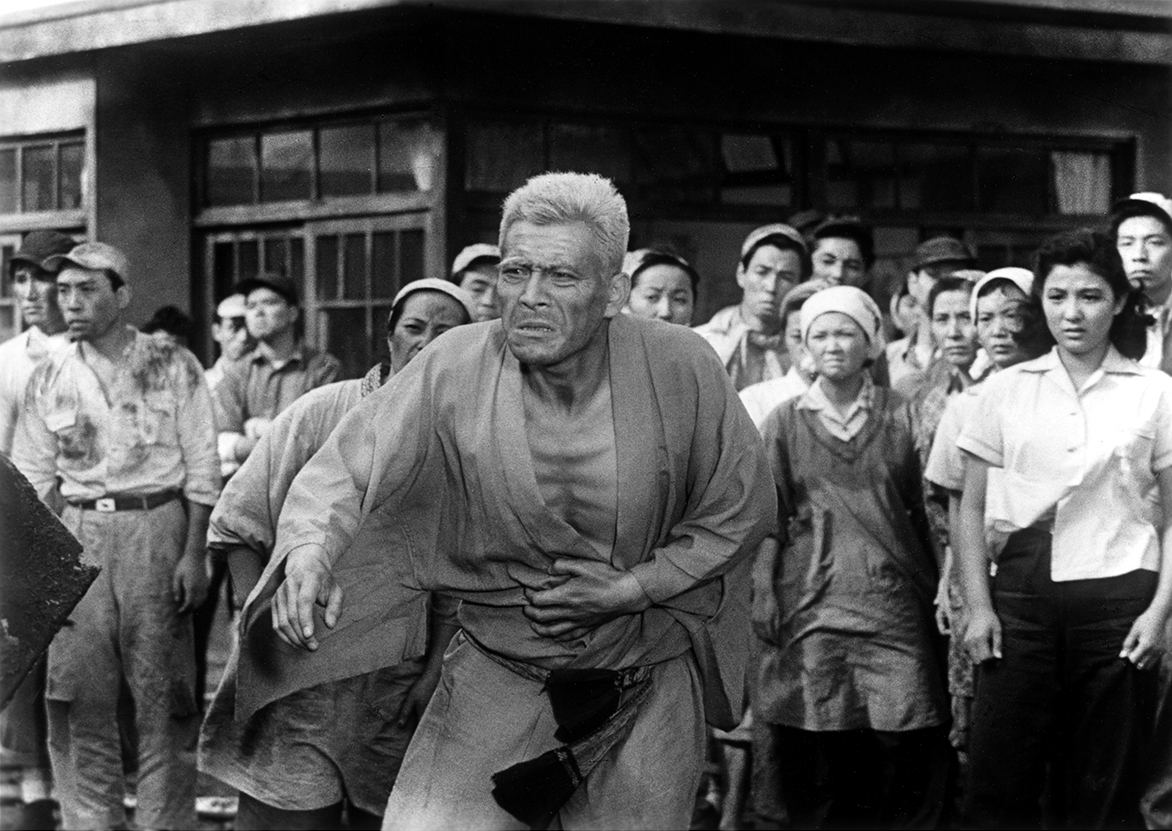
Written and directed by Akira Kurosawa, “I Live in Fear” is the legendary filmmaker’s most direct attempt at fictionalizing the very real social anxieties sweeping Japan post World War Two. The film opens on an unfolding case being discussed in family court. Kiichi Nakajima (Toshiro Mifune) is a successful, elder, Japanese industrialist that has been taken to court by his family for the unreasonable use of his funds to secure land in Brazil, the only place on earth Mr. Nakajima believes to be safe from Nuclear Annihilation. He wishes to purchase a farm in the South American country and to bring his family with him- to which the whole family objects. Granted, most of the family doesn’t want to uproot their entire lives just to assuage the fears of Kiichi, but as the film progresses we get the impression that the family would have gone on without acknowledging the man’s paranoia and mental health IF he hadn’t begun to use his wealth, their inheritance, to fund several projects that he thought would protect his loved ones from an irradiated doom.

9b149e5d3e00a9441b40519bb66681ff

After much deliberation the family court approves the family’s petition, that Mr. Nakajima’s actions and intentions deem him mentally unfit. Naturally he appeals the notion and as the court machinations move forward Mr. Nakajima only becomes more frenzied with each passing hour. As he unravels, he fails to understand why everyone around him can be so calm when the very fact that the H bomb exists at all should concern every living soul with grave danger. One of the more powerful scenes in the film, in my opinion, happens during a visit to one of his mistresses (the film doesn’t shy away from the fact that our lead isn’t perfect) as he mistakes lightning and thunder to be another bomb dropping- he dives for his youngest son and startles him awake, at which point the mistress snatches her child up and looks at Kiichi with fearful eyes. Eventually he is so distraught by a son-in-law’s suggestion that even Brazil wouldn’t be safe from the fallout of nuclear war, that Kiichi takes drastic measures and sets the family foundry ablaze. The foundry was the source of the family’s wealth- which Kiichi eventually only saw as a deterrent to moving to safety.

ILIVEINFEAR

Throughout the film Kurosawa wisely placed Takashi Shimura as the moral center, and therefore soul of the film, in Dr. Harada. In the role as a dentist that’s been accepted by the local community to be on the board of the family court, Dr. Harada is often the one individual to question the group’s assumptions and point out when Mr. Nakajima makes logical points of contention. After Shimura’s spellbinding performance in Kurosawa’s “Ikiru” in 1952, it was a cinematic pleasure seeing two of Kurosawa’s most lauded performers onscreen together. Granted, I’m watching Kurosawa’s films out of order, so this may not be as momentous as it felt to me at the time. The two actors play off of each other brilliantly, with Shimura’s reserved and quiet performance set against the rigidity and barely contained anger of Mifune’s Kiichi- it’s an excellent pairing of personalities.

897id_336_020_w1600

Kurosawa presents an argument in the film, which party is the sane one? Mr. Nakajima, who’s trying to save lives and avoid nuclear disintegration? Or the World around him that neglects his worries as trivial and misguided. Sirens wail in the background throughout the film and most of the characters have a sort of laissez-faire attitude about the whole idea of nuclear annihilation. Several even acknowledge that while Mr. Nakajima had gone too far- they couldn’t accurately articulate why he should be deemed mentally incompetent. The film’s final scene encapsulates this dichotomy visually with Mr. Nakajima institutionalized in a psychiatric ward. Dr. Harada leaves the institution, having just witnessed a man broken by paranoia, just as Nakajima’s daughter enters and both are anchored in a mourning and uneasiness as they each enter a world that harbors curious intent.

iliveinfear12

In reading what others have said about this film I came across the perfect summary of where the film’s head-space lives. In an article from Slate in 2008, by Fred Kaplan, he extrapolates that if someone were to make a similar film on the American psyche post 9/11 “[they] might cover and somehow dramatize: the line between obsession and obliviousness, between whimpering terror and blithe denial; the undeterminable toll on our ‘unconscious minds’ from embracing either course; and the question of whether it’s possible to lead a fully conscious, sane life on some road in between“. All of which is crafted here exquisitely by Akira Kurosawa and his crew. This tragedy is worth a watch, if only to recognize how the outcomes of war can affect a society and it’s people.


Final Score: Two minutes, ’til midnight

film

Old School Review: “Wings of Desire” (1987)

Caution: This movie is over thirty years old- there will be spoilers!

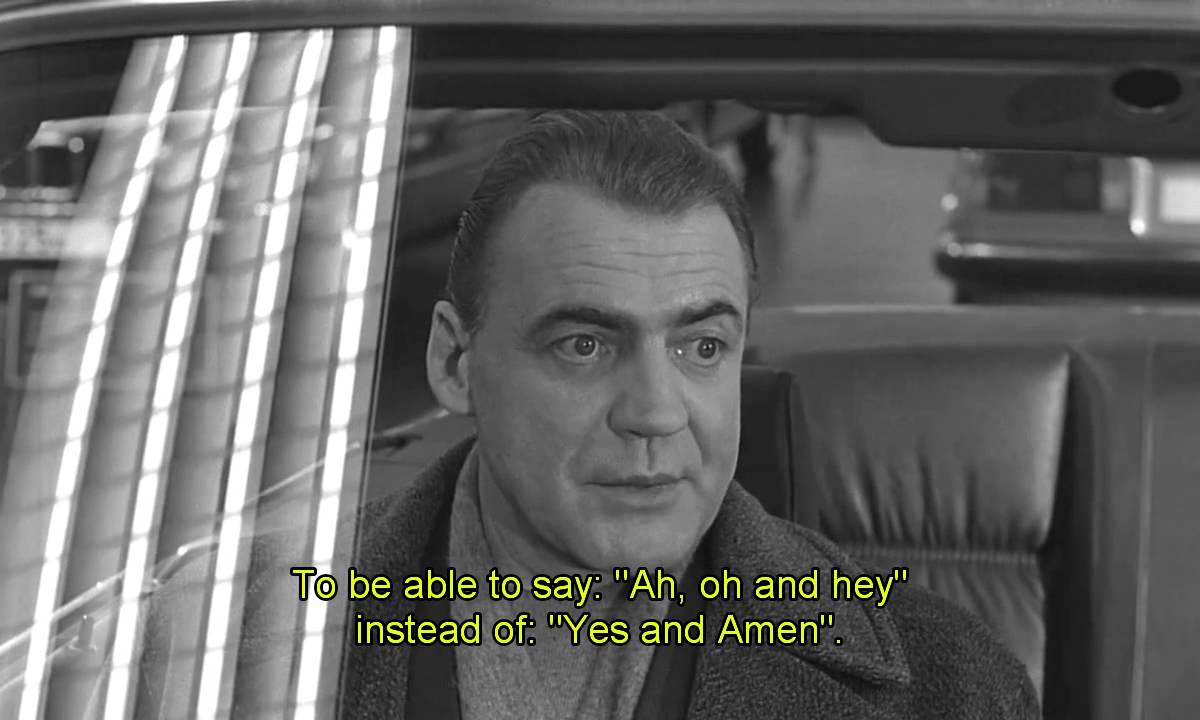
Written by Peter Handke and Wim Wenders and directed by Wenders, “Wings of Desire” is a German arthouse fantasy film about two angels stationed in Berlin that observe the inner thoughts and outer actions of the many citizens they choose to monitor at any given moment. The film can be understood in two parts in my opinion. The first half of the film consists of an introduction to how the angels go about their unending time, who they choose to listen to, and who to comfort in small and almost unnoticeable ways. This half illuminates the musings of the soul that these angelic figures eavesdrop on as they witness, observe, and record the thoughts and feelings of thousands in Berlin. The second half comes when Damiel (Bruno Ganz) wanders upon a circus and begins to fall in love with the female trapeze artist Marion (Solveig Dommartin). Afterwards Damiel,  whose been observing humanity for thousands of years now, becomes enraptured by the idea of leaving immortality behind for the bittersweet, romantic, and melancholic nature of life. He discusses this idea at length with his angelic counterpart Cassiel (Otto Sander), who seems to dismiss his friend’s fascination with the possibility of living a life with risk in it.

maxresdefault

What I love most about this film is it’s balance between the solemn deadpan nature of the Angels’ existence (shown exclusively in black and white) set against the multifaceted and blended world of the living- which is shot in waves of color. This is one of those films that you admittedly have to be in the right mood to digest. It’s more about absorbing the moving imagery and pondering the larger than life questions and ambiguities of life rather than a focused narrative, though there is a through-line of thought taking place. Poetic in nature and more interested in what people aren’t saying, “Wings of desire” shows an angel that is more concerned with what makes a life worth living rather than his own heavenly duties. Or to put it more bluntly, he’s gotten bored and uninterested in the angelic listening gig after a few thousand years. Marion triggers something in him, something that ultimately drives him to give it all up to be with her, to aide her in navigating her own sadness and to be a more present guardian.

asas-do-desejo-1

In some light prep for this review, another reviewer referenced this film as being a “modern fairy tale about the nature of being alive” and I couldn’t agree more. This comes mostly from what we hear, alongside the angels, from the minds of everyday people. One particularly fascinating character was that of Homer (Curt Bois), an elderly author or historian of some fashion. His comparisons with the Berlin of old, with the empty spaces or new buildings that have replaced the locations of memory are enlightening. Back in the library, with Cassiel peering over his shoulder listening and watching, Homer wonders about the nature of war and peace and the obsession that is paired with War- but not peace, “My heroes are no longer the warriors and kings.. but the things of peace, one equal to the other. The drying onions equal to the tree trunk crossing the marsh. But no one has so far succeeded in singing an epic of peace. What is wrong with peace that its inspiration doesn’t endure.. and that its story is hardly told?” Homer considers himself mankind’s storyteller, though this idea as expressed by the actor suggests that the self appointed title goes hand in hand with his humility- not pride. As this old man reflects on life and it’s mysteries in the library, his monologue is juxtaposed against footage from the chaos and death that besieged Berlin after/during the third Reich’s fall. This kind of storytelling seems to be a product of societies that have gone through incredible pain and loss on grand scales. There are similar, at least it seems to me, creative machinations at play in artists trying to sort out their country’s faults or miscalculations amid a general sense of nihilism, or existential crisis. This can be found in filmmakers in comparable situations, like Akira Kurosawa and his string of post-war films in Japan for example.

tumblr_oe0jdoZiVK1v4a8wfo1_500
wings-of-desire (1)

Peter Falk (best known for his TV detective character Columbo) has a playful role here as a convincing version of himself. He too gets to muse in some hypnotic inner dialogue, preoccupied with his upcoming role in Berlin on the flight from America. It’s not until he reveals to both Damiel and us the audience, that he can feel the presence of Damiel the angel, and he knows that Damiel can hear him. This being due to the fact that Falk too was once an angel that gave it all up thirty years prior in New York City. This could have broken the immersion and illusion of the story but it’s wisely played down and not focused on too heavily. In the end if you’re looking for a somber stroll through late 1980’s Berlin while heavy with thoughts spiraling from anti-war nihilism to the nature of love and the awe in simply living- then I would certainly recommend it.

Final Score: Two Angels and a Circus

film

Old School Review: “The Battleship Potemkin” (1925)

Written by Nina Agadzhanova and directed by Sergei M. Eisenstein “The Battleship Potemkin” is about a mutiny aboard the Russian battleship during the height of the Russian Revolution of 1905. It is also the first silent film I have reviewed on the blog thus far. This film is so infamous by this point that there is little I can add to the conversation other than regurgitating the film’s numerous technical achievements that so many others have touched upon. If you haven’t given the film a watch before and you’re invested in learning about the history of cinema then I encourage a viewing- especially since it’s only a brisk hour and fourteen minutes long. Otherwise most modern audiences will bore with the lack of dialogue and color, which can edge out one’s attention span, even I had to stay focused during my own viewing.

59cd211f15e9f96aa51f5725

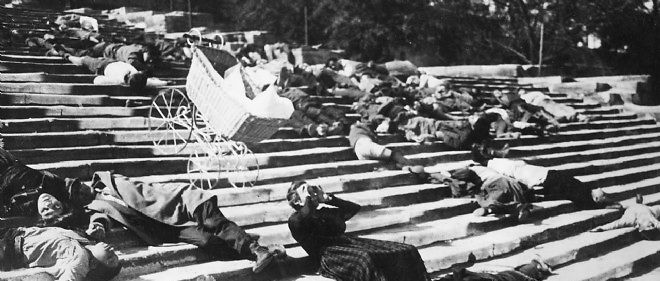
The film begins with the Russian ship returning home through the Black Sea from the recent war with Japan. The crew inspect the meat to be used that day and stir the captains and officers to complain of its quality. The ship’s doctor is sought to inspect it and when the camera gets a closer inspection to show the meat squirming with maggots he labels the meat satisfactory. Mutinous boiling rage fills the crew and they refuse to eat. This act of defiance comes to a head as the captain and officers round up the crew asking who is dissatisfied with the food, when a portion stand their ground they are ordered to be shot dead. Vakulinchuk, the voice of the ship’s imminent revolution, shouts above the clamor as the officers raise their guns “Brothers! Who are you shooting at?” and thus the raucous mutiny begins. After the crew is victorious the battleship heads to the port of Odessa where the locals have heard of the uprising and feel connected to the hardships of the sailors as the lower classes of society were engaged in revolutionary war. This prompts a swift damnation by the Czar’s elite guard as they march down the steps of Odessa shooting into the crowd creating one of early film’s most infamous scenes.

94d5786f-9085-46b1-95fb-8a97ce1be329

After this the crew aboard the Potemkin engage in debate over what to do with the supportive citizenry. Eventually they decide to help and target several locations of importance to the Czar’s government and fire away. This calls the attention of a nearby fleet of unknown allegiance and the remainder of the film is brilliantly played for anxiety with the score and inter-cutting of scenes of preparation for battle on the Potemkin as they go to meet the fleet. In the end the Potemkin glides through the approaching ships’ guard unscathed as they realize that they too are revolutionaries in arms. In doing some light research on the film’s history and how it helped to shape cinema nearly a century ago I read Roger Ebert’s 1998 review and he was right. I had already seen the parody of the massacre on the Odessa Steps years before (ie The Untouchables) seeing the source material. In fact, I will post a link below to his review of the film, which is far more in depth and personal of a review than what I have experienced with Potemkin.

cuirasse-potemkine-2929936-jpg_2563697_660x281

What is most impressive about the film in my opinion is the use of space in the film. Granted this may have simply been a side effect from having masses of people represent groups and ideals over individualized ‘characters’, but its still years ahead of its time and is even today a bit of a wonder as to how they accomplished this in 1925. This paired with the sheer choreography of hundreds of extras milling about the Odessa Steps and aboard the Potemkin makes for good eye-catching movement. Especially aboard the Potemkin, where the sailors can mill above and below where the main action is focalized- the staging makes for layered movement and gives the impression that the warship is gigantic in scope requiring a village of people for upkeep. The score was also incredibly important here, as the only sound in the film it helps to engage the viewer in the intended feelings of the characters onscreen. The brash and overbearing clash of orchestral audio waves crash as the Czar’s men advance with their rifles drawn, the inherent sadness and grief at the useless killing is portrayed in weeping stringed symphonies, and the finale assuages the audience’s anxieties with triumphant and victorious horns. Altogether “The Battleship Potemkin” is an important piece of cinema’s history while the film’s history itself is also quite fascinating given how many governments across the globe banned it fearing Potemkin‘s call to arms aimed at the masses. If you’re at all invested in cinema’s history, this is one you should see.

Final Score: a Mutiny and a Slaughter

Roger Ebert’s 1998 review of “The Battleship Potemkin”:

https://www.rogerebert.com/reviews/great-movie-the-battleship-potemkin-1925