film

Double Feature Review: “Citizen Kane” & “Mank”

With Netflix’s latest auteur oriented film release, in the form of “Mank” directed by David Fincher, shining a light on the lesser known screenwriter behind “Citizen Kane”, I figured this would be the perfect excuse to write a double feature review on both films. I’ll start with ‘Kane‘ and then dive into “Mank” afterwards. I highly recommend looking into the history of Old Hollywood and its key players to fully enjoy and understand the extent of each of these films. If you don’t already know the name William Randolph Hearst, he’s an integral piece of the puzzle when it comes to these films, a quick google search would go a long way in parsing out “Citizen Kane” at the very least. Oh, and fair warning, I will be spoiling key plot points of these films in order to freely discuss them. I’d suggest giving them a watch first and then returning here for analysis. Enjoy!

Written by Herman J. Mankiewicz and Orson Welles, and directed by Welles, “Citizen Kane” is the film lauded for most of the twentieth century as “The Best Film ever made!“. While I’m loathe to give any one film such a title, Welles’ first film is certainly one that should be in the conversation when discussing some of the most groundbreaking and revelatory films in cinema’s young history. To better understand the context of this film you’ll have to dig into the history of both Orson Welles and William Randolph Hearst, the man that Charles Foster Kane was based on, and the very public feud between them. Hearst’s onscreen counterpart certainly has a lot in common with the real McCoy, and while there are differences between the man and the character, the broad strokes are there- and impossible to deny. Hearst was the son of a millionaire mining engineer who owned several gold rich mines. Both he and Kane went to, and were kicked out of, Harvard. Both men were fiery liberal progressives in their youth who bought out several newspapers across the country and started several salacious circulation wars between rival Newspapers of reknown. Both were titans of the print industry and each used their persuasive papers to push for a war with Spain over Cuba’s independence, and while historians have downplayed Hearst’s claim of personally starting the Spanish-American war of 1898, he did have an immense effect on the public’s fury over the topic. Later, after World War One, both men turned more conservative and isolationist in ideology. They both had mistresses that they made grandiose gestures for, one in Hollywood, the other in Opera. Both men also grew dissatisfied with the world after losing very publicly in their political pursuits, and each turned their isolationist views into reality by building outrageously over the top castles on acres and acres of land, the real one in California, with Kane’s “Xanadu” in Florida.

If you haven’t yet seen this film, (I highly encourage you to do so, it’s pretty good!), it begins with the death of Charles Foster Kane (Orson Welles) as he gasps his final word, “Rosebud”. Kane’s death reverberates through the News publications of the world, and one such outlet designing a visual obiturary reel titled “News On The March!” gives the audience a quick outline of the Newspaper Magnate’s life in bullet points. The editor of the Newsreel then delegates Jerry Thompson (William Alland) with finding the meaning behind Kane’s last words. The rest of the film is divided into flashbacks on Kane’s life through Thompson’s investigation and interviews with the people who were closest to Kane. Initially he tries to talk with Susan Alexander Kane (Dorothy Comingore), his mistress and second wife, though she’s inconsolable during his first attempt. Thompson next goes to the vault of the late banker Walter Parks Thatcher (George Coulouris) who oversaw Kane’s trust fund from childhood until his twenty-fifth birthday. While reading Thatcher’s personal memoirs, Thompson learns of Kane’s financial rise and fall. Under the prudent investments that Thatcher had made while Kane was in his youth, he had essentially become one of the richest men in the world by the time he took over his finances. Kane acquired many Newspapers and fiercely fought against the business practices of Thatcher himself and those of his ilk. None of this brought Thompson any closer to finding the truth about “Rosebud” however, and he moved on to interviewing Kane’s personal business manager, Mr. Bernstein (Everett Sloane). Bernstein’s interview and flashback is personally my favorite segment of the film. It focuses on the early days of Kane’s purchase of The New York Inquirer and his circulation war with Chronicle, of whom he effectively stole the top journalists from. This began his intense interest in collecting both people and things for the rest of his life. The scenes of the early days at The Inquirer are full of energy and confidence, with Welles’ Kane striking a resemblance to future onscreen billionaires like Robert Downey Jr.’s Tony Stark and Leonardo DiCaprio’s Jordan Belfort, AKA The Wolf of Wall Street. The next two candidates for interview were Jedediah Leland (Joseph Cotten) Kane’s estranged best friend and a return to interview a more collected Susan Alexander Kane. Both subjects clue Thompson in to the more intimate relationships and nature of Kane as a person and how he evolved over time in the latter half of his life. The final shot at finding the meaning behind Kane’s final words lay with Kane’s butler at Xanadu, Raymond (Paul Stewart). Raymond knows of at least one other time Kane uttered the word ‘Rosebud’, but it’s not enough to form a better understanding of its revelance to Kane or his life. Thompson finally ends his search with his time at Xanadu, saying that he doubts any one word could unlock the mysteries of a man such as Kane, or any other man for that matter. Though we, the audience, receive the truth as we witness unnamed workers clearing out the treasure trove of Xanadu’s massive collection. A small snow sled is casually tossed into the incinerator, which we see inscribed with the word Rosebud, as it is set ablaze.
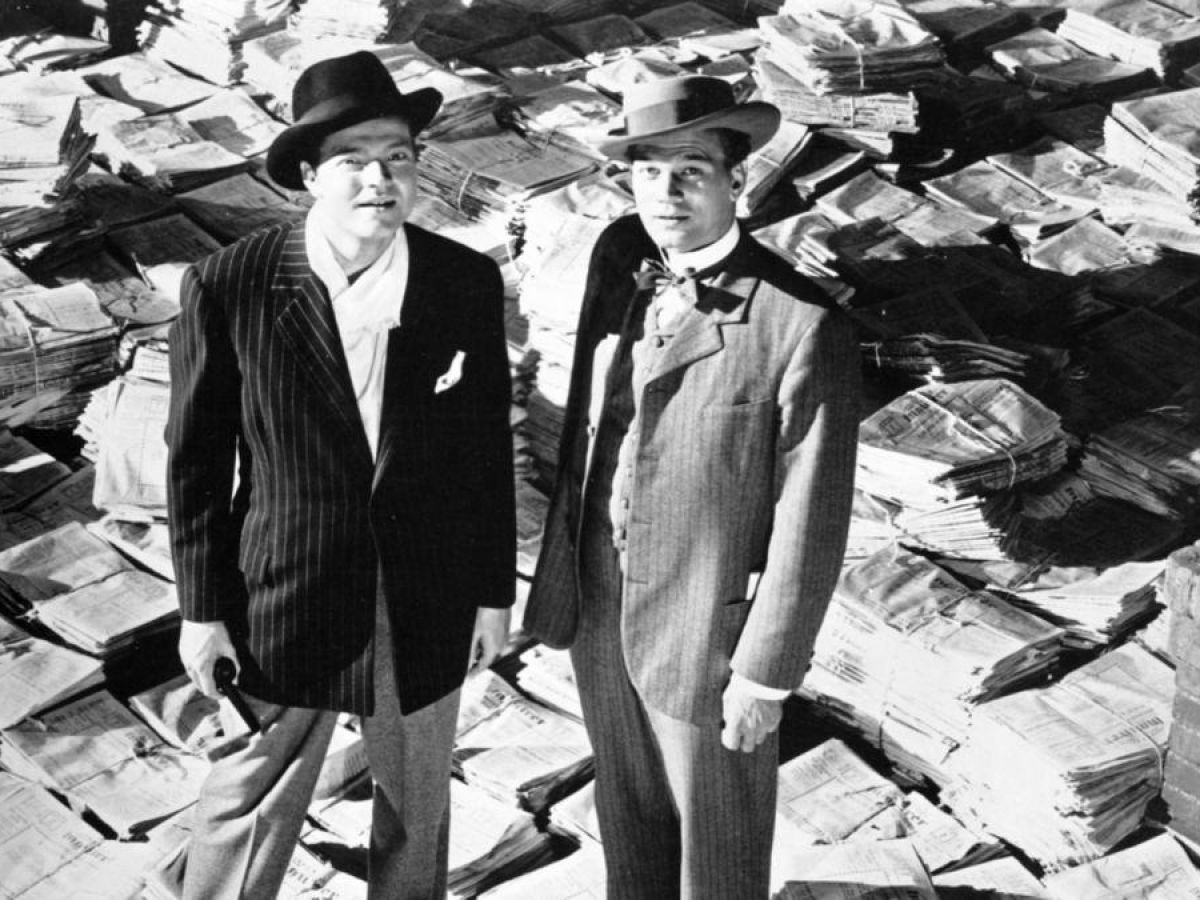
With this film Orson Welles broke new ground in filmmaking, generating new techniques and methodology that would spur filmmakers of the future to similarly write new rules of cinema as they saw fit. Even though “Citizen Kane” didn’t make any money due mostly to the blackout campaign that Hearst waged against the film’s release, Orson Welles succeeded in making a revolutionary film that has stood the test of time. His career following this would be a constant battle against the studio system of Hollywood, ever vying for artistic control against the bottom line of the studio’s budget. In the end Welles’ career as a filmmaker would outlive the studio system that he battled against for decades, so, in that respect, he won. “Citizen Kane” is an excellent film, and a touchstone of history in cinema. If you care at all about the history of movies, this one is a must watch.

Final Score: 1 Snowglobe

Written by Jack Fincher and directed by David Fincher, “Mank” is the story of Herman J. Mankiewicz, screenwriter of one of the most infamous films of all time, “Citizen Kane”. Much like how ‘Kane‘ used flashbacks to try to understand the elusive fictional media figurehead, “Mank” also uses flashbacks of our titular character to better understand him and his reasons for writing what is effectively a character assasination of one of the most powerful men in media at the time. While the film eschews direct character interviews to provide the flashbacks structure, there is a similar string of characters important to Mank who visit him to persuade him not to take on Hearst, which is an entertaining flip. The film begins with Mank being driven out to a small homestead in the Mojave desert with a large cast entombing one of his legs. In this temporary abode Mank is supported by two women, Rita (Lily Collins) a British Secretary that types for him as he dictates from bed initially while also effectively working as a sounding board for script ideas and insight, and Fräulein Frieda (Monika Gossmann) who attends his medical needs as he needs them. He’s also repeatedly visited by John Houseman (Sam Troughton), the politely anxious assistant of Orson Welles (Tom Burke) who calls and eventually stops by for consultation. The series of flashbacks, which are charmingly introduced with screenwriting introductions like EXT. MGM STUDIOS – DAY – 1934 (FLASHBACK), begin in 1930 when Mank is introduced to William Randolph Hearst (Charles Dance) via a set visit of one of the films starring Hearst’s mistress Marion Davies (Amanda Seyfried). Thus beginning a near decade of Mank’s involvement in Hearst’s inner circle of friends and various recipients of his vast wealth and empire. The film goes back in forth in time as we garner information about Mank’s time with Hearst’s inner circle and how Mank views the film industry and politics (there’s probably some insight into how David Fincher views these as well). We see the effects of the great depression on the movie industry and the true nature of the old school movie studio executives like MGM’s Louis B. Mayer (Arliss Howard) and Irving Thalberg (Ferdinand Kingsley). There’s also a surprising amount of screentime given to Upton Sinclair’s (portrayed in one scene by Bill Nye) 1934 campaign for Governor of California, beseiged by the power hungry political machine run by Hearst, Mayer, and Thalberg to name a few.

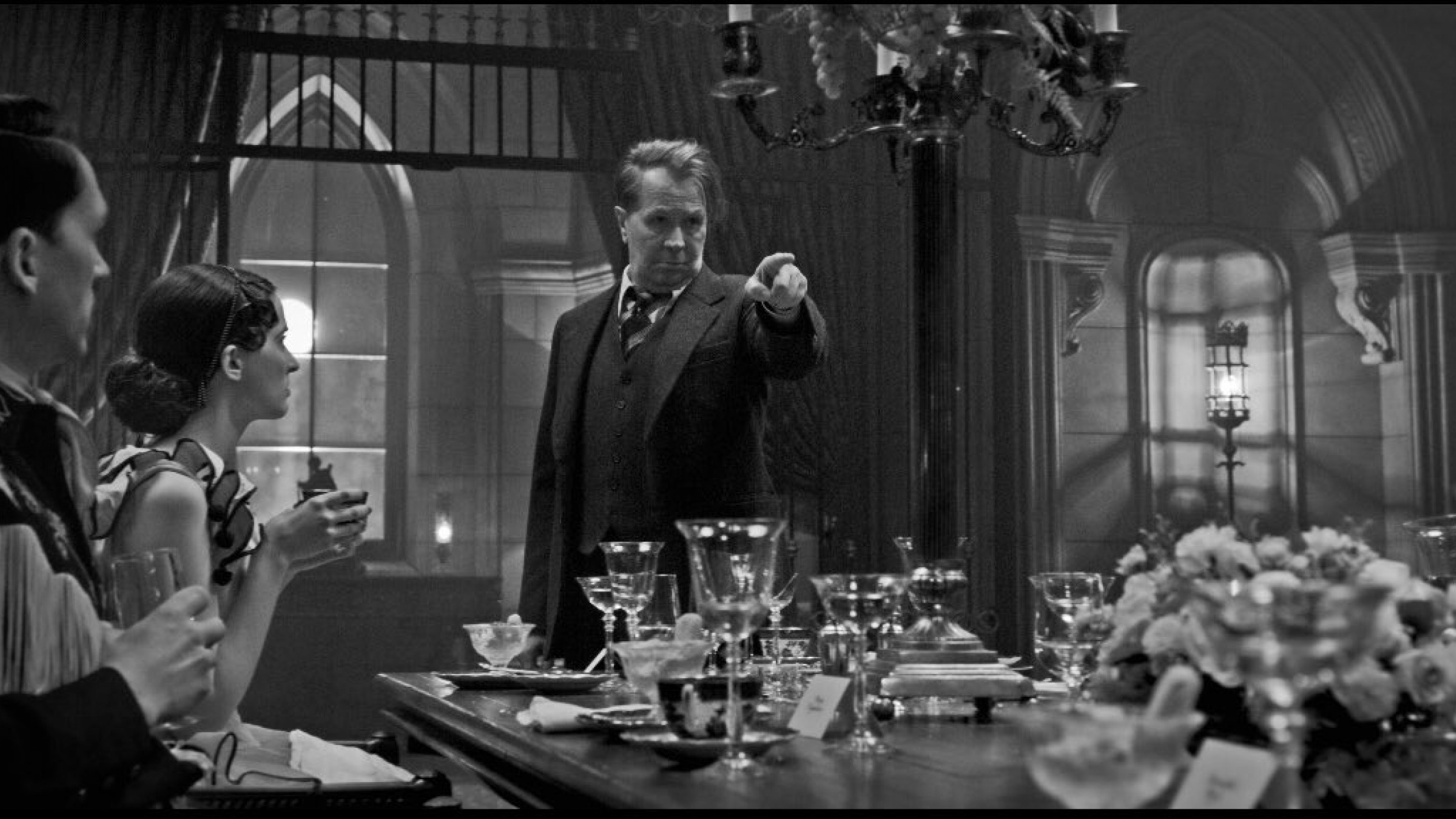
What really hooked me with this movie was that the film wasn’t interested in the “how” of Mank writing ‘Kane‘, but the “why”? Sure, the real life drama was more about the fight for screenwriting credit of the script between Mank and Welles, and this film does touch on that, but only briefly near the end. Instead the film poignantly focuses on the years building to Mank’s writing of ‘Kane‘, when he was in the orbit of Hearst through most of the 1930’s, witnessing the reality of powerful people, and how they manipulate systematic control through crushing fiscal hegemony. Mank tries to do what he can to combat these actions, but ultimately hes’ a beneficiary of that exact system, and it’s not until he sees the brutal effects that these manipulations have on ordinary people that he decides to dig in his heels and do something about it. Personally, my favorite scene is the drunken monologue at Hearst mansion where Mank essentially pitches “Citizen Kane”, mockingly, to Hearst as he entertains a dinner. One by one the loyal roaches, like Louis B. Mayer of MGM, slink away from the table, eager not to be associated with the court jester’s imminent ousting. Apparently, the scene took over one-hundred takes to nail down before Fincher and company were happy with it- and I have to say, the juice was worth the squeeze with this one. While I’m not sure if this is technically the best film that was released in 2020, it may end up being my favorite film of this terrible, awful, year. For it shows that principles, in the end, matter more than power. At least, that’s what I got out of it. You also don’t have to twist my arm to get me interested in a film about a screenwriter, I’m the core audience- I just also happen to completely adore the character of Mank as portrayed by Gary Oldman in this movie. Witty, entirely fallible, Mank employs self-deprecating humor at every opportunity, and he’s incredibly capable of delivering corrosive criticism with sharp clarity while completely sauced. He uses words and a literary understanding of the world to not only get himself into far too much trouble, but to gracefully avoid it at times as well. The choice to cast Charles Dance as Hearst was Brilliant! Dance is particularly skilled at portraying powerful figures of aristocracy, and his performance here only enhances the production as a whole. I also have to praise the score by Trent Reznor and Atticus Ross, it’s perfectly period accurate and delightfully engaging! The cinematography by Erik Messerschmidt and editing by Kirk Baxter also pair to give the film an authentic ‘Old Hollywood‘ tangibility. I really just dig the look, sound, and feel of this film. For me, it all works gloriously.
“Mank” is out now on Netflix in the US and I highly encourage you to check it out if you can. Everything about this film worked for me, hopefully you’ll get some satisfaction out of it as well! I’ve also linked below to an article from the New York Times about the Upton Sinclair election in 1934, which was pretty neat and quite valuable in layering “Mank”‘s historical accuracy versus the fictional liberties they took in creating the film. Enjoy!

Final Score: A Debt of $24,000

For some more information on what “Mank” got right with the Upton Sinclair campaign in 1934, check out this informative NY Times article:

film

Old School Review: Orson Welles’ “The Magnificent Ambersons” (1942)

Written and directed by Orson Welles with additional direction by Fred Fleck and Robert Wise, and additional script work by Joseph Cotten and Jack Moss in Welles’ absence, “The Magnificent Ambersons” is a familial epic designed as a Shakespearian Tragedy set across several decades as the Ambersons chart their course in matters both historical and intimate. This being Orson Welles’ second feature after the powerhouse debut of “Citizen Kane”, known derisively in Hollywood at the time as “The Boy Wonder”, Welles was riding high after a decade of proving his naysayers wrong and possibly il-advised, he may have thought himself invincible, capable of the impossible even. This film however, was where his fracture with the studio system in Hollywood was forged, he never fully regained his artistic control within this system going forward. After digging into the story of the making of the film, I’ve found it to be a fascinating look into mistakes made by both the Hollywood executives, fearful of financial ruin after “Citizen Kane”, revolutionary as it was, didn’t make nearly enough profit to continually invest in the artistic whims of a supposed ‘boy genius’, and the mistakes made by Welles himself thinking that he could do it all. I’ve linked below this article to a story that Vanity Fair wrote on the entirety of the subject that I highly recommend for anyone seeking to understand the broader scope of it all, but for now, I’ll get back to the film at hand.

The story, while it remains an ensemble at it’s core, mostly follows the life and actions of George Minafer (Tim Holt) the son of Isabel Amberson Minafer (Dolores Costello) and Wilbur Minafer (Don Dillaway). Though the inciting incident of the whole story begins with Eugene Morgan (Joseph Cotten) as a young man partaking in the dying tradition of romantic youth at the time, the serenade. A mishap with Eugene accidentally falling over his cello and smashing it to bits in the yard of the Ambersons, as he had hoped to take the hand of Isabel in song, immediately dashed his chances of any serious courtship as this made him a social outcast in the town. So, he took his heartbreak and funneled his ambitions into his invention of the automobile instead. Flash forward twenty years or so and Morgan returns to town with his burgeoning automobile business in fruition and a daughter, Lucy (Anne Baxter), as he’s found himself an inventor and a widower. In that time Isabel had bore a petulant and insufferable child with Wilbur, a man she did not truly love, which harbored in young George a fiery and combative spirit. Young George was seen by the whole town as an annoying brat that they’d all like to see get the stuffing walloped out of him. Thus we have a lead character who’s unanimously seen as a blight on the town’s citizenry, and yet throughout the film we’re given moments and scenes in which the character’s complexity is hinted at, he’s not entirely a character that experiences sucess at every corner, but one that slowly eeks into abscurity in life, but most painfully, in love as well. Though, I have to say, he’s a character who’s earned a tragic end despite the upbeat studio enforced ending that we got. Which is that he’s ironically run over by an automobile, resulting only in a couple of broken legs with Eugene visiting him in the hospital in the last scene, hurridely conveying an off-screen resolved understanding between the two that belies the last half of the film’s path to tragedy. Which is the crux of the issue of this film. While broadly adequately telling the tale of the Ambersons and the notion of the erosion of family and tradition, this altered version of the film that we’ve got feels like it’s pulling its punches.

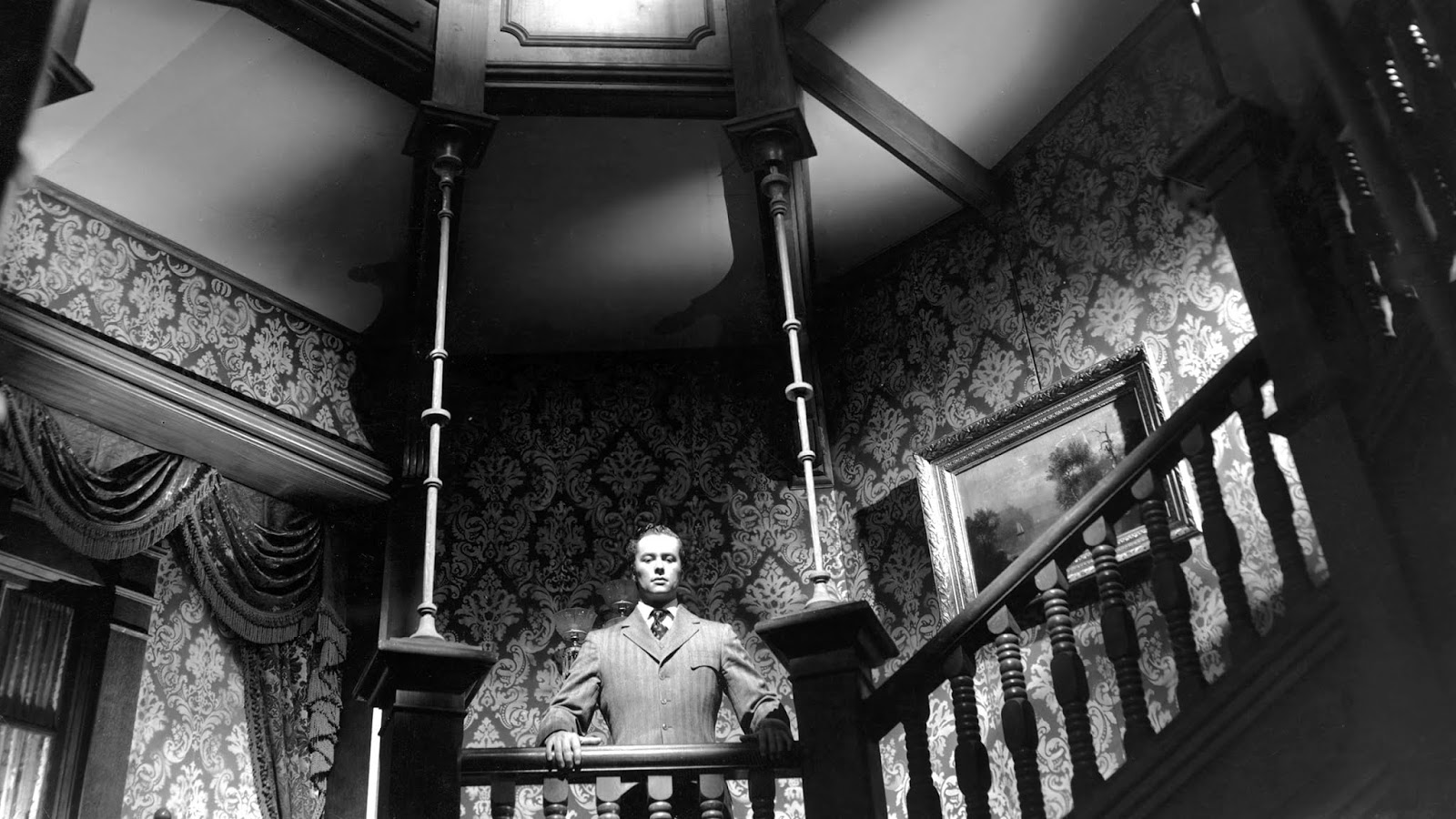
Even in this form, the film showcases Welles’ skill in framing, blocking, camera movement and his pioneering of ‘Deep-focus’ onscreen. There’s a lot to enjoy here even if the film does indeed feel the absence of those forty minutes cut from its runtime. The film still does hold onto it’s notion of being ‘an epic’ even though its 88 minutes feel at odds with the story at hand. You can tell that there’s something missing, but the overall decline of the Ambersons family is intact, if not as biting as it could be. The last scene in particular feels one-hundred percent at odds with the last half of the film narratively speaking. It still works, but nowhere near as well as you might expect from Welles- which makes the Studio’s cuts that much more obvious. When looking back at this film, especially alongside his later film in “Chimes at Midnight”, Welles seems indeed to be a man in love with the romanticized past. The opening of this film brilliantly showcases this notion as Welles narrates over the way of life that had benefitted the Amberson family so greatly in the late 1800’s. As we’re shown men changing their fashion styles in a large mirror over the seasons as they pass Welles narrates the seemingly increasing speed at which life was (and still is) accelerating. “Too slow for us nowadays, because the faster we’re carried, the less time we have to spare….In those days, they had time for everything. Time for sleigh rides, and balls, and assemblies, and cotillions, and open house on New Year’s, and all-day picnics in the woods, and even that prettiest of all vanished customs: the serenade.” Throughout this he’s darkened the corners of the frames and made this sequence feel as though you were thumbing through old sepia-toned family photographs, a nostalgic and anxiety inducing look at the harrowing speed of humanity and its changing ways, which is more constant than we perceive it to be.

While the film isn’t what it could have been, I would still recommend a viewing of it. The performances, truncated they may be, are an idication of Welles evolving direction after ‘Kane‘. I also can’t forget to mention Agnes Moorehead as ‘Aunt Fanny’, she has some of the most playful and heartbreaking scenes with Tim Holt’s George throughout the film. Welles choosing not to impart his own performance as any of the leading characters allowed the audience to more aptly connect with them, or against them, on their own terms. Welles is all over the film in parts, but his bravado and presence would probably have taken away from the ensemble nature of the film, which I do believe was a wise choice. Though I have to admit the production design of the mansion itself, and the gliding, inventive, camera-work stole most of my attention the first time around. For the record, I do not believe that this film is better than “Citizen Kane” as some have come to say in recent decades, it’s a fine film- but just as almost every other film of the twentieth century, it’s no “Citizen Kane”.

Final Score: 2 Broken Legs

For an in-depth look into the history of “The Magnificent Ambersons” and it’s original edit’s status as film’s ‘Holy Grail’ of undiscovered glory, check out this article by Vanity Fair:

https://www.vanityfair.com/hollywood/2010/04/magnificent-obsession-200201

Here’s also another essay about the whole affair that appeared on The Criterion Collection’s ‘The Current’:

https://www.criterion.com/current/posts/6061-what-is-and-what-might-have-been

film

Old School Review: “Paris, Texas” (1984)

Written by Sam Shepard and directed by Wim Wenders, “Paris, Texas” is a road movie that’s ultimately about troubled parents, loss, and connection. The film begins in southwest Texas as the camera travels over empty, grand, landscapes of rock and dust until we come upon a man wandering alone through the vast expanse. The lone figure is clad in jeans, a suitcoat, and a worn red baseball cap, his face sunburned and craggy, he has but a jug of water that he empties before continung onward. Eventually he comes across a small building that juts out from the nothingness. It’s a local watering hole, he enters, grabs some ice out of a freezer, and then passes out.

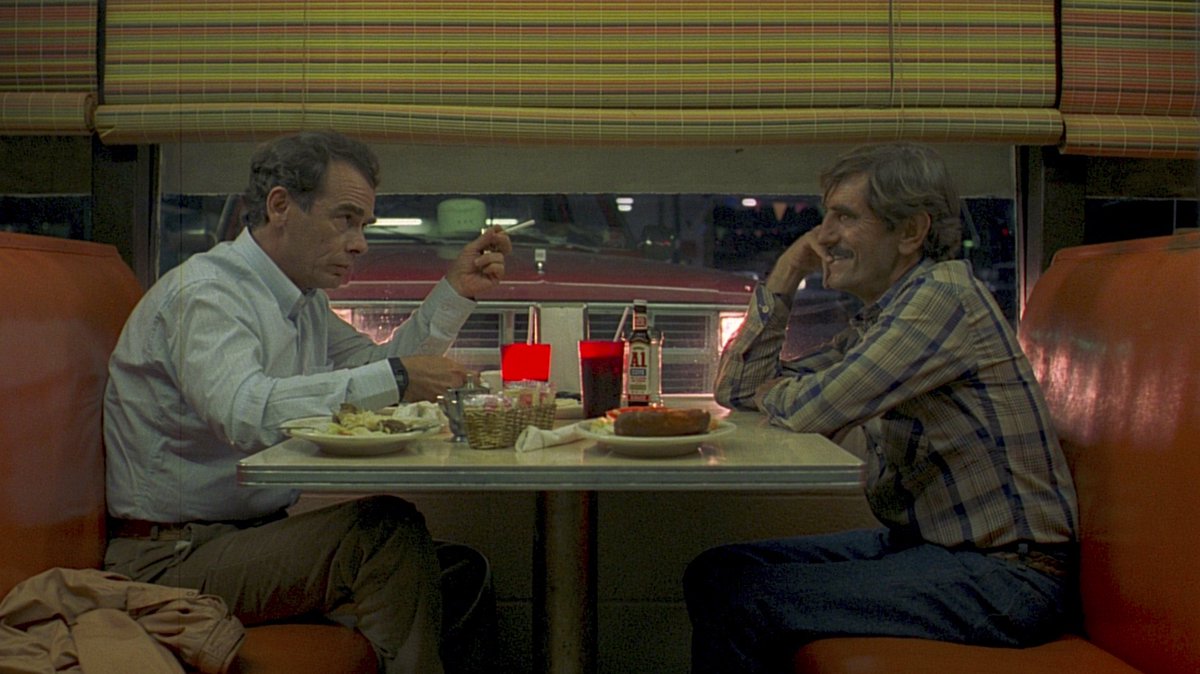
We soon discover that this man’s name is Travis (Harry Dean Stanton) and that he’s been lost wandering the desert for roughly four years after a Doctor (Bernhard Wicki) finds and calls Travis’ brother Walt (Dean Stockwell). Walt flies out from Los Angeles to retrieve his long lost brother, and after several false starts- Travis has a tendency to get up and walk away- they then embark on the road trip back home as Travis will not fly. This first third of the movie Travis is essentially mute, and despite all of his brother’s attempts to get him to talk back and tell him where he’s been this whole time, he barely utters a word until he slowly begins to reintegrate into society and seemingly remember his past, who he was… and is. Turns out that Travis had a wife and a son, and that Walt and his wife Anne (Aurore Clément) have been raising Hunter (Hunter Carson) as their own ever since Travis’ disappearance. The second act takes place in L.A. as Travis lives at his brother Walt’s home with Anne and Hunter. It’s a slow going reunion, but eventually both Travis and Hunter realize that they both remember each other and begin to reconnect. It’s rather charming in its own way.

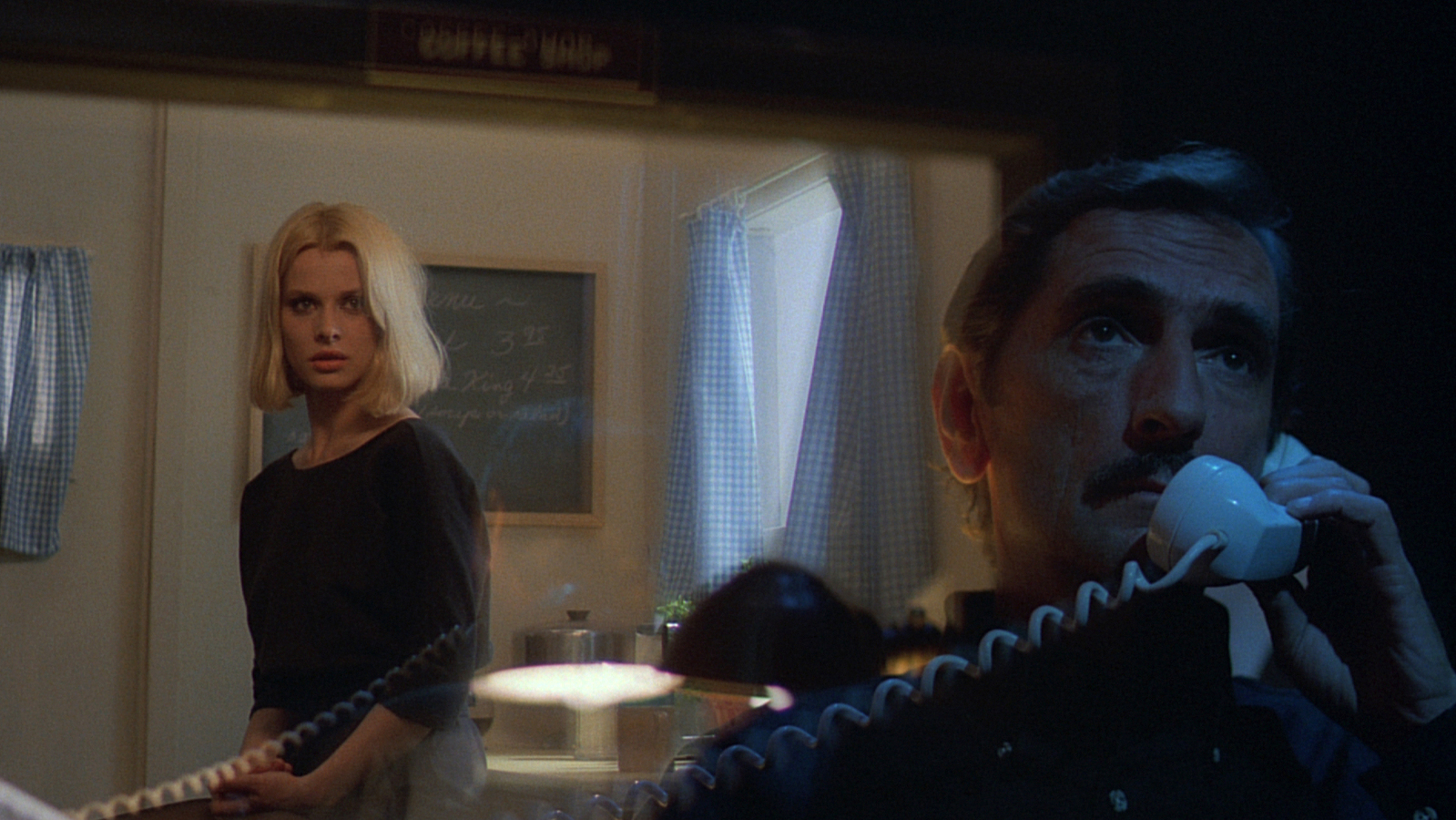
Later, after the family watches some old footage of a beachside vacation before everything went to hell, both Travis and Hunter are entranced by the appearance of the missing wife and mother, Jane (Nastassja Kinski). This spurs the two to throw caution to the wind and depart to Houston, Texas on a hunch that they can indeed find her. The third act is mainly of father and son reuniting to rediscover their Jane. We also get a deeper realization of what each parent has gone through after Jane is found and they both take turns trying to explain to the other their deep existential crises, their sadness, and regret. It’s easily the best scene of the film with Harry Dean Stanton giving a powerfully emotional monologue. Strangely, out of their confessionals comes a heartfelt, if illogical, reunion between mother and son. Travis sacrifices his love for them as he knows he cannot be a father, or husband to either of them anymore.

To truly enjoy this movie, you must throw away the notion of realism. This film is Wenders engaging with the American Myth with a European eye guiding the characters. It feels like every sad country song you’ve ever heard- but depicted with earnest sincereity and shown plainly. The characters take their time with their words, almost irritating so, but this film isn’t interested in reason or logic. This is poetic allegory onscreen, and that may not work for every viewer, but for those that it does, you’ll find an emotional journey with carthartic release by the end. I myself am torn about how I feel about the movie. I’m glad to have watched and experienced it- but it’s my least favorite film of Wim Wenders’ that I have seen thus far. It is painfully slow paced. I’m game for a good slow burn, but it almost doesn’t feel like the wait was worth it. I would argue that the film is worth a watch for the cinematography and for Harry Dean Stanton’s acting. He does a lot with little to no dialogue. I also quite enjoyed the mystery of the first half of the film. Your enjoyment of this film may vary based on your patience.

Final Score: 1 new pair of boots

film

Old School Review: Orson Welles’ “Falstaff (Chimes at Midnight)” (1966)

Written, edited, produced, starring, and directed by Orson Welles, “Falstaff (Chimes at Midnight)” is an adaption of several plays by William Shakespeare regarding Henry the IV, Henry the V, and notably Sir John Falstaff, knight of mischief. My relationship with Shakespeare has been an evolving one since having to read through several of his most famous plays in High School. I’ve never much cared for “Romeo and Juliet” or even “Macbeth” for that matter, but I’ve come to greatly admire the plays concerning the ruling hand of England, academically called the “Henriad” plays, meaning four to eight (depending on who you ask) of his works dealing with Historical figures and events (though my favorite piece by Shakespeare is “King Lear”). Orson Welles took the comic side character of John Falstaff and decided to tell a story that focused more on the relationship between Hal (Keith Baxter), or Henry the V, and his two father figures in Falstaff and Henry the IV (John Gielgud).

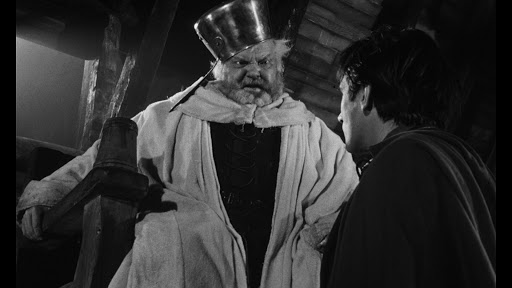
More than that however, the film seems to be intently focused on the changing of the times, going from a more “Arthurian” romanticized and nostalgic past, versus the new, cold, modern age. The first act is full of playful scenes full of movement amongst Hal and Falstaff and company that is perfectly juxtaposed against the later scenes in the film concerning Henry the IV and the colder, harsher, future. The scenes in the Castle are rigid, somber, with architecture filling the frame rather than the first half of the film which focused more intimately on the faces and action of Hal and his companions. Welles’ blocking and cutting on movement greatly assist in the pace and kinetic energy of the story as it’s being told. Which, I must say, helped to keep me personally invested in the film. While, yes, the langauage is old and a bit difficult to understand at times, the actors all emote so effectively that you get the general idea of what’s happening and how the story is moving. I found this film to be far more approachable than Laurence Olivier’s adaption of “Henry V” for example. That film had few camera movements and felt as though it were itself a stageplay and didn’t quite use the medium of film to its advantage.

After the mesmerizingly well executed battle sequence halfway through the movie (more on that in just a bit), you may begin to have an inkling that this story, or at least this version of the story, isn’t one that may end in joyous good fortune, but rather, one of tragedy. It’s as much Orson Welles’ longing for a good pair of rose-colored glasses as it is for the simplicity of easier times gone by, and Falstaff embodies that wholeheartedly. The character is one of charming ego and pathetic lies, conjured from exaggeration and jovial, bawdy, good times. Which, in the light of modernity, cannot exist side by side such a serious and brutal world. That brutality is borne out in the expertly crafted war scenes in the middle of the film, which were particularly exciting. The whole sequence felt surprisingly modern in its depiction. Quick cuts with the editing amid the dirty, chaotic, action with many men dying in the mud felt revelatory for its time. The battle feels appropriately frantic with handheld shots and close ups of horrified faces, especially when you compare it to the earlier scene in which Falstaff and Hal commit a small scale robbery in the woods, filmed on gliding dolly shots set against a beautiful forest with a very playful mood. When you focus on how Falstaff is depicted during the battle, it’s as if the two time periods of England are merging. Falstaff running around cowardly in his huge armor and hiding from the fight- while intercut with rapid shots of men dying awful deaths, most of which is indescernable when trying to figure out who’s who on the battlefield. In this beginning of the new era, Falstaff is out of place. He does not fit in this violent and serious world of conflict. I must also take a moment to point out that though rotund and portly, Welles was shockingly nimble and quick on his feet in several scenes throughout the film. I did not expect that.

This film was far more complex and fascinating than I expected going in. It’s actually quite funny too. There’s a scene early on when Hal and Poins (Tony Beckley) turn Falstaff’s cheeky robbery on him by spooking him into running off, which turns into a great bit when they hear him greatly exaggerating his pursuers and his bravery in fending them off. I highly recommend this one, and if you can get past the archaic language barrier you’ll find a satisfying and endearing story. Orson Welles himself cites this as his favorite film to have worked on and completed, despite it being a financial failure. Check it out!

Final Score: 12 Chimes

Orson Welles on “Chimes at Midnight”:

film

Old School Review: “Three Outlaw Samurai” (1964)

Written by Eizaburo Shiba, Gin’ichi Kishimoto, Keiichi Abe, and Hideo Gosha, and directed by Hideo Gosha, “Three Outlaw Samurai” is a blistering Chanbara, or ‘sword-fighting‘, film that excels in its characterization of the three titular Samurai while keeping a tight and satisfying pace. The aspect of the film that struck me most while watching was how familiar the film felt. Not simply because the film relies on staples of the Samurai genre of cinema, it most certainly does, but rather the three Samurai themselves and their personalities. It reminded me most of the Western Epic, “The Good, The Bad, and The Ugly”. Now, both this film and Sergio Leone’s first entry in what would be come commonly known as ‘The Dollar Trilogy’ starring Clint Eastwood as The Man with No Name, were completed and released in 1964. “Fistful of Dollars” was a Western intrinsically tied to another Samurai film, “Yojimbo” which provided the foundation of what the dollar trilogy would become. So, is it unreasonable to suggest that Sergio Leone, Clint Eastwood, or someone involved with the production of “The Good, The Bad, and The Ugly” saw this film and decided to return to the well of Samurai film homage?

Titular Samurai left to right; Kikyô, Shiba, & Sakura.

Granted, these two films are incredibly different in many ways. The runtime for the dollar trilogy capper was a lofty four hours long, whereas “Three Outlaw Samurai” is a compact hour and a half. Sergio Leone’s third outing with The Man with No Name was also stylized more as an ‘epic’ with vast distances traveled while this film’s consequences and geography are smaller in scope- though no less violent! The worlds of both films are indeed brutal, death surrounds all the major players of each film, the major difference here is that the Western keeps the three titular characters at odds with each other throughout the film while the Samurai movie has it’s characters eventually working together against their adversaries. There are shifting allegiances in both films, but the back and forth morality was a trait more fervent in the Western. The characterization of all six share some similarities between each and their counterpart. Shiba (Tetsurô Tanba), for example, is ‘The Good’ of this tale. We start the film with this ronin as he wanders into a constantly evolving hostage scenario at a mill just outside the town. He enters and sees that three village peasants have captured the local Magistrate’s daughter in order to force the local government’s hand in lowering the collective tax of eight surrounding villages. After several attempts at diplomacy with the Magistrate, the villagers felt they had no choice but to take drastic measures to feed their families and stay alive. Shiba plays the aloof ronin part well in the first act, when the government’s goons show up, he helps the farmers defend the mill and makes sure the Magistrate’s daughter eats as well. Cue the introduction of ‘The Bad’ Kikyô (Mikijirô Hira), a hired Samurai working for the Magistrate who enjoys the finer things in life. He takes a lot of motivation to eventually join the cause, but betrayal can be very persuasive. The last one to be introduced to the story, Sakura (Isamu Nagato), is our freewheeling and slightly rotund Samurai who is this film’s ‘The Ugly’. He begins in the Magistrate’s prison, but ends up switching sides to help the farmers when ordered to assist in slaughtering them at the Mill with their ronin guardian. Though admittedly, Sakura is a far more moral character than Tuco aka ‘The Ugly’.

“Three Outlaw Samurai” does a lot with it’s runtime, the storytelling economy is inspiring and compelling. There’s a lot to love here, the film’s action sequences are expertly crafted, thrilling to watch, and while it may not reinvent the wheel, the execution of it’s familiar elements paired with stylistic flourishs throughout the runtime make it a stellar example of the Samurai film genre. I highly encourage anyone that’s interested in Japanese cinema to give this one a watch. Revenge, loyalty, love and loss- this film has it all!

Final Score: 3 Samurai Outlaws

film

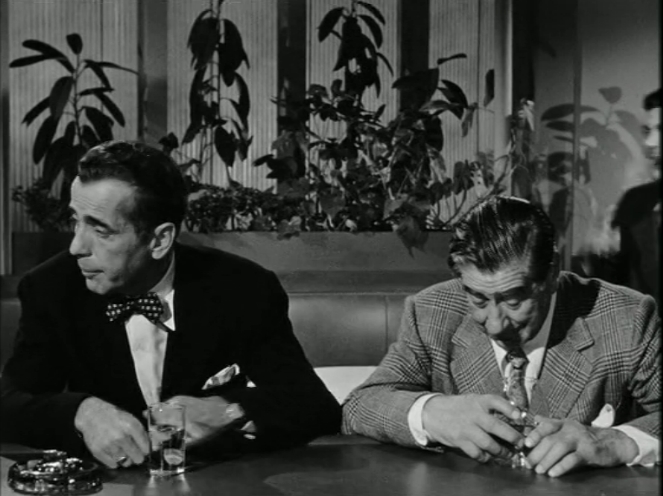
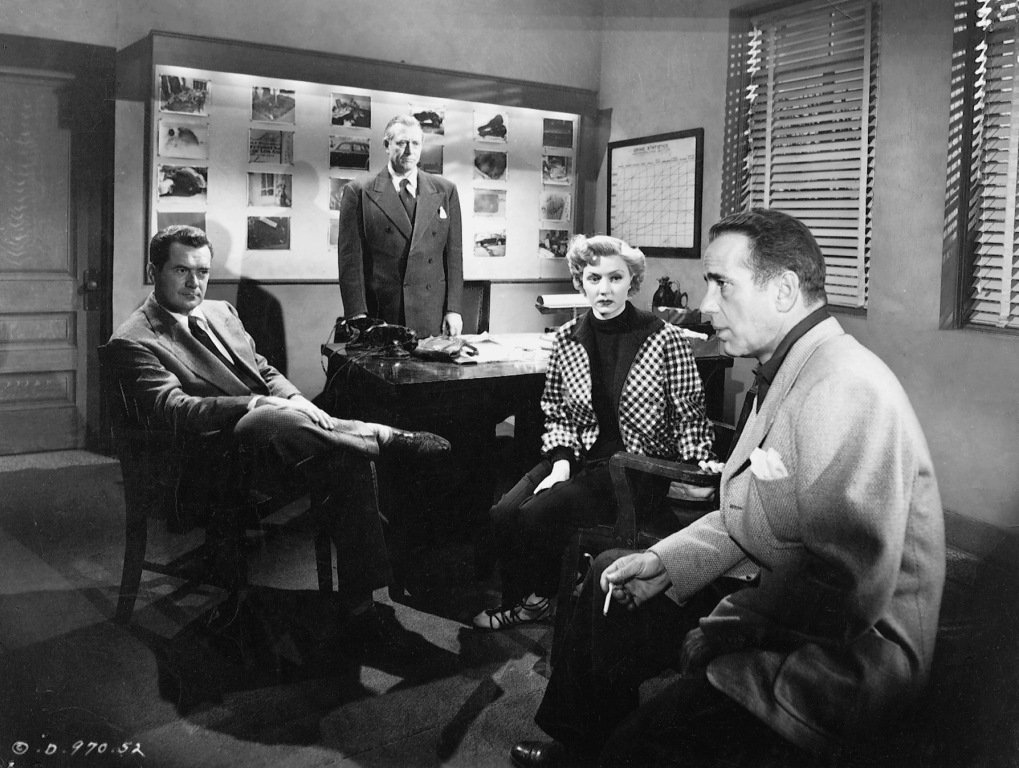
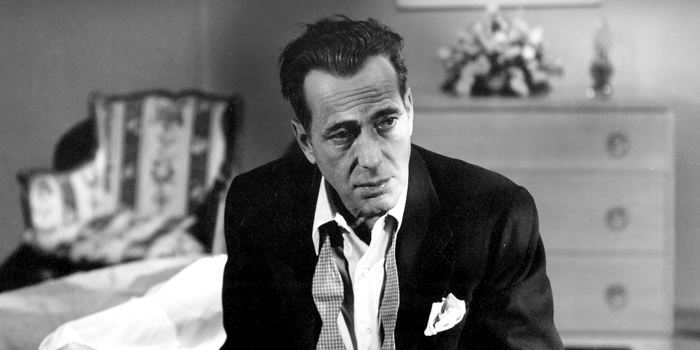
Old School Review: “In a Lonely Place” (1950)

Written by Andrew Solt, based on a story by Dorothy B. Hughes, and directed by Nicholas Ray, “In a Lonely Place” is a mystery noir film that cleverly plays with audience expectations and goes against the grain when regarding Hollywood star Humphrey Bogart and his character, Dixon Steele. Having only just recently seen “Casablanca” for the first time this past summer (I know, I know..) paired with “The African Queen” and “The Maltese Falcon”, I had an image conjured up from these films of Bogart’s usual assets in acting. Namely, playing a man beaten down by the world or it’s expectations resulting in sarcasm, a dry wit, and usually with a drink in hand or nearby. He might play a cynic- but at his core the characters usually have good intentions. This film toys with that image and what we the audience may have come to expect from Bogart’s other hit films, granted, the film starts out in a very familiar place for Bogart as Steele, a washed up screenwriter with a chip on his shoulder and a drinking problem. After Steele throws a spiteful fist early on in the film however, we get an inkling that this incarnation of Bogey has more of a temper this time around. Steele is a far punchier lead than his roles in the previously mentioned films, and this only assists in the delightful second act flip, which I found to be particularly innovative for the time.

The film begins with Steele’s agent, Mel Lippman (Art Smith), a longtime friend and confidant, whose just gotten Steele the opportunity to adapt a trashy pulp novel into a screenplay. Steele can’t bring himself to read the book even though he needs the work and instead hires a hat-check girl, Mildred Atkinson (Martha Stewart), who he heard loves the book and had just finished reading it. She comes to his place that evening and ecstatically goes over the plot while he glances at a new neighbor across the way who had also noticed him earlier as well. After Steele gets the general idea of the story, which he seems to detest a bit internally, he sends Ms. Atkinson home for the night by a nearby cab station- which he pays for in addition to helping him with the pulp fiction. Early the next morning Steele’s met by L.A. Detective, Brub Nicolai (Frank Lovejoy), who had served under him during the war. He brings Steele in for questioning, and while Steele believes it’s because he got into a fight with the son of the studio head the previous day, it’s actually because he’s the prime suspect in the murder of Mildren Atkinson found dead earlier in the dark hours of the morning.

Steele doesn’t do hiumself any favors when being questioned by the police. By his nature, he’s a macabre idealist with awful self-esteem, someone who’s intentionally vague and (as a writer does) likes to exaggerate from time to time. Luckily for him his new neighbor, Laurel Gray (Gloria Grahame), did see Ms. Atkinson leave the previous night without Steele, providing him an alibi, as well as a flirtatious invitation. After awhile the two begin to fall in love, they begin to date and Steele gets back to writing after Laurel helps get him off the bottle for some time. Though Laurel and Dixon do seem to be mutually affectionate to each other, things begin to go awry when an evening at the beach turns sour and Dixon’s temper reemerges when he discovers that Laurel was brought in for further questioning by the police chief, which she didn’t tell him about as she didn’t want to interrupt his writing streak. That he’s still being followed amid uncertainty in the air of whether or not he actually did kill Ms. Atkinson sends him into a rage while on the road and he almost kills a man after a traffic altercation. This is when the film switches the perspective to that of Laurel, who’s paranoia about Dixon grows slowly at first before he starts displaying seriously questionable behavior. This is the film’s best trick, they took great effort in the first half to assuage any suspicions of Dixon as a murderer and slowly inserted moments and scenes that could be looked back on with the latter half of the film’s perspective that turn the audience against Dixon whose losing control in his life and begins to break down the closer we get to the finale. It’s a very clever notion, the film’s twisty perspective and illusory truth pair to make this one a memorable outing for both Bogart and Grahame.

While this film may not reach the heights of the other Bogart films mentioned above, it does a fine job with some fun creative twists thrown in for good measure. There are some particularly entertaining pieces of the film that I must mention before departing however. Firstly, I really enjoyed the sauced theatrics of Steele’s has-been actor buddy, Charlie Waterman (Robert Warwick), who pops up throughout the film to espouse lyrical poetry and to support his screenwriter friend. Bogart also has a few really unexpectedly funny lines throughout as well, like when he jokingly suggests another suspect was the actual killer, not him, the man replies as Dixon shakes his hand on the way out: “What an imagination. That’s from writing movies.” And Dixon turns it around on the man in a split-second with: “What a grip. That’s from counting money.” There’s a lot of sly jabs like that throughout the film. As for the downsides, the film definitely feels its age. Those turned off by depictions of toxic masculinity will probably not find much to like about Dixon Steele. That and good lord there’s a lot of smoking cigarettes- which, is expected given the time period, but it’s still jarring at times and kind of fascinating to see the wheel of time rolling ever farther from cinema’s golden age of studio controlled dramas, musicals, and epics. If you’re looking for a decent black and white mystery noir, this should do just fine.

Final Score: A Few Weeks…

film

Quarantine 2020 Catch-Up — Movie Reviews: Doctor Sleep

Well, my last review “Until the End of the World” couldn’t have been more aptly timed it seems. Personally, I’ve been quarantined for about two weeks. No, I don’t have Covid-19 (aka Coronavirus), however my place of work has been heavily impacted by this phenomenon as, I’m sure, many of you reading this probably have experienced some level of disruption in your life as well. So, in these times of uncertainty, I’ve decided to dive into my watch-pile of movies that I’ve accumulated over the years and forgotten about, or more plainly- haven’t gotten around to watching for one reason or another. I figured I’d start with a more recent release, and Mike Flanagan’s adaption of “Doctor Sleep” is an excellent place to begin!

Written and directed by Mike Flanagan, “Doctor Sleep” is both an adaption of Stephen King’s Novel and a direct sequel to Stanley Kubrick’s film. This film also puts a heavy emphasis on nods back to Stephen King’s original book that really cements the world building attempted here. Admittedly, I missed the theatrical run when it was in theaters, so when I picked up the blu-ray, I chose the ‘Director’s Cut’ of the film. I’m not sure how much of the story is altered for this cut, but as I see it, this should be the definitive version of the film. Though, this does add about a half hour to the run time making it a three-hour commitment, you have been warned. The story is divided into six chapters and each one effectively peels back layers of the return to this world, and the dangers that come with it. We get some quick flashbacks early on with a young Danny Torrance and his Shining mentor Dick Hallorann, or at least, a communication with Hallorann from beyond the grave. He warns Danny that “it’s a hungry world out there” and that there are those who would feed on Danny’s power in a most violent way. It’s really the perfect introduction to the threat that Danny must eventually face in “the true knot”.

When we catch up with Danny (Ewan McGregor) as an adult, it’s 2011 and he’s in a bad place. He’s become an alcoholic to quiet the effects of his shining abilities. Dan (as he’s called now) steals from the single mother he’d just had a one night stand with and gets on a bus and heads out of town. After some ignored shame from the ghostly Hallorann, Danny finally succumbs to do the right thing after being haunted by the dead Mother and Son he neglected. He finally settles in a small town in New Hampshire and befriends Billy Freeman (Cliff Curtis) who helps Dan get a small apartment, a job as an orderly at the local Hospice, and becomes his AA sponsor. Fast forward seven years to 2019 where Dan’s gotten over his alcoholism, and he gets a new ‘friend’ of sorts when another person, who also shines, leaves him chalk messages on the blackboard wall. That ‘friend’ is Abra Stone (Kyliegh Curran), a teenage black girl living in an affluent suburb whose Shining power is strong, even more so than Dan’s. Meanwhile, ‘the true knot’ is running amok in the world, feeding on the life-source of those who shine. ‘The true knot’, as they call themselves, are a roaming band of psychic vampires that hunt and devour those who shine, and those who shine strongest give the most potent steam when they die. Initially, I wasn’t impressed with these villains, but they grew on me over the course of the film. Once they capture and brutally slaughter a young baseball loving boy, their threat and menace was secured. The group consists of about ten to twelve members for most of the story, each a different immortal age and prowess. The group is run by Rose the Hat (Rebecca Ferguson) a particularly charismatic and analytical vampire of the mind. Rose is incredibly gifted in the dark arts and hears Abra’s mental projections pleading with Rose to stop the young baseball player’s slaughter- even halfway across America. Thus she sets her sights on the young Abra, and when Abra seeks out Dan for help in her investigation of that young boy’s murder, things start to accelerate.

At this point you may have an idea or two where the story is going, but I’ll leave any plot summation for your own discoveries. In truth, I was incredibly, joyously, wrong in my original assumption that a sequel to “The Shining” would be ill-advised. I’m still in shock that “Doctor Sleep” isn’t just a passable sequel, but one that ties both books and Kubrick’s film adaption together in consistently smart and horrific (i.e. Good) ways. While the last half hour or so does indulge in returning to the Overlook Hotel, it earns that return. It doesn’t feel like the script takes us there for shallow nostalgia, but for a deeper character exploration for Dan Torrance besides the solution for Rose the Hat. Which really runs into the theme of the film, using your own fears against your problems. Facing your fears with the acknowledgement and confidence required to stop them. Speaking of the return to the Overlook, one of my favorite aspects of this film was the reliance on actors that look extremely close to the actors who portrayed major characters in the first film. There’s no attempts to dig up Jack Nicholson and reanimate his face for a cameo scene here, no, just strikingly similar actors. Particularly impressive was the actress they got to portray Wendy Torrance in Dan’s flashbacks, Alex Essoe, she was eerily close to Shelley Duvall‎’s appearance and her acting choices were so close that, at times, it was mind-boggling.

“Doctor Sleep” was a welcome surprise, and well worth the wait! The new characters and dynamics that arose were engaging and well executed, but the return to the characters and places that we know and loved from both the book and film adaption of “The Shining” were outright spectacular! I haven’t enjoyed a long-gestating sequel as much as this since “Blade Runner 2049”. If you enjoy a good horror movie every now and then, and especially if you like or love “The Shining”, I highly encourage you to check out the Director’s Cut of this movie!

Final Score: 41 Psychic Vampires

film

Old School Review: “Until The End of The World” Director’s Cut (1991)

For my 250th blogpost here, I wanted to review and write about something that felt as monumental as reaching this number of articles. Wim Wender’s 1991 globe-spanning road-trip, mystery, romance etc.. felt like the appropriate choice. At nearly five hours long, I’ll be reviewing the Director’s Cut version of the film, and it was a feat simply to find the time to sit through the road trip epic. I’ve only seen one other film from Wenders, “Wings of Desire”, which many call his Masterpiece, and you can read my thoughts on that film here on the blog as well; (https://spacecortezwrites.com/2018/08/24/old-school-review-wings-of-desire-1987/). If I were to try to describe all of the story beats, all of the character moments, or even the bulk of the visual/audial hallucinatory imagery that takes up a considerable volume of the last hour of the film- then this review would be nearing the 8,000-10,000 word mark with ease. Instead, I’ll try to give an authentic sense of the film’s perceived meaning and chatter along about the aspects I thought were especially poignant or prescient.

Sam Neill, Chick Ortega, and Rüdiger Vogler together in the Australian Outback.

Written by Peter Carey and Wim Wenders, “Until The End of The World” was based off of an idea conjured up by Wenders and Solveig Dommartin, who stars as Claire Tourneur, the lead of the film. “Until The End of The World” is a hard film to narrow down to any one genre other than that of journey and discovery. The film mainly follows Claire on a journey that spans the world, however she herself is chasing another individual, Trevor McPhee (William Hurt), an Australian with an American accent that she bumps into in France. However, there are a few key details to digest first before getting into that. While the film was released in 1991, it is set in 1999, aka “The Future“. In this version of the twentieth century’s final year an Indian Satellite outfitted with Nuclear weapons has spiraled out of control and the unknown impact of this slowly falling doomsday device has the world on edge. Millions of people are constantly migrating away from the next best guess on wherever it may land, but Claire could care less. We begin the film with her in an eclectic Venetian Party as she tries to forget about Gene (Sam Neill) her former boyfriend, an English Author living with her in Paris. Gene’s infidelity drove Claire away, and even though he loves her, she quickly falls for Trevor after a few encounters in Europe. On her way back north to Paris Claire gets in a car wreck with a couple of amicable French Bank Robbers, namely Chico Rémy (Chick Ortega) who becomes fast friends with Claire as she allows them a ride for awhile. There’s a huge bag of cash involved but getting bogged down in the details won’t help in analyzing a movie that’s almost five hours long. Anyways, on the road to Paris she meets Trevor, who’s in dire need of transport as he’s also being pursued by another Australian in a trenchcoat, but he’s armed. When she finally gets back to Paris, Trevor departs, and she returns to Gene’s apartment. After Claire showcases the huge bag of stolen money to Gene, she realizes that Trevor has stolen some of the money. She vows to track down Trevor, she says it’s to retrieve what’s been taken from her- but as we hear in the plentiful narration, Claire couldn’t really even articulate her reasoning for herself other than a sensation of purpose in doing so. Meanwhile, Gene’s been writing a new Novel with Claire as the protagonist, and as such, he too follows her across the world. In fact, the narration within the film is all from Sam Neill’s Gene, by the end we realize that the narration we’ve been hearing for roughly four hours, is from Gene’s second book he starts on this journey when he has a profound realization about Claire, humanity, and life in general. There’s a lot of chasing, following, love loss, forlorn nostalgia, and newfound friendships in this film. In truth the first half of the film is Claire following Trevor around the world from Paris to Berlin, where we meet a German Detective (Rüdiger Vogler) that Claire hires to track down Trevor, to Moscow, Beijing, Tokyo, San Francisco, and then to central Australia. There’s A LOT that happens in that time. Relationships between those involved in the Love Triangle evolve, we learn more about Trevor, why he’s being pursued, what his personal mission is, and that his real name is Sam Farber and that he’s the son of brilliant scientist Henry Farber (Max von Sydow). *I must stop for a moment to acknowledge the nod of cinematic respect for Yasujiro Ozu’s work with the short but notable inclusion of the legendary actor and longtime collaborator of Ozu’s, Chishû Ryû- seeing him appear in this film even for only but a moment was like seeing an old friend again, and I personally adored that moment.*

Solveig Dommartin, William Hurt, and Lois Chiles in San Francisco as Hurt’s Character, Sam, attempts to record a video clip of his sister, Elsa, for their Blind Mother to see with their father’s latest invention.

However, it is the second half of this film that captured my attention more. The whole of the second half of the film is set in Australia. The characters discover that the U.S. Government actually did nuke the Indian Satellite, resulting in an planet-wide N.E.M.P. (or nuclear electromagnetic pulse) that shuddered all non-shielded electronics. People everywhere are unsure of the devastation, without a connection to the world, they fear for their fellow humans all over the planet, not knowing if the atomic winds will turn in their direction. The whole gang of characters, Claire, Gene, Sam, Detective Winter, and even Chico, gather at the home and laboratory of Dr. Henry Farber. They all engage in pleasantries and we meet Sam’s mother Edith Farber (Jeanne Moreau) as well, the person he’s traveled the world over for, just to help her see once more. They spend what seems like weeks or months there trying to get the science of the project down as they ignore the greater significance of world events and look inward on their little project, which brilliantly foreshadows the next stage of events. On December 31st 1999, the group reestablishes radio contact and realizes that the world has been spared, the nuclear explosion and fallout was entirely contained to space. They also had some successes in transmitting images and video into Edith’s brain and visual cortex with the help of Claire, a natural at transmitting brainwaves apparently. However, all of this exhaustive testing has wrought too much from Edith and she passes with the twentieth century. After the news that the Earth is indeed intact, each character except for Gene, Claire, Henry, and Sam leave for home which sets the tone down to a more personal one. Sam’s father Henry may be a genius- but he’s as obsessive as his son in his pursuits and after Edith’s death he moved towards a new goal; transmitting people’s dreams into digital images and video. Henry thinks it will win him a Nobel Prize, but the truth is he needed to make the device, for his dreams where the only place that Edith lived for him, or at least, his memory of her. After some trial and error the headset and accompanying monitor reveal their dreams to both Sam and Claire and it immediately consumes their interests to an unhealthy level. Neither or them can take their eyes off of their monitors as they stumble through the world and ignore everything around them. Sound familiar? Obsession with screens and the nostalgia of the mind aren’t the only things Wim Wenders correctly predicted with this film. The only reason Detective Winter could track down Sam earlier in the film was with a rudimentary search engine that combs the digital world for traces of the footprint you’ve left through credit card uses among other variables. The film also had video-messaging, VR-like headsets, and devices comparable to large Ipads. I’d also like to take some time to mention that the audio in the film was something that was clearly, heavily, considered. Throughout the film there are a litany of songs used that not only reiterate themes resonant with the story, there’s also a huge amount of atmospheric tracks in the soundtrack that are big players in the overall texture of the film.

Max von Sydow as Henry Farber, a brilliant Scientist living off the grid in Australia to continue his experiments into extracting imagery from brainwaves.

“Until The End of The World” is a fascinating experiment in cinema’s history. There are parts of the film that I found quite charming, other sequences felt a bit too elongated for my taste however. There are stretches of the runtime that I found to be too meandering for me personally, but there’s enough unique choices to keep my own attention. The cast itself is certainly a major factor in choosing to check this one out, the performances were compelling, though I had a tough time understanding or relating to Claire and her decision making for most of the film. It was, however, quite nice to watch a movie with Max von Sydow in it the day after his passing, obviously he was a gigantic player in cinema’s history and he changed it for the better. This one was a very mixed-bag in my opinion, it was worth a watch to sate my own curiosity, but not everyone will appreciate this one though I’m afraid. “Until The End of The World” is just too long, too vague, and without a coherent sense of direction. Watch at your own risk.

Final Score: 11 Countries

film

Old School Review: “Le Cercle Rouge” (1970)

Written and directed by Jean-Pierre Melville, “Le Cercle Rouge” is a return to the criminal underworld he momentarily left behind to film “Army of Shadows”. This may be my favorite Melville film (of the assortment of his films that I have seen), it’s got the most tightly packed story with a superb cast of characters, all of which are dynamic, engaging, and memorable. The film opens similarly to “Le Samouraï” with another invented epigraph by Melville, “Siddhartha Gautama, the Buddha, drew a circle with a piece of red chalk and said: “When men, even unknowingly, are to meet one day, whatever may befall each, whatever the diverging paths, on the said day, they will inevitably come together in the red circle.” While the whole cast is excellent overall, there are three characters that brought a bit of cinematic magic to the whole affair. First there’s Corey (Alain Delon, of “Le Samouraï” fame) an expert thief who begins the film by being released from prison early for good behavior. Just before his release, a prison guard tips him off about a major jewelry store that’s rumored to be ripe for the picking. The other two are Vogel (Gian Maria Volontè) a notorious criminal who got caught in Marseille and was being personally transported by train with Le Commissaire Mattei (André Bourvil), a tough as nails comissioner who stops at nothing to get the job done. Naturally, after Vogel unexpectedly crashes out of the train’s window and starts an impromptu manhunt through the French countryside, Commissaire Mattei uses every asset in his power to track down the criminal.

While Vogel was running through the woods from the cops, Corey made his way to Rico’s (André Ekyan) apartment, a former colleague of his. Rico’s been making power moves since Corey’s jailhouse detour, one of which involved dating Corey’s former girlfriend. So, Corey makes a power move of his own by robbing Rico of his guns and money right there in his home. After this, Corey buys a car with Rico’s money, and heads out to a diner for lunch. While eating there, Vogel crawls out of the woods nearby and sneaks into Corey’s trunk. Corey drives out to the middle of an empty field, gets out of the car, and sits nearby on some farming equipment before telling Vogel that he knows he’s in the trunk and to come out as he has nothing to fear (Corey had stashed his two guns in the trunk anyways, so he knew Vogel would have them). What follows is a crucial scene, two like-minded criminals with an attitude of stoic nonchalance that suggests that beyond their sparse dialogue, the potential of a lucrative partnership, goes without saying. What begins as a confrontational beat turns towards cooperation with relative ease once each man sizes up the other. Shortly after this newfound agreement, Vogel hides back in the trunk to avoid any prying eyes of the law, and they’re off to Paris. Further down the road, two of Rico’s henchmen force Corey off the road and walk him off the side of the road. Just before they kill Corey for stealing from and humiliating their boss, Vogel climbs out of the trunk, takes their guns, and shoots each man with the other’s gun while holding the pistols with a hankerchief. No fingerprints here, only a newly cemented friendship in crime.

The rest of the film is devoted to the preparation, and execution, of that jewelry heist mentioned earlier. Corey and Vogel make it back to Paris to prepare for the logistics of the heist, but Commissaire Mattei is tracking any and all movements that could be attributed to Vogel. The Comissioner turns up at the scene of Rico’s murdered men and turns over every rock, clue, and hint of Vogel’s involvement. Meanwhile, Corey and Vogel agree that they will need at least two more people to adequately complete the job. First they need an expert marksman, one that knows everything there is to know about guns and ballistics for a very precise shot. Corey has a contact he used to know, though he doesn’t know if the old man is still up for the task, but phones him anyways. That just so happens to be Jansen (Yves Montand), a down-on-his-luck ex-cop with a heavy drinking problem. He answers the call despite a horrifying hangover, but agrees to help. The last piece of the puzzle is a fence to sell the jewelry to afterwards. They go to a farm outside of Paris and convince the fence (Paul Crauchet) that their product will be worth the risk, he agrees. While the three criminals are out haggling with their newfound fence, Commissaire Mattei is back in Paris hounding Santi (François Périer), the owner of a well established nightclub, known for its connections to the Parisian underworld. After everything is in order, they attempt the heist in a scene that’s both wordless and yet excruxiatingly full of a taught anxiety knowing that they could be discovered or caught at any moment. It’s a highly memorable heist sequence that both calls back to cinema’s criminal capers of the past, and yet foreshadows how some heist films are oriented in the decades that followed.

In the end, the fence denies their haul citing that it’s far more risky than he had anticipated with Vogel’s escape raising the awareness of local law enforcement. Though in reality, he had been given orders from Rico not to pursue the product, and to direct Corey towards Santi, suggesting that he may know of a fence willing to take the jewels. Of course, the fence that Santi knows is Commissaire Mattei in disguise. Corey sets up a time and place to make the tradeoff and, as with all of Melville’s Tough Guy crime films, it doesn’t go well for our anti-heroes. This was an excellent neo-noir from Jean-Pierre Melville, and it completes my short dive into his filmography. If I come across some of his other films from earlier in his career, or find a copy of “Un Flic”, I’ll probably give it a watch and let you know what I thought. Check out Jean-Pierre Melville’s work sometime, his films influenced leagues of filmmakers, genres of filmmaking, and are generally a good time.

Final Score: Four Fat Cats

film

Old School Review: “Army of Shadows” (1969)

Written and directed by Jean-Pierre Melville, “Army of Shadows” is adapted from a book with the same title by Joseph Kessel which details some of Kessel’s involvement in the French Resistance during World War Two. Though some characters in both the book and this film adaption are fictionalized versions of real life resistance fighters, the film is meant to be be less of a realized adaption of real life events and more of an expression of the mindset of those living a life of resistance under Nazi controlled France. Which, I feel, is crucial information for any analysis of this film. Interestingly, the film wasn’t well received in France during it’s release as the public view of Charles de Gaulle had shifted dramatically since the second World War. It was also denied an American distribution due to the rather grisly content of the film (for the time anyway), and wasn’t released in the United States in any form for thirty-seven years until 2006.

“Army of Shadows” deals in the suspense of terror in every day encounters. The film follows a small group of resistance members as they attempt to send and receive pertinent information, supplies, and logistics between themselves and a few trusted individuals in the allied forces. However, while the stakes for the characters is always high, the film does not encourage larger than life displays of defiance, but rather playing out small moments in which decisions are made or abandoned that carry the weight of survival or death. A perfect example of this is when Lino Ventura as Philippe Gerbier (a major contributor to the cause during the resistance) escapes a Gestapo prison in France in the first half of the film, Gerbier convinces another captive to rush a German guard, and they both make a break for it, parting ways once hitting the street. Gerbier darts into a barbershop late at night and asks to have his moustache shaved off- the barber mutely acknowledges Gerbier’s suspect request and after he’s done, he denies Gerbier’s money and instead offers him a remarketedly different overcoat instead. It’s a tense, terse, and quiet scene, one that effectively captures the mood of the film as a whole. The minimalism that was so effective in “Le Samouraï” is expanded upon in this film, and used to emphasize the airy, spacious, nightmare that occupies the locations and sets used in the film, but its also, ironically, the claustrophobic inverse for the headspace of the characters that we’re following.

Speaking of the cast, it’s an excellent mixture of returning Melville favorites like Lino Ventura as the lead, Philippe Gerbier, or Paul Meurisse as Luc Jardie, secretly the true leader of the French resistance. Which is a fun turn of events as the actors were enemies last time around in “Le Deuxième Souffle” with Meurisse portraying ‘Inspector Blot’. The other notable standout is Simone Signoret as Mathilde, a wife and mother whose family knows nothing of her involvement in the resistance. Mathilde not only specializes in elaborate costumes, but helped to design intricate operations for the resistance. Memorably, she organized an effort to rescue fellow resistance member Felix Lepercq (Paul Crauchet) from a maximum security prison in Lyon. Mathilde, along with ‘Le Masque’ (Claude Mann) and ‘Le Bison’ (Christian Barbier), dressed as a German nurse and her two bodyguards accompanying her to attempt to transport Lepercq to a different facility due to his extremely poor condition. Though when a German doctor denies him passage and labels him ‘unfit for transport’, Mathilde must stay in character in that moment and accept the decision, comitting to ‘file a report about that’ and then leaving on the spot. To push the subject or to let her face betray her mission at this news would threaten not just her life, but those of ‘Le Masque’ and ‘Le Bison’ as well. What shocked me in the film was the level of commitment that the resistance members swore to- its definitely a situation where hard decisions had to be made, but the atmosphere and casual tone among resistance members who agreed to kill any informers from the inside out was… in truth, very in line with Melville’s cold and analytical nature in previous films. I suppose it was the more intimate nature of the way they had to kill their informer that got me, they had secured an abandoned house to do the deed in- but neighbors had noisily moved in the night before, so no guns. They decide to use a knife, but no one has a knife. What to do? Strangulation it is! The camera does not cut away from the informer, in fact, the frame focuses on the young man as we watch the life leave his eyes. It cements the fact that this is not an easy life, it’s a hard, depressing, and violent one.

While this isn’t my favorite Melville film so far, it’s a unique one that should be seen if you’re a student of film or history, or both. Melville’s ‘tough guy’ noirs will always capture my imagination more than this film did- but the imagery and atmosphere is one I will remember for a long time. If you’ve run out of conventional World War Two films, I highly suggest checking this one out, because while it focuses on people and events that took place during the war, it’s not really a war film. Expand your horizons, and give this one a watch!

Final Score: 1 Submarine

*Below is Roger Ebert’s review of the film and a deeper dive into Melville’s work as a whole, I encourage you to check it out!

https://www.rogerebert.com/reviews/great-movie-army-of-shadows-1969