film

Review: Parasite

*Warning! In order to discuss this film, I will be spoiling large aspects of the plot- I highly recommend this one though!*

Written by Han Jin-won and Bong Joon-ho, and directed by Bong Joon-ho, “Parasite” is a social satire that greatly benefits from the audience knowing as little as possible for your first viewing. Being the first film from South Korea to be nominated for Best Picture at the Oscars this year, it seemed like a perfectly good reason to check this one out. That, and the fact that Bong Joon-ho is an excellent director. Personally, I’ve only seen a few of his films, namely “Snowpiercer” and “The Host”, both of which were quite enjoyable and fun genre films that housed aspects of a critical eye towards society. This film, however, is far more critical of society and it’s financial machinations. If you want nothing more than my recommendation to see this film, then you have it already. It’s easily one of the best films of the year, and as already mentioned, the less you know, the better… I suspect. “Parasite” focuses on two families, the Kims, and the Parks. The Kims are in dire financial straits, a family of four adults living in a small, cramped, and sunken, apartment. They fold cardboard pizza boxes for income and allow street fumagation to freely blow through their windows- free fumagation is better than none, and besides, it will get rid of their bug problem. Eventually Ki-woo (Woo-sik Choi), the son of the family, is offered a lucrative job by a close friend as an English tutor for the daughter of a rich family in town. Ki-woo’s friend is heading out of the country for awhile and he doesn’t want just anybody mentoring this girl, none of his collegiate peers were up to the task though, as they might simply fawn over the young girl instead of actually teaching her. After his interview is a success Ki-woo begins to analyze the Park family’s situation and assess how he may fit his other family members into the high life as well. It isn’t long before the Kim family brutally excises the other working class people that earn their livings from the Park family and replace them with a member of the Kim family, extravagantly performing an act, or scheme, to fool the Parks into accepting them into their realm with high dollar luxury positions such as Art Therapist or Handmaid.
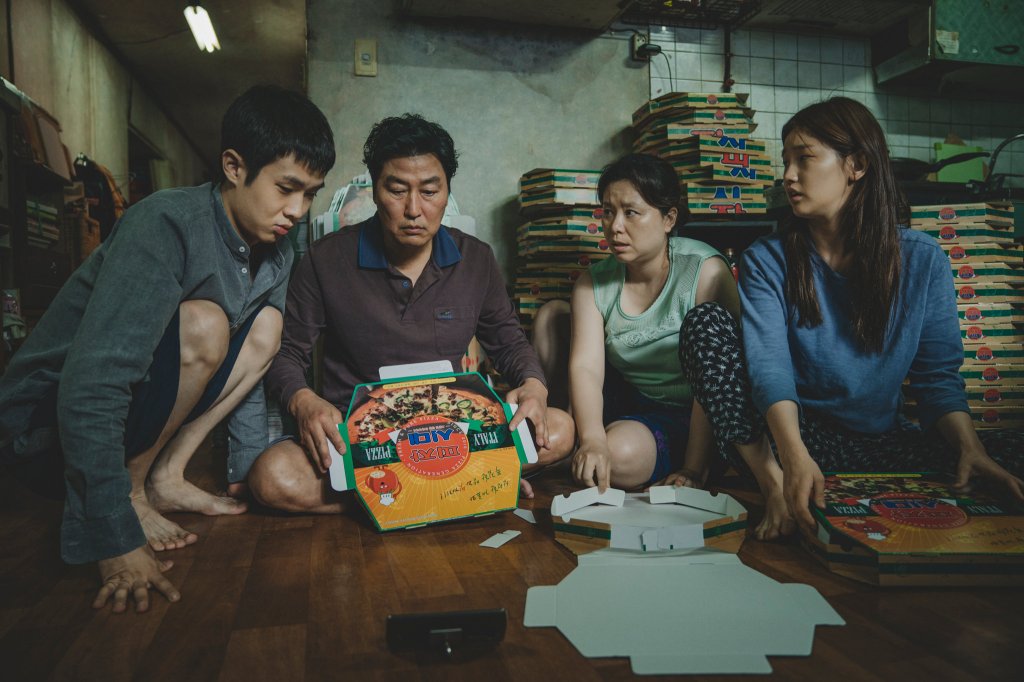
A lot of the film tells its story purely through the visuals displayed onscreen. Through the staging and direction, we can see how differently the two families operate and how each family’s financial status orients their needs for certain skillsets. The two families are staged in near complete opposites, the Kims are almost always physically close together onscreen and working efficiently as a group. The Parks on the other hand are barely in any shots with other members of their family, and when they are there are large empty spaces inbetween them. This division extends to a multitude of layers that separate the two families. The Parks can afford to outsource skills that the Kims couldn’t live without, cooking, cleaning, understanding the needs and idosyncracies of their closest family members etc. The film even wisely showcases how even simple things can affect the families in wildly different ways. When a rainstorm ruins the Park’s camping trip and they have to come home early, they complain that it was “a disaster”. However, when the Kims return to their home at the bottom of the city, the rain that the Parks so quaintly admire in the night sky, has actually caused the Kims a real disaster in flooding their home. “Parasite” even goes so far as to show that while the Parks are very particular about their maids, housekeepers, and drivers “crossing the line” between work and their family life- they have no qualms about reaching out to the Kims while they’re off duty to request a litany of demands.

The writing and complexity of this film are at the core of why it works on so many levels. Literally involving levels to be exact. There’s a lot to be said of the imagery involving staircases throughout the film too. The Parks ascend stairways while the Kims descend, fearing a misstep into the abyss below. Keep an eye out for stairs, they’re all over the film, who goes up them, and who falls down them. I think one particualrly small aspect that could get overlooked, is actually one aspect that I respect the hell out of, creatively speaking. Bong Joon-ho has an opinion about the world and what it does to people, but he doesn’t lay any judgement on the characters. Neither the Parks or the Kims are full-fledged stereotypes, the film doesn’t even seem to embrace each family’s perception of the other. The Parks are not villains or naive, nor are the Kims triumphant protagonists or simple helpers. There are societal criticisms to be had for sure, but these events unfold plainly before us, without a wagging finger or an opinionated slant with a heavy-handed message. If you haven’t seen the message of the film yet, it seems, to me at least, to be about capitalism and how it can turn anyone into Parasites. The film cleverly makes an argument for how daily competition can get cutthroat, but more importantly it dives into how the poor can get lost in the chaos by trying to smother each other in an attempt to climb into the higher class. One of the most powerful scenes in the film is also its most depressing. I’ll leave the specifics to the third act, but when Ki-woo allows himself to be filled with hope at the thought of eventually saving his Father from isolation through the power of money.. it is this hope that has infected him, it is what continues the cycle of poverty and despair. Ki-Woo even has a plan. Which is even worse when considering what his father pointed out earlier in the film when revealing that lives with laid out plans are never lived that way.

I’d be a fool not to point out the crucial performances of all the actors in the film, the movie wouldn’t work without the skills on display and comittment to the craft. Kang-ho Song, as Ki-taek (the father of the Kim family), in particular was a fascinating performance to watch evolve over the course of the film, he did so much with even the smallest facial expressions. Everyone though put in standout performances. “Parasite” is a unique and powerful drama/thriller that I highly recommend to everyone. This movie should win Best Picture, it’s got my vote! (If I were voting for the Oscars that is…)

Final Score: 4 Parks, 4 Kims

*For fun, check out this video that further analyzes the film, be warned though, it contains ALL THE SPOILERS!

film

Old School Review: “They Live” (1988)

Written and directed by John Carpenter, “They Live” is genre filmmaking at it’s finest. Overtly political and eerily prescient with it’s themes and imagery, this film from Carpenter is one that could (or should) be remade or rebooted (or however you want to phrase it) with today’s issues and politics. Famous Wrestling star “Rowdy” Roddy Piper plays as the lead here, John Nada, a wandering vagrant looking for work. As Nada enters Los Angeles, he’s optimistic about his opportunities despite his standing in life. Eventually he’s hired as a construction worker and one of his fellow homeless workers, Frank (Keith David), offers to show him where he and others in similar situations live, a small community of ramshackle housing just outside of downtown L.A. After he’s accepted by the multiracial and marginalized people, Nada begins to notice a few strange things taking place.

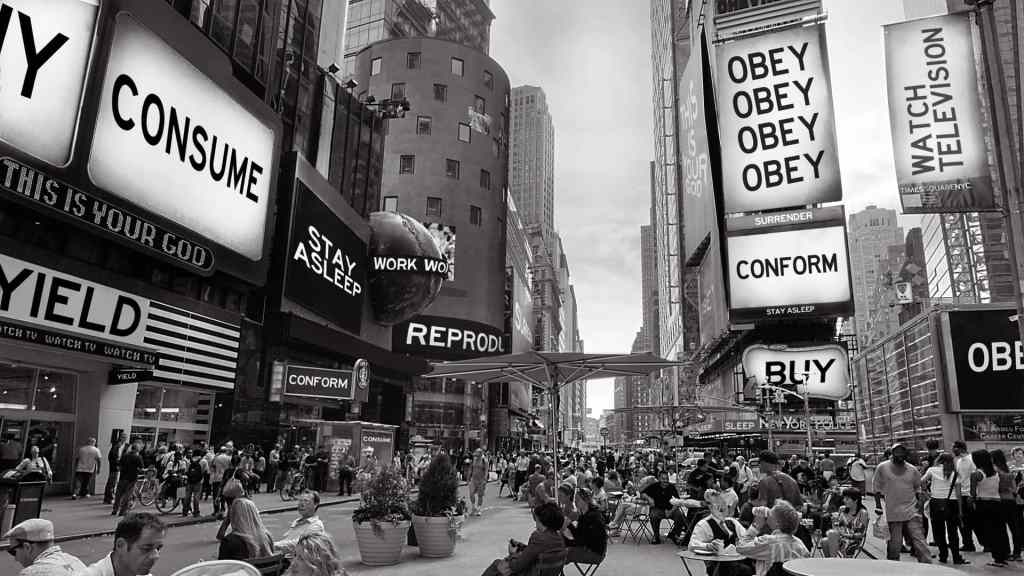
In the homeless community there’s a couple television sets strewn about with a few people aimlessly watching them. Though when alternative programming begins to break through the static, a man’s face appears as he tries to bring the truth to the people. He warns of the ruling class who own us, using humanity as cattle, and taking advantage of our fondness for wealth for the loss of the human race. No, these aren’t Wall Street Executives, Politicians, or Industrial Tycoons- they’re an alien race hiding amongst us and using these positions of power to subjugate the masses. The allegory isn’t subtle, but it sure is a fun concept, and Carpenter squeezes every drop of vile ichor of defiance against his real world targets as he can. Not long after the revolutionary programming is cut from the air, Nada witnesses one of the homeless men hurrying off to a church just on the outskirts of the shantytown. Piquing Nada’s interest, he decides to go check it out. As he enters into the back of the church, he sees cardboard boxes all over the place alongside a chemical lab of some sort. After he accidentally trips into a breakaway wall, he quickly puts the fake wall back into place and heads back to the shantytown. Things rapidly escalate out of control after this with helicopters hovering over the revolutionaries’ church hideout before they get paranoid and escape just before an army of police and SWAT teams descend upon the church. When they don’t find their victims, they turn to the homeless shantytown and swiftly destroy it with brutality and efficiency. The next morning after the demolition, Nada heads back to the church and stumbles across the one cardboard box left inside the fake wall he’d fallen into before. Inside are a bunch of black sunglasses, curiously, he takes the box and heads into downtown L.A. before tying on a pair. The result is a profound awakening for Nada as the sunglasses allow him to see the true meanings of all the advertisements throughout the city in black and white.

As he wanders about the city in sheer awe, he also realizes that the glasses allow him to see which people are disgusting aliens in hiding, and which are simply humans. Notably, most of the upper class and people in positions of privilege are alien impostors enjoying the finer things in life. After he reveals to a few aliens that he can see them, they immediately (and creepily) all turn towards him from across crowds and stores and speak into their watches describing Nada’s appearance and reporting it like a hivemind collective. “We’ve got one that can see“. So after causing a bunch of raucous and gaining a whole lot of attention for himself, Nada takes up arms and openly starts killing any impostor aliens that he can find. After this backfires when he finds a human he (wrongly) thinks he can trust, Holly (Meg Foster) one of the TV executive personalities in L.A., Nada searches for Frank. Which brings me to one of the silliest yet most memorable fight scenes in film to this day. Frank wants nothing to do with the danger and notoriety that Nada’s earned, but Nada desperately wants to convince the only person that’s been a friend to him in the city to see the truth and neither will back down. Thus resulting in a six minute long fight scene in a Los Angeles alley, every time you think it’s over, it just keeps going. Apparently, Roddy Piper and Keith David choreographed the whole fight themselves and mostly fought it out as you saw it onscreen, with the exception of those groin shots and the obvious work that goes into fight scenes in films to avoid actual harm. Finally, when Nada forces the glasses onto Frank’s face and he sees the truth, he is shocked and energized to fight against the system with Nada. The third act gets silly with it’s level of over the top violence and Nada’s one-liners are typical of many 1980’s action stars, but it’s all in good fun. Eventually the two escape using the aliens teleportation to find a hidden bunker of self congratulating aliens and the humans that got rich off of the cooperation and further enslavement of humanity. It’s another on-the-nose commentary about those who help to enable the rich and elite to control the majority of people, and I enjoyed the anti-establishment tone and messaging Carpenter was going for throughout the film.

As the two work their way through the compound, they discover that the aliens are using a broadcasting signal that emits waves that mask their appearance to the masses. So, obviously, they head towards the tower on top of the building to destroy it. On the way there they’re met by one of the men at the homeless encampment who was actually a human mole in the shantytown who congratulates them for being accepted into the big leagues and shows them around. Eventually the two out themselves and make a last ditch effort to scale the skyscraper’s stairwells to the roof. Once there, Holly tries to stop Nada, but he declines and destroys the broadcasting device and is unceremoniously gunned down, but not before he gives the aliens one last middle finger. As the signal fades, the aliens begin to appear in their true forms across the globe and the disgust on the humans’ faces everywhere reveal an optimistic note to end on.

“They Live” is ripe with potential for a sequel in today’s world. If the Reaganomics of the 1980’s had enough potential for cinematic mockery and criticism than the Trump era is perfect for a sequel of this kind. All of the social commentary that made “They Live” work so well could be applied here tenfold. Income inequality has skyrocketed since the 1980’s, Trump himself is the epitome of a stooge impostor that enforces policies and executive orders that pit the middle class against each other based on race and hatred, I mean, the material for this basically writes itself. Just toss John Cena in for the Nada archetype of Middle-America everyman and team him up with Lakeith Stanfield or Daniel Kaluuya and have them end up taking on the elite alien overlords and call it “We Sleep”. You could do so much with this concept in today’s world, just think of the examination of social media and smartphones as tools of the subjugation of the masses- I mean, this needs to happen.

Final Score: Six Minutes of Street Fighting

*A quick note: I don’t usually get too political in my reviews or analysis of films- but as this film is uniquely political in nature, I felt that it was vital to the discussion. Please be kind and courteous if you leave comments, lets have a civil discourse if we must disagree. Hell, disagreeing about politics is about the most American thing you can do, let’s just not turn to name calling or personal attacks- it’s just a movie after all. Thanks for reading!

film

Review: Uncut Gems

Written by Ronald Bronstein, & Josh and Benny Safdie, and directed by The Safdie Brothers, “Uncut Gems” is the ultimate anxiety inducing film. The film seems designed to put viewers on edge, to drag them into the world of New York City Jewelers and more specifically into the realm of Howard Ratner (Adam Sandler). Howard’s a man of conflict and obsession. As a New York City Jewel salesman that makes every ill-conceived, high risk, and unwise choice possible with his life, Howard is a man whose entire existence is at the boiling point. Howard’s relationship with addiction, stress, and the next big score is incredibly dangerous. As soon as the film begins we’re introduced to Howard putting the funding from several loans and gambling rackets immediately into even more high risk bets on the NBA. Which is where Kevin Garnett comes in. The Boston Celtics star athlete is brought in from one of Howard’s many lures he’s thrown out into the abyss and right when Howard receives an extremely rare opal from Ethiopia his pure passion for the rock explodes and he decides to show Garnett. Unfortunately for Howard, Garnett immediately has a sort of vision or soul bond with the rare rock and wants to buy it from Howard. The thing is, Howard’s already several steps into another financial scam to sell the opal at an auction for an incredibly inflated price. His admiration for the basketball player outshines his reasoning and he allows Garnett to “borrow” the Opal for his championship game. This is but one of many, MANY, poor decisions that Howard makes over the course of several days.

I’ll leave the details about the plot points for those of you interested enough to check this one out, it’s definitely a film I recommend if you’re okay with a near constant assault on your nerve endings, but it was an exhilarating and unique movie-going experience. The specifics aren’t exactly the point of the film anyways, at least as I view it. It’s more about the onslaught of noise, the squirming in your seat when Howard does the exact opposite thing that any sane person would do, but Sandler’s performance keeps you entrenched in the fury and downward spiral of Howard’s actions. Dressed in his best Lando Calrissian attire, Howard is always on the move, always hustling whether he’s on the streets, walking through hallways, lobbies, he never stops talking and never stops moving to the next step in his countless plans already in motion. The score really stood out to me, it’s a cacophony of juxtaposing heavy synth sounds not unlike that of “Blade Runner”‘s score mixed with Saxophone solos and an eight-person choir. The mix of an incredibly fast-paced and unsettling narrative with the slow and almost cosmic transcendence of the score was eerie and a brilliant choice in my opinion. There’s also the dialogue. It’s mixed and directed to be more realistic. Everybody talks over each other and no one stops to listen to each other until their profits are endangered. It’s a bit gross, but refreshing, it reflects the choice to showcase New York like the sleazy and hustling place that it is, seemingly a throwback to the 1970’s filmmaking done in New York.

“Uncut Gems” is almost more of an assault on your senses than a narrative based film. The experiential flurry that is this film is recommended, but with a warning to those weak of heart. This is a film wherein a flawed, but somehow endearing (thanks to Sandler’s performance), man schemes, gambles, and risks everything in his life. It’s a cycle of mutual grime, but it’s an interesting way to start the year, and the decade. Happy New Year people!

Final Score: 1 Uncut Gem

*For fun, check out this “Actors on Actors” discussion Variety put together between Brad Pitt and Adam Sandler who both chat each other up on their recent performances:

*Also, here’s an NPR article on the score of the film, definitely worth a read:

https://www.npr.org/2019/12/28/791473556/inside-uncut-gems-a-cosmic-score-in-a-frantic-film

film

25 days of Zatoichi The Blind Swordsman: #25 Zatoichi’s Conspiracy (1973)

Writer/Director: Yoshiko Hattori/ Kimiyoshi Yasuda (6th film)

Summary: Zatoichi returns to his home town again in this final film of the series (More on that later). Initially, he’s mistaken for another former citizen returning home, Shinbei (Eiji Okada), a former childhood friend of Ichi’s and now a successful businessman. While Zatoichi meets with old friends and familiar faces of the village, Shinbei sets up meetings with the local government to see what he can do to help with the town’s finances. The villagers and farmers had endured several years of poor crop yields and couldn’t afford their taxes, so Shinbei decided to help and paid off their fees. Zatoichi visited the grave of the woman that raised him, and checked on the ruins of her home, the house he grew up in. He also met with Sakubei, the local potter in another authentic and engaging role from legendary Japanese actor, Takashi Shimura. Zatoichi’s also followed by a small group of charming rogues that pestered him constantly, though he never seemed too bothered by them- that is until they got caught up in the mania caused by the huge bounty on Zatoichi’s head. Zatoichi eventually paid Shinbei a visit to give him a complimentary massage and see what kind of man his childhood friend had become. To his disappointment, the man had become cold to the world, deeply analytical, and focused on monetary gain over ell else. Which, clues the blind swordsman in to the fact that Shinbei’s subtle interest in the local quarry may not be as altruistic as he first seemed. For generations, the quarry was recognized by the Magistrate’s office as being owned by the people of the village. However, when word got to Edo that those mines were far more profitable than realized, Shinbei was sent home to win the villagers loyalty before forcing them to hand over the quarry and all it’s money-making abilities. On top of that- they also participate in a rice heist scheme that doubles down on their cruelty. As you may have guessed, Zatoichi is eventually pushed into a massacre of bosses, henchmen, and of course- Shinbei too.

My favorite part: This film returned to the major overarching theme of Melancholy that ran throughout most of the films in the series. While this entry in the series kept the exaggerated violence from the last ten (or so) films, it was the perfect blend of tone, story, and style from both halves of the series. The villains were despicable and cruel to the people beneath them, stealing what wasn’t theirs and proudly defending their decisions- that is until Zatoichi comes for them.

Why it’s great: Well readers, we did it. Twenty-five films and twenty-five reviews in twenty-five days. It may have gotten close to falling behind for a few days, but I’m glad to have gone on this film journey with you. Hopefully I’ve encouraged at least a few of you to seek out films you might not have come across or known about before, or a fun reminder to those who have seen the Zatoichi films. I had a great time with this, and who knows, I might go through similar film analysis challenges in the future. There’s always more movies out there!

Final Score: 25 films

*For a final treat to end this saga of Zatoichi, check out this incredibly silly youtube fan made video in which Zatoichi meets The Predator:

film

25 days of Zatoichi The Blind Swordsman: #24 Zatoichi in Desperation (1972)

Writer/Director: Minoru Inuzuka (7th film)/ Shintaro Katsu

Summary: With Shintaro Katsu himself directing this Zatoich film, I was curious to see if his work would stand out from the rest of the series. I’ll cut straight to the case here- it’s massively unique for it’s tone and specific camera choices. I’m pretty sure this is the most inventive camera work within the whole series, here the camera glides, pans, and generally moves more than any other Zatoichi film. Anyways, in the beginning of this film Zatoichi is crossing a bridge when he meets a shamisen player, who mentions that she’s headed to see her daughter in a nearby town. Unfortunately, right when they depart Ichi decides to offer her some money, as he appreciates musicians, but she falls through a gap in the bridge and to her death. So, with only the name of the town she was headed to, and the shamisen she had been playing, Zatoichi heads there to inform her daughter of the news. Eventually Ichi finds the young woman, Nishikigi (Kiwako Taichi), who works as the prized prostitute of the local brothel. While there, Ichi overhears a young man, Ushimatsu (Katsuo Nakamura), breaking in to see Nishikigi, who wishes to buy her freedom from the brothel. Zatoichi inserts himself in the situation, namely by hitting up the local gambling house and taking the establishment for everything it had. He frees Nishikigi, but both she and Ushimatsu aren’t content with freedom alone. Ushimatsu claims his honor slighted due to Zatoichi’s involvement, and Nishikigi’s eyes twinkle at the thought of the one-hundred ryo bounty on Ichi’s head. Eventually the bosses from this seaside town, and Lioka (the village from the first movie where Ichi played a part in the war), and the Magistrate himself all descend on the town to crush Zatoichi and the local fishermen from rising up. These criminals were smart though and used Nishikigi as bait against her will to entrap Zatoichi- and they almost kill her to get Ichi’s cane sword out of his hands. Surprisingly, he’s forced into placing his hands on the table in front of the Yakuza, and they immediately stab both of his hands with harpoons! Thus putting Zatoichi in the most desperate and dire situation he’s ever been faced with before the third act fight. Confident with their scheme, the bosses, the magistrate, and dozens of henchmen mob Zatoichi’s known location. Luckily, the blind swordsman is nothing if not creative, and he strides out of hiding with his blade tied between both of his bloodied palms- as he begins to slay them all in one of the bloodiest battles of the series. It’s a great way to end this dark chapter in the Zatoichi series.

My favorite part: The best parts of “Zatoichi’s Desperation” were the extremes that the criminal Yakuza went to in order to grab power and crush anything or anyone standing in their way. This film is easily the darkest and bleakest entry in the Zatoichi series. Right from the opening, a man who had committed suicide by hanging is discovered by family and friends- this has nothing to do with the plot or the story except to establish the dark tone that this film will be immersed in. Boss Mangoro (Asao Koike) even kills Kaede’s (Kyoko Yoshizawa) younger brother (a mere child) for throwing rocks at him whilst he chastised the local fisherman. When Kaede is told of her brother’s death, she goes to the beach where he was killed and takes his body, and walks into the ocean to die with him. Damn, that’s Dark… It’s a downright evil group of gangsters and government officials trying to destroy the local fishing community by implementing their own expensive infrastructure that forces locals to take part in their monopoly.

Why it’s great: This film, in my opinion, is great because of its risk taking. There’s more of a descent into depravity in this one, with lots of shots lingering on sexual intimacy, death, and menacing laughter in the gambling houses when all the patrons believe they’re tricking a blind man out of his money. This film can get uncomfortable at times, it’s not afraid to show a brutal Yakuza beat a child to death, or to showcase that just because someone is in a bad situation, freeing them doesn’t always mean they were a good person to begin with. I really appreciated putting Zatoichi’s back against the wall with this one, pushing the character to his limits and forcing him to handle horrific scenarios was an interesting choice.

Final Score: Dozens of burnt fishing nets and boats

film

25 days of Zatoichi The Blind Swordsman: #23 Zatoichi At Large (1972)

Writer/Director: Kinya Naoi (2nd film)/ Kazuo Mori (3rd film)

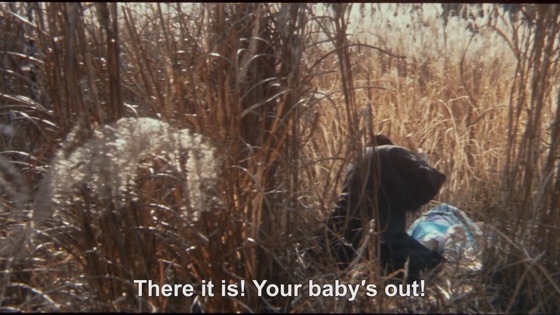
Summary: “Zatoichi at Large” begins with the blind swordsman helping a wounded woman deliver a baby. She gives him the name of the baby’s father and the village where he should be just before she dies, and at once Ichi has stepped into another familial drama that will consume most of the runtime. As Ichi heads to town he’s followed by another small boy that likes to throw rocks directly at his head. When he gets into town looking for the father, Ichi bumps into the more interesting storyline in the film (in my opinion). When a young man jokingly brings Ichi to his home for a few Mon (small currency), the young man’s father, Tobei the Deputy Constable (Hisaya Morishige) directs him to the only known relative of the newborn’s father, his sister who works at an inn. Later we discover that Tobei, now an old man, had once driven a deeply rooted Yakuza clan from their town in his heyday through humanistic methods driven by a need to help others. And when he witnesses Zatoichi handily shaming the new Yakuza threat in the form of Boss Tetsugoro (Rentaro Mikuni) and his band of ruthless underlings, the old Deputy’s eyes widen, and a smile begins to form on his face- impressed with the blind Masseur’s techniques. There’s a few moments where misinformation and hasty reactions threaten to turn everyone Ichi had helped against him, but through shear intimidation and cooler heads for some, he gains the upper hand and saves the town from Tetsugoro’s wrath! Oh! There’s also another ronin challenger in this film, though he’s unique in that he witnesses Ichi’s skill and is so impressed that he commits to fight Zatoichi in the future, no matter what. The ronin even saves Zatoichi from being bound by multiple ropes, just so he can get that fight- and he does get that fight in the final shot of the film with a quick but visceral kill. It’s a fairly standard Zatoichi film in it’s structure, but it’s executed well and has enough style and panache to merit it’s worth.

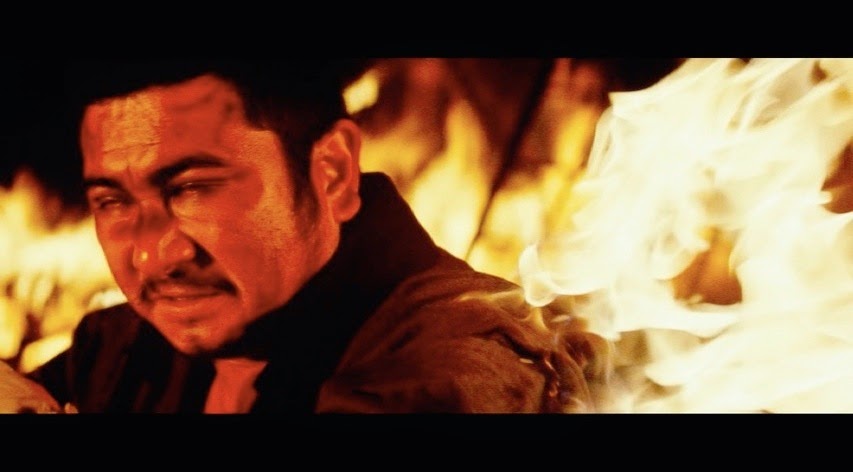
My favorite part: Honestly, my favorite parts of this film were some of the unique set-pieces and the imagery of a few scenes. The dancing monkeys in one of the villager’s rehearsals for Boss Tetsugoro to see if they qualify to perform at the local festival was silly and unique for the series. Though, admittedly my favorite visual came from the end fight sequence where Zatoichi is fighting Boss Tetsugoro’s men on a raised platform that’s been covered in lantern oil. Initially it’s a friction-less and chaotic scramble for stability while fighting, but the platform is eventually set aflame with only Zatoichi trapped amidst the fire. When he finally gets out of the blaze, he’s still on fire and smoldering with intensity as he walks towards Tetsugoro, striking demonic fear into his eyes. It was a fun visual that played well into his own previous myths about escaping from Hell just to strike down injustice.

Why it’s great: While this film wasn’t exactly a knockout within the series, it doubles down on everything that has worked in previous films, with a twist of style thrown in for good measure. “Zatoichi at Large” works because the filmmakers, production crews, and actors all know what’s proven to resonate with their audiences by now. Twenty-three films in, the bumps in the process have been mostly smoothed out by now. Though, I tend to prefer the Zatoichi films that take chances and swing big- they may not always land- but I respect them for trying something new rather than totally relying on the proven formula, even though I did rather enjoy this film.

Final Score: Two Performing Monkeys

film

25 days of Zatoichi The Blind Swordsman: #22 Zatoichi Meets The One-Armed Swordsman (1971)

Writer/Director: Kimiyoshi Yasuda & Takayuki Yamada (2nd film)/ Kimiyoshi Yasuda (5th film)

Summary: “Zatoichi Meets The One-Armed Swordsman” was truly a delight! Not only is it my favorite film from Kimiyoshi Yasuda within the Zatoichi film series, it’s also one of my favorite Zatoichi films in general. This one harbored a far more lighthearted tone than the most recent films, hearkening back to the first half of the film series, while maintaining the exaggerated violence from the more recent evolution that’s taken place since “Zatoichi The Outlaw”. This film is another crossover similar to Zatoichi’s encounter with Toshiro Mifune’s Yojimbo. I’d only recently heard of Jimmy Wang’s Hong Kong action oriented character “The One-Armed Boxer”, which is a ridiculously entertaining and over-the-top Kung Fu style film (I’ll link the trailer the below, it’s worth a watch!). Which, in doing some light research just now, is not the same character as the “One-Armed Swordsman” despite both characters being portrayed by the same actor and both only having one arm. Huh. In any case, when the One-Armed Swordsman travels to Japan, he encounters a family of fellow Chinese nationals now living in Japan. The mother, father, and child, offer to guide him to his destination- a temple devoted to the study of martial arts. While on the road, the family and One-Armed Swordsman encounter a procession of Samurai transporting a tribute to the shogun. As the father explains to the One-Armed Swordsman, the law requires that any and all travelers kneel at the side of the road to let them pass. As they do so, the child’s kite flies from his hands and under the foot of the first Samurai. The kid runs for his kite and the Samurai raises his sword to slay the offender- but the mother and father run to save their son, but end up being slain instead of the boy. The One-Armed Swordsman jumps into the fray killing several Samurai before escaping, though he loses the boy in the chaos. Several bystanders witness the carnage that followed as the Samurai killed every innocent bystander kneeling by the road, farmers, peasants, everyone. Of course, they then blamed the slaughter on the One-Armed Swordsman, a Chinese citizen that speaks very little Japanese, the perfect target for such corruption. Initially, even through the language barrier the two swordsmen formed a fast friendship with the young boy roughly translating for them. Later, when scheming Yakuza bosses and misinformed side characters persuade Wang Kang into believing that it was Zatoichi that sold them out to the Yakuza, the two are set against each other. Unfortunately for the One-Armed Swordsman, he didn’t figure out that Zatoichi was a good man until it was too late.

My favorite part: Jimmy Wang’s One-Armed Swordsman was a real treat within the Zatoichi series. He’s the only combatant that Zatoichi’s ever faced that can move the way he did in battle. Wang Kang, as he’s referred to formally, performs some high level acrobatics- jumping from his enemies shoulders like Legolas, and he’s also incredibly powerful with his punches and karate chops- slicing trees in half with his bare hand! His wuxia antics were enjoyable, and he was a heroic character that was manipulated into fighting Zatoichi by the end of the film. He was tricked and lied to by his closest Chinese friend in all of Japan, clearly he had not encountered the type of double-crossing that’s often utilized in the Zatoichi films. Since he was even portrayed as a Chinese character, and spoken in Mandarin mostly, there were some great conflict and confusion that came from the misunderstanding of intent between him and Zatoichi. In fact it’s the main source of conflict between the two major characters, with lots of misdirection and scheming by Yakuza bosses- which comes with the territory in Zatoichi’s world.

Why it’s great: The crossover effect between not just two cinematic icons, but of two different countries and languages, worked excellently! This one may have been more playful and not quite as heavy as recent Zatoichi films, but it earned it’s place with the inclusion of Wang Kang’s wuxia, martial arts, and moral character work. This film has the most snap-zooms out of any Zatoichi film this far, and since it was filmed in 1971, there’s a funk insurgence within the soundtrack that plays into the nature and tone of this film well. Reportedly, the Chinese edit had more wuxia content with scenes showing Wang Kang walking across the tops of trees, and also featured a different ending where instead of Zatoichi it was the One-Armed Swordsman who was victorious in their final fight, and he didn’t kill his opponent. This was a fascinating experiment in the Zatoichi film series, and I had a great time with it!

Final Score: One Arm

Trailer for “The One-Armed Boxer”:

film

25 days of Zatoichi The Blind Swordsman: #12 Zatoichi and The Chess Expert (1965)

Writer/Director: Daisuke Ito/Kenji Misumi (3rd film)

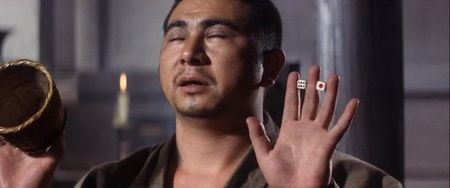
Summary: “Zatoichi and The Chess Expert” begins with Zatoichi being pursued by henchmen from previous films still holding a grudge. Zatoichi boards a ferry to Honshu island, leaving his pursuers on the mainland to take the long way around. While on the boat Zatoichi decides to make a bit of money through some dice gambling among the passengers aboard. As expected he employs some expert sleight of hand tricks to see if they’d take advantage of a blind man if the dice fell outside of the cup, the raucous group were all too eager to exploit the blind man’s weakness and Zatoichi let them build their expectations up before pulling the rug out from under them- resulting in a large sum of winnings (Though later we see Zatoichi legitimately lose at dice, a first for the series). While aboard the ship Zatoichi finds a fast friend in the samurai going by the name of Jumonji (Mikio Narita). Impressed by Zatoichi’s skill in dealing with a couple of the resentful gamblers aboard, he accepts Ichi’s request for a game of Shogi Chess, and is again nearly caught off guard by the blind swordsman’s skill- even in intellectual games. Later, on the island, the aggrieved gamblers track him down and set a trap for the blind masseur by having him massage the local Yakuza boss that they happen to be in touch with. While they do get the jump on Zatoichi at first by pinning him to the ground, he escapes their grip and in the scuffle he dropkicks one of the men out the 2nd story window resulting in a young girl getting a broken foot. Once outside, Zatoichi attempts to help, feeling profound guilt as her injury was an unexpected consequence of his brawl. When the girl’s aunt, who she’s traveling with, can’t afford the medicine required, Zatoichi heads out to make enough money with his usual gambling tricks, and after some trial and error, he returns with the medicine in hand with some help from Jumonji. The four of them then decide to travel to the hot springs not far from their location to further heal Miki.

Once there the group meet new guests at the inn and hot springs, a young lord named Sagawa (Gaku Yamamoto), his retainer Roppei (Tarô Marui), and the lord’s sister Kume (Chizu Hayashi) dressed as man (to avoid unwanted suspicions on the road). The trio are on a fact finding mission to track down the murderer that killed their father, who had been cut down over a heated game of shogi chess. When Roppei turns up dead at a nearby temple with evidence of strangling, Zatoichi is perplexed- until some children bring back a lure found in the pond near the scene of the crime. After the facts begin to build Zatoichi’s suspicion grows. He, Otane, Miki, and Jumonji all head out on the road as planned, and to pass the time Jumonji suggests a verbal game of Shogi Chess. Each move between them seems to ratchet up the tension until Zatoichi lets Jumonji win thereby confirming his guilt as the killer with his known tell of scratching his nose and snapping his fingers. With that single action Zatoichi reveals his knowledge by showing Jumonji the red lure and engaging in battle. He only wounds Jumonji before Lord Sagawa and Kume arrive with swords to finish the job and secure their vengeance. At the same time the henchmen from the beginning of the film sneak up and kidnap Miki and run off with her, which prompts a fun one versus five end fight sequence in which Zatoichi skillfully slays them all before walking off into the distance once more.

My favorite part: With the Zatoichi series, a great villain can always spice up the familiar ingredients, and that’s exactly the case with “Zatoichi and the Chess Expert”. Jumonji was a clever and calculating villain- and one of the few enemies that seemed to be an ally to the blind swordsman for most of the film’s runtime. The performance by Mikio Narita was charming, sly, and cold blooded- perfect for a Zatoichi villain.

Why it’s great: Kenji Misumi is starting to become one of my new favorite Japanese directors with this series. His work on the “Lone Wolf and Cub” film series in the early 1970s paired with his films within the Zatoichi series strike a tone that resonates with me deeply. I know I’m getting ahead of myself here but I’ve been watching far ahead in the film series so I can always be ahead of the next quick review, but Misumi’s next film in the series is “Zatoichi Challenged” and it might be my favorite film of the bunch. Misumi seems to be very invested in stories where young children are protected by powerful swordsmen, and that element is very present in this film. While Zatoichi isn’t exactly on the road as the sole protector of Miki, her safety and health is at the core of his concern for this film. This one ranks higher for me than the last few films, good character development with a clear narrative can do wonders for this formula of popular genre film.

Final Score: 5 Ryo

film

25 days of Zatoichi The Blind Swordsman: #4 Zatoichi The Fugitive (1963)

Writer/Director: Seiji Hoshikawa/Tokuzo Tanaka (2nd film)

Summary: This time Zatoichi is attacked right off the bat by a young Yakuza looking to earn the ten ryo bounty on the blind swordsman’s head. Of course Ichi bests the young attacker, and as he lay dying he reveals that the reward was for his mother who runs a business in the nearby town. In town Ichi enters a sumo wrestling match to the surprise of the crowd and defeats several sighted fighters. As the event was organized by the local Yakuza gang, they vow to earn their respect and honor back- by killing Zatoichi! This time, the two major story arcs crossed paths and intermingled far more than before. Once finding the dead Yakuza’s mother, Maki, Ichi confesses to having killed her son and she forgives him seeing him as honorable for seeking her out to tell her this. He also gives Maki his winnings from the Sumo match and told her it was from her son. Back at the local inn Zatoichi encounters even more drama. The innkeeper’s adopted daughter, Nobu, is in love with one of the junior members of that same local Yakuza gang. Her father, however, disapproves and the junior accountant ends up being manipulated by a superior Yakuza who decries that if Zatoichi is not killed, the junior accountant will be stripped of his rank and kicked out of the gang. Ichi also encounters Otane at the inn, his first love from the last few films, who’s now married to a brutish ronin named Tanakura. In order to squash the advances by the Yakuza and possibly help alleviate Nobu’s predicament, Zatoichi goes straight to the heart of the Yakuza during a meeting of their local leadership. During this encounter Tanakura, (mysteriously also at the Yakuza meeting) attempts to establish dominance over Zatoichi with a feat of swordplay- but the blind swordsman quickly retaliates with his own display of skill that shocks everyone in the room. Tanakura immediately claims defeat and personally establishes Zatoichi as his rival due to his injured pride. After this the junior accountant rushes to Zatoichi to plead for help, suggesting that both Otane and Nobu have been taken hostage at the inn. Once there, Ichi finds the two women unharmed- but before he can make sense of the situation the inn is surrounded by Yakuza- a trap! Otane hears Tanakura outside and tells Zatoichi she will plead for them to reconsider. Once outside Otane mistakenly draws Tanakura’s sword in the heat of the moment and he immediately cuts her down for this transgression. Nobu sees this from inside the inn, horrified by the violence, and tells Zatoichi- which sends him into his most emotionally fueled bloodlust that the series has seen at this point. He cuts down dozens of yakuza in a fury and eventually finds himself one on one with Tanakura. What follows is an excellent and visceral fight to the death in which Zatoichi bests Tanakura. As he bleeds into the dirt, the dying ronin tells Ichi that the ambush was Otane’s idea, and that she wasn’t exactly the saint he thought she was. Thus leading to one of the most dramatic and painful exits the blind swordsman has tallied up this far, preferring to wander off than stay and wallow in his pain.

My favorite part: The fact that the Otane character’s arc has continued in some semblance for every film until this point was a nice touch. Though, admittedly her storyline ends tragically. In the last film Otane was mentioned as the fiance of a local carpenter, but instead ended up marrying Tanakura- the hot headed ronin. *Also* I think it’s important to mention how “punched up” the cinematography and direction is in this film- it feels markedly different and more modern than the past films despite the previous film having the same director and being released in the same year.

Why it’s great: The fight scene between Tanakura and Zatoichi is one of the best fight scenes in the series so far. Zatoichi’s sword breaks during the fight and he kills the fiery ronin with a dagger hidden in the sword’s hilt. This is also indicative of the fact that the series is increasingly smoother and more streamlined than before. There’s no real introduction of Zatoichi, the film assumes you’ve seen the others, and I enjoyed the immediacy of that.

Final Score: 1 Sumo match & 1 unleashed Zatoichi!

film

25 days of Zatoichi The Blind Swordsman: #3 New Tale of Zatoichi (1963)

Writers/Director: Minoru Inuzuka (3rd film) & Kikuo Umebayashi/Tokuzo Tanaka

Summary: Zatoichi returns to his village four years after he completed his training. There are two major storylines this time around, the first major arc includes the brother of the Yakuza Boss that Ichi killed in the last movie seeking revenge. The second is more personal, in which Ichi learns that his old Master, Banno, has turned to colluding with local gangsters involved in corrupt schemes, due to financial duress. Banno has also arranged a marriage for his younger sister, Yayoi, to a Samurai, but she ends up falling in love with Zatoichi instead. Learning from his past mistakes Ichi attempts to take the pacifistic route and absolve himself from violence to settle and marry- even taking a dice roll to determine whether or not he lose an arm to the bereaved Yakuza brother instead of the usual fight to the death. Later, in the forest, Zatoichi finds out that Banno’s corruption wasn’t just financial- but that he also needlessly kills in cold blood to serve his goals. Banno can’t stand to let Zatoichi leave with this knowledge and forces his former student into a fight. Zatoichi reluctantly kills Banno in an emotional fury as Yayoi watches from the brush. After the deed is done Ichi acknowledges that he cannot avoid his true calling stating that he is “That kind of man“… and wanders off, broken once more.

My favorite part: This film is interesting because it’s the first time the series acknowledges the consequences of Zatoichi’s actions from the past two films. I was also surprised by the Yakuza brother’s lack of commitment to killing Zatoichi, seeing a villain give some consideration to forgiveness was unexpected.

Why it’s great: This was the first color film in the series, and seeing the world come alive was like a breathe of fresh air. Granted, this film took a muted color palette of earthy tones and shades for most scenes- but it was still very cool to take in this new paradigm.

Final Score: A Ransom of 300 Ryo