Writer/Director: Minoru Inuzuka (2nd film) /Kazuo Mori
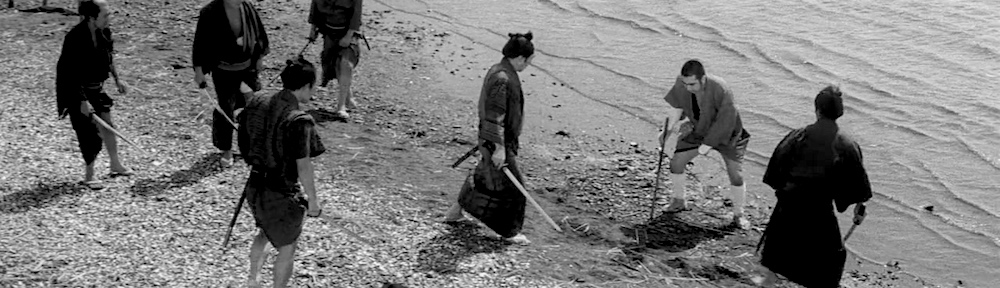
Summary: A year after the events of the first film, Zatoichi returns to the town near the Joshoji Temple to pay his respects to Hirate, the Samurai he killed at the end of the first film. While in town he’s hired to give a massage to a powerful lord, but during the massage Ichi notices how strange the lord acts, taking on socially unacceptable behavior for a lord. Being the humble warrior that he is, Zatoichi didn’t really care all that much about the Lord’s behavior citing it as a bit weird, but he quickly moved on from it. The lord’s advisers couldn’t let Ichi wander freely when he knew of their collective shame at the state of their lord’s behavior- so they sent a whole bunch of men to kill him and be rid of that loose end. This doesn’t go well for these unnamed henchmen…
My favorite part: The smaller, yet more personal, villain of the film is Yoshiro. Like Hirate, but without the respect, Yoshiro is a competent swordsman, but one only posing as a Samurai. I really enjoyed this character because not only do we discover that Yoshiro is Zatoichi’s long lost brother, but that he also stole away the love of Zatoichi’s life years prior as well! There’s also the added benefit of know that the actor portraying Yoshiro was Tomisaburō Wakayama of “Lone Wolf and Cub” fame! Who also happens to be Shintaro Katsu’s actual brother in real life as well!
Why it’s great: The sequel to “The Tale of Zatoichi” punched up on everything fun about the character and his potential. The fights are much bigger and more expertly crafted, including dozens and dozens of opponents onscreen for Shintaro Katsu to cut through! The melodramatic history of the character is more personal and devastating, and it may have my favorite ending in the series so far- a brutal and quick kill by the man with the lightning cane sword!
Written by Larry Karaszewski and Scott Alexander, and directed by Tim Burton, “Ed Wood” is a comedic biopic about the famed cult film director who infamously made the worst film of all time in “Plan 9 from Outer Space”. This film is partly adapted from the book “Nightmare of Ecstasy: The Life and Art of Edward D. Wood Jr.” by Rudolph Grey. Admittedly, this is a film that I hadn’t heard of until I caught an episode of “re:View” on the youtube channel Red Letter Media in which they thoroughly discussed the Tim Burton adaption and the filmmaker Ed Wood himself. This might be my favorite film from Tim Burton, I’ve enjoyed his work before- but since the middling 2000’s Burton has seemed a bit passionless with most of his work, slowly trending towards parody with films like “Dark Shadows” and I wasn’t particularly impressed with his two “Alice in Wonderland” movies if I’m being honest. Here, you can tell that he had a fondness for the atomic-era Z-list filmmaker, and he treated the subject with great care and respect as a fellow filmmaker.
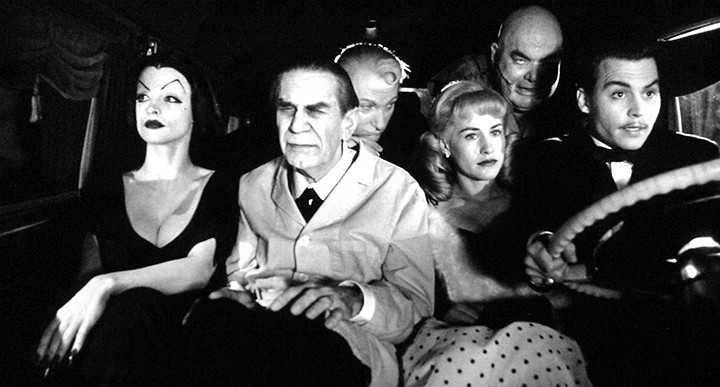
Now, Ed Wood was a very unique character to say the least. Not only did he put out a series of films (unsuccessful as they may have been), he surrounded himself with Hollywood’s rejects, weirdos, and the forgotten to craft together whatever kinds of ramshackle films that he could. He also had a very strange relationship with angora sweaters, only finding comfort and confidence while wearing them and other such women’s clothing. In fact the whole first quarter of the film rests on this strange fetish- but the film never struck me as mockery or slander, but rather towards a more truthful reveal of who Ed Wood was. Granted, this film dances between a heightened and glamorized tone when it comes to some of the performances, most notably with Johnny Depp’s portrayal of the eternally optimistic Ed Wood. However the film also lets dark real world issues creep into it’s plot over the course of the film, especially after Bela Lugosi (Martin Landau) enters the picture. Once Ed scrambles together his small theatrical crew and morphs it into one that can tackle his first feature “Glen or Glenda”, the movie kicks up the pace. Even through every scrap and white lie needed to get in the door, Ed Wood’s journey is an inspiring and relatable one, especially if you have any experience trying to get a movie made. He never gave up- even when all common sense suggests that might have been for the better.
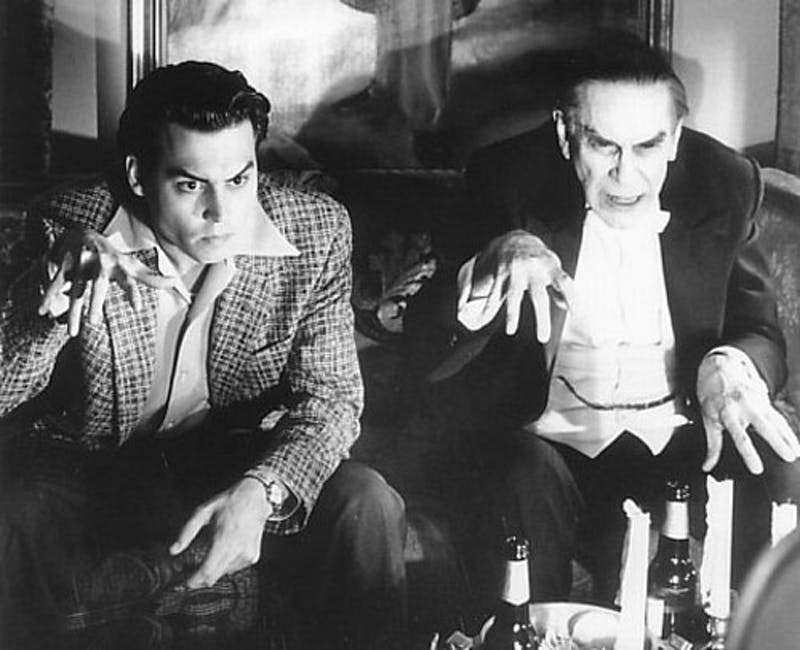
After Ed’s been around the block with a couple small features he ends up crossing paths with veteran monster movie actor Bela Lugosi. Ed Wood’s relationship with the former Count Dracula actor is the emotional crux of the film, and its an excellent pairing between the pre and post war remnants of Hollywood. Lugosi’s an aging and out of work actor when Ed meets him, starstruck, Ed can’t believe that the original Vampire himself isn’t being signed onto multiple pictures- so he takes every and any opportunity to get Lugosi involved in his movies. After befriending him when the world had forgotten him, Lugosi accepts the adoration from Ed and agrees to work with him on several films. It’s slyly mentioned early on that Lugosi’s a washed up actor, and it isn’t until he’s on set when the make-up artist silently notices the track marks on his arms representing decades of drug abuse. Lugosi only makes eye contact with the make-up artist momentarily, and knowingly, and then they move on without mentioning the obvious.
This film may have been a financial loss for the studio, but it was well received by critics and it won two Oscars; Best Supporting Actor for Landau and Best Makeup for Rick Baker. The cast was excellent, Johnny Depp’s portrayal of Wood meshed 1950’s caricature with genuine earnestness and the film was all the better for it. You also don’t have to twist my arm to get me to watch a movie shot in black and white- but the film’s cinematography was exquisite, there’s a lot of really beautiful compositions throughout the film. “Ed Wood” is a love letter to even the lowliest of filmmakers and it suggests that an unflappable and passionate love of the craft can get you places in life- just maybe not the places you expected.
Final Score: 2 Vampires, 1 wrestler, and 1 motivational speech from Orson Welles
*Check out the re:View that youtube channel Red Letter Media did on Ed Wood for further fun and analysis:
Written by Steven E. de Souza and directed by Paul Michael Glaser, “The Running Man” is a sci-fi adjacent action movie adapted from the novel of the same name by Stephen King. The novel, from what I can tell with some light internet research, is VERY different from this adaption with the core concept alone surviving the transition. Which makes perfect sense after giving this one a watch, casting Arnold Schwarzenegger as the main character of a Stephen King novel adaption in the 1980’s wouldn’t have made much sense unless you were going to drastically change the nature of the story. Mostly set during 2019 (appropriately) two years after a worldwide economic collapse, the United States has degraded into a totalitarian nightmare. The government uses TV game shows to keep the public pacified through violence and carnage. The most popular game show is ‘The Running Man’, where convicted criminals must evade armed mercenaries for a chance at parole- or a grisly death!
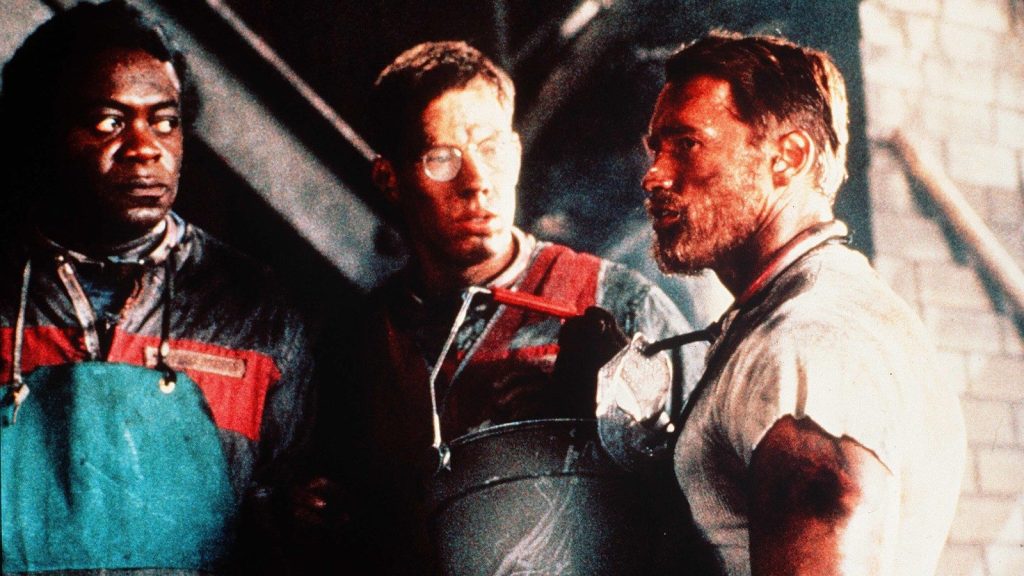
A police helicopter pilot by the name of Ben Richards (Arnold Schwarzenegger) is flying above Bakersfield, California, with his crew when he’s given orders from his superiors to fire into a sizable crowd of citizens engaging in a “food riot”. When he refuses, his crew members on board get their own orders to restrain Richards and to quell the rioters with a barrage of bullets. So the system committed a massacre, blamed it on Richards, and threw him in a labor camp for his revolt. After some time he escapes from the camp with two resistance fighters named Harold Weiss (Marvin J. McIntyre) and William Laughlin (Yaphet Kotto). They make it to one of the resistance camps, but Richards decides to seek shelter at his brother’s apartment not far from the camp. There he meets Amber Mendez (María Conchita Alonso), the new tenant that took up residence after Richards’ brother was taken for “re-education”. Richards then takes Amber hostage and tries to hop a flight to Hawaii, but she outs him to airport security and he’s quickly scooped up by the ICS broadcasting company. Having viewed the footage of Richards escaping the labor camps, Killian (Richard Dawson), the host of ‘The Running Man’, chooses to snatch Richards up before the government can have him- as he’s the perfect candidate for his game show.
Killian coerces Richards to play the game in exchange for his two resistance fighter friends’ safety, which is, of course, a lie. Killian has tracked down Weiss and Laughlin and made them game contestants as well. At this betrayal, Richards swears revenge before Killian sends them down the tubes and into the game. In the abandoned parts of Los Angeles that are the game zone, Richards and his friends keep moving as they’re pursued by the stalkers. Out in the world, Amber sees footage of Richards being captured for ‘The Running Man’ and realizes that the advertisement was doctored and begins to question whether Richards was telling the truth and investigates. After some sleuthing, she discovers that Richards was framed for the Bakersfield Massacre, but she’s quickly caught by the ICS security and thrown into the game for her punishment. After Richards, Weiss, and Laughlin kill Sub-Zero, the first stalker to be dispatched in the show’s history, they begin to search for ICS network’s uplink tech, which they believe to be in the area. Amber catches up with the three and shares her discovery, they then split up as two more stalkers are sent after them.
The majority of the film takes place in the game zone of ‘The Running Man’, and it’s a fairly entertaining time if you’re into cheesy action oriented movies from the eighties. There’s some fun one-liners from Arnold, gratuitous violence involving chainsaws and flamethrowers, and some genuinely fun arch villain acting from Richard Dawson as Killian, who was the first host of “Family Feud”- great casting with that part! The movie also correctly predicted several aspects of what modern society might be dealing with in the year 2019, though not nearly to the degree that the movie suggests. “The Running Man” predicted “deep-fake” technologies and correctly suggested that the people of 2019 would be having huge societal issues with the truth and misdirection due to ever-advancing technologies. It also predicted economic collapse, the disparity between the rich and the poor, and our collective obsession with “reality” TV. While this one may not be the most intellectually engaging, and not exactly the peak of Arnold’s action movies to come out of the eighties, it IS a fun time and a perfectly fine way to spend a rainy (or snowy) night in.
*Warning! There will be some light spoilers in this review! If you want to remain completely in the dark then I caution you not to read further- though I do recommend the film on it’s merits.*
Written and directed by Taika Waititi, “Jojo Rabbit” is a dark comedy satire about an overzealous ten year old boy growing up in 1940’s Germany. This wartime comedy performs a balancing act so perfectly poised to elicit boisterous good cheer alongside a dark and grim real world sadness that you’d think Taika Waititi was a genius or a madman for taking on such a ridiculous, yet potent, concept. Waititi has, once again, proven he has a knack for finding excellent child actors and helping to coax memorable and competent performances out of them. Both Roman Griffin Davis as the titular Jojo, and Thomasin McKenzie as Elsa, showcase excellent skill as young actors and it’ll be very interesting to see what they do after this. Jojo is a normal ten year old boy, easily excitable and incredibly impressionable, he even has his own imaginary friend- but his is Adolf Hitler as a young boy might imagine him, played with cartoonish sensibilities by Taika Waititi himself. Though, occasionally, the depicted authority figure can get eerily close to the hatred fueled real life version. He lives with his mother, Rosie (Scarlett Johansson) and he goes to a Hitler youth camp alongside a friend in Yorki (Archie Yates) as they get groomed for war by playing with knives and grenades. After an incident at the camp Jojo returns home to discover a new reality that he must face. His mother has hidden a Jew (Thomasin McKenzie) in the crawlspace of their walls.
The crux of the film’s story rests on this conflict for Jojo, what will he do when confronted by a real person that he’s been taught to hate his entire life? As we’ve seen Jojo interact with those around him and the world at large for several scenes by this point, we’ve been with him and seen that he’s just a normal boy as Elsa puts it, “Who wants to wear a costume and be part of a club“. In fact, the movie’s title refers to his limited time at the Hitler youth camp in which he’s tasked to kill a small rabbit. Jojo can’t commit to the deed and is mocked for his inability to kill, “Jojo, the rabbit“. After Elsa and Jojo come to the agreement that they both need each other to keep their awareness of each other secret, Jojo begins to question Elsa about the Jews. Initially this is to make an account of “How to spot a Jew” and Elsa indulges him with heaps of sarcasm and jabs at Nazis in general, “We’re just like you, but human“. However the two slowly begin to come to an understanding as Jojo begins to question the nature of his authority figures. This relationship between one of blind fanaticism, Jojo, and of persecuted minority, Elsa, is at the core of the movie’s message. Namely, that personal relationships can prove the humanity between opposing factions, cutting through the power of propaganda and adult manipulation to see the truth. Oh, and to endlessly mock those who would hate others on the basis of ethnicity.
The surrounding cast may be small, but they’re no less critical to the film and it’s message. Both Sam Rockwell as Captain Klenzendorf and Scarlett Johansson as Jojo’s Mother Rosie are excellent examples of those who would perform acts of rebellion in whatever ways they could from within the power structures they reside in respectively. They supplement the heart and common sense of the film, trying to fight the further indoctrination of family and friends within their communities without attracting the wrong kind of attention. Both of these characters are clever and have heart despite living in the heart of Nazi Germany, doing what they can, for who they can. Rebel Wilson and Alfie Allen also have smaller roles as devoted Nazi underlings and both provide some decent comedic relief sprinkled throughout the film. If you can find a showing of this film, I definitely recommend giving it a shot. It may not surpass his earlier comedic work in “The Hunt for The Wilderpeople” for me personally, but it’s a pretty decent film that’s worth a watch.
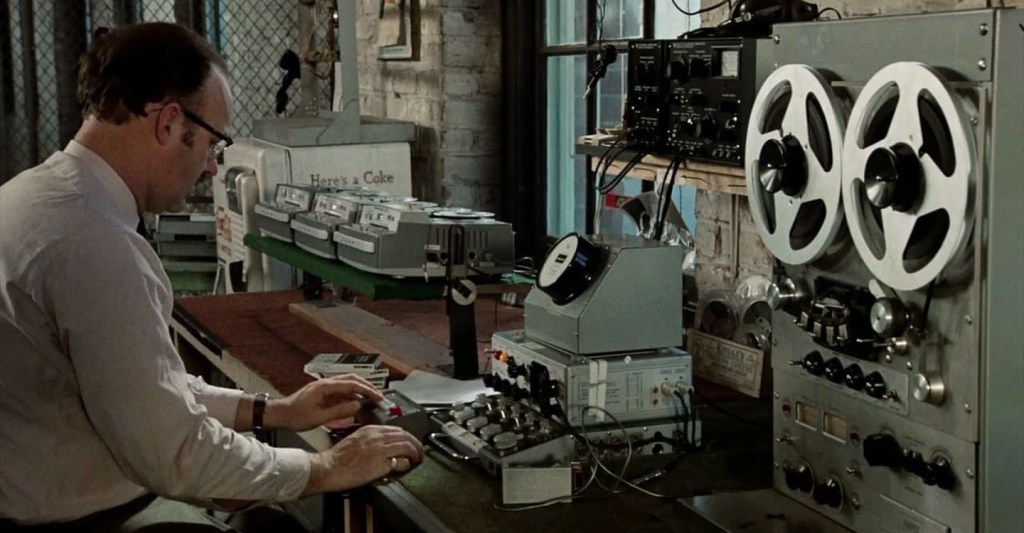
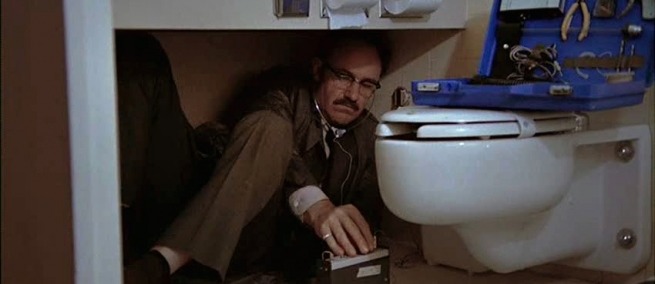
Written and directed by Francis Ford Coppola, “The Conversation” is a paranoia-thriller surrounding a man within the surveillance industry, released fittingly during the height of the Watergate Crisis. The private surveillant in question is Harry Caul (Gene Hackman), and we first encounter him in the field, covertly recording audio of a conversation between a young couple (Frederic Forrest and Cindy Williams) out for a walk. The two seem innocuous enough as they circle through the crowded plaza, we only get bits and pieces of their conversation as Harry and his small team use a variety of methods to capture their exchange. This film has a simple, but taught, premise and while it may be a slow burn as far as the pacing of the story unfolding- it is one wrought with tension, analysis, and questioning. It’s also a small miracle that this film is as good as it is because it was made and released inbetween Coppola’s first two “Godfather” films!
After Harry begins to analyze the audio back in his lab alongside his partner in the business, Stan (John Cazale), he uncovers a possible motive for his client wanting this information- with deadly implications. As a private, small time, surveillant Harry rarely knows intimate knowledge of who he’s tracking or why somebody wants them to be followed. He only knows the target and any knowledge relevant to getting information out of them through stealth and carefully applied technologies. As things escalate Harry finds himself between two sides of some high level corporate espionage, driven to prevent the murder of the young couple he was hired to tail. Harry Caul is an interesting character, especially for Gene Hackman after winning the Best Actor Oscar in “The French Connection” just two years prior. Here Hackman turns in Detective “Popeye” Doyle’s bombastic grit for a more measured and inward determination within Harry Caul. Harry’s a quieter detective, one whose problems are more internalized than Doyle’s.
Which leads me to the only real crux of an issue that I have with the film. After visiting a surveillance convention and meeting up with several acquaintances, Harry brings them back to his lab for a social drink. Up until this point in the film Harry has exhibited a very careful and fairly paranoid persona, he doesn’t let people into his life and he hides his secrets well. He’s even known by the others at the convention to be a shrewd businessman by making his own tech and never sharing his blueprints or prototypes to anyone. So, why has he invited a group of people to his working lab where his audio reels and secretive methods are hidden? After some deliberation, I’ve come to the conclusion that there are a couple beats and one earlier scene that showcase how conflicted Harry Caul really is when it comes to social interactions and the nature of his relationship with intimacy. He seems to be a character that craves camaraderie and attention, but he also seems incapable of cultivating it in his own life. This character flaw is the only reason that I can fathom as to why he would loosen his standards so far as to let an unknown woman close to him and his secrets- which she takes full advantage of. Other than this scene, the movie feels flawless in Coppola’s hands- and most of it is as far as I can tell.
“The Conversation” is an excellently poised film within Coppola’s 1970’s filmography. Squeezed inbetween his first two “Godfather” films and followed up by “Apocalypse Now” in 1979, this was an excellent decade for the director. Rarely do I recommend a film based on it’s technical aspects- but even if the plot or performances didn’t catch your eye then maybe the audio and editing skill on display will, they’re absolutely fantastic for the film’s time. As a plus, a pre-Star Wars Harrison Ford makes an appearance as a villainous corporate underling! What’s not to love about that?
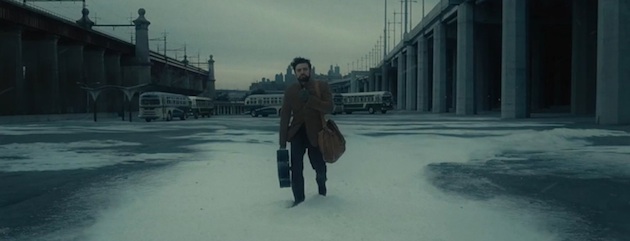
Written and directed by Ethan and Joel Coen, “Inside Llewyn Davis” is a somber American tale following the titular Llewyn Davis (Oscar Isaac) set within 1961’s New York City folk scene. The Coen brothers, obviously, are masters of cinema with an unmistakable creative voice and skill. Here again, as in “O’ Brother, Where Art Thou?”, the duo return to an American landscape of music synonymous with a certain time and place. This time around, the odyssey belongs to Llewyn Davis, a down-on-his-luck folk singer in Greenwich Village who survives the cold winter months mostly due to the hospitality of friends and neighbors in the upper west side. We first find Llewyn at the Gaslight cafe giving an evocative performance of melancholy mood and airy atmosphere.
After a stirring rendition of an age old folk tale “Hang me, Oh Hang me”, the beleaguered Llewyn is told by the bartender that a friend is waiting for him outside. Que the snarky and sarcastic singer getting beatdown by a shadowy figure for reasons that are initially unknown. Llewyn awakens the next morning on the couch of some wealthy academic friends, the Gorfeins, and heads out after recouping momentarily- but not before accidentally letting their cat escape! Having locked the door on his way out, he grabs the Gorfeins’ cat and heads to the apartment of his friends’ Jim (Justin Timberlake) and Jean (Carey Mulligan)- though their relationship to Llewyn is strenuous at best. Hoping to stay a night on their couch, with cat in tow, Llewyn is met with polite simmering rage by Jean who has two pieces of bad news for him. First, that the couch had already been offered to a soldier in town for a few musical gigs before heading back to the service, but more importantly, Jean’s pregnant and it could be Llewyn’s unborn child. Jean can’t discern whether the father is truly Llewyn, or Jim to which she is engaged. Llewyn’s allowed to stay, on the floor, after hashing it out with Jean and swearing to pay for her abortion- with money he doesn’t have. Cue another morning of mounting anxieties and you’ll begin to understand the crushing existence that Llewyn lives, right as he watches the Gorfeins’ Cat leap out Jean’s open window and scampering off into wild bluster of the city.
This propels the wandering Llewyn to chase down the cat and it seems as though each step brings him closer to failure or the ultimate sin for artists, giving in to financial pressure. We get a lot of background information about Llewyn through his interactions with those aware of his past and of him encountering those from his past, notably his family and those who knew that he was part of a musical folk duo- that is, until his partner Mike jumped off a bridge. Through Llewyn’s sister and father, there’s a sense of practicality over expression, and a lot of Llewyn’s stubbornness to continue struggling for his art stems from the anxiety and dread he experiences when visiting his father late in the film- which was the push he needed to follow through with a life he wanted versus a life of regret. It’s not necessarily explicitly said in this scene, but you can sense the nature of it. What I really found inspiring in this film is exactly that, Llewyn’s innate nature to get back up after being knocked down, no matter the severity of blows that life throws at him. I’m skipping a bit here to my personal consensus about the film overall, but that’s because the journey that this film, and Llewyn himself, are going on is a great one and I don’t intend to spoil the whole damn thing for any of you out there. There’s a lot of small aspects of the movie that have endeared me to it. The world that Llewyn resides in has a desaturated color palette of cold blues and greens that give it a texture akin to a furled and beaten paperback novel. This analog world of the early 1960’s is lit with soft and full lighting when focused on any of the musical performances throughout the film, while a crisp and harsher eye is applied to scenes shot outside, within small and cramped New York City apartments, the dark and grimy alleyways, or the humorously narrow hallways like the one Llewyn and Adam Driver’s Al Cody squeeze past each other at one point. Which brings me to the performances. As with every and all Coen Brothers films, the deadpan, sarcastic, heartening, and unique nature of the characters involved ties the film together with a bow only Ethan and Joel Coen could craft so neatly. Justin Timberlake’s Jim holds no resemblance to the world famous singer, if only through vocal talent- Carey Mulligan is poise perfect with a grumpy under-pinning that makes her “Jean” feel like a real person with dreams and purpose. There’s also, yes, a John Goodman cameo as an aging Jazz man critically destroyed by a Heroin addiction and a nasty case of spite and bitterness. Goodman’s paired with a similar yet opposite side of failure with musicians in Johnny Five (Garrett Hedlund), a quiet poet who’s controlled by an older cynic in the industry, from failure breeds further failure. Llewyn stumbles across these two when deciding to hitch-hike to Chicago to see how the record he’d put out after Mike’s death was any good and to see if he could audition for the studio owner. It’s this audition that drives Llewyn back home to New York City, and ultimately back to the Gaslight Cafe.
While some may find this film a bit too Melancholy for their taste, I’d recommend watching (or maybe re-watching) and focusing on how Llewyn navigates his troubles and how nothing seems to stop him. Even though his failures do have an affect on him, he doesn’t let those failures define him, he picks himself back up and goes forward. There’s a wistful nature about the film that suggests that part of the joy of the struggle is the unknown element and pure expression of it all. There are deep undercurrents of the authenticity versus commercialism debate that everyone who’s ever wanted to, or tried to, live off of their art knows full well. Maybe that’s why I was so struck by the beauty of this film’s circular storytelling. At the end of the film Llewyn is back where he started, singing at the Gaslight Cafe and getting beaten up in the alley. Every artist, failed, successful, or otherwise- knows this cycle all too well and it’s a welcome nod to those who keep going for it. Oscar Issac came on the scene in a big way with this film and if you’ve only ever seen him in the recent Star Wars movies, then I suggest giving this one a watch.
Final Score: 2 Cats, 1 Roadtrip
*Check out this video essay on the film! Caution, there are spoilers for the film within the video:
Written by Darren Lemke, Billy Ray, and David Benioff, and directed by Ang Lee, “Gemini Man” is an Action oriented thriller with a dose of Science-Fiction thrown in for good measure. So, this one is a mixed bag. More so than any other movie this year, for me anyways. Will Smith has had a good year with the “Aladdin” remake and next year’s new installment of “Bad Boys” looks like a long awaited return to a ridiculous set of films that should be, if nothing else, a good time at the movie theater. That’s the mindset I was in after walking out of “Gemini Man”, having had a legitimately good time at the movies- even though there were some jarring aspects to the experience. Low expectations are to be sought out friends and fellow movie-goers, they will do more for you than any hype or word-of-mouth. Having heard that this one was a bit of a stinker at the box-office I went in seeing if this one would fall into the category of “So bad it’s good” movies. Not so, the film was well directed and the performances were competent enough for the story that this film was trying to tell. The writing however, was bad. That’s actually the worst part of the film, but I’m getting ahead of myself.
Will Smith’s Henry is an aging assassin, and as the opening scene dictates, he’s still the best as what he does- even though he himself spots his skill slipping. After getting too close to a civilian death for comfort, Henry decides that it’s time to retire his trigger finger. As with all movie assassins that decide to hang it up for good- Henry’s pulled back into the action before too long. After getting a hint of some shady business surrounding his last target from a fellow former brother-in-arms, Henry’s off on the scent of conspiracy. From there Henry is pursued by his own agency for “knowing too much” and gets another old friend (Benedict Wong) roped into the search for answers when he quickly spots an agent (Mary Elizabeth Winstead) surveilling him nearby. Once they all agree to find out why their own agency is chasing them down with deadly intent, the three agents find themselves being pursued by a familiar face.
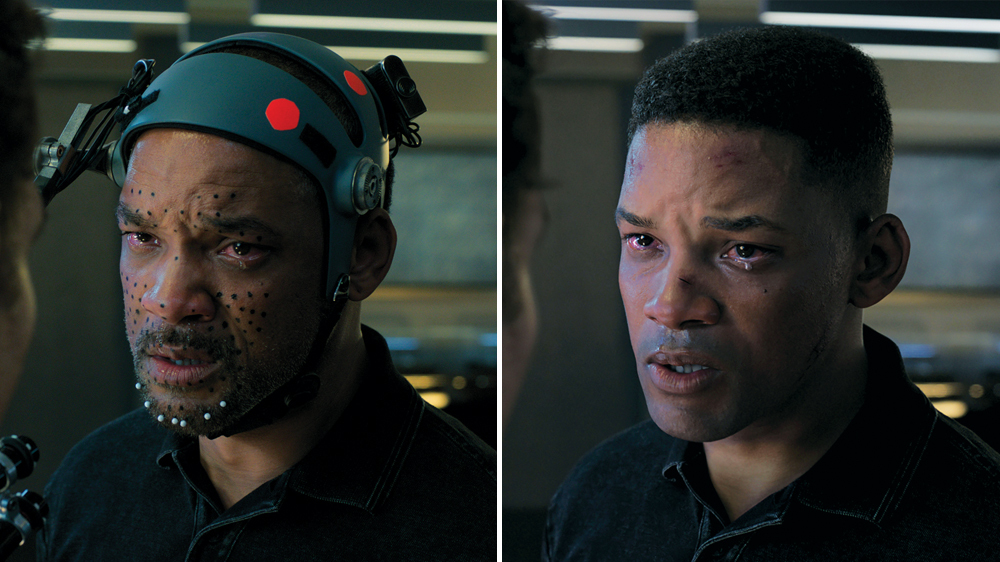
Which is where the action kicks up a considerable degree. The motorcycle chase scene in Colombia between Will Smith and his Fresh Prince-era clone is one of the most exciting sequences of the whole movie, it’s well directed and feels frantic and chaotic. This exemplifies the best asset of the film (aside from two Will Smith performances), constant pursuit with increasingly brutal tactics from the “Bad Guys” of the movie. The film wisely keeps the pace and speed of the film high, which is good because otherwise the writing would have stood out more than it already did. Which leads me to my biggest complaint about this film: it’s way too predictable. From the first moment you see Clive Owen’s Clay Verris in an office barking orders and threats, you know almost everything you need to know about him, he’s a brutal and efficient Villain- with a capital V. Everything about the “old man fights his past self and conflicts with him ideologically” theme of the film is surface level psychology and just a fun excuse to experiment with that shiny new de-aging technology. Which, by the way, was somewhat impressive in execution. I’m not quite sure how they filmed Will Smith grappling with himself on the ground- but some curiosity behind the filmmaking process won’t balance out your film when a more thoughtful script may have been a better solution.
“Gemini Man” doesn’t use all of it’s actors as well as it could have, and its definitely an easy one to plot out if you’ve seen enough movies, but I can’t say I didn’t enjoy my time with it. The plot and hook of the film may not be the most innovative or as memorable as they’d like it to be, but there’s some good fun to be had with this one as long as you’re okay with turning your brain off for a bit. Thankfully, the film puts all of its dramatic weight on the shoulders of Will Smith’s acting abilities, but it isn’t quite enough to distract from the flaws in the storytelling. However, if you’re just looking for some good escapist fun at the movie theater, you could do far worse than this one.
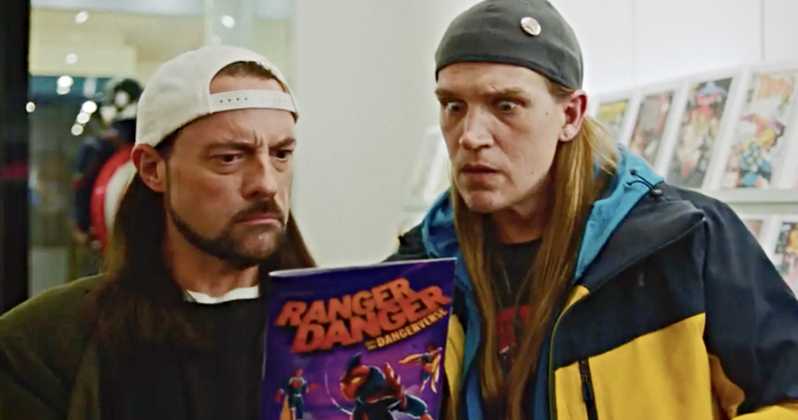
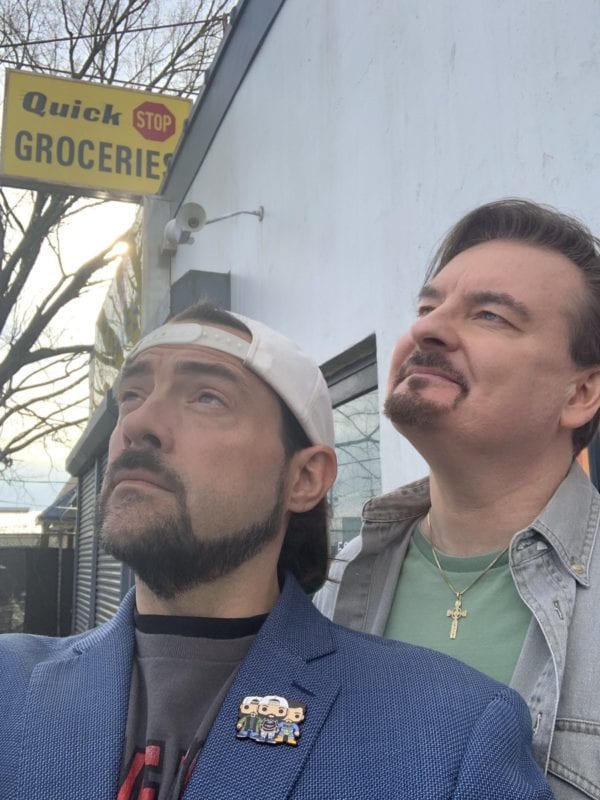
Written and directed by Kevin Smith, “Jay and Silent Bob Reboot” is a comedy sequel to 2001’s “Jay and Silent Bob Strike Back!”, but it’s also an update of sorts on the whole View Askew Universe of films that the “Clerks” movies originated back in the early 1990’s. This time around, infamous ne’er-do-wells Jay and Silent Bob are roped into traveling cross-country from New Jersey to Hollywood so they can stop the reboot of “Bluntman V Chronic” from using their likenesses (again). If that plot sounds overly familiar to “Jay and Silent Bob Strike Back” then you’ve got an idea where the comedy in this film is forged from.
Having been a fan of Kevin Smith’s work for some time now, I knew walking into the theater that “Reboot” would most likely be a funny self-aware jab at Hollywood’s never-ending remixing of popular IPs, maybe a few fun celebrity cameos, at least of those who could tolerate the cavalcade of genitalia jokes that comes with the territory. What I did not expect was that there was legitimate heart at the core of the movie, I won’t spoil it, but it was a nice surprise. Comedies like these typically work for me, but I happen to appreciate silly, dumb, immature humor, and crass wordplay and I’m well aware of all of the View Askew universe’s little easter eggs (Like Ralph Garman’s quick cameo, Smith’s podcast partner for “Hollywood Babble-On”), I think I even spotted Andy McElfresh from “Edumacation” in the background of one scene. Anyways, my point being that I fundamentally understand if these movies don’t work for you, but Kevin Smith is a personal hero to me in the filmmaking world, I may not always love everything he makes, but god damn does he go for the gold and he just never gives up.
What I found most fascinating about the film was the third act in particular. Smith may not have always been a consumer of marijuana when writing these characters in the past- but this is the first View Askew film since he’s began partaking in the herb- and the difference in depiction is notable. It was as if he took the whole of his crafted universe and meshed it all together, giving updates on everything from the aftermath of “Dogma” (My favorite Kevin Smith film) to tying up loose ends from “Chasing Amy” and nods to the “Clerks” films, even “Mallrats”. This addition to the View Askew universe felt right at home with previous films and yet expanded on these characters’ emotional depth, the sway of nostalgia, and a subtle sense of maturity emerging from those you expect least.
Oh, and holy guacamole the cameos! If you thought “Strikes Back” had a surprising amount of celebrity cameos, then this one will really blow your hair back. I won’t reveal any because spotting them and enjoying the ride are some of the best aspects of the movie. I’m happy to see Kevin Smith getting another film out there, and this is one of his best in years, in my opinion. I sincerely hope this film does well enough for him to gain leverage to finally make his “Clerks 3”, I need that film- No, America needs that film!
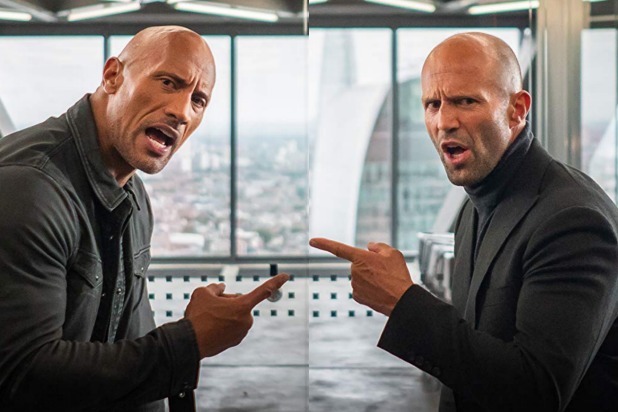
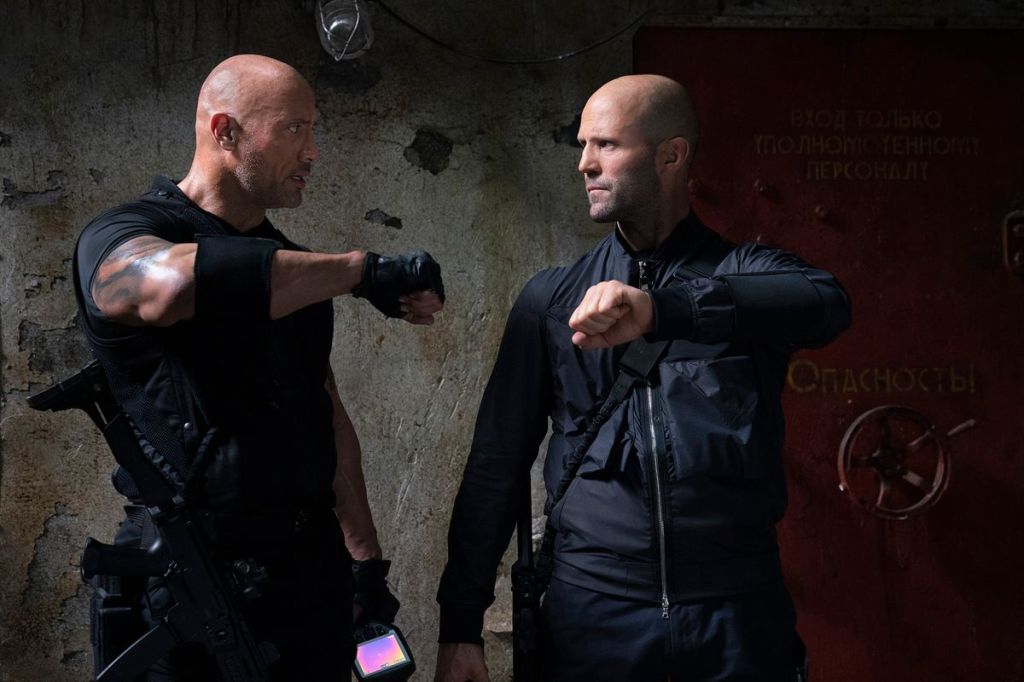
Written by Chris Morgan and Drew Pearce and directed by David Leitch, “Hobbs and Shaw” is an action film spinoff from the Fast and Furious films chronicling the over-the-top antics of the Fast franchise’s two most memorable antagonists. Forced to work together to save the world from a MacGuffin that could inexplicably kill us all, Hobbs (Dwayne Johnson) and Shaw (Jason Statham) must put their differences aside to track down the deadly super-soldier Brixton (Idris Elba) and stop him from implementing this nefarious plan. Once the duo are on the hunt they run into Shaw’s sister Hattie (Vanessa Kirby), an MI6 agent on the trail of the very same viral MacGuffin and ends up injecting it in her own body to get away with the super-weapon. As you might expect, the movie is a loud, dumb, and highly entertaining series of action set-pieces with some vehicular mayhem thrown in for good measure.
Dwayne Johnson and Jason Statham are the reason to see this movie. Period. Their charisma, banter, and one-liners are pitch perfect and thoroughly entertaining throughout the whole runtime, no matter how massively stupid the plot or action sequences get (and trust me, they get VERY stupid). Vanessa Kirby was a pleasantly surprising addition to the cast offering, providing some solid action performing and that touch of heart you may need to remind you that you’re still human while watching this one. Though, admittedly, Hobbs’ scenes with his daughter (Eliana Sua) are damn cute, if fleeting. Charisma and Machismo are the fuel for this movie and everybody knows that, which is why I was overjoyed that Idris Elba let his performance as Brixton go so far over the top that it seemed appropriately cartoonish at times. Which is apt- this movie is an adult cartoon essentially, these super spies and international security agents are not men- but super heroes in suits and leather jackets. At least the movie is evidently self aware of it’s own absurdity- which forgives a LOT of it’s flaws and faults, for me anyways.
While the paper-thin (what are they doing again?) plot to save the world from imminent destruction may not be the most engaging, that’s not why anyone came to see this movie- at least it shouldn’t be. It’s all about the spectacle, set-pieces, and humor. If you enjoyed the older, but equally absurd, action movies of the 1980’s like “Commando”, “Rambo: First Blood Part 2”, “Robocop”, or “Top Gun” then you’ll likely get a kick out of this one. However, I must note that even a few of those movies I referenced have plotlines that are smarter than this one. There’s also a few fun surprise cameos that I won’t ruin for you, but they were delightful and perfect additions to this series.
The final act is a a complete mess when it comes to any kind of continuity. The final fight in Samoa has sequences of abject darkness in the early morning, to a raging storm, or a sunny day depending on the emotion they’re trying to convey for the shot. I have to say it’s absolutely ridiculous, but by this point they’ve earned the complete disregard of all reality. Whatever, I have no expectations of logic or physics at this point in the film series, I just want to be entertained with this completely fun and dumb guilty pleasure. While this film resides within the larger framework of “The Fast and Furious” world, I wouldn’t be surprised if this pairing became a franchise itself- I’d certainly go see a few more outings with these two powerhouse stars. There’s even rumors that Keanu Reeves may join a sequel if one musters up enough interest, and to that possibility I say, bring it on.
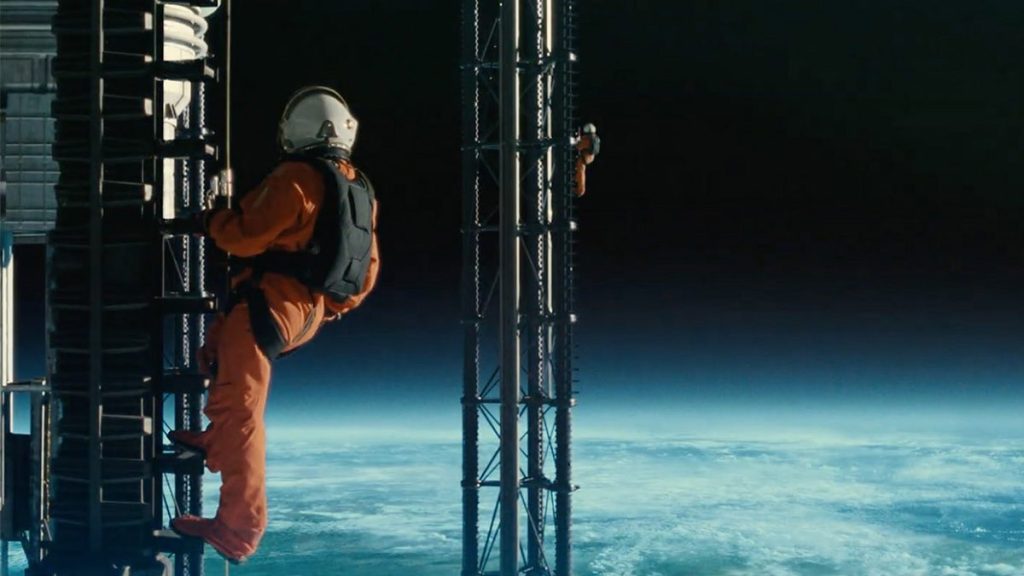
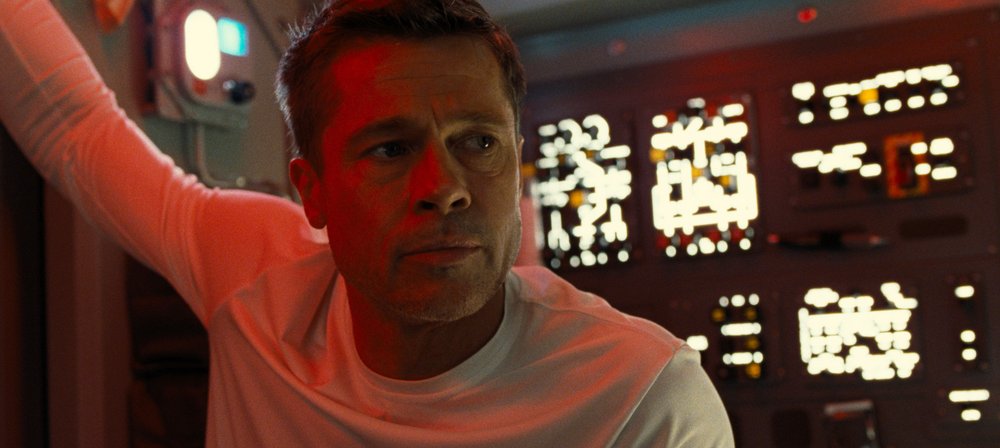
Written by Ethan Gross and James Gray and directed by Gray, “Ad Astra” is a sci-fi drama set in a not-so-far-off future that follows Brad Pitt as Roy McBride, the son of legendary astronaut Clifford McBride (Tommy Lee Jones). Major Roy McBride is a member of Space Command, a N.A.S.A. inspired international organization that’s investigating a series of increasingly catastrophic power surges that have been rippling throughout the solar system. Early on in the film Roy is nearly killed by one of the surges while attending to some routine maintenance on the colossal space antenna. It’s a thrilling sequence as Roy falls from the heights of the atmosphere and calmly calculates how to survive the scenario, its a sequence of cold logic paired with intense visuals. The rest of the film may be slower over all, but its peppered with sequences that may catch you off-guard, and that’s part of the joy I found with “Ad Astra”. Yes, it’s a heady sci-fi with a huge amount of narration set mostly in space, but it’s also one that injects some compelling action and thrilling sequences throughout the course of the movie.
After surviving the fall Space-Com brings the dutiful former soldier in for what seems like a debriefing for the space antenna explosion, but is in reality a far more somber and urgent preamble. The brass at Space-Com inform Roy that they believe the source of the power surges fracturing the solar system to be originating from Project Lima, the exploratory vessel that his father Clifford captained out to Neptune’s orbit some years ago. It is a mission of utmost secrecy with deadly implications for Humanity if Roy fails to contact the potentially rogue Clifford- if he’s still alive. At every step of the journey Roy must take scheduled Psychological evaluation tests required by Space-Com, which act as strange confessionals that determine if he’s stable enough to journey farther. The mission, clearly a last ditch effort by Space-Com, is to send Roy to the Mars facility that houses the strongest signal generator left operational from the surges- to send a personal message to his father in the hopes of making contact with The Lima Project and her crew.
With this film and the summer’s “Once Upon a Time… in Hollywood”, this has become an excellent year for Brad Pitt performances. The two characters, Cliff Booth and Roy McBride, could hardly be more different though. While both are equally cool under pressure, Roy is a far more reserved character. He’s clinically cold to others and heavily contemplates his choices, actions, and past while on his journey. Which is why I so appreciated the efficient use of narration from Roy’s perspective, it can be tough to get narration down correctly without it over-staying its welcome, while also avoiding narrative redundancy. Here the narration serves to add depth, paired with Pitt’s minimalist performance, the film benefits from understanding how the character operates, especially as the story becomes intensely personal over time. The film excels at merging grand, expansive, visuals and score with a more intimate rumination on morality, duty, and the meaning of it all (i.e. Life). Which makes perfect sense as the film is almost wholly about duality and it’s many variations sprinkled throughout the runtime; faith and science, hope and despair, to name a few.
While “Ad Astra” may remind you of other films based on structure (Apocalypse Now), or visuals (Interstellar), it does a lot to make itself unique among fellow sci-fi or journey-based tales. The pacing may require a bit of patience at times and the supporting cast may not be used to their full potential (Donald Sutherland, Ruth Negga, and Liv Tyler), however if you’re a fan of a good space travel film or just enjoy similarly cerebral sci-fi like the “Blade Runner” movies, then I highly recommend giving this film a chance.












 spacecortezwrites