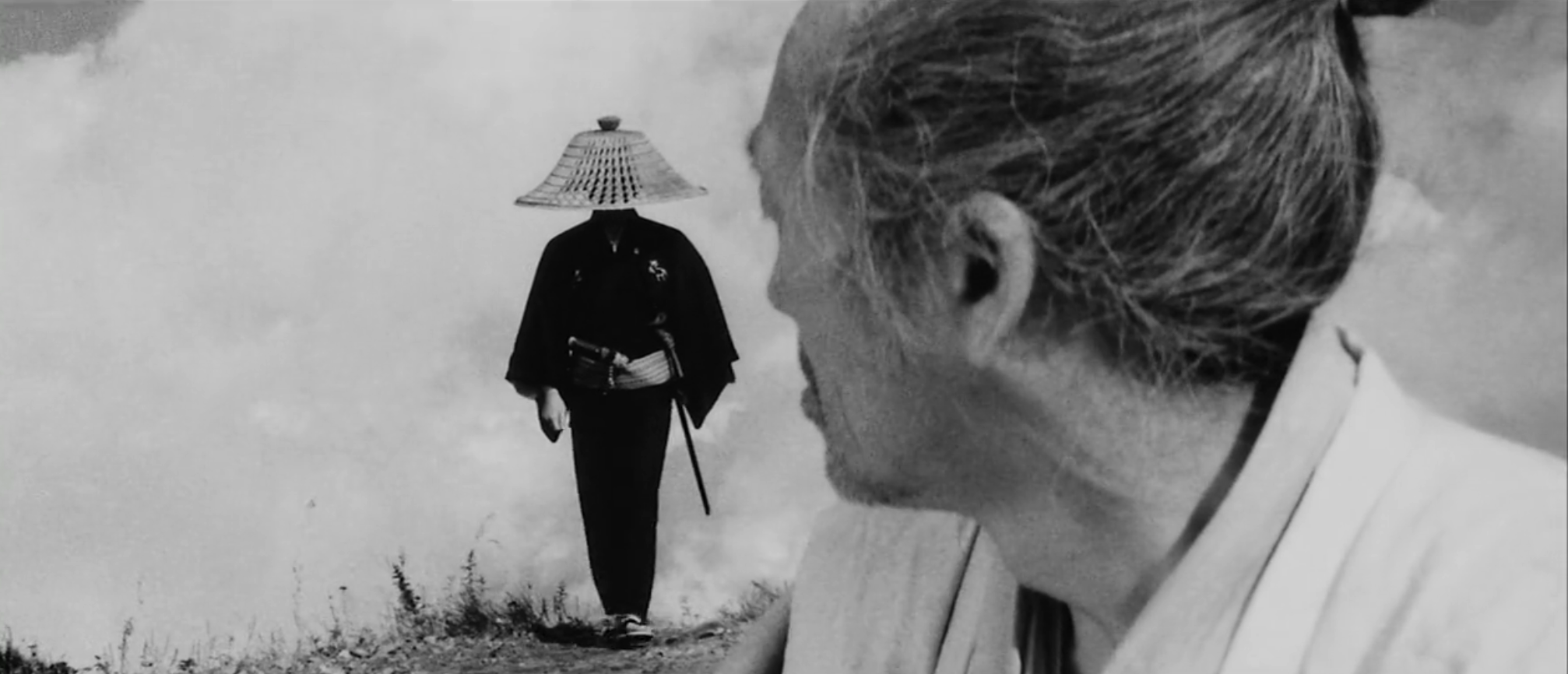
Summary: Zatoichi returns to his village four years after he completed his training. There are two major storylines this time around, the first major arc includes the brother of the Yakuza Boss that Ichi killed in the last movie seeking revenge. The second is more personal, in which Ichi learns that his old Master, Banno, has turned to colluding with local gangsters involved in corrupt schemes, due to financial duress. Banno has also arranged a marriage for his younger sister, Yayoi, to a Samurai, but she ends up falling in love with Zatoichi instead. Learning from his past mistakes Ichi attempts to take the pacifistic route and absolve himself from violence to settle and marry- even taking a dice roll to determine whether or not he lose an arm to the bereaved Yakuza brother instead of the usual fight to the death. Later, in the forest, Zatoichi finds out that Banno’s corruption wasn’t just financial- but that he also needlessly kills in cold blood to serve his goals. Banno can’t stand to let Zatoichi leave with this knowledge and forces his former student into a fight. Zatoichi reluctantly kills Banno in an emotional fury as Yayoi watches from the brush. After the deed is done Ichi acknowledges that he cannot avoid his true calling stating that he is “That kind of man“… and wanders off, broken once more.
My favorite part: This film is interesting because it’s the first time the series acknowledges the consequences of Zatoichi’s actions from the past two films. I was also surprised by the Yakuza brother’s lack of commitment to killing Zatoichi, seeing a villain give some consideration to forgiveness was unexpected.
Why it’s great: This was the first color film in the series, and seeing the world come alive was like a breathe of fresh air. Granted, this film took a muted color palette of earthy tones and shades for most scenes- but it was still very cool to take in this new paradigm.
This year for the Christmas season I decided to try something a little different. Recently, I realized that the movie series I’ve been watching in my free time, “Zatoichi: The Blind Swordsman”, had exactly 25 installments. So, instead of reviewing Christmas movies, well known or otherwise, I figured I’d write up a short review for each film in the 25 days leading up to Christmas. This format will be slightly different from my free form reviews where I discuss anything within a film that I found to be particularly fascinating. It will be similar to that style, but a bit more regimented. I’ll chunk each short review into a few categories; the writer and director of each film will be highlighted alongside a count of how many films within the series that any particular writer or director has worked on (at that point in time) given that there are repeats across the 25 films. There will also be a quick summary that goes over the specifics of the film- but as I’ve been watching the films I’ve noticed that there’s a bit of a formula at hand so there may not be as much analysis as there would be with any one singular film (but I haven’t finished the series as of this point and am open to being wrong about that for the series as a whole). *The character of Zatoichi was adapted by the work of Japanese novelist Kan Shimozawa*
Writer/Director: Minoru Inuzuka/Kenji Misumi
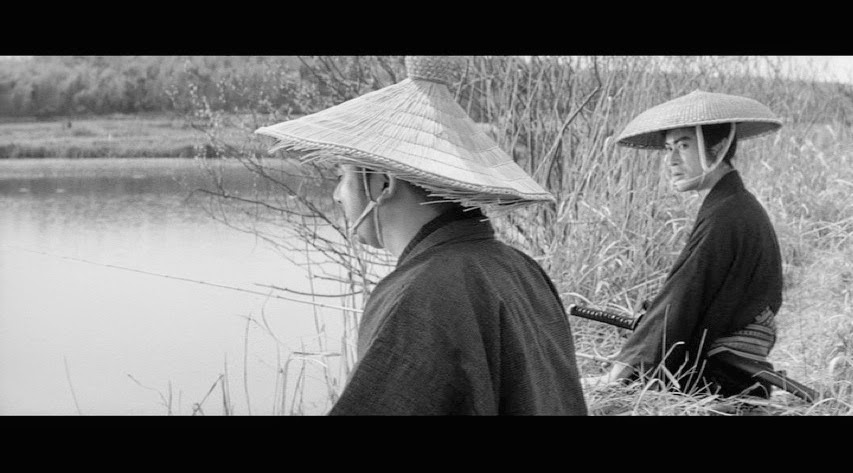
Summary: Starring Shintaro Katsu as Zatoichi, this first film in the Blind Swordsman’s Samurai saga expertly lays the foundation of the character’s personality, skillset, and morality that will guide future filmmakers and writers with a winning formula. In his first story, Zatoichi happens upon two neighboring villages on the precipice of war, with tensions high and about to boil over. Ichi (as he’s referred to non-formally) is quickly hired by one of the Yakuza gangs, while the other side quickly does the same in hiring a skilled ronin of their own. As the war brews in the background Ichi spends his time fishing- ironically with Hirate, the other ronin the rival Yakuza gang has hired, and they strike up a fast friendship. Ichi also happens to get involved with a little Romeo and Juliet scenario involving Otane, a young woman growing increasingly weary of the Yakuza lifestyle, and her lover from the rival gang. Eventually when the war comes, Zatoichi discovers that his friend Hirate is dying of Tuberculosis, and wishes to die in battle with a worthy foe. Hirate, having found his faction’s secret weapon to be a rifle they planned to shoot Zatoichi with, commits to fight to the death for his honor. After the war between the Yakuza gangs dissolves Otane gives her consent of marriage to Zatoichi- but he denies her, feeling too much shame for his way of life and stature in society and wanders off having discovered a profound sadness in killing a friend and destroying a love he could not accept.
My favorite part: I’ve always enjoyed the notion of two highly skilled warriors earning each other’s respect through sheer skill alone. This is a recurring motif that the series will continue to mine throughout future installments. Its an aspect that’s especially common among Japanese anime and manga, and two of my favorite anime “One Punch Man” and “DragonBall Z” lean into this notion constantly. There’s something exciting about seeing previously reserved characters come alive at the possibility of a “real fight” with someone of equal or greater skill- especially when they’re consumed by reckless abandon and their former allegiances are tossed aside for a taste of greatness in battle. Fun stuff!
Why it’s great: This first Zatoichi film, one of the two black and white films in the saga, is great due to the sum of it’s parts. Everything that’s great about the series can be traced back to this core. Zatoichi may be a wandering blind masseur, a lowly social status in Japan’s Edo period, but he uses his impediments to his advantage and fights that much harder and faster because of them. His code of honor is tranquil, but true. He doesn’t want to kill anyone, but he will stand up for himself and others when abuse and neglect are in play. His humility and guilt over his own actions and of society as a whole build into the series’ inherent sadness at the state of humanity at large. Many, but not all, of the films end with Zatoichi wandering off into the distance as he both literally and figuratively distances himself from the people he’s helped and hurt- staying would only create more harm, more pain.
Recently I began watching a Samurai film series from Japan made in the early 1970’s called “Lone Wolf and Cub” based on the hugely popular Manga of the same name. I’ve been slowly wading into the popular Samurai genre of Japanese films for a little while now. I started, as most Americans do, with Akira Kurosawa in “Yojimbo” and “Sanjuro”, before plunging into the famed director’s sword brandishing epic “Seven Samurai”. From there I found “The Sword of Doom” partly because that’s a great title- but also because it starred Tatsuya Nakadai (Who gave memorable character appearances in both Yojimbo and Sanjuro) as the lead, with the legendary Toshirô Mifune as a revered master swordsman in a minor, but powerful, role. All of these films have reviews here on this blog, and they left me wanting to discover more! One day after seeing a few reputable cinephiles on twitter take note that the series had landed on the Criterion Collection’s streaming service, I knew I had to check it out. It must seem as though I’m plugging this streaming service all the time- but it is only because I often find films there that I cannot find anywhere else, and as a student of the medium- I always need to see more movies. Always.
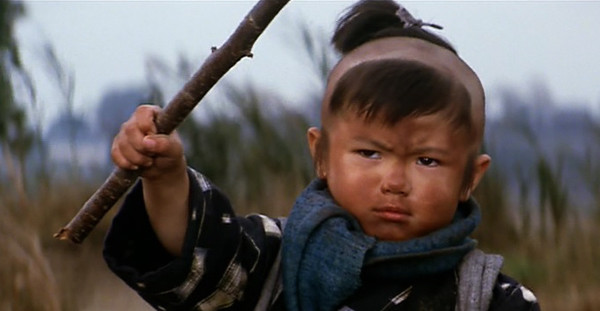
Rather than go through each film and review them individually, it made more sense to sum up the series as a whole and what made it great. Though, for your convenience I’ve listed each film’s title and year of release below this piece. Throughout these six films the most singular and significant factor that makes them stand out from the rest of the genre is the fact that Itto Ogami (Tomisaburo Wakayama) roams the vast Japanese countryside with his infant son, Daigoro (Akihiro Tomikawa) by his side. In the beginning of the first film, we see Ogami in his role as the shōgun’s executioner, mercilessly cutting down an incredibly young daimyō (Essentially a Lord in the feudal sense, a form of royalty within Japan’s Edo period. Forgive me if this is inaccurate, I’m only going by slight internet research and how this role is depicted within the films). This is important as it sets this world of cinema apart as a particularly brutal one, not even children can escape with their lives. It also serves as the assumed revenge for Ogami’s wife who was killed by three ninjas afterwards. It’s a bit more complicated than that, but it boils down to the “Shadow” Yagyū Clan framing Ittō for treason and subsequently taking over his executioner’s post. Ogami quickly gathers his son Daigoro and offers the toddler a choice to avoid the hardships of their uncertain future by death or to join his father “On the Demon path to Hell”. Which is, essentially, to wander as assassins-for-hire as they seek vengeance by hunting down all members and known associates of the Yagyū Clan. Obviously, Daigoro accepts the ronin lifestyle.
Holy Mother of Violence!
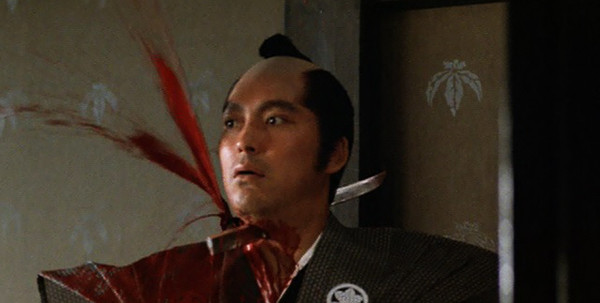
The hook of the series, for me anyway, is the absolutely insane graphic violence that is on display throughout these films. I’m fairly certain that there isn’t a film in the bunch that doesn’t have at least five severed limbs from anyone foolhardy enough to challenge Ogami. From the candy-cane red blood that sprays from the Wolf’s victims to the inventive and bizarre ways in which he has outfitted Daigoro’s baby cart for maximum carnage- the series is fundamentally soaked in blood and corpses. The villains that seek to destroy Ogami and Daigoro get cartoonishly creative with their various techniques as the films progress. From hiding in walls and stone barriers to literally writhing through the dirt and snow to pursue the Lone Wolf and Cub- these enemies can seem unending at times, though we as the audience know that Ogami’s mastery of his Suiō-ryū swordsmanship is unparalled! These films could be categorized under exploitation within the Samurai genre, and there is plenty to be said about the snap-zooms and bad guys giving whole monologues with swords jammed in their skulls, but there’s enough artistry beyond pure shock and awe that propels these films into a category all their own. What other films series so values extreme bloodletting alongside such strong familial bonds?
Silence and the poetic nature it instills
The use of sound in these films is uncannily serene at times. Depending on the scene, these films can have either a melodic score to accompany Ogami strolling with Daigoro’s baby cart, or a jazzy upbeat tempo to fit the pace. Don’t get me wrong, I love the scenes when the 1970’s funk kicks in to accompany Ogami’s blending of bad guys, but if you’re paying attention you’ll begin to notice the times that have the least noise weigh the most thematically. Below this article I’ve left a link to a video analysis of how these films utilize silence effectively, and I urge you to check it out. Often when Ogami is stoically seated at altars and shrines, the score takes a beat or two back to meditate and breathe inbetween the chaotic fight scenes. The best use of silence in each film, in my opinion, is at the beginning of Ogami’s one-on-one duels with the central villain of the film. Upon drawing swords, each warrior takes his or her stance and waits, calculating, taking only slow measured movements. It is the calm before the storm. It heightens the tension from some of the sillier one-versus-many scenes’ over the top violence and allows a moment of uncertainty to slip in. Who will strike first? Will Ogami come away unscathed? Or will he finally meet his match? The films often put a lot of technical precision, craft, and care into their fight scenes with excellent choreography, but the biggest diversion from this tactic in the series lies in the third film “Baby cart to Hades”. It’s a far slower film than the rest and focuses more on the ulterior dimensions of the warrior spirit within Ogami. Deep within the second act Ogami is forced to endure a ridiculous amount of torture that would make Mel Gibson proud. Through his restraint and self control, he defeats his enemies. These things help to elevate the film series beyond it’s grindhouse attractions.
Cinematography
From thick wooded forests to sweeping sand dunes and even snow topped mountains, the “Lone Wolf and Cub” movies put a heavy emphasis on the locations that our two assassins travel through. Visually, location is front and center where the camera is concerned. Each film does it a bit differently, but whether through differing camera techniques or inventive framing, there is always a sense that the world these characters inhabit is fully realized, if a bit fantastical. I particularly appreciate any scenes that immerse themselves in mood or when depth of landscape is considered. The fight scenes themselves are constructed for the most visceral and eye-popping blood splatter, and it’s a joy to see Ogami take on literal armies of opponents at times. Throughout all the spraying blood, dubiously performed monologues, and patient wanderings through varying landscapes, the cinematographers of these films have thoroughly earned their place in celluloid history.
The Elephant in the room…
While these films are highly entertaining and culturally significant, we must take a moment to acknowledge the sexual acts of violence against women. I am no scholar of Japanese society, especially of any time period or place, but these films do depict several instances where women are taken advantage of. Maybe it’s more off-putting as an American because what we’re shown is a bit more explicit than our legacy of films, at least in the portrayal of the sexual assault. The films explicitly exist in the pulpy and exploitative arena of cinema- so I feel that it’s just wise to know that these scenes exist and could put some viewers off from watching the rest of the films. Though, to be fair, Ogami is never the perpetrator of these violent sexual acts, the villains here tend to be the worst of society. So, maybe making them out to be monsters of every variety was the intention to get audiences on board with Ogami’s particularly violent dispatching of such vile men? So, it can get ugly at times, but, hey people are a mixed bag themselves right? If you can get past these instances of vulgarity, then I would highly recommend giving these films a watch!
Final Score: 6 films, 6 circles of Hell
*Below I’ve listed a couple links to more information on these films that I quite enjoyed and found to be rather informative. If you want to know more about these films, check it out!
Written by Ryuzo Kikushima, Hideo Oguni, and Akira Kurosawa and directed by Kurosawa, “Sanjuro” is the sequel to Kurosawa’s earlier Samurai Ronin feature “Yojimbo” also starring Toshiro Mifune in the lead role. After “Yojimbo”‘s success Kurosawa’s producers pushed him to craft a sequel to the wandering Samurai’s debut. “Sanjuro” is a lighter affair than the first film, often playing off of well established expectations within the sub-genre so often associated with the Kurosawa ‘Western‘ Samurai flick. When asked for a name, the Ronin simply observes his surroundings and gives a random title (Sanjuro) just as he did in “Yojimbo”, seemingly only to appease whoever asked.
We’re quickly introduced to a group of young Samurai in a clan trying to rescue their uncle (Yûnosuke Itô) from the corrupt Superintendent of the clan. Luckily for them they stumble upon the disheveled and aloof Sanjuro who overhears their opening assessment of the clan’s situation, he chooses to interject, and tell them how wrong he thinks they are about the facts of the matter. “Sanjuro” has an excellent balance that keeps the film’s tension intact, and the scenes investing, even though the base story is fairly simple overall. As the nine young Samurai keep switching back and forth from trusting Sanjuro to being skeptical of his intent throughout the film, the dynamism of the large cast keeps the momentum high throughout the film. There’s also the fact that at any given moment Mifune can overshadow an entire screen filled with dozens of people and then disappear into the background within seconds if needed.
With the deft hand of Kurosawa behind the camera the simplicity of the story bleeds into the background of consciousness. Every cut, every use of movement onscreen, and every choice regarding spatial design keeps the seams of the theater curtain from tearing and revealing the secrets behind the illusion of film-making. For having a core cast of ten characters, solely regarding the protagonists, Kurosawa layers the space with them masterfully. He knows how to fill the field visually and uses the geometry of blocking to great effect in every scene, not to mention the ingenious camera movements that clue the audience in on story elements with ease. Most of the film takes place with Sanjuro and the rebel Samurais planning out how they will rescue their uncle and his wife (Takako Irie) and daughter (Reiko Dan). When Sanjuro’s clever conniving fails due to the rebel Samaurais’ incompetence, he finally resorts to the sword. It’s a thing of beauty to watch Sanjuro take stock when he is strategically cornered and plainly frees his fellow Samurai in a room full of guards and then proceeds to slaughter the dozen or so opponents single-handedly.
If you’re looking for a fun Samurai flick but don’t necessarily want the self-seriousness ingrained within the genre, then “Sanjuro” is for you. The sequel is actually pretty funny, and there’s no greater on-screen Ronin than Toshiro Mifune! You can’t go wrong with this one, plus, the very end scene has one of the very best Samurai stand-offs in cinema history.
Written by Shinobu Hashimoto and directed by Kihachi Okamoto, “The Sword of Doom” is an existential samurai film that dwells on a titular character that isn’t exactly altruistic, to say the least. This is, essentially, the story of a villain. A Samurai with a unique style, long lost from any traces of morality, Ryunosuke (Tatsuya Nakadai) spends the majority of the film brooding and sulking about until he bursts with a flurry of violence. Don’t fret, this film most assuredly lives up to its pulpy title. Ryunosuke appears suddenly in the opening scene when he happens upon an old man praying for death so that his granddaughter would not be burdened by his increasing fragility. He swiftly grants his elder’s wish and moves along nonchalantly. Our protagonist is almost more of a singular force set upon the world than a human character, a skilled swordsman with a thirst for violence.
Early on in the film Ryunosuke’s father, who disproves of the psychopathic Samurai’s technique, pleads with his son to purposefully lose an upcoming fencing match. His opponent’s wife, Hama (Michiyo Aratama) also urges him to concede and throw the match against Bunnojo Utsuki (Ichirô Nakatani). Ryunosuke agrees on one condition, that Hama sleep with him before the match. Hama agrees, though Bunnojo discovers the infidelity before the match’s start and has made the clash a far more personal affair. After the fight is considered a draw Bunnojo lunges for a kill shot, but Ryunosuke’s entire style leans into this tactic, lying in wait for his opponent to strike with his eyes and sword leisurely cast aside. After Bunnojo is slain Ryunosuke and Hama are run out of town and the film cuts to an unspecified jump in time.
A few years later, roughly, Hama and Ryunosuke are married and considering returning to their village. Ryunosuke’s a sake drunk and Hama is resentful of her husband and her situation in life. Ryunosuke hears of rumors that Bunnojo’s brother Hyoma (Yûzô Kayama) is seeking vengeance, so he does a bit of research. What he doesn’t know is that his father urged Hyoma to train under master fencer Shimada (Toshirô Mifune), to wipe the shame of Ryunosuke’s actions from his family’s name. I won’t go into an excessive amount of detail on every plot point, but that is the skeletal framework essential to understanding the film. “The Sword of Doom” harbors a dense and nightmarish atmosphere that is used to great effect. The cinematography and blocking of the actors is magnificient and alleviates any stress that the admittedly convulted plot contributes to. The remainder of the film has some of the best Samurai action I’ve seen in films (so far), and Ryunosuke’s descent into existential paranoia is an excellent departure from his stoic confidence earlier in the film. Though my favorite scene of the whole film is when Ryunosuke witnesses Shimada’s expertise in killing an onslaught of attackers on a wintry night- his skill is enough to shake the soul of the morally corrupt Samurai. Aside from the Kurosawa films in which these two actors frequently come to blows, “The Sword of Doom” takes a different route, the two iconic Samurai actors never cross blades. Though Ryunosuke is profoundly affected by seeing the superior’s swordsman’s technique in action.
This was the final Criterion Collection film that I picked up through a sale they had recently, and it was worth every penny. The Criterion Collection does an excellent job with their film restoration. They clean up the audio and frames of film of any static or dirt and allow the full vision of the original filmmakers to shine through. Criterion commits to a commendable standard of quality that I personally highly value and I cannot recommend them enough. If you’re in need of a good Samurai film and have exhausted the library of Kurosawa, then this is a fine film to sate your katana brandishing needs.
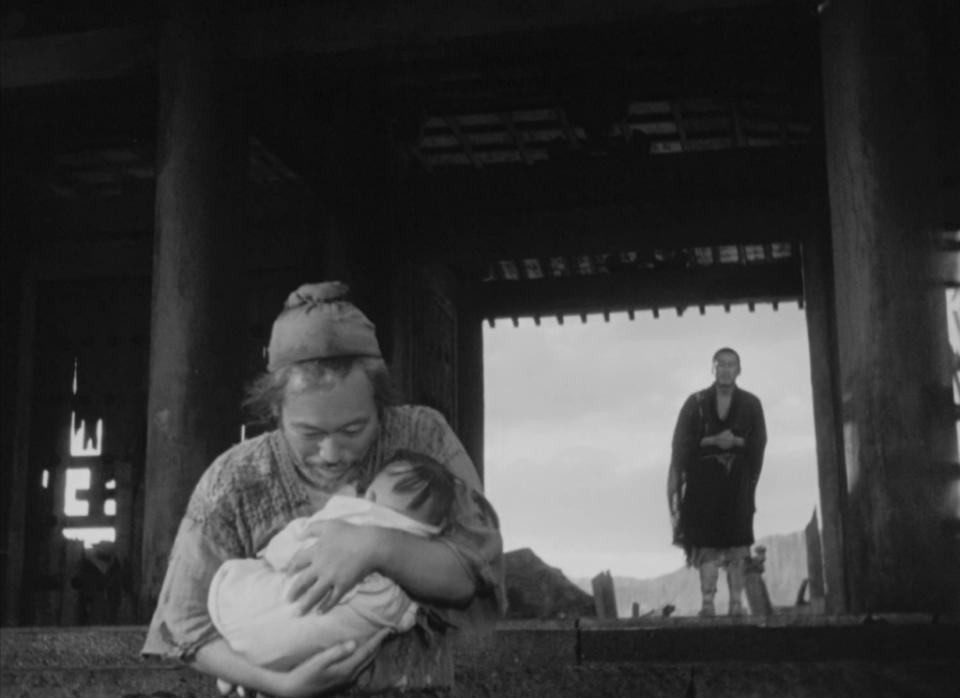
Written by Shinobu Hashimoto and Akira Kurosawa, and directed by Kurosawa, “Rashomon” is a film about the complexities of human nature surrounding a murder with four contradictory eye-witness accounts. In the film three men find solace from a torrent of rain under Kyoto’s Rashomon gate. In the opening a woodcutter (Takashi Shimura) and a priest (Minoru Chiaki) are discussing and processing the differing accounts of an event recently taken place nearby. A commoner (Kichijiro Ueda) comes in from the storm and joins the conversation. He’s brought up to date on the situation at hand; a samurai (Masayuki Mori) has been murdered, his wife (Machiko Kyo) raped, and a local bandit (Toshiro Mifune) is the suspect. The woodcutter happened upon the crime scene and was the first to report the incident.
What follows is a series of revolutionary flashbacks to describe the tale as each character remembers it. All retellings of the same event differ, while remaining both true and false. True in that it is how they remember the events, but false in objective truth. The only scenes that are objectively true in what they show us are the ones taking place at Rashomon. Every flashback is an amalgamation of fractured memories, every scene in the forest broke new ground by showing the audience unreliable retellings of the past. This wasn’t a new idea that “Rashomon” originated, but rather a storytelling device that the film popularized. In fact the film is so connected to the idea of contradictory interpretations of past events that they became entwined with each other until ‘The Rashomon Effect’ became part of the cultural zeitgeist.
Each suspect questioned by an unknown official, which leads into each one’s version of the truth. The bandit gives his testimonial first, then the wife, and then the dead samurai- who speaks through a spirit medium, with the woodcutter’s tale kept until the end. All claim to be guilty to varying degrees, and all describe the situation with varying representations of themselves and the others involved. The three men under the Rashomon gate have differing reactions to the events and various recollections of those involved. The commoner is the most cynical of the three, at one point he posits, “Is there anyone who is truly good? Maybe goodness is just make-believe.” The woodcutter is visually distraught by these stories as he tries to reassemble the truth of the matter, while the priest seems to be placing the weight of his faith in humanity upon the outcome of the tale.
The film ends on a high note when the fog of ambiguity is lifted by the sounds of an abandoned child crying out. The woodcutter lifts his spirits and takes on the responsibility of this orphan, proving to the priest that humanity still has hope left in its spirit. The simple act of selflessness gives the film’s end a beacon to strive towards, even if humanity is muddled, complex, and not always truthful- we still strive to be better than our worst habits.
“Human beings are unable to be honest with themselves about themselves. They cannot talk about themselves without embellishing.“- Akira Kurosawa
Final Score: 1 samurai ghost, 1 over the top bandit, and 1 woodcutter







 spacecortezwrites