After the Holidays I settled into a steady stream of random films, we may still be in the midst of a global pandemic- but some things never change, and January is still the dumping grounds of all major movie studios. Thus, I’ve taken to the Criterion Collection for a good chunk of the month’s film watching. In fact, of the ten films listed below, only one isn’t from the collection. It’s also the newest film to date by a wide margin, with only a streaming exclusive documentary getting near it. These films have no connective tissue other than the fact that I’d never seen them before and needed to fill in some of my film history gaps. Hopefully you’ll find something worthy of a watch for you, I enjoyed most of the following films.

Vertigo (1958)
Written by Alec Coppel and Samuel A. Taylor, based on the novel by Pierre Boileau and Thomas Narcejac, and directed by Alfred Hitchcock, “Vertigo” is one of Hitchcock’s most well known thrillers of the 1950’s. “Vertigo” deals with obsession, fear of heights as the title implies, and an amalgamation of other more burrowing fears that emerge from our main character over the course of the film. While this one doesn’t rank as my favorite Hitchcock film that I’ve seen so far, it’s still pretty damn good. James Stewart stars as Scottie, a detective in San Francisco that’s retired early after a harrowing rooftop chase. In the opening scene Scottie’s in pursuit of a criminal on foot with another officer, but looses his balance and barely holds onto the ledge, the other officer attempts to reach out and save him- but falls to his death instead. This opener sets the tone for the rest of the film. Scottie carries his guilt with him, but soldiers on. An old colleague of Scottie’s calls him up after he’s mostly recovered from injuries related to the opening scene. Gavin Elster (Tom Helmore) has a proposition for Scottie, follow his wife Madeleine (Kim Novak) and try to see what she’s up to while he’s at work and cannot keep track of her. He quickly follows up the request with a waving away of the normal assumptions, not a story of infidelity but of potential madness? Gavin is beginning to believe that a ghostly spirit of one of Madeleine’s ancestors is possessing her, perhaps towards an untimely demise? So Scottie follows Madeleine, but the mystery only becomes more opaque as he collects information, and curiously, he begins to fall for her. I won’t reveal the twist of the film, granted it’s been over sixty years since it’s release but just in case you haven’t seen it as I hadn’t until just recently, it’s a good one that’s worth preserving for yourself. Hitchcock here utilizes brilliantly bold color schemes that further instill the dreamlike atmosphere of Scottie’s dilemma. His camera work is cerebral and inventive while keeping audiences guessing as to what comes next, it’s a real treat. I highly recommend this one, it’s definitely among the director’s best works.

Topaz (1969)
Written by Samuel A. Taylor, based on the novel by Leon Uris, and directed by Alfred Hitchcock, “Topaz” is a film that feels like Alfred Hitchcock’s answer to the popularity of the James Bond franchise. This Cold War spy thriller may be associated with the famed director’s “creative decline” but I think that depends on your disposition for cinema overall- and the context of Hitchcock’s time at Universal studios at this time as well. The director was boxed in by Universal’s parameters of acceptable violence and restrained sexuality at the box office, given the films he was attempting to make at the time versus what he was pushed toward adapting. I have a lot of ground to cover with Hitchcock yet, but getting to the later period of his work and understanding the position he was in as an auteur was a fascinating detour. This isn’t a bad film, it’s just nowhere near as good as Hitchcock’s best work, not an easy task to outdo yourself constantly and consistently when you’ve got hits like “Psycho”, “Vertigo”, and “North by Northwest” in your oeuvre. The plot of the film is focused on the ramifications of a Russian spy ring that has infiltrated the inner circle of Higher French Government, stealing NATO secrets and spreading disorganization across the Atlantic. While the film overall lacks a certain tension that usually runs throughout a Hitchcock thriller, there are certain sequences that showcase the British director’s firm grasp of how taut a scene can be. The opening sequence of Russian family escaping Soviet boogeymen in a ceramic shop in Copenhagen with the help of CIA operatives is certainly thrilling and memorable. As was the later scene in New York when our main character, French Spy Andre Devereaux (Frederick Stafford), enlists the help of another French colleague in Harlem to do some intelligence gathering when a group of Cuban revolutionaries are in town. I ended up watching the two hours and five minutes cut of the film with the ending that implied the villain’s death by suicide. Apparently there were multiple endings based on audience reception and the studio’s reticence towards an ending the French Government would not accept for distribution purposes and aptitude for eyeing profits over quality. While not the best Hitchcock film, it’s certainly watchable and I give it a hearty recommendation.

Rodan (1956)
Written by Takeshi Kimura and Takeo Murata, based on a story by Ken Kuronuma, and directed by Ishirô Honda, “Rodan” is the second Kaiju character from Toho studios, and the first Kaiju movie to be filmed in color! If you’re familiar with the Kaiju genre of films from Japan, a lot of the usual story beats and themes are present here as well. Presented alongside the original “Godzilla” and the standalone “Mothra” flick, “Rodan” excels in it’s own right as an entertaining story about gargantuan monsters besieging humanity. In a small mining town in southern Japan, two miners go missing. It’s well known that these two had been quarreling for some time. After the mines get flooded and one of the miners’ lifeless body is found torn to shreds, it’s not long before large burrowing insects make their way to the surface and cause more chaos forcing the mining community to flee the area. It’s later revealed that the insects were disturbed from their earthly bungalows by the mining company, and when we get the reveal of Rodan’s birth we discover that it’s nuclear testing that’s rocked the giant Pteranodon’s egg, causing the winged creature to burst forth in an underground cavern. This is witnessed by the other lost miner that had been swept away by the flooded mineshafts. The filmmakers wisely had large larva insect monsters attacking the miners early on, which gives Rodan’s birth excellent scale as the awakened Kaiju snatches up the comparatively smaller creatures to snack on. After this point the film ditches the small scale storytelling as Rodan stretches it’s wings and takes flight across the waters surrounding Japan. It isn’t long before the military are getting reports of an unidentified flying object flying at supersonic speeds all across the hemisphere. Reports of British airliners going down, buildings being torn asunder by screaming winds in China, the Philippines, and even Korea- all within mere minutes of each other. Eventually the Military forms a plan to drive Rodan to the base of Mount Aso, an active Volcano, and bury it in rubble from an assault of missiles. They also discover, quite late into the game, that there is a second Rodan that follows the first to the Mount Aso. The Military follows through with their plans but accidentally trigger an eruption from the Volcano. This works out in their favor though when the first Rodan is hit in the wing by the flying lava. The second Rodan dives into the lava, not being able to bear life without a mate. The final images in the film are kind of brutal for the Kaiju genre, especially knowing the kid friendly route that Toho studios would take a decade later. End Credits hit as the lifeless bodies of the Rodans are melting into nothingness from the lava. This one is just different enough from it’s predecessors and future titles in the Kaiju genre to make it a fun detour in an otherwise Godzilla heavy sub-genre. Recommended, but especially for monster movie fans the world over.
*For more Monster Movie goodness, check out my ranking of the entire Showa era of Godzilla films over at Films Fatale:

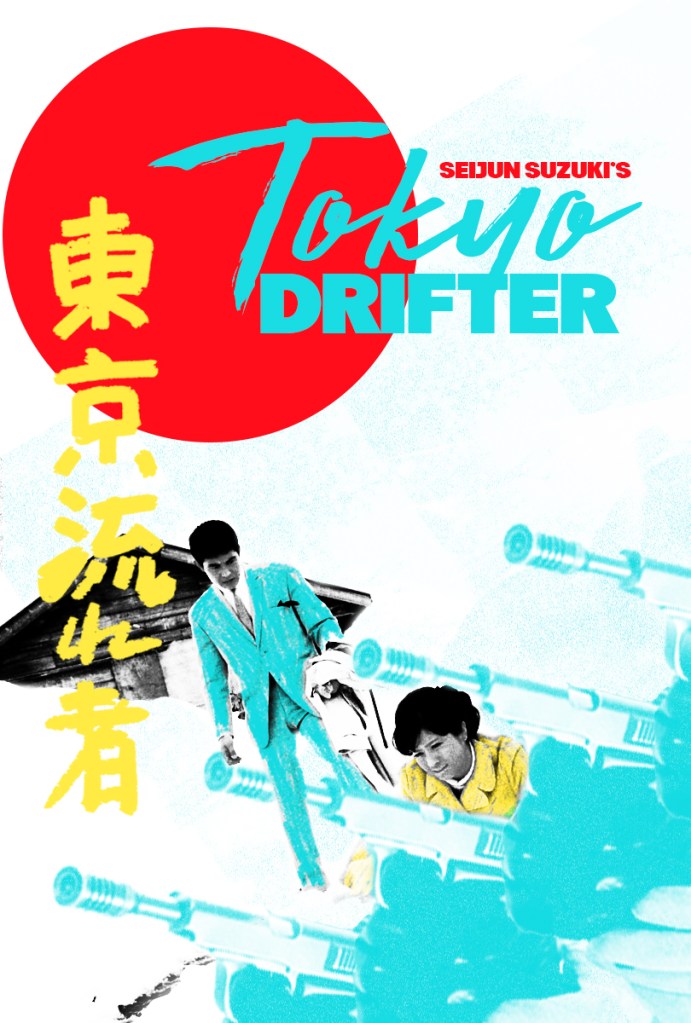
Branded to Kill (1967)
Written by Hachiro Guryu, Mitsutoshi Ishigami, Takeo Kimura, Chûsei Sone, and Atsushi Yamatoya, and directed by Seijun Suzuki, “Branded to Kill” is supremely strange among the legion of Yakuza gangster films. It’s so weird and wild in fact that the Seijun Suzuki was immediately fired from the studio after submitting this oddball flick. It’s plot is fairly straightforward, but the secret spice lies in it’s execution. The main plot point is that a hitman goes on the run after botching a hit and unintentionally killing the wrong person. There’s so much more that happens beyond that though. Goro Hanada (Joe Shishido) is the third ranked Hitman in Japan, there’s a few scenes of Goro successfully murdering his targets in strange ways, usually with even weirder exit strategies, to drive that point home early on. Goro is hired by Misako Nakajô (Annu Mari), a woman obsessed with death, who wants a foreigner killed. Goro immediately falls head over heels for the uninterested Misako, she eagerly awaits her own death as well, but when the time comes to kill his target, a butterfly lands in front of the scope and he misses- killing an innocent bystander. After this transgression the number one ranked hitman in Japan sets his eyes on Goro- for he has offended the guild’s rules, and the two become entangled in a life or death cat-and-mouse scenario. The film is very experimental in nature, with absurdist story logic, animated inserts occasionally, heaps of violence and sex, and a surreal sense of time and place. There are double crosses (and I believe triple crosses if I’m remembering correctly), and everything about the production is filled with unique choices. The sound design, for example, is incredibly inventive for the time signaling certain characters without musical cues. There’s also a lot of random sex within the love triangle of Goro, Misako, and his wife, Mami Hanada (Mariko Ogawa). Goro’s also, distinctively, got a fetish for the smell of freshly boiled rice. Yep, this one’s weird, but if you’re into the history of Yakuza films from Japan, or just gangster style crime movies to a degree- it’s worth a watch. Strange indeed, but a worthwhile endeavor!

Pickpocket (1959)
Written and directed by Robert Bresson, “Pickpocket” is a stripped bare look into the life of a pickpocket, and what makes him tick. I’ll be honest, while I was impressed with several scenes showcasing the technical precision of effective pickpockets in action on heavily crowded streets, or later on a train with multiple participants- the majority of the film left me wanting. The main character of the story at hand is Michel (Martin LaSalle), a lonely type who becomes less interesting once he espouses his thief’s philosophy. In short, he essentially believes that those who take what they want when they want it are superior beings who should be respected as such. Okay, not only do I not buy his philosophy, but the way the performances are directed even Michel feels as though he’s not really in it for the ideology, but rather that it’s just something to say to feel powerful when people ask about it. I know the story is supposed to be about redemption through love, but the ending felt unrealistic for the character as he’s been shown to us. I suppose if it’s considered by many to be great, it probably is on some level- but other than the technically impressive scenes of the illicit act itself, I could care less. Not recommended from me, but feel free to give it a shot and see whether or not the film works for you.

5 Card Stud (1968)
Written by Marguerite Roberts, based on the novel by Ray Gaulden, and directed by Henry Hathaway, “5 Card Stud” is a thoroughly entertaining old school Western. Maybe it’s because I was initially becoming more acquainted with films and filmmakers through Westerns as a teenager that I always find the technicolor standard of Westerns in the 50’s 60’s and 70’s as something familiar and comfortable. That’s the case with this film as well. Even though it was a first time watch for me, the rhythms of the old west were instantly recognizable, and heartily welcomed. Here Dean Martin stars as the lead of the film in Van Morgan, a restrained, yet genial gambler who’s the only voice of reason once a cheatin’ cardshark is revealed among his usual card group. The other players have their hearts set on brutal vengeance though, and immediately drag the sorry newcomer out of town and hoist him up high. After the dust settles, one by one the members of that card game start mysteriously showin’ up dead. As the gamblers try to reckon with which card player is the killer among them, a new preacher comes to town after the gold rush starts. Rev Rudd (Robert Mitchum) has a hellfire and brimstone take on his sermons, short, sweet, and heavy on accusing the townsfolk of being derelict sinners. He’s also got a twitchy trigger finger, he’s prone to punctuating his points with bullets. The film isn’t a masterpiece by any means, but it’s a well made, professional, movie. It’s also incredibly entertaining thanks to the two leads in Martin and Mitchum, though the cast surrounding them isn’t too far off. Roddy McDowall as Nick Evers is a fun, if a bit mustache twirling at times, villainous role. Henry Hathaway had already filmed a few action Westerns by this time and knew the right ingredients for the recipe. Shootouts, an ensuing mystery, barroom brawls, and swaggering gunslingers with a penchant for walloping one-liners. This one’s a good time, and I highly recommend it.
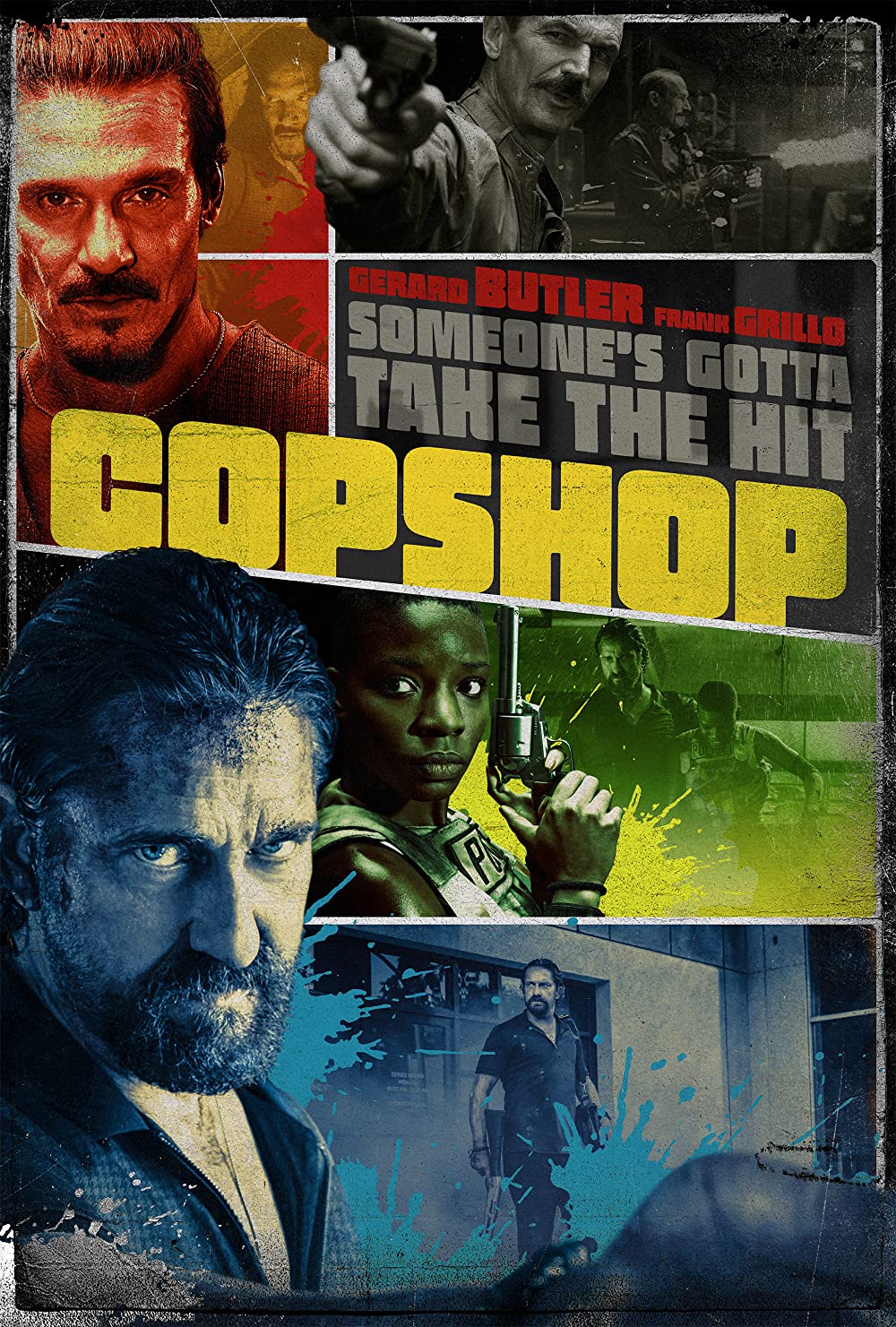
Copshop (2021)
Written by Kurt McLeod and Joe Carnahan, from a story by Mark Williams, and directed by Carnahan, “Copshop” is a simple but explosively fun action thriller. This sort of film doesn’t get made all that often anymore. It’s a small, nasty, one-location shootout that evolves throughout the runtime. The hook of the film is that con artist Teddy Murretto (Frank Grillo) has a hit put out on him, so he punches a small town cop and gets tossed in their holding cell for the night. Unfortunately for him, a grumbly and cerebral, Gerard Butler appears in the cell across from him as the first hitman to find Murretto’s hiding spot. One of the best roles in the film also goes to Alexis Louder as the rookie cop on the force, Valerie Young. She holds her own against some darkly violent characters and pursues justice as best she can amongst the chaos. The surprisingly excellent role of secondary Hitman, Anthony Lamb portrayed by Toby Huss, is the shot of adrenaline that the film needed. Lamb’s skill as a Hitman is immediately showcased in his own dark and comic way, and I absolutely adored this performance. Huss plays the character as if he were a merge between the Joker and the Punisher from the big two comic publishers. He’s aces with a gun, but absolutely off his rocker and having a great time doing it. The whole film is a rough and tumble, guns-a-blazing, survival of the luckiest crackshot style romp, and I loved it. If you’re looking for a dark comedy action thriller with loads of style, Carnahan has just the film for you, and it comes highly recommended from me.

No Way Out (1950)
Written by Lesser Samuels, Philip Yordan, and Joseph L. Mankiewicz, and directed by Mankiewicz, “No Way Out” is a film about racial tensions in America and how quickly things can unravel when wrong-headed assumptions take root. After Sidney Poitier’s recent passing, I made it a point to go back and get into some of his more well known films. I have a ways to go yet, but I figured why not start closer to his beginnings than his end. Poitier stars as Dr. Brooks, one of only a few Black Doctors in the Hospital and wider city. His first day on the job brings him face to face with the very real racism of the day (We’ve gotten better since then but clearly have a looooooong ways to go) in two young white men who’ve robbed a gas station, gotten shot and caught. These scoundrels are the Biddle brothers, Ray (Richard Widmark) and George (Harry Bellaver). George seems to be worse off than his scheming loudmouth brother, and when Dr. Brooks attempts a spinal tap to assess the cause of George’s deeper pain, Ray objects. It isn’t long after this that George dies, and Ray accuses Dr. Brooks of intentionally killing him. Filled with indignant rage and a lost heart, Ray continues to make matters worse for Dr. Brooks when the Doctor asks to have an autopsy to assess what went wrong. Ray also fuels the flames of racial tensions in the area when he gets his side of the story out to the low income white community of Beaver Canal through a lip reading friend. Things escalate from there, but the film does a decent enough job for it’s time when showcasing the institutional racism and the social structures that could foster such hatred throughout the city. Eventually Dr. Brooks turns himself in amongst a literal race riot with tempers raging about, a turn that would require the Hospital to perform an autopsy which ultimately proves Dr. Brooks right. George did have a tumor that exacerbated his gunshot wounds to an untimely death. The film is most certainly of it’s time, but it attempts to rise above and tell a story about perceived assumptions and how the truth must be sought after, not merely assumed. It’s worth the watch folks!
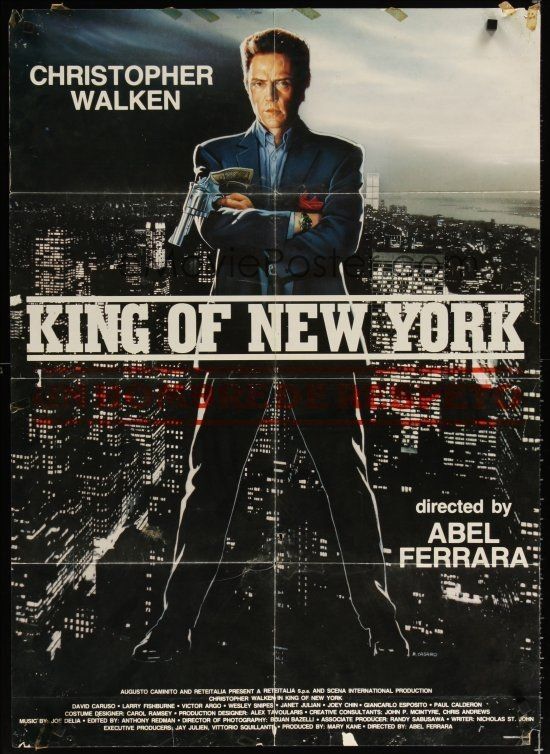
King of New York (1990)
Written by Nicholas St. John and directed by Abel Ferrara, “King of New York” is a crime drama that doesn’t exactly know what it wants to be- other than “Cool”. The film has it’s fair share of fun action beats and snarling gangster criminals that pop and sizzle with memorable performances. That’s mostly due to Laurence Fishburne and Christopher Walken though. Everyone else is just kinda there. Giancarlo Esposito has a minor role, but they don’t give him anything to do within it. Walken’s role as Frank White, a big time drug kingpin who is released from prison in the film’s opening, is the anchor of the story as White and his men go about trying to take a bigger slice of New York City while also attempting to give back to the community through funneling drug money into children’s hospitals and helping the poor more generally. The film lacks precision, as the plot drunkenly wanders from cliché to cliché, and at times the gunfights and character work can be fun, but it never feels in service of the story. Moderately recommended.
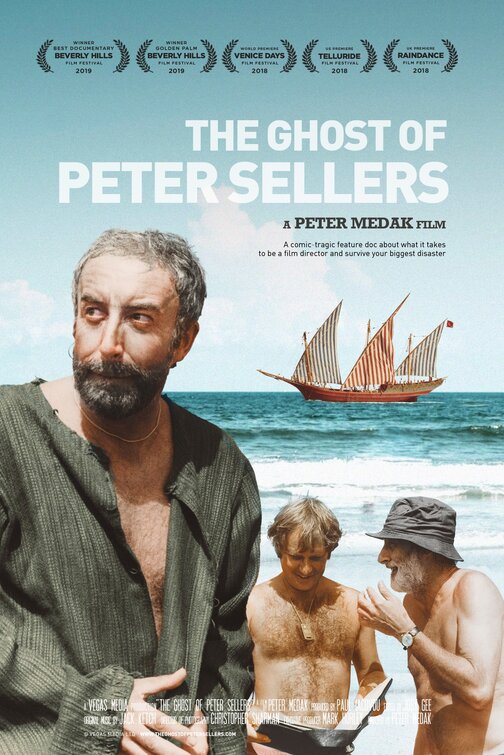
The Ghost of Peter Sellers (2018)
“The Ghost of Peter Sellers” was directed by Peter Medak. This documentary was a bit underwhelming if I’m being honest. It follows the production of the 1973 pirate comedy, “Ghost in the Noonday Sun”- which Peter Medak himself directed. The doc details all of the aspects of this doomed film production, from the context of pre-production to the unraveling that would come to take place late in the production. There are some interesting bits about Peter Sellers in general, and the idea of the film, but after awhile all of the ingredients seem to pile up to a fairly clear answer as to why this film didn’t work out, all while Medak is constantly venting his frustrations some forty-five years later. The director himself didn’t have a handle on the production, didn’t know the details of what he was trying to do, and had a flimsy and wandering script in which Medak simply decided to put all of his faith in the project’s success in Sellers worldwide comedic fame. Sellers at the time had just been dumped by his girlfriend Liza Minelli, this was just after his third wife had divorced him, and was entering the project in a dark state. Hardly a good footing to begin with for your major star. After a few modern scenes with Medak wandering around old shooting locations in Cyprus with one of his fellow producers of “Ghost”, one gets the impression that Medak was easily one of the major inhibitors of the project. As the director he should have had a much stronger grasp of the story, the details of the production, and to be perfectly honest, he should have better assessed his own skills as a director for such a project. He gives off the air of a stuffy history professor, someone that maybe should not have attempted a comedy. There are some bits that are worth seeing, but more often than not the doc is repetitive therapy for the director with Medak equally cursing and praising Peter Sellers, among the many other issues of the production. It was a bit dour and depressing if I’m being honest. Barely recommended.
*I’ve continued to write film criticism articles over at Films Fatale as well, here are a couple of my most recent articles from there. Show them some love and check out what Films Fatale has to offer!
https://www.filmsfatale.com/blog/2022/1/14/22-movies-to-see-in-2022?rq=Cameron%20Geiser


 spacecortezwrites