Summary: This time Zatoichi is attacked right off the bat by a young Yakuza looking to earn the ten ryo bounty on the blind swordsman’s head. Of course Ichi bests the young attacker, and as he lay dying he reveals that the reward was for his mother who runs a business in the nearby town. In town Ichi enters a sumo wrestling match to the surprise of the crowd and defeats several sighted fighters. As the event was organized by the local Yakuza gang, they vow to earn their respect and honor back- by killing Zatoichi! This time, the two major story arcs crossed paths and intermingled far more than before. Once finding the dead Yakuza’s mother, Maki, Ichi confesses to having killed her son and she forgives him seeing him as honorable for seeking her out to tell her this. He also gives Maki his winnings from the Sumo match and told her it was from her son. Back at the local inn Zatoichi encounters even more drama. The innkeeper’s adopted daughter, Nobu, is in love with one of the junior members of that same local Yakuza gang. Her father, however, disapproves and the junior accountant ends up being manipulated by a superior Yakuza who decries that if Zatoichi is not killed, the junior accountant will be stripped of his rank and kicked out of the gang. Ichi also encounters Otane at the inn, his first love from the last few films, who’s now married to a brutish ronin named Tanakura. In order to squash the advances by the Yakuza and possibly help alleviate Nobu’s predicament, Zatoichi goes straight to the heart of the Yakuza during a meeting of their local leadership. During this encounter Tanakura, (mysteriously also at the Yakuza meeting) attempts to establish dominance over Zatoichi with a feat of swordplay- but the blind swordsman quickly retaliates with his own display of skill that shocks everyone in the room. Tanakura immediately claims defeat and personally establishes Zatoichi as his rival due to his injured pride. After this the junior accountant rushes to Zatoichi to plead for help, suggesting that both Otane and Nobu have been taken hostage at the inn. Once there, Ichi finds the two women unharmed- but before he can make sense of the situation the inn is surrounded by Yakuza- a trap! Otane hears Tanakura outside and tells Zatoichi she will plead for them to reconsider. Once outside Otane mistakenly draws Tanakura’s sword in the heat of the moment and he immediately cuts her down for this transgression. Nobu sees this from inside the inn, horrified by the violence, and tells Zatoichi- which sends him into his most emotionally fueled bloodlust that the series has seen at this point. He cuts down dozens of yakuza in a fury and eventually finds himself one on one with Tanakura. What follows is an excellent and visceral fight to the death in which Zatoichi bests Tanakura. As he bleeds into the dirt, the dying ronin tells Ichi that the ambush was Otane’s idea, and that she wasn’t exactly the saint he thought she was. Thus leading to one of the most dramatic and painful exits the blind swordsman has tallied up this far, preferring to wander off than stay and wallow in his pain.
My favorite part: The fact that the Otane character’s arc has continued in some semblance for every film until this point was a nice touch. Though, admittedly her storyline ends tragically. In the last film Otane was mentioned as the fiance of a local carpenter, but instead ended up marrying Tanakura- the hot headed ronin. *Also* I think it’s important to mention how “punched up” the cinematography and direction is in this film- it feels markedly different and more modern than the past films despite the previous film having the same director and being released in the same year.
Why it’s great: The fight scene between Tanakura and Zatoichi is one of the best fight scenes in the series so far. Zatoichi’s sword breaks during the fight and he kills the fiery ronin with a dagger hidden in the sword’s hilt. This is also indicative of the fact that the series is increasingly smoother and more streamlined than before. There’s no real introduction of Zatoichi, the film assumes you’ve seen the others, and I enjoyed the immediacy of that.
Summary: Zatoichi returns to his village four years after he completed his training. There are two major storylines this time around, the first major arc includes the brother of the Yakuza Boss that Ichi killed in the last movie seeking revenge. The second is more personal, in which Ichi learns that his old Master, Banno, has turned to colluding with local gangsters involved in corrupt schemes, due to financial duress. Banno has also arranged a marriage for his younger sister, Yayoi, to a Samurai, but she ends up falling in love with Zatoichi instead. Learning from his past mistakes Ichi attempts to take the pacifistic route and absolve himself from violence to settle and marry- even taking a dice roll to determine whether or not he lose an arm to the bereaved Yakuza brother instead of the usual fight to the death. Later, in the forest, Zatoichi finds out that Banno’s corruption wasn’t just financial- but that he also needlessly kills in cold blood to serve his goals. Banno can’t stand to let Zatoichi leave with this knowledge and forces his former student into a fight. Zatoichi reluctantly kills Banno in an emotional fury as Yayoi watches from the brush. After the deed is done Ichi acknowledges that he cannot avoid his true calling stating that he is “That kind of man“… and wanders off, broken once more.
My favorite part: This film is interesting because it’s the first time the series acknowledges the consequences of Zatoichi’s actions from the past two films. I was also surprised by the Yakuza brother’s lack of commitment to killing Zatoichi, seeing a villain give some consideration to forgiveness was unexpected.
Why it’s great: This was the first color film in the series, and seeing the world come alive was like a breathe of fresh air. Granted, this film took a muted color palette of earthy tones and shades for most scenes- but it was still very cool to take in this new paradigm.
Writer/Director: Minoru Inuzuka (2nd film) /Kazuo Mori
Summary: A year after the events of the first film, Zatoichi returns to the town near the Joshoji Temple to pay his respects to Hirate, the Samurai he killed at the end of the first film. While in town he’s hired to give a massage to a powerful lord, but during the massage Ichi notices how strange the lord acts, taking on socially unacceptable behavior for a lord. Being the humble warrior that he is, Zatoichi didn’t really care all that much about the Lord’s behavior citing it as a bit weird, but he quickly moved on from it. The lord’s advisers couldn’t let Ichi wander freely when he knew of their collective shame at the state of their lord’s behavior- so they sent a whole bunch of men to kill him and be rid of that loose end. This doesn’t go well for these unnamed henchmen…
My favorite part: The smaller, yet more personal, villain of the film is Yoshiro. Like Hirate, but without the respect, Yoshiro is a competent swordsman, but one only posing as a Samurai. I really enjoyed this character because not only do we discover that Yoshiro is Zatoichi’s long lost brother, but that he also stole away the love of Zatoichi’s life years prior as well! There’s also the added benefit of know that the actor portraying Yoshiro was Tomisaburō Wakayama of “Lone Wolf and Cub” fame! Who also happens to be Shintaro Katsu’s actual brother in real life as well!
Why it’s great: The sequel to “The Tale of Zatoichi” punched up on everything fun about the character and his potential. The fights are much bigger and more expertly crafted, including dozens and dozens of opponents onscreen for Shintaro Katsu to cut through! The melodramatic history of the character is more personal and devastating, and it may have my favorite ending in the series so far- a brutal and quick kill by the man with the lightning cane sword!
This year for the Christmas season I decided to try something a little different. Recently, I realized that the movie series I’ve been watching in my free time, “Zatoichi: The Blind Swordsman”, had exactly 25 installments. So, instead of reviewing Christmas movies, well known or otherwise, I figured I’d write up a short review for each film in the 25 days leading up to Christmas. This format will be slightly different from my free form reviews where I discuss anything within a film that I found to be particularly fascinating. It will be similar to that style, but a bit more regimented. I’ll chunk each short review into a few categories; the writer and director of each film will be highlighted alongside a count of how many films within the series that any particular writer or director has worked on (at that point in time) given that there are repeats across the 25 films. There will also be a quick summary that goes over the specifics of the film- but as I’ve been watching the films I’ve noticed that there’s a bit of a formula at hand so there may not be as much analysis as there would be with any one singular film (but I haven’t finished the series as of this point and am open to being wrong about that for the series as a whole). *The character of Zatoichi was adapted by the work of Japanese novelist Kan Shimozawa*
Writer/Director: Minoru Inuzuka/Kenji Misumi
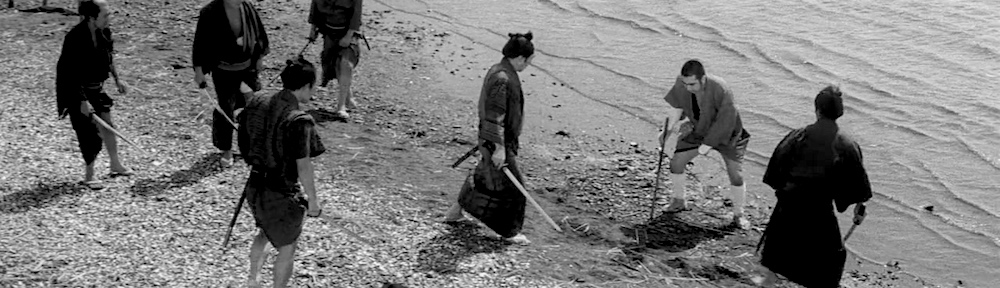
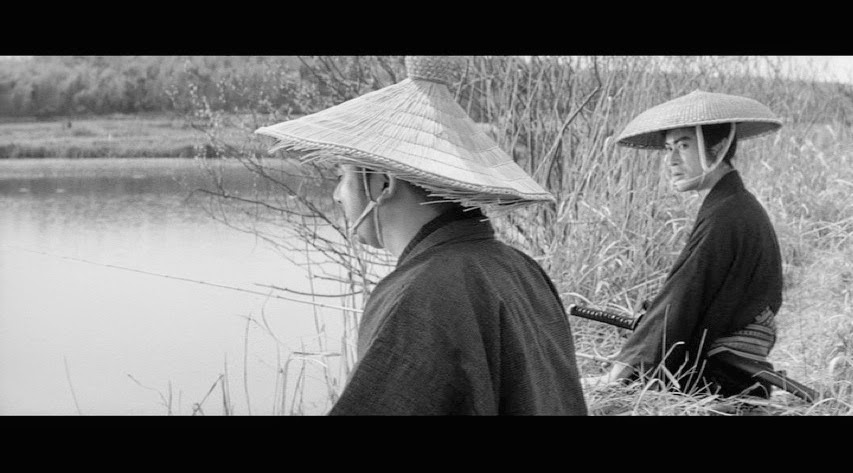
Summary: Starring Shintaro Katsu as Zatoichi, this first film in the Blind Swordsman’s Samurai saga expertly lays the foundation of the character’s personality, skillset, and morality that will guide future filmmakers and writers with a winning formula. In his first story, Zatoichi happens upon two neighboring villages on the precipice of war, with tensions high and about to boil over. Ichi (as he’s referred to non-formally) is quickly hired by one of the Yakuza gangs, while the other side quickly does the same in hiring a skilled ronin of their own. As the war brews in the background Ichi spends his time fishing- ironically with Hirate, the other ronin the rival Yakuza gang has hired, and they strike up a fast friendship. Ichi also happens to get involved with a little Romeo and Juliet scenario involving Otane, a young woman growing increasingly weary of the Yakuza lifestyle, and her lover from the rival gang. Eventually when the war comes, Zatoichi discovers that his friend Hirate is dying of Tuberculosis, and wishes to die in battle with a worthy foe. Hirate, having found his faction’s secret weapon to be a rifle they planned to shoot Zatoichi with, commits to fight to the death for his honor. After the war between the Yakuza gangs dissolves Otane gives her consent of marriage to Zatoichi- but he denies her, feeling too much shame for his way of life and stature in society and wanders off having discovered a profound sadness in killing a friend and destroying a love he could not accept.
My favorite part: I’ve always enjoyed the notion of two highly skilled warriors earning each other’s respect through sheer skill alone. This is a recurring motif that the series will continue to mine throughout future installments. Its an aspect that’s especially common among Japanese anime and manga, and two of my favorite anime “One Punch Man” and “DragonBall Z” lean into this notion constantly. There’s something exciting about seeing previously reserved characters come alive at the possibility of a “real fight” with someone of equal or greater skill- especially when they’re consumed by reckless abandon and their former allegiances are tossed aside for a taste of greatness in battle. Fun stuff!
Why it’s great: This first Zatoichi film, one of the two black and white films in the saga, is great due to the sum of it’s parts. Everything that’s great about the series can be traced back to this core. Zatoichi may be a wandering blind masseur, a lowly social status in Japan’s Edo period, but he uses his impediments to his advantage and fights that much harder and faster because of them. His code of honor is tranquil, but true. He doesn’t want to kill anyone, but he will stand up for himself and others when abuse and neglect are in play. His humility and guilt over his own actions and of society as a whole build into the series’ inherent sadness at the state of humanity at large. Many, but not all, of the films end with Zatoichi wandering off into the distance as he both literally and figuratively distances himself from the people he’s helped and hurt- staying would only create more harm, more pain.
Recently I began watching a Samurai film series from Japan made in the early 1970’s called “Lone Wolf and Cub” based on the hugely popular Manga of the same name. I’ve been slowly wading into the popular Samurai genre of Japanese films for a little while now. I started, as most Americans do, with Akira Kurosawa in “Yojimbo” and “Sanjuro”, before plunging into the famed director’s sword brandishing epic “Seven Samurai”. From there I found “The Sword of Doom” partly because that’s a great title- but also because it starred Tatsuya Nakadai (Who gave memorable character appearances in both Yojimbo and Sanjuro) as the lead, with the legendary Toshirô Mifune as a revered master swordsman in a minor, but powerful, role. All of these films have reviews here on this blog, and they left me wanting to discover more! One day after seeing a few reputable cinephiles on twitter take note that the series had landed on the Criterion Collection’s streaming service, I knew I had to check it out. It must seem as though I’m plugging this streaming service all the time- but it is only because I often find films there that I cannot find anywhere else, and as a student of the medium- I always need to see more movies. Always.
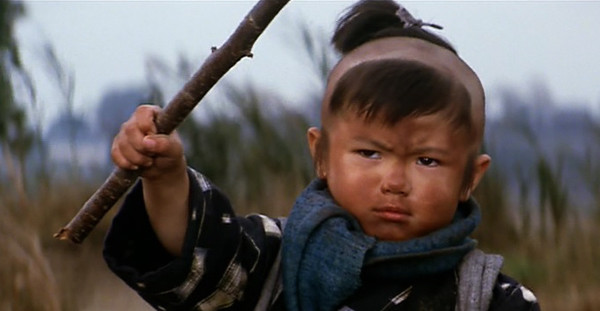
Rather than go through each film and review them individually, it made more sense to sum up the series as a whole and what made it great. Though, for your convenience I’ve listed each film’s title and year of release below this piece. Throughout these six films the most singular and significant factor that makes them stand out from the rest of the genre is the fact that Itto Ogami (Tomisaburo Wakayama) roams the vast Japanese countryside with his infant son, Daigoro (Akihiro Tomikawa) by his side. In the beginning of the first film, we see Ogami in his role as the shōgun’s executioner, mercilessly cutting down an incredibly young daimyō (Essentially a Lord in the feudal sense, a form of royalty within Japan’s Edo period. Forgive me if this is inaccurate, I’m only going by slight internet research and how this role is depicted within the films). This is important as it sets this world of cinema apart as a particularly brutal one, not even children can escape with their lives. It also serves as the assumed revenge for Ogami’s wife who was killed by three ninjas afterwards. It’s a bit more complicated than that, but it boils down to the “Shadow” Yagyū Clan framing Ittō for treason and subsequently taking over his executioner’s post. Ogami quickly gathers his son Daigoro and offers the toddler a choice to avoid the hardships of their uncertain future by death or to join his father “On the Demon path to Hell”. Which is, essentially, to wander as assassins-for-hire as they seek vengeance by hunting down all members and known associates of the Yagyū Clan. Obviously, Daigoro accepts the ronin lifestyle.
Holy Mother of Violence!
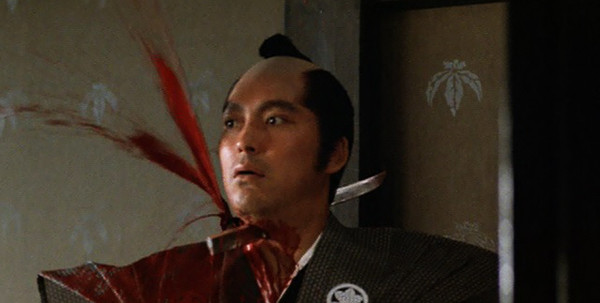
The hook of the series, for me anyway, is the absolutely insane graphic violence that is on display throughout these films. I’m fairly certain that there isn’t a film in the bunch that doesn’t have at least five severed limbs from anyone foolhardy enough to challenge Ogami. From the candy-cane red blood that sprays from the Wolf’s victims to the inventive and bizarre ways in which he has outfitted Daigoro’s baby cart for maximum carnage- the series is fundamentally soaked in blood and corpses. The villains that seek to destroy Ogami and Daigoro get cartoonishly creative with their various techniques as the films progress. From hiding in walls and stone barriers to literally writhing through the dirt and snow to pursue the Lone Wolf and Cub- these enemies can seem unending at times, though we as the audience know that Ogami’s mastery of his Suiō-ryū swordsmanship is unparalled! These films could be categorized under exploitation within the Samurai genre, and there is plenty to be said about the snap-zooms and bad guys giving whole monologues with swords jammed in their skulls, but there’s enough artistry beyond pure shock and awe that propels these films into a category all their own. What other films series so values extreme bloodletting alongside such strong familial bonds?
Silence and the poetic nature it instills
The use of sound in these films is uncannily serene at times. Depending on the scene, these films can have either a melodic score to accompany Ogami strolling with Daigoro’s baby cart, or a jazzy upbeat tempo to fit the pace. Don’t get me wrong, I love the scenes when the 1970’s funk kicks in to accompany Ogami’s blending of bad guys, but if you’re paying attention you’ll begin to notice the times that have the least noise weigh the most thematically. Below this article I’ve left a link to a video analysis of how these films utilize silence effectively, and I urge you to check it out. Often when Ogami is stoically seated at altars and shrines, the score takes a beat or two back to meditate and breathe inbetween the chaotic fight scenes. The best use of silence in each film, in my opinion, is at the beginning of Ogami’s one-on-one duels with the central villain of the film. Upon drawing swords, each warrior takes his or her stance and waits, calculating, taking only slow measured movements. It is the calm before the storm. It heightens the tension from some of the sillier one-versus-many scenes’ over the top violence and allows a moment of uncertainty to slip in. Who will strike first? Will Ogami come away unscathed? Or will he finally meet his match? The films often put a lot of technical precision, craft, and care into their fight scenes with excellent choreography, but the biggest diversion from this tactic in the series lies in the third film “Baby cart to Hades”. It’s a far slower film than the rest and focuses more on the ulterior dimensions of the warrior spirit within Ogami. Deep within the second act Ogami is forced to endure a ridiculous amount of torture that would make Mel Gibson proud. Through his restraint and self control, he defeats his enemies. These things help to elevate the film series beyond it’s grindhouse attractions.
Cinematography
From thick wooded forests to sweeping sand dunes and even snow topped mountains, the “Lone Wolf and Cub” movies put a heavy emphasis on the locations that our two assassins travel through. Visually, location is front and center where the camera is concerned. Each film does it a bit differently, but whether through differing camera techniques or inventive framing, there is always a sense that the world these characters inhabit is fully realized, if a bit fantastical. I particularly appreciate any scenes that immerse themselves in mood or when depth of landscape is considered. The fight scenes themselves are constructed for the most visceral and eye-popping blood splatter, and it’s a joy to see Ogami take on literal armies of opponents at times. Throughout all the spraying blood, dubiously performed monologues, and patient wanderings through varying landscapes, the cinematographers of these films have thoroughly earned their place in celluloid history.
The Elephant in the room…
While these films are highly entertaining and culturally significant, we must take a moment to acknowledge the sexual acts of violence against women. I am no scholar of Japanese society, especially of any time period or place, but these films do depict several instances where women are taken advantage of. Maybe it’s more off-putting as an American because what we’re shown is a bit more explicit than our legacy of films, at least in the portrayal of the sexual assault. The films explicitly exist in the pulpy and exploitative arena of cinema- so I feel that it’s just wise to know that these scenes exist and could put some viewers off from watching the rest of the films. Though, to be fair, Ogami is never the perpetrator of these violent sexual acts, the villains here tend to be the worst of society. So, maybe making them out to be monsters of every variety was the intention to get audiences on board with Ogami’s particularly violent dispatching of such vile men? So, it can get ugly at times, but, hey people are a mixed bag themselves right? If you can get past these instances of vulgarity, then I would highly recommend giving these films a watch!
Final Score: 6 films, 6 circles of Hell
*Below I’ve listed a couple links to more information on these films that I quite enjoyed and found to be rather informative. If you want to know more about these films, check it out!







 spacecortezwrites