film

25 days of Zatoichi The Blind Swordsman: # 10 Zatoichi’s Revenge (1965)

Writer/Director: Minoru Inuzuka (6th film)/ Akira Inoue
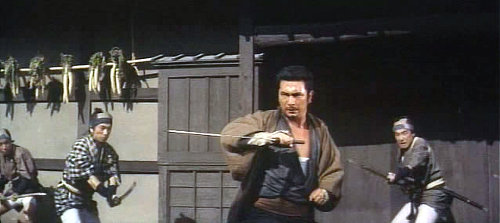
Summary: “Zatoichi’s Revenge” may have the darkest plot points of the series, definitely of the first half of films, though I haven’t quite finished the series yet. This one’s fairly compelling, though it’s another example of more of the same ingredients from past films- but with a few new variations. It’s another case of corrupt government officials working with criminals to satiate their lust for money and power. As the film opens Zatoichi realizes that he’s near the village where he underwent his masseur training and decides to pay his sensei, Master Hikonoichi, a visit. Upon arrival he discovers that his old sensei had just recently been killed while traveling on the road nearby. Even worse yet, Hikonoichi’s daughter Sayo had been forced into prostitution! When searching for Sayo in order to free her, it’s revealed to Zatoichi that almost all of the daughters of the town have been forced into sexual slavery as well. The three main villains of this film are Tatsugoro, the local businessman that worked up financial crimes that preyed upon the lenders, his boss the corrupt Intendant Isoda overseeing the whole process, and Koheita Kadokura, the ronin samurai in town working as a blade for hire. Eventually through the usual information gathering process of rooting out corruption in gambling houses and intimidation through feats of swordplay skill, Zatoichi finds out who the culprits are and seeks them out. Pretty standard stuff for the series at this point.
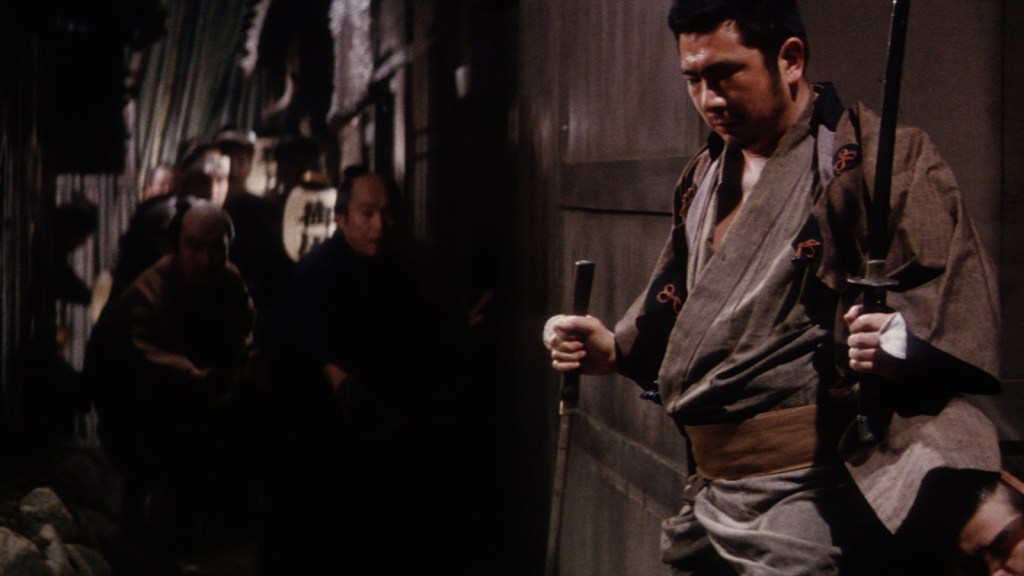
My favorite part: Honestly, the ongoing fight sequences that litter the second half of the film are very entertaining. They’re well shot, captivatingly choreographed, and thrilling to watch. It also helps that all of the unfortunate fodder for Zatoichi’s blade are despicable people working to enforce the massive prostitution ring in the town. Good stuff!
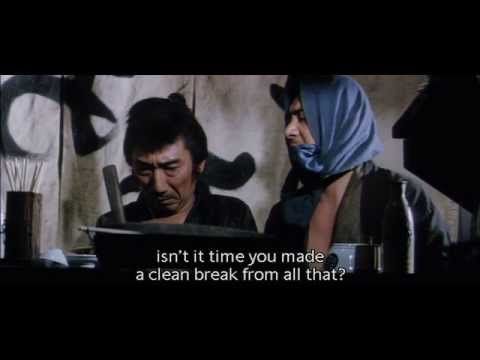
Why it’s great: One of the great story beats of this film centers on Zatoichi’s friendship with the local dice dealer Denroku. The skilled dice dealer never wanted to cheat players, he admits to Zatoichi that he’s under the thumb of Tatsugoro and Isoda’s oppression, and Zatoichi forgives him. Later when the villains are starting to get uneasy about Zatoichi’s snooping around, they order Denroku to steal the blind swordsman’s cane sword or submit his own daughter, Tsuru, to one of the local brothels. When Tsuru overhears this, she steals the blade herself and hands it to her father, who finds his impression on her to commit such acts that he gets incredibly drunk and wanders the town in a funk. After awhile he stumbles into a noodle stand and openly bemoans his situation. To his surprise the proprietor of the noodle shop isn’t a normal noodle chef- but Zatoichi himself. Ichi encourages Denroku to give up the criminal life and to lead a better life for Tsuru’s sake, at which point the dice dealer acknowledges his mistakes, and hands the cane sword back to its owner.

Final Score: 1 Cane Sword versus dozens of henchmen

film

25 days of Zatoichi The Blind Swordsman: #9 Adventures of Zatoichi (1964)

Writer/Director: Shozaburo Asai (3rd film)/Kimiyoshi Yasuda (2nd film)

Summary: After being asked to deliver a letter from a man that’s curiously discrete while on the road, Zatoichi accepts and heads to the nearby town of Kasama to find Osen at the Musashi inn. He’s not too bothered by the inconvenience as he was planning on being there for the New Year’s Celebration anyways. He only wants to bring in the new year atop Mount Myogi in solemn worship with the rising sun, but as with most of these films, it cannot be that easy for the blind swordsman. Later we find out that the man’s name is Shinsuke, and that he’s Osen’s brother. He’d been jailed for murder, but it was an assassination ordered by the local Yakuza Boss, Jinbei, and approved by the new Magistrate. As Zatoichi investigates this situation another story strand begins as he protects Miss Saki from being harassed by Jinbei’s men at the inn. Zatoichi presses Saki as to why they’d be after her and she reveals that her father is Seiemon the headman of a nearby village, and he had traveled to Edo to plead with the overarching government to be more lenient with their taxation. Which had already been established with the many vendors congregating in Kasama for the New Year’s celebration (but more on that later). These two storylines are the main narrative thrust of the film, between Osen and Shinsuke against Jinbei and the Magistrate, and Miss Saki and her father Seiemon against Jinbei and the Magistrate. Eventually, we discover that those two stories are far more intertwined than previously thought, for the man that Shinsuke was hired to kill.. was Seiemon. The Magistrate and Jinbei may be the typical authoritative figures abusing their power within the Zatoichi series, but their cunning and elaborate planning made them far more formidable villains, for they got essentially what they wanted for most of the film- killing both Seiemon and Shinsuke when he returned from his daring prison escape.

There’s also a comedic duo that’s part of the local village’s New Year celebration where vendors come to sell goods, put on performances, and generally take part in the festivities. This year the Magistrate has enforced a new system for vendors which requires them to set up shop in particular places and for these freshly required spaces the local government will charge them forty percent of their sales- effectively ruining the small vendors chances at a profit. The comedy pair allow for some cheesy slapstick and fun wordplay as they work a few bits into almost every scene they’re involved in. It’s not grating enough to be irritating, but their shtick doesn’t always land, at least for me. Zatoichi also befriends two child performers specializing in acrobatics. There’s also a third storyline that’s more personal to Zatoichi in which he befriends an aging drunk who has a similar story to Zatoichi’s about losing his son in this town years ago, just as Zatoichi had lost his father in a similar New Year’s Dawn celebration. For a brief period Zatoichi believes there could be some merit to Giju’s story and it helps to peel back small layers of Zatoichi’s past as he tries to remember specifics about his childhood. However Giju ends up being a slave to the bottle and sells out Miss Saki to Jinbei and the Magistrate and from there Zatoichi tracks down Miss Saki and takes on an army of hired hands and does what he does best.

My favorite part: I’ve always enjoyed the feats of near supernatural swordplay that Zatoichi frequently displays to instill fear and intimidation, usually to forgo violence by proving his skill to those who previously thought little of him. This time around when Zatoichi catches Jinbei’s underlings cheating in a dice roll, he goes to meet the boss himself to discuss the matter, however Jinbei is caught in a game of Go with the Magistrate himself. After they brush off Zatoichi for the game, he intervenes after they accidentally reveal a few bits of information about their corruption, and their samurai muscle Gounosuke strides in to see Zatoichi for himself. Gounosuke’s the typical gruff, risky, and brooding ronin challenger the series is familiar with, and he immediately makes a move for Zatoichi’s life resulting in the brash ronin lobbing a bit of Ichi’s cane sword off before he excuses himself and leaves. As soon as the Magistrate and Jinbei return to the game, the board splits in half. Classic Zatoichi.

Why it’s great: This entry in the series has a few things going for it that work well, but ultimately it is one of the lesser Zatoichi films out of the whole at this point. A lot of the material is repeated ideas or themes that the other films have utilized, but with a bit of a twist here and there. For example, initially the first ronin type character to show up seems lackadaisical and a bit portly for the usual challenger role that Zatoichi would end up fighting in the third act. Of course, the real ronin challenger makes his presence known in a flash of an introduction later, ah.. a real fighter approaches. This wasn’t a “bad” film by any measure, just one that struggled to live up to the status that the previous films have established. It’s still a good time if you’ve gotten this far in the series, because at the end of the day, a blind swordsman still fights corruption with accuracy and conviction.

Final Score: 1 eyeless daruma

film

25 days of Zatoichi The Blind Swordsman: #8 Fight, Zatoichi, Fight! (1964)

Writer/Director: Seiji Hoshikawa (2nd film), Tetsuro Yoshida, & Masaatsu Matusmura/Kenji Misumi (2nd film)

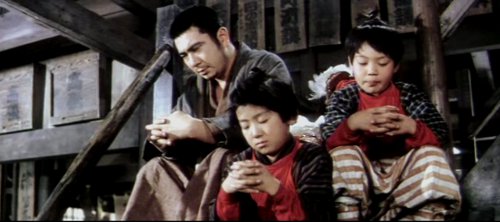
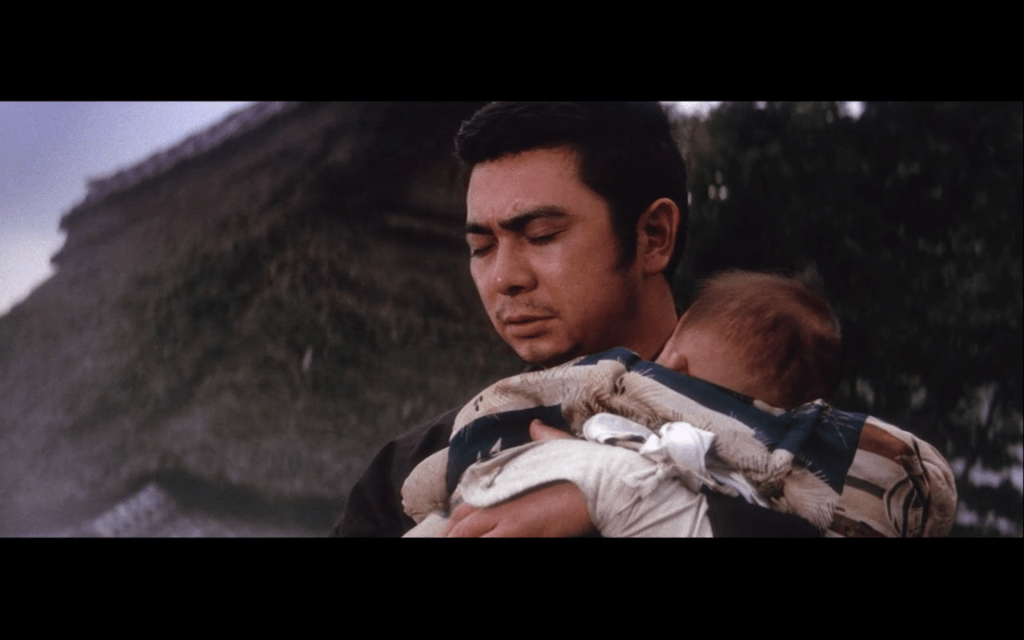
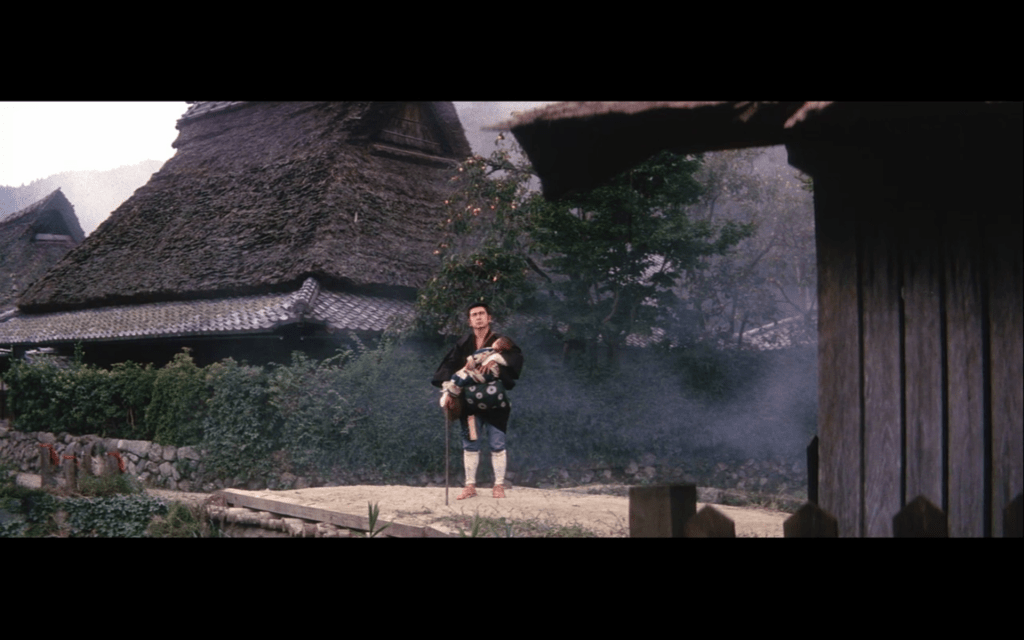
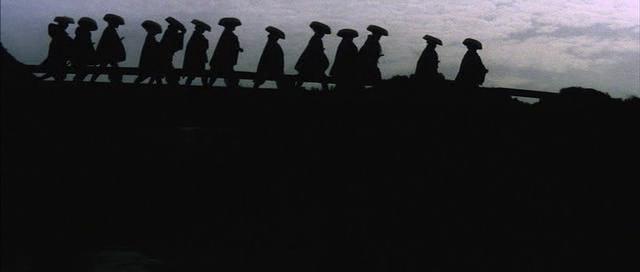
Summary: This may be one of the more memorable entries in the series for me at this point based almost solely on the film’s core concept. How would a skilled killer handle caring for a small child- especially when he’s being pursued by the most determined adversaries he’s faced so far? Far from star Shintaro Katsu’s brother’s work in the ‘Lone Wolf and Cub’ series that would come to be in the next decade, Katsu’s pairing of killer and baby is more sly, tongue in cheek, and far less brutally violent in its depiction. The setup here is that a well paid group of assassins are after Zatoichi throughout the film, initially he’s hidden from them within a group of blind men making a pilgrimage. After awhile he’s approached by a pair of palanquin (a wheelless, covered, box carried by two or more people designed for transport) bearers and they offer him a ride through the countryside. His pursuers see him enter the palanquin and they sneak off for an ambush. A short way down the road the bearers stop to investigate a body lying in the road, which just so happens to be a woman with a baby who had just collapsed from exhaustion. Concerned, Zatoichi insists that she take the palanquin and within moments they’re off. However, they don’t get far before the assassins tracking Zatoichi attack the palanquin and accidentally kill the mother. Once Zatoichi finds out he, the bearers, and the local village headmen who arrived shortly afterwards all go to the nearby town to discuss what to do. The mother’s travel documents reveal that she was heading home to her husband who ran a silkworm farm in a village far from there. Zatoichi offers to bring the child there himself as he feels responsible for the death.

Just outside of town the assassins make their first real attempt at killing Ichi. He swiftly kills the first attacker and the rest begin retreating as he makes the connection and accuses them of killing the mother, he offers to fight them all once he has delivered the child to it’s father, but they deny his offer stating “The Monju clan does not give up once it has accepted payment“. Throughout the journey the Monju clan attacks Zatoichi one by one, recruiting other gangs they meet on the road in an attempt to swarm and overwhelm him. There’s a few women Zatoichi meets on the road, one he pays for a night and asks her to watch over the kid so he can get some sleep, another initially uses him as cover after (rightly) being accused of stealing, to which Zatoichi plays along and in turn asks her to travel with him and help with the child. Eventually they reach the father’s village, and he denies ever having a child or a previous wife as he’s due to be married to the daughter of the local Yakuza boss. The leader of the Monju clan is all that remains by this point and, as Zatoichi ponders what to do with the child, the assassin leader recruits the father stating that he know Zatoichi’s weakness and persuades the silkworm farmer to try and ‘make a name for himself’. At the local temple, a kindred Monk offers to raise the child, and right when Zatoichi had begun to consider what his life would be like if he raised the child himself, the Monju leader and the father arrive for a fight. Zatoichi bests them, even though he’s burned several times with their torches. When Zatoichi has the upper hand he again asks the father if the child is his, he finally breaks and admits that it is his and that he had sent away the mother not as collateral, but to simply be rid of her. He swears to raise his child to be better than him, but as Zatoichi turns away, he lunges and Zatoichi kills him in defense. Thus, Zatoichi realizes he cannot accept fatherhood if he’s always sought after in this way, and he gives the child to the monks, slinking off down the road as the blind men’s pilgrimage passes him once more.

My favorite part: Honestly, after having watched all six ‘Lone Wolf and Cub’ films and knowing that both stars Shintaro Katsu and Tomisaburo Wakayama are brothers in real life, AND that director of this film, Kenji Misumi, also directed four of the six ‘Lone Wolf and Cub’ movies- to be fair, the connections are too wild to ignore. I particularly loved this quirky entry in the blind swordsman’s saga as an ‘alpha‘ run for the future concept. I mean, how many times have you seen a gambling scene where a baby is thrown through the air before some supernaturally quick swordplay is performed to prove a point without harming the baby?

Why it’s great: This film in the series may ultimately still end in the bittersweet sadness that characterizes most of the finales, but it’s chock-full of the series best humor thus far. From accidentally having the baby pee in the faces of sumo wrestlers to killing men while changing the baby’s diaper- ‘Fight, Zatoichi, Fight!’ is a cheeky good time with a simple, fun, concept.

Final Score: 1 Zatoichi & 1 Baby

film

25 days of Zatoichi The Blind Swordsman: #7 Zatoichi’s Flashing Sword (1964)

Writer/Director: Minoru Inuzuka (5th film) & Shozaburo Asai (2nd film)/ Kazuo Ikehiro (2nd film)

Summary: In the beginning of this film Zatoichi is shot and injured by a young Yakuza gangster looking to make a name for himself. Luckily Zatoichi was hauled to safety and healed by a mysterious woman. Waking at a later date he asks his newfound caretaker what happened, and learns that the mysterious woman that saved his life was only a passerby on her way home for her village’s festival of fireworks. He decides to head there to thank her, and upon arrival he’s convinced to stay for the fireworks festival- even if only to hear them. Zatoichi quickly finds himself in-between two Yakuza gangs once more, he’s already pledged his support to the more benevolent Yakuza boss, as it was his daughter that saved his life. The opposing boss wants to take control of the heavily trafficked river between the two villages so he can gouge all who cross it. Things get exponentially more complicated when the young Yakuza that shot Zatoichi in the opening returns home and is revealed to be the son of the boss that Ichi’s been helping. Zatoichi tries to prevent more violence, but the opposing Yakuza boss both kidnaps his rival’s son and sends men to kill Zatoichi to get him out of the picture. Which leads into a really fun sequence where Zatoichi’s surrounded while attempting to bathe in the river, he slowly descends underwater and kills all of the men before coming up for air. Eventually the benevolent Yakuza boss is manipulated by his ambitious rival to send Zatoichi away before the fireworks, though he returns to the town’s border to hear the fireworks when he overhears some hired samurai camped out nearby and learns of the true nature of the relationship between the Yakuza bosses. There’s a lot going on in this one, and I really enjoyed it, however the second half was by far the more interesting portion for me as the filmmakers got real creative with their portrayal of Zatoichi.

My favorite part: Near the end of the film, when Zatoichi discovers the truth as to why he was asked to leave town, another familiar sequence begins- but with a twist this time. During the fireworks, Zatoichi hunts down and kills the corrupt Yakuza boss and his underlings in complete darkness. The way he’s framed, how the camera follows him, and how his victim’s react in abject horror, all combine to showcase the blind swordsman exactly like how a slasher horror movie would show and frame their villain or monster. It’s one of the most visually unique sequences I’ve seen thus far in the series!

Why it’s great: After the generally neutral/happy ending we received in the last film, it’s back to the humanist core of the character of Zatoichi. Meaning that morality drives the character with an inherent disillusionment at the state of humanity usually settling in at the film’s end. It’s that state of mind during most of the series’ endings that really stand out to me personally, it’s a unique quality that you don’t hardly see in other popular genres of film.

Final Score: 1 river crossing

film

25 days of Zatoichi The Blind Swordsman: #6 Zatoichi and The Chest of Gold (1964)

Writer/Director: Shozaburo Asai & Akikazu Ota/Kazuo Ikehiro

Summary: Maybe it’s the more streamlined sense of urgency, or the fact that this entry in the series utilizes Kazuo Miyagawa’s (The cinematographer from Akira Kurosawa’s ‘Rashomon’) talents to great effect, but I really dug this entry in the blind swordsman’s saga. Excellent imagery aside, this film follows Ichi as he travels to pay his respects at the grave of a man he accidentally killed during the Yakuza gang war from the first film. The village nearby was in a celebratory mood, having finally paid off their local taxes, they invite Ichi as he’s passing by to partake in the festivities. Things quickly turn sour though when a small group of Samurai rob the villagers’ transport of taxes and Ichi gets the blame for it. After he’s coincidentally spotted sitting atop the chest of gold and seen killing samurai by one of the villagers, Ichi gets mauled by the mob of townsfolk, now in a hysteria fueled by economic anxiety. He convinces the townsfolk that he’ll get their money back, and heads off to the mountains to see a local hero, Chuji, who oversees the safety of the citizens while hiding out from the provincial constabulary. After discovering that two of his men were part of the group that attacked the transport, Chuji becomes disillusioned with his way of life and decides to disband. Before leaving he asks Zatoichi to bring one of the troupe’s young nephews back to the village with him- with a dire warning to take an alternate route from his troupe’s departure as the local government’s men are likely scouring the main roads for them. Things only escalate from this point until Zatoichi follows the scent of corruption to the head of the provincial government’s office where the village headman pleads with the authority to give them more time to make up the loss of their taxes. Instead they accuse the villagers of trying to get out of their payment and as punishment they charge the townsfolk double (2,000 Ryo!) for their offense. Which only inflames Zatoichi further when he discovers that the provincial government was behind the initial crime of stealing the villagers taxes in the first place! As you might expect, Zatoichi’s flashing sword was quite busy that day.

My favorite part: Tomisaburo Wakayama (Brother of the lead Shintaro Katsu, later made famous by the ‘Lone Wolf and Cub’ films) returns to the series to play another ronin challenger. While his antagonistic role might not have the emotional punch that his role in the 2nd film did, his role here as Jushiro is a lot of fun. Using a bullwhip as his identifying technique isn’t just unique for the series- it also sets up one of the more hair-raising final battles at the end of the film!

Why it’s great: In my opinion, what made this entry in the Zatoichi series so effective was the brash attitude and blatant corruption of the government as the main antagonists. The audacity of their oppression against a village of people just trying to survive was so transparent that it made their eventual deaths feel incredibly justified. Things aren’t always so black and white in this series, so having the villains clearly causing all of the havoc and chaos made Zatoichi’s actions ring true without question.

Final Score: 1,000 Ryo

film

25 days of Zatoichi The Blind Swordsman: #4 Zatoichi The Fugitive (1963)

Writer/Director: Seiji Hoshikawa/Tokuzo Tanaka (2nd film)

Summary: This time Zatoichi is attacked right off the bat by a young Yakuza looking to earn the ten ryo bounty on the blind swordsman’s head. Of course Ichi bests the young attacker, and as he lay dying he reveals that the reward was for his mother who runs a business in the nearby town. In town Ichi enters a sumo wrestling match to the surprise of the crowd and defeats several sighted fighters. As the event was organized by the local Yakuza gang, they vow to earn their respect and honor back- by killing Zatoichi! This time, the two major story arcs crossed paths and intermingled far more than before. Once finding the dead Yakuza’s mother, Maki, Ichi confesses to having killed her son and she forgives him seeing him as honorable for seeking her out to tell her this. He also gives Maki his winnings from the Sumo match and told her it was from her son. Back at the local inn Zatoichi encounters even more drama. The innkeeper’s adopted daughter, Nobu, is in love with one of the junior members of that same local Yakuza gang. Her father, however, disapproves and the junior accountant ends up being manipulated by a superior Yakuza who decries that if Zatoichi is not killed, the junior accountant will be stripped of his rank and kicked out of the gang. Ichi also encounters Otane at the inn, his first love from the last few films, who’s now married to a brutish ronin named Tanakura. In order to squash the advances by the Yakuza and possibly help alleviate Nobu’s predicament, Zatoichi goes straight to the heart of the Yakuza during a meeting of their local leadership. During this encounter Tanakura, (mysteriously also at the Yakuza meeting) attempts to establish dominance over Zatoichi with a feat of swordplay- but the blind swordsman quickly retaliates with his own display of skill that shocks everyone in the room. Tanakura immediately claims defeat and personally establishes Zatoichi as his rival due to his injured pride. After this the junior accountant rushes to Zatoichi to plead for help, suggesting that both Otane and Nobu have been taken hostage at the inn. Once there, Ichi finds the two women unharmed- but before he can make sense of the situation the inn is surrounded by Yakuza- a trap! Otane hears Tanakura outside and tells Zatoichi she will plead for them to reconsider. Once outside Otane mistakenly draws Tanakura’s sword in the heat of the moment and he immediately cuts her down for this transgression. Nobu sees this from inside the inn, horrified by the violence, and tells Zatoichi- which sends him into his most emotionally fueled bloodlust that the series has seen at this point. He cuts down dozens of yakuza in a fury and eventually finds himself one on one with Tanakura. What follows is an excellent and visceral fight to the death in which Zatoichi bests Tanakura. As he bleeds into the dirt, the dying ronin tells Ichi that the ambush was Otane’s idea, and that she wasn’t exactly the saint he thought she was. Thus leading to one of the most dramatic and painful exits the blind swordsman has tallied up this far, preferring to wander off than stay and wallow in his pain.

My favorite part: The fact that the Otane character’s arc has continued in some semblance for every film until this point was a nice touch. Though, admittedly her storyline ends tragically. In the last film Otane was mentioned as the fiance of a local carpenter, but instead ended up marrying Tanakura- the hot headed ronin. *Also* I think it’s important to mention how “punched up” the cinematography and direction is in this film- it feels markedly different and more modern than the past films despite the previous film having the same director and being released in the same year.

Why it’s great: The fight scene between Tanakura and Zatoichi is one of the best fight scenes in the series so far. Zatoichi’s sword breaks during the fight and he kills the fiery ronin with a dagger hidden in the sword’s hilt. This is also indicative of the fact that the series is increasingly smoother and more streamlined than before. There’s no real introduction of Zatoichi, the film assumes you’ve seen the others, and I enjoyed the immediacy of that.

Final Score: 1 Sumo match & 1 unleashed Zatoichi!

film

25 days of Zatoichi The Blind Swordsman: #3 New Tale of Zatoichi (1963)

Writers/Director: Minoru Inuzuka (3rd film) & Kikuo Umebayashi/Tokuzo Tanaka

Summary: Zatoichi returns to his village four years after he completed his training. There are two major storylines this time around, the first major arc includes the brother of the Yakuza Boss that Ichi killed in the last movie seeking revenge. The second is more personal, in which Ichi learns that his old Master, Banno, has turned to colluding with local gangsters involved in corrupt schemes, due to financial duress. Banno has also arranged a marriage for his younger sister, Yayoi, to a Samurai, but she ends up falling in love with Zatoichi instead. Learning from his past mistakes Ichi attempts to take the pacifistic route and absolve himself from violence to settle and marry- even taking a dice roll to determine whether or not he lose an arm to the bereaved Yakuza brother instead of the usual fight to the death. Later, in the forest, Zatoichi finds out that Banno’s corruption wasn’t just financial- but that he also needlessly kills in cold blood to serve his goals. Banno can’t stand to let Zatoichi leave with this knowledge and forces his former student into a fight. Zatoichi reluctantly kills Banno in an emotional fury as Yayoi watches from the brush. After the deed is done Ichi acknowledges that he cannot avoid his true calling stating that he is “That kind of man“… and wanders off, broken once more.

My favorite part: This film is interesting because it’s the first time the series acknowledges the consequences of Zatoichi’s actions from the past two films. I was also surprised by the Yakuza brother’s lack of commitment to killing Zatoichi, seeing a villain give some consideration to forgiveness was unexpected.

Why it’s great: This was the first color film in the series, and seeing the world come alive was like a breathe of fresh air. Granted, this film took a muted color palette of earthy tones and shades for most scenes- but it was still very cool to take in this new paradigm.

Final Score: A Ransom of 300 Ryo

film

25 days of Zatoichi The Blind Swordsman: #1 The Tale of Zatoichi (1962)

This year for the Christmas season I decided to try something a little different. Recently, I realized that the movie series I’ve been watching in my free time, “Zatoichi: The Blind Swordsman”, had exactly 25 installments. So, instead of reviewing Christmas movies, well known or otherwise, I figured I’d write up a short review for each film in the 25 days leading up to Christmas. This format will be slightly different from my free form reviews where I discuss anything within a film that I found to be particularly fascinating. It will be similar to that style, but a bit more regimented. I’ll chunk each short review into a few categories; the writer and director of each film will be highlighted alongside a count of how many films within the series that any particular writer or director has worked on (at that point in time) given that there are repeats across the 25 films. There will also be a quick summary that goes over the specifics of the film- but as I’ve been watching the films I’ve noticed that there’s a bit of a formula at hand so there may not be as much analysis as there would be with any one singular film (but I haven’t finished the series as of this point and am open to being wrong about that for the series as a whole). *The character of Zatoichi was adapted by the work of Japanese novelist Kan Shimozawa*

Writer/Director: Minoru Inuzuka/Kenji Misumi

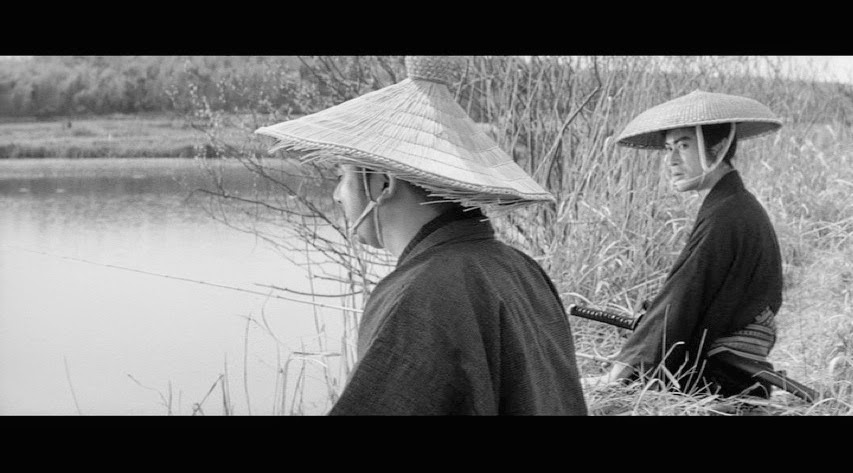
Summary: Starring Shintaro Katsu as Zatoichi, this first film in the Blind Swordsman’s Samurai saga expertly lays the foundation of the character’s personality, skillset, and morality that will guide future filmmakers and writers with a winning formula. In his first story, Zatoichi happens upon two neighboring villages on the precipice of war, with tensions high and about to boil over. Ichi (as he’s referred to non-formally) is quickly hired by one of the Yakuza gangs, while the other side quickly does the same in hiring a skilled ronin of their own. As the war brews in the background Ichi spends his time fishing- ironically with Hirate, the other ronin the rival Yakuza gang has hired, and they strike up a fast friendship. Ichi also happens to get involved with a little Romeo and Juliet scenario involving Otane, a young woman growing increasingly weary of the Yakuza lifestyle, and her lover from the rival gang. Eventually when the war comes, Zatoichi discovers that his friend Hirate is dying of Tuberculosis, and wishes to die in battle with a worthy foe. Hirate, having found his faction’s secret weapon to be a rifle they planned to shoot Zatoichi with, commits to fight to the death for his honor. After the war between the Yakuza gangs dissolves Otane gives her consent of marriage to Zatoichi- but he denies her, feeling too much shame for his way of life and stature in society and wanders off having discovered a profound sadness in killing a friend and destroying a love he could not accept.

My favorite part: I’ve always enjoyed the notion of two highly skilled warriors earning each other’s respect through sheer skill alone. This is a recurring motif that the series will continue to mine throughout future installments. Its an aspect that’s especially common among Japanese anime and manga, and two of my favorite anime “One Punch Man” and “DragonBall Z” lean into this notion constantly. There’s something exciting about seeing previously reserved characters come alive at the possibility of a “real fight” with someone of equal or greater skill- especially when they’re consumed by reckless abandon and their former allegiances are tossed aside for a taste of greatness in battle. Fun stuff!

Why it’s great: This first Zatoichi film, one of the two black and white films in the saga, is great due to the sum of it’s parts. Everything that’s great about the series can be traced back to this core. Zatoichi may be a wandering blind masseur, a lowly social status in Japan’s Edo period, but he uses his impediments to his advantage and fights that much harder and faster because of them. His code of honor is tranquil, but true. He doesn’t want to kill anyone, but he will stand up for himself and others when abuse and neglect are in play. His humility and guilt over his own actions and of society as a whole build into the series’ inherent sadness at the state of humanity at large. Many, but not all, of the films end with Zatoichi wandering off into the distance as he both literally and figuratively distances himself from the people he’s helped and hurt- staying would only create more harm, more pain.

Final Score: 1 rifle, 1 war