film

Review Catch-Up: Once Upon a Time in… Hollywood

Written and directed by Quentin Tarantino, “Once upon a time in Hollywood” is a film about several topics blended together. Yes, it’s a film about Hollywood experiencing a tumultuous evolution in its creative output at the end of the 1960’s, but it is also a film about ageing and the perspective that comes with the passage of time. It’s also about a few dastardly dirty hippies and a multitude of references to decades-old film and television shows and the actors that appeared in them. At times “Once upon a time in Hollywood” can feel like a departure from Tarantino’s earlier work in that this period-piece rumination about Hollywood at the end of an era takes a slower, almost meditative pace at times, but ask anyone who’s seen it and they can tell you that it’s definitively still a Tarantino picture.

This one centers around film star Rick Dalton (Leonardo DiCaprio) and his stunt double, and part time chauffeur, Cliff Booth (Brad Pitt). Rick and Cliff are a fascinating duo, as Rick often plays machismo fueled leading men in westerns and war films, yet he’s obsessed with how others perceive his acting to the point of vanity. He can be soft and vulnerable when alone, depressed and weeping over a bungling of lines on a western TV show. While Cliff on the other hand seems to exude all of the qualities that Rick’s characters represent; calmness, masculinity, and violence when the need arises. Tarantino’s ninth film is happy to let you simmer pleasantly with its two lead characters for long stretches of time. It’s content to follow Cliff as he drives Rick in his creamy yellow 1966 Cadillac Coupe de Ville to his home in the Hollywood hills only then to switch to his blue, beaten-up, 1964 Volkswagen Karmann Ghia and traverse a sea of neon lights out to a small trailer behind a drive-in movie theater. These two characters, clearly, live and breathe different air- yet seem inseparable as partners in the world of cinema.
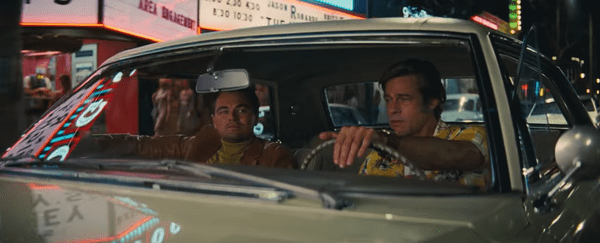
Eventually, the film’s story opens up a bit and some questionable characters take our attention. We get a glimpse of Charlie Manson (Damon Herriman) himself, but it is fleeting. We also see Roman Polanski (Rafal Zawierucha) a few times, but his sightings are almost as rare. However we do get a lot more footage of Sharon Tate (Margot Robbie) as she goes about her daily life. We watch her casually going to the theater to see one of her own movies, dancing to records at home, and generally being a good-hearted person. While the film takes fairly massive liberties with how the actual real-life events of the Manson family murders took place, there are a lot of accurate details filling out the world Tarantino has crafted. For example, it isn’t just Tarantino’s oft-reported obsession with women’s feet, apparently Sharon Tate was frequently barefoot and would occasionally put rubber-bands around her ankles to make it look like she was wearing sandals so she could get into restaurants. So while shots of bare feet may not be everyone’s thing, it is accurate in this case (source linked below). Tarantino simply inserted his two leads next door to the scene of the infamous crime. In “Hollywood”, Rick Dalton is the next door neighbor to Roman Polanski and Sharon Tate, to which Rick plans to turn a chance meeting with the famed director into an opportunity for the, self described, washed-up actor. Beyond the residents of the Hollywood hills, this film is filled to the gills with celebrity cameos, sometimes as an influential movie mogul as with Al Pacino, other times purely as minimal side characters like Kurt Russell’s ‘Randy’ or Timothy Olyphant’s character actor side-by-side Rick Dalton’s guest appearance on the pilot episode of western show ‘Lancer‘. The dialogue here is, as always with Tarantino, very good. However it isn’t quite as punchy as say “The Hateful Eight” or “Inglorious Basterds”, but that shouldn’t turn you toward the door, it’s just a different spice added to Tarantino’s oeuvre.

By now you probably know whether or not Quentin Tarantino’s style of filmmaking is for you, but even if you don’t appreciate the filmmaker- you have to admit that his skill in the medium is ageing like a fine wine. Tarantino has been saying that he’ll put down a ten film legacy and be done with making movies, but this film itself is a great argument against that. If he doesn’t want to make more than ten films, then he has earned that and his place in Hollywood’s history, but I highly doubt someone as in love with the art of filmmaking and movies in general will ever give it up. Here’s hoping for at least a few more films from the legendary director!

Final Score: 1 Flamethrower

https://www.rollingstone.com/culture/culture-features/manson-murders-once-upon-time-hollywood-tarantino-ending-868192/

film

Review Catch-Up: IT Chapter 2 (2019)

*Caution! There will be some spoilers within this review*

Written by Gary Dauberman and directed by Andy Muschietti, “IT Chapter 2” is the sequel to the 2017 horror hit “IT”. In the second half of this most recent adaption of Stephen King’s monolith of a book, The Losers club returns to Derry twenty-seven years after their initial bout with Pennywise (Bill Skarsgård) the dancing clown. After a particularly gruesome murder with a tinge of the supernatural, Mike Hanlon (Isaiah Mustafa) starts calling up his old friends to summon them home to finish the deed and kill the clown for good. The Losers are older now, and most of them ended up fairly successful in their careers. Bill (James McAvoy) is a horror author helping to adapt one of his books into a film when he gets the call to return to Derry. Beverly (Jessica Chastain) may have an abusive husband, but she also runs a successful fashion line. Richie (Bill Hader) wanders out a of a backstage to lose his lunch after hearing from Mike, after which he heads onstage to profusely ‘bomb‘ his comedy set. Meanwhile, Ben’s (Jay Ryan) in the middle of a meeting on a new building’s blueprints, he’s the head architect of the project. Eddie (James Ransone), who’s now, aptly, a risk assessment manager, gets into a car crash after hearing Mike’s message. The only loser to not return to Derry, is also the one who’s death is most impactful in the pages of the book version of “IT”, Stanley (Andy Bean). Too horrified by his past encounter with Pennywise, Stanley kills himself in the tub, sprawling the word “IT” in his blood on the tiled walls. In the book, the two halves of the story are meshed together in a circular tale that, wisely, slowly ramps up the tension and horror by hiding it’s secrets in the momentum of both story’s third acts which both happen alongside each other. This allows the adults’ memory loss to feel “remembered” in real time. This also allows Stanley’s death to conjure a more abject fear of IT because we don’t fully know why he was so traumatized to begin with. Imagination breeds a fear of the unknown, and King knew that.

So, the structure of the film is such that the Losers all congregate at a Chinese restaurant as they begin to remember their childhood and why it was so important to come back, to keep their pact intact. In the book, this search for meaning and realization of purpose is a huge portion of the adults’ stories and when it’s meshed in-between the escalating tension of Pennywise’s attacks on them both in the present and the past, you get a more nuanced ebb and flow than what separate adaptions of each era of the story can do alone. Which is why I understand the attempt at recreating the “forgotten memories” aspect of reshooting the kids’ scenes like the fort that Ben built, eluding to his skill in quiet observation evolving into the mind of an architect later on. Essentially the film is organized around the losers meeting in a group and then splitting up so that each character has a personal journey in which they must find themselves and an object, or artifact, from their childhood that held meaning to them personally. We get bits of backstory and exposition from Mike and several scenes to trigger a flood of memories as they remember more crucial information about themselves and their past.

This image has an empty alt attribute; its file name is it22.jpg

This film, as entertaining as it was, is definitely a mixed bag at times when concerned with film structure. However, this is similar to the quality of the book. The book has a LOT more backstory on Derry and it’s history that slowly hints at Derry being a place dripping in hatred, racism, and a general lack of morality. Things may seem fine at the surface level, but once you start digging, one finds there to be a litany of malice that has soaked into the dirt upon which Derry was built. The book seems to point to people being the ruinous creatures that true horror emanates from, Pennywise is simply a cosmic predator of sorts, one that has found the perfect hunting ground for an eternal vulture that feeds on fear. The cast and crew make a considerable effort to take what worked from the first film and double down on those traits. Which is why the film works so well given the stumbles that it does have sprinkled throughout. It can feel chaotic, uneven, and as if you’re moving from set-piece to set-piece- structured more like a theme park or funhouse than a story at times, but it’s crafted with such genuine performances and fine-tuned pacing that it never feels boring. It never feels truly ‘scary’ or unsettling either though. The film is far funnier than I had expected, Bill Hader and James Ransone do a lot of the heavy lifting in the levity department and it works to great effect!

Other than some structural critiques and some changes from page to screen (some better than the book, others not as much), “IT Chapter 2” was mostly a success and I personally had a good time with the film. The only big disappointment for me was the end sequence, and I get it, it can be hard to visualize scenes from a book that weigh so heavily on the power of imagination that this wild one was bound to be a disappointment in most adaptions. However, that being said, I wish the filmmakers had gone for the gold and went with the book’s trippy cosmic-horror ending with Bill’s consciousness transcending the universe, then deliberating with the giant space turtle, and diving into Pennywise’s spidery abdomen and swimming through his gooey innards to crush his heart from the inside. Now that’s metal.

Final Score: 7 Losers and 1 Killer Clown from Space!

film

Old School Review: The “Lone Wolf and Cub” Film Series (1972-1974)

Recently I began watching a Samurai film series from Japan made in the early 1970’s called “Lone Wolf and Cub” based on the hugely popular Manga of the same name. I’ve been slowly wading into the popular Samurai genre of Japanese films for a little while now. I started, as most Americans do, with Akira Kurosawa in “Yojimbo” and “Sanjuro”, before plunging into the famed director’s sword brandishing epic “Seven Samurai”. From there I found “The Sword of Doom” partly because that’s a great title- but also because it starred Tatsuya Nakadai (Who gave memorable character appearances in both Yojimbo and Sanjuro) as the lead, with the legendary Toshirô Mifune as a revered master swordsman in a minor, but powerful, role. All of these films have reviews here on this blog, and they left me wanting to discover more! One day after seeing a few reputable cinephiles on twitter take note that the series had landed on the Criterion Collection’s streaming service, I knew I had to check it out. It must seem as though I’m plugging this streaming service all the time- but it is only because I often find films there that I cannot find anywhere else, and as a student of the medium- I always need to see more movies. Always.

This image has an empty alt attribute; its file name is lonewulf1.jpg

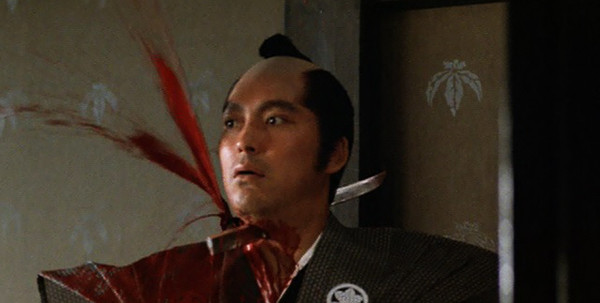
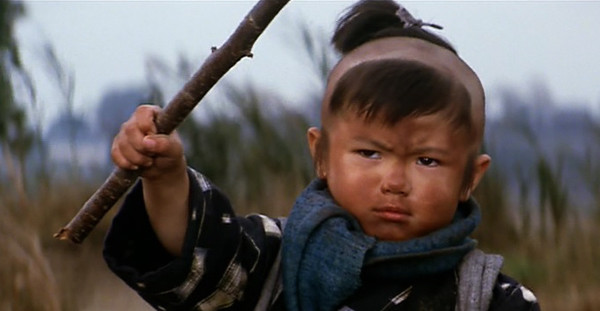
Rather than go through each film and review them individually, it made more sense to sum up the series as a whole and what made it great. Though, for your convenience I’ve listed each film’s title and year of release below this piece. Throughout these six films the most singular and significant factor that makes them stand out from the rest of the genre is the fact that Itto Ogami (Tomisaburo Wakayama) roams the vast Japanese countryside with his infant son, Daigoro (Akihiro Tomikawa) by his side. In the beginning of the first film, we see Ogami in his role as the shōgun’s executioner, mercilessly cutting down an incredibly young daimyō (Essentially a Lord in the feudal sense, a form of royalty within Japan’s Edo period. Forgive me if this is inaccurate, I’m only going by slight internet research and how this role is depicted within the films). This is important as it sets this world of cinema apart as a particularly brutal one, not even children can escape with their lives. It also serves as the assumed revenge for Ogami’s wife who was killed by three ninjas afterwards. It’s a bit more complicated than that, but it boils down to the “Shadow” Yagyū Clan framing Ittō for treason and subsequently taking over his executioner’s post. Ogami quickly gathers his son Daigoro and offers the toddler a choice to avoid the hardships of their uncertain future by death or to join his father “On the Demon path to Hell”. Which is, essentially, to wander as assassins-for-hire as they seek vengeance by hunting down all members and known associates of the Yagyū Clan. Obviously, Daigoro accepts the ronin lifestyle.

Holy Mother of Violence!

The hook of the series, for me anyway, is the absolutely insane graphic violence that is on display throughout these films. I’m fairly certain that there isn’t a film in the bunch that doesn’t have at least five severed limbs from anyone foolhardy enough to challenge Ogami. From the candy-cane red blood that sprays from the Wolf’s victims to the inventive and bizarre ways in which he has outfitted Daigoro’s baby cart for maximum carnage- the series is fundamentally soaked in blood and corpses. The villains that seek to destroy Ogami and Daigoro get cartoonishly creative with their various techniques as the films progress. From hiding in walls and stone barriers to literally writhing through the dirt and snow to pursue the Lone Wolf and Cub- these enemies can seem unending at times, though we as the audience know that Ogami’s mastery of his Suiō-ryū swordsmanship is unparalled! These films could be categorized under exploitation within the Samurai genre, and there is plenty to be said about the snap-zooms and bad guys giving whole monologues with swords jammed in their skulls, but there’s enough artistry beyond pure shock and awe that propels these films into a category all their own. What other films series so values extreme bloodletting alongside such strong familial bonds?

Silence and the poetic nature it instills

The use of sound in these films is uncannily serene at times. Depending on the scene, these films can have either a melodic score to accompany Ogami strolling with Daigoro’s baby cart, or a jazzy upbeat tempo to fit the pace. Don’t get me wrong, I love the scenes when the 1970’s funk kicks in to accompany Ogami’s blending of bad guys, but if you’re paying attention you’ll begin to notice the times that have the least noise weigh the most thematically. Below this article I’ve left a link to a video analysis of how these films utilize silence effectively, and I urge you to check it out. Often when Ogami is stoically seated at altars and shrines, the score takes a beat or two back to meditate and breathe inbetween the chaotic fight scenes. The best use of silence in each film, in my opinion, is at the beginning of Ogami’s one-on-one duels with the central villain of the film. Upon drawing swords, each warrior takes his or her stance and waits, calculating, taking only slow measured movements. It is the calm before the storm. It heightens the tension from some of the sillier one-versus-many scenes’ over the top violence and allows a moment of uncertainty to slip in. Who will strike first? Will Ogami come away unscathed? Or will he finally meet his match? The films often put a lot of technical precision, craft, and care into their fight scenes with excellent choreography, but the biggest diversion from this tactic in the series lies in the third film “Baby cart to Hades”. It’s a far slower film than the rest and focuses more on the ulterior dimensions of the warrior spirit within Ogami. Deep within the second act Ogami is forced to endure a ridiculous amount of torture that would make Mel Gibson proud. Through his restraint and self control, he defeats his enemies. These things help to elevate the film series beyond it’s grindhouse attractions.

Cinematography

From thick wooded forests to sweeping sand dunes and even snow topped mountains, the “Lone Wolf and Cub” movies put a heavy emphasis on the locations that our two assassins travel through. Visually, location is front and center where the camera is concerned. Each film does it a bit differently, but whether through differing camera techniques or inventive framing, there is always a sense that the world these characters inhabit is fully realized, if a bit fantastical. I particularly appreciate any scenes that immerse themselves in mood or when depth of landscape is considered. The fight scenes themselves are constructed for the most visceral and eye-popping blood splatter, and it’s a joy to see Ogami take on literal armies of opponents at times. Throughout all the spraying blood, dubiously performed monologues, and patient wanderings through varying landscapes, the cinematographers of these films have thoroughly earned their place in celluloid history.

The Elephant in the room…

While these films are highly entertaining and culturally significant, we must take a moment to acknowledge the sexual acts of violence against women. I am no scholar of Japanese society, especially of any time period or place, but these films do depict several instances where women are taken advantage of. Maybe it’s more off-putting as an American because what we’re shown is a bit more explicit than our legacy of films, at least in the portrayal of the sexual assault. The films explicitly exist in the pulpy and exploitative arena of cinema- so I feel that it’s just wise to know that these scenes exist and could put some viewers off from watching the rest of the films. Though, to be fair, Ogami is never the perpetrator of these violent sexual acts, the villains here tend to be the worst of society. So, maybe making them out to be monsters of every variety was the intention to get audiences on board with Ogami’s particularly violent dispatching of such vile men? So, it can get ugly at times, but, hey people are a mixed bag themselves right? If you can get past these instances of vulgarity, then I would highly recommend giving these films a watch!

Final Score: 6 films, 6 circles of Hell

*Below I’ve listed a couple links to more information on these films that I quite enjoyed and found to be rather informative. If you want to know more about these films, check it out!

https://www.criterion.com/current/posts/4287-samurai-and-son-the-lone-wolf-and-cub-saga

Sword of Vengeance(1972)

Baby Cart at the River Styx(1972)

Baby Cart to Hades (1972)

Baby Cart in Peril(1972)

Baby Cart in the Land of Demons(1973)

White Heaven in Hell(1974)

film

Old School Review: “Chungking Express” (1994)

Written and Directed by Wong Kar-Wai, “Chungking Express” is a uniquely romantic film out of Hong Kong in the early-to-mid 1990’s. This film falls heavily into the category of “Art film” and it relies far more on the feeling or sensation of its characters and imagery than the logic of plot progression. If that sort of film repels you, then this one may not be for you. Though I do suggest going out of your comfort zone when choosing which movies to watch, broadening one’s artistic horizons is always encouraged. Anyways, this film is essentially split into two halves- almost directly down the middle of the runtime. Each half even has its own cinematographer! The first half belonging to Andrew Lau, and the second to Christopher Doyle.

Both halves of the film follow lovelorn police officers in Hong Kong. The first half follows Officer 223 (Takeshi Kaneshiro) in the midst of his listless drudgery, the symptoms of a recent breakup. He’s taken to buying canned pineapple with the expiration date of May 1st- thereby giving himself a month after the break to wallow in self pity. When the date comes, he decides to eat the entirety of the canned pineapples he’s collected and then go out to a bar and try to seduce the first woman he sees. That first woman, however, happens to be a someone we’ve seen along side Officer 223’s malaise. We get almost no information about this woman (Brigitte Lin), other than the fact that she’s involved with some serious criminals. She’s always sporting a blonde wig and sunglasses, something that looks straight out of a 1940’s Noir’s femme fatale wardrobe. We witness her oversee a bunch of Indian men as they prepare to smuggle large amounts of heroin, watch her dance with a white man in a nightclub (possibly indicating him to be her superior), and observe as she goes on the run in an escalating foot-chase through the crowded marketplaces and streets of Hong Kong with a few haphazard shootouts along the way. By the time she escapes into a quiet bar and has a few drinks to settle her nerves, officer 223 enters in civilian clothing- eyeing her as his next obsession of love. From here, the two share a night of communal drinking, awkward expressions, and a sexless night at the officer’s apartment as he watches old movies late into the night as she sleeps unconsciously next to him. When she mysteriously exits in the morning, we follow officer 223 on his habitual route to the Midnight Express fast food shop, which just so happens to be frequented by another officer, number 663 (Tony Chiu-Wai Leung).

The second half of the film changes up it’s color palette and tonal sensibilities while still focusing on another officer experiencing love-loss in Hong Kong. This half is drenched in a colder blend of colors, whereas the first was submerged in deep reds and yellows. It’s also more akin to a rom-com dipped in whimsy than the first’s playful experiment in aspects of pulpy crime; a woman in danger, some gunplay, all existing in a subsect of a criminal underworld that exists parallel to everyday life. Officer 663 is also experiencing a sense of purposelessness in the aftermath of a breakup with a flight attendant (Valerie Chow). After the flight attendant leaves 663’s apartment keys, accompanied by a handwritten letter, at the Midnight Express we’re introduced to Faye (Faye Wong), the cashier with a pixie cut. After everyone else in the kitchen has read the letter, Faye indulges and takes a keen interest in officer 663. Faye’s interest quickly turns into a strangely, quirky, obsession as she repeatedly sneaks into his apartment to clean and rearrange his things. In other films, and in real life, several of her actions would seem alarming and unstable at times- but here it’s presented as playfully romantic. Which incorporates into the film’s thesis on relationships, both in the wake of longing and the potential of a new love. Taking the film as a whole, it’s harbors a unique ideology in which change is inevitable, but also that you must open yourself up to allow for the potential of a new positive evolution to take place.

This was an interesting film to take in. On its own merits, “Chungking Express” has something unique to offer- even if I didn’t quite love it as much as I anticipated, the film’s reputation exceeded itself for me personally. Though I am glad to have seen it. I admired the techniques employed throughout both halves. Melding slow motion, pixelation, and freezing the foreground while simultaneously blurring and speeding up the backgrounds of officers 223 and 663 in certain compositions helped to establish them as alone in a sea of people constantly on the move. Even though the film immerses itself in the wallowing of dissolved relationships- it retains a sheen of dreamy optimism that pairs well with it’s hypnotic nihilism, resulting in something truly bittersweet. I caught this film on the Criterion Collection’s streaming service (The Criterion Channel), and I cannot recommend the service enough. If you love old cinema and foreign films from every era, its worth your time.

Final Score: 1 month’s worth of canned pineapple

*For a deeper dive into the film and further context, check out the link below! I found the article to be an illuminating read:

https://thedissolve.com/features/movie-of-the-week/216-keynote-chungking-express/

film

“C’est La Vie!” Traverse City Film Fest Review (2019)

Written and directed by Olivier Nakache and Éric Toledano, “C’est La Vie!” is a French comedy about a cantankerous, but well meaning, caterer rallying his crew for an elaborate wedding at a prestigious French chateau. Max (Jean-Pierre Bacri) has a lot on his mind as he ventures out of Paris and into the beautiful countryside where his team is beginning to transform the 17th century palace into one couple’s ‘dream come true‘. The musicians that the Groom, Pierre (Benjamin Lavernhe), wanted aren’t available so they’ve hired a combative DJ (Gilles Lellouche) at the last minute, the catering team and the musicians are squabbling over elevator use, and the Groom also wants an elaborate finale with fireworks and high flying balloon acrobatics. There’s also the fact that one of his waiters knew the Bride (Judith Chemla) years earlier and is still smitten for her, a few of his crew were unavailable so a less than ideal replacement has arrived via his number one in command, Adèle (Eye Haidara)- and that’s not to mention that Max’s secret girlfriend, Josiane (Suzanne Clément), that he works with has been giving him the cold shoulder as he’s still technically married even though both parties are seeing other people at this point. Whew!

That’s not even half of the elevated antics that take place in the film, and its a miracle that the pacing and heavy character count never gets too cumbersome or uninteresting. There’s a mark of brilliance in this film where everything that’s taking place may seem chaotic and erratic, but the irony that the filmmaking on display is incredibly efficient and clever likely isn’t lost on anyone involved in anything as large and unwieldy as making a film or catering an event will know. There about five to seven sub-plots and character arcs that are all weaved through various problems that the crew encounters as Max and his team constantly have to adapt to. Which just so happens to be his mantra on site, whenever something goes wrong, say a power outage that ruins the main course dinner, Max asks of his crew, “What do we do?” to which they dutifully reply “We adapt!”. The film handily juggles the quirky personalities of the catering crew, their needs, faults, doubts and successes, all with care and in a timely fashion.

The film confidently relies on it’s colorful characters and a consistent witty humor that snaps between sarcastic cynicism and a charming level of earned optimism, and it’s all the better for it. An upbeat jazz-imbued score plays into the chaotic, but classy, sense of momentum that rides throughout the film’s scenes giving it the proper tone that fits these characters nice and snug. Even though almost everything goes awry, the film acknowledges the intensity of the moment without getting too nasty or dark. In the end our resolution is met with a gentle recognition that even when it seems as though everything has gone wrong- not all is lost!

The film may be a bit bourgeoisie at times, but it never gets too rude about it. In fact there are undertones of working class humor levied at those in the upper class who are too stuffy and cannot take a joke (looking at you Pierre!). If you enjoy ensemble comedies that dish out a brevity of levity with a lovable cast of oddball characters, then I highly recommend checking this one out!

Final Score: Dozens of Twirling Napkins!

film

“Villains” Traverse City Film Fest Review (2019)

Written and directed by Dan Berk and Robert Olsen, “Villains” is a dark comedy thriller where a couple of young amateur thieves break into a well-to-do home in the middle of nowhere where they find some ominous developments and disturbing homeowners. The film opens with our modern day Bonnie and Clyde, Mickey (Bill Skarsgård) and Jules (Maika Monroe), robbing a gas station. However, criminal geniuses they are not, and they end up stranded on a back-road due to an empty gas tank. Eventually they stumble upon a seemingly empty home, with a car in the garage to boot! All they need to do is break in and find the keys…

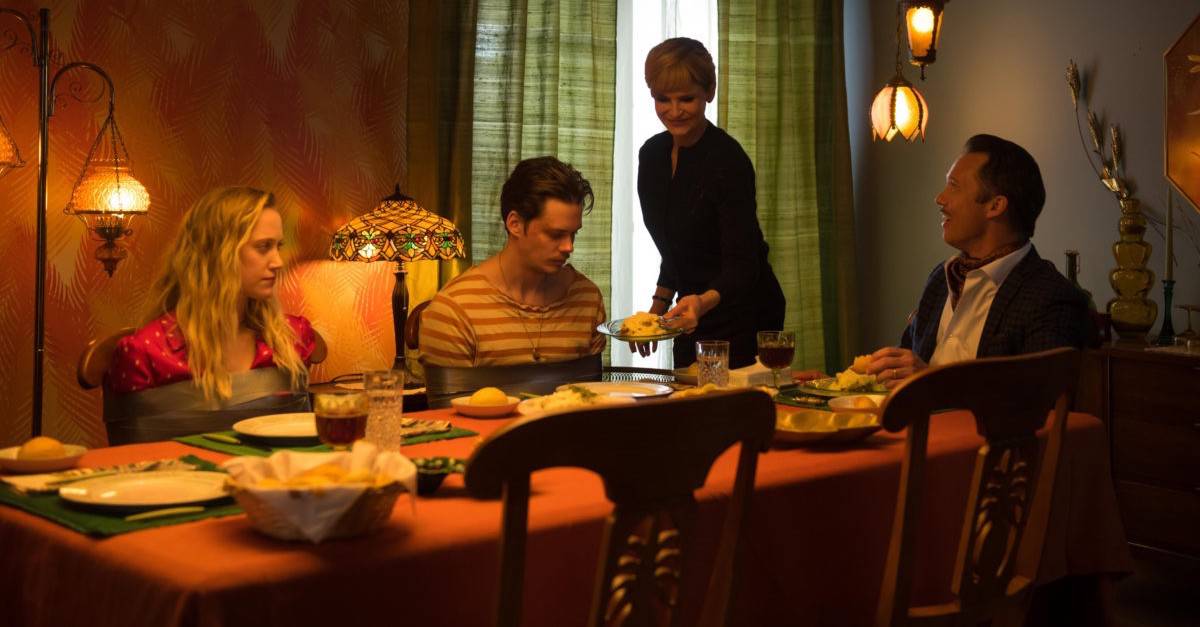
After searching the house for a few minutes they decide to check the basement, where they discover a young girl chained up, emotionless and mute to their concerns. Jules wants to save the girl (Blake Baumgartner), and Mickey obliges even though he’d rather make their escape as quick as possible. Not long after this the homeowners return and kickstart the film’s central power dynamic between Mickey and Jules, and George (Jeffrey Donovan) and Gloria (Kyra Sedgwick). George and Gloria are an older couple with a retro style from their clothes to their mannerisms. They can be charming at times, at least when they’re not mellifluously menacing the young drug-fueled thieves. In fact, the performances from the four major players is what keeps this one location thriller from destabilizing under it’s own expectations. Don’t get me wrong, it’s nice to see Skarsgård in a charming (though somewhat naive) role, and Monroe’s Jules is the heart and soul of the film. However, that being said, the title of the film alone brings a more devilish tone to mind than what we ultimately get.

The script is probably the weakest part of the film. What the actors do with the characters is what saves this one from an untimely demise of boredom. It’s not exactly a lackluster film, but it never quite gets as punchy as I suspect the original intention was. “Villains” will most likely find a cozy home on a streaming service in the near future- and it will probably do well there. I’d be a harder sell if this were to open to a wide release in theaters though, I’m not quite sure it’s worth the price of admission.

Final Score: 1 Bonnie, 1 Clyde

film

“Extra Ordinary” Traverse City Film Fest Review (2019)

Written by Mike Ahern and Enda Loughman (with additional writing by Maeve Higgins and Demian Fox) and directed by Ahern and Loughman, “Extra Ordinary” is an Irish comedy that follows Rose Dooley (Maeve Higgins), a well known psychic in a cozy small town who’s got a love/hate relationship with her supernatural abilities. Rose grew up under the tutelage of her father Vincent Dooley (Risteard Cooper), the host of a local paranormal TV series that she often appeared on with him. Tragically, and hilariously, Rose accidentally kills her father one day when the two investigate a haunted pot-hole. As the film opens up to the present, we find her issues with bereavement haven’t exactly been worked through yet. Rose’s pregnant sister Sailor Dooley (Terri Chandler), pries her away from their father’s roadside grave after the opening credits, implying that this ritual has been performed ad nauseam.

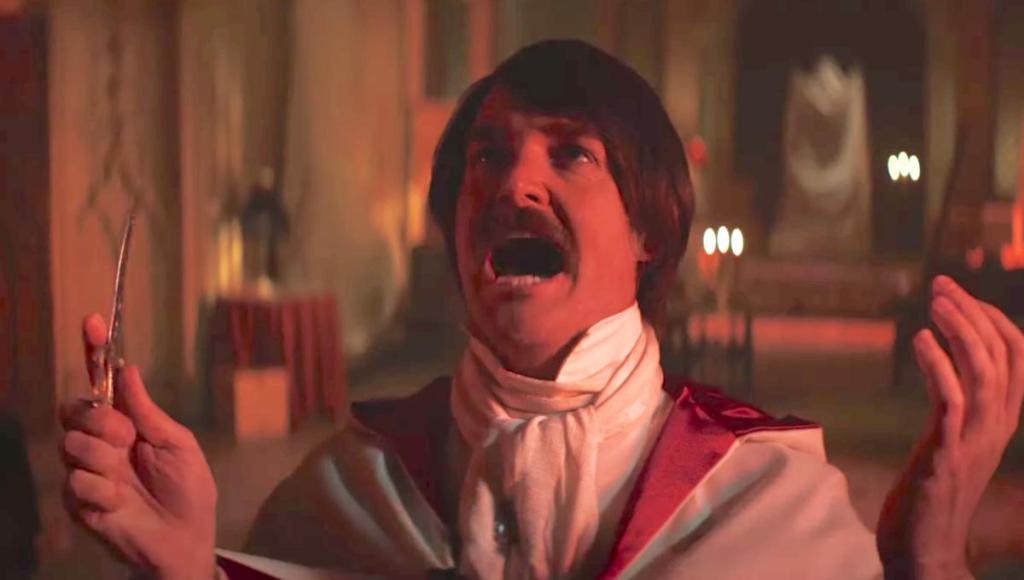
Within that same small Irish town resides Martin Martin (Barry Ward), a widowed father who has a unique supernatural problem. His dead wife has been casually haunting him for some time- forcibly picking out his wardrobe, whipping donuts out of his hand etc. After Martin decides to do something about it, he tracks down Rose to see if she can help him out. Rose hasn’t used her abilities for some time now and works as a driving instructor, even though her heart’s not quite in it despite her cheery disposition. She refuses to help Martin at first, even though she quickly takes a liking to him. Across town residing in a large castle, loafing American one-hit wonder musician, Christian Winter (Will Forte), is running out of money. Out of desperation, he decides to make a deal with the Devil to ensure another hit song- he just needs the standard virginal sacrifice first. Once he tracks down Martin’s daughter, Sarah (Emma Coleman), and puts her in a spell of levitated slumber, Martin and Rose team up in one of the funniest ghost-busting duos to hit the silver screen in some time!

This film was a delightful surprise at the festival this year. Throughout it’s roughly hour and a half runtime the quirky, idiosyncratic, characters rattle off gut busting jokes at a rapid-fire clip while crucially maintaining an earnest and heartwarming vibe. The off-kilter nature of the film keeps everything light, even when the jokes and gags get a bit gross- which is all in good fun when battling the ego of Forte’s Christian Winter and his mustache twirling villainy. Martin Martin, while mainly playing the role of the straight man who’s startled by all of these ghastly ghost adventures, gets a fun twist in the second half of the film when his dead wife possesses him. Rose then utilizes Martin’s new gift to help them collect enough ectoplasm to break Winter’s spell on Sarah. This allows Martin to play an important role in saving his daughter’s life while evolving the comedic tendencies of his character.

Considering the fact that this is Mike Ahern and Enda Loughman’s first directorial feature- this is a superb outing for the duo! Personally, I know I’ll be looking out for the next film from them. If you enjoy comedies that dabble in other genres and styles, I highly recommend seeking this one out!

Final Score: 7 Jars of Ectoplasm

film

“Sword of Trust” Traverse City Film Fest Review (2019)

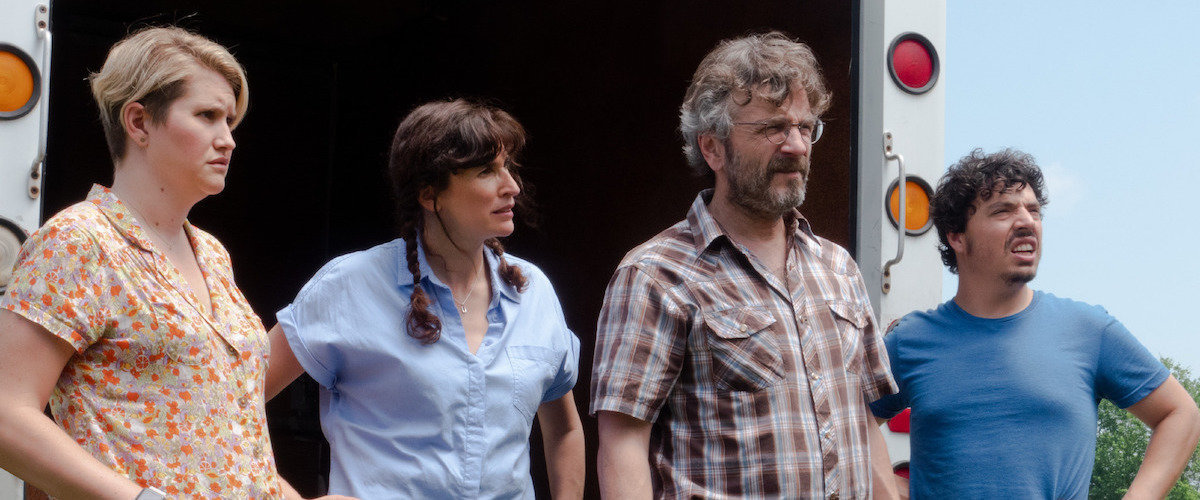
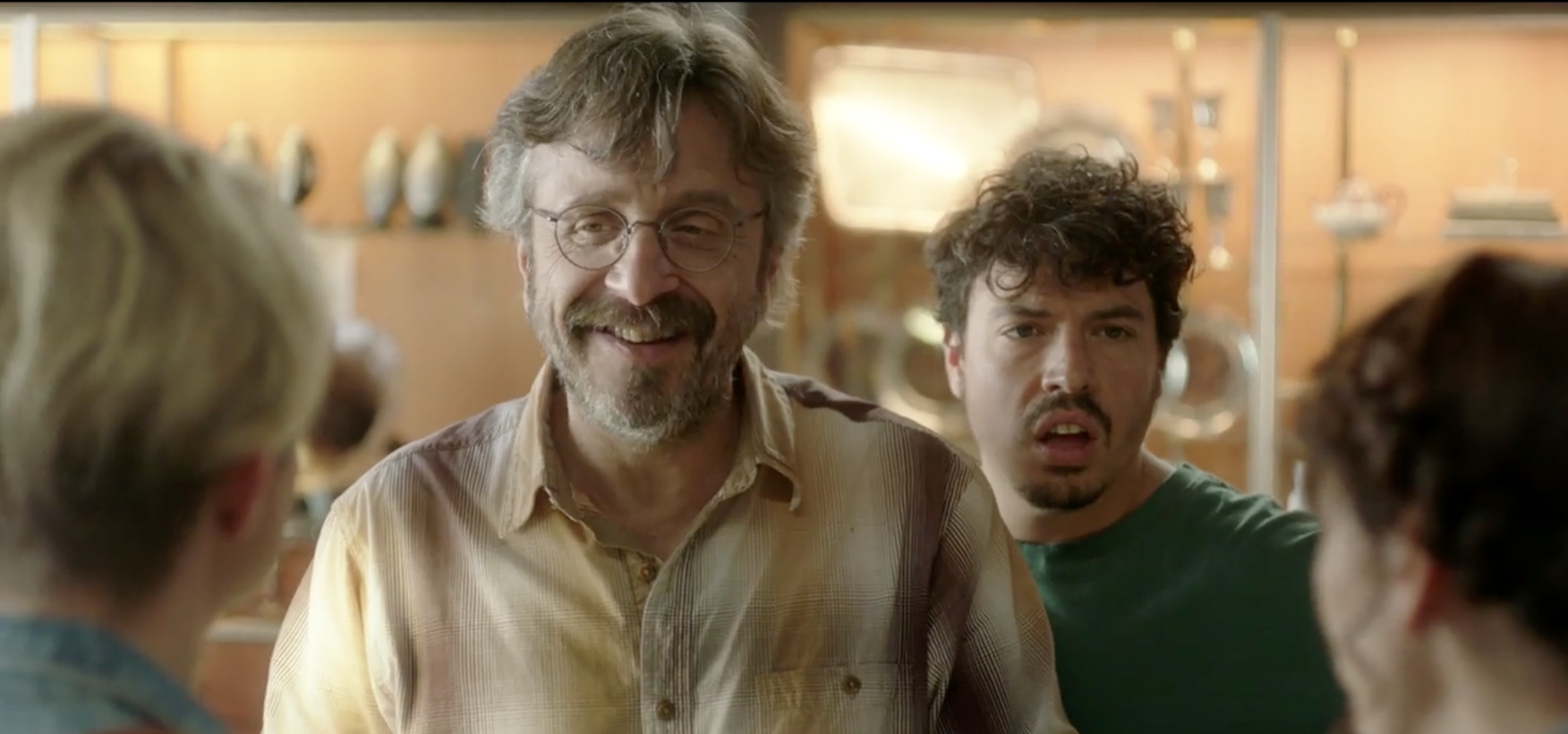
Written by Lynn Shelton and Michael Patrick O’Brien and directed by Shelton, “Sword of Trust” is a dramatic comedy that follows a mysterious Sword from the Civil War, and how it may in fact bear proof that the South had actually won the war. Marc Maron stars in the film as Mel, a wry but welcoming curmudgeon of sorts that runs a pawn shop in Alabama. He has one employee, Nathaniel (Jon Bass), a fool with a heart of gold who harbors a fascination for conspiracy theories propagated on the internet. We’re also introduced to Cynthia (Jillian Bell) and Mary (Michaela Watkins), a couple visiting town to manage Cynthia’s grandfather’s will and belongings. With the bank owning her grandfather’s house Cynthia is left only with a Civil War sword with several documents and a letter from her grandfather stating the sabre’s importance.

At first when the couple dare to enter Mel’s pawn shop, eager to rid themselves of their inherited relic of alternate history, they attempt to recoup their losses by feigning the sword’s legitimacy. This scene (and the film as a whole) between Mel and the couple attempting to prove the sword’s authenticity was a welcomed throwback to the character driven, dialogue heavy, indie flicks from the nineties. After some clever wordplay the four decide to seek out any true believers of the conspiracy willing to shell out enough cold hard cash for the blade. They encounter rival factions of southern men willing to get nasty over the conspiracy as they discover that a surprising amount of people believe in the flimsy facade, and are willing to get violent for “the truth“.

The emotional crux of the film, which was unexpected on my part, came from Maron’s Mel. When the foursome are hauled in the back of a trailer to the secret location of the family boss presiding over items of legitimacy from “The War of Northern Aggression“, they take the time to get to know each other. Cynthia and Mary recount their decision to chase their dreams before attempting to have and raise children, but it’s when they ask Mel about his life where he reflects on his musician-junkie days with Deirdre (in a small supporting role played by the director of the film, Lynn Shelton) where the film finds its humanistic core. The film’s identity relies, wisely, on the performances of its characters, and its in Marc Maron’s performance in the third act where all of the character’s intricacies and nuances are connected to a past of love, regret, hardened outlooks, and a weathered sense of realism that’s relatable and true to life. Maron, always ready with a pithy comeback, is anchored by a cast of skilled performers all working towards a well made dramatic comedy. “Sword of Trust” is a film that’s perfectly tailored for our post-truth paradigm, the fact that it manages to be equal parts clever and funny while maintaining a breezy hour and a half runtime is in itself a small cinematic miracle. Check it out!

Final Score: 40,000 dollars

film

“Greener Grass” Traverse City Film Fest Review (2019)

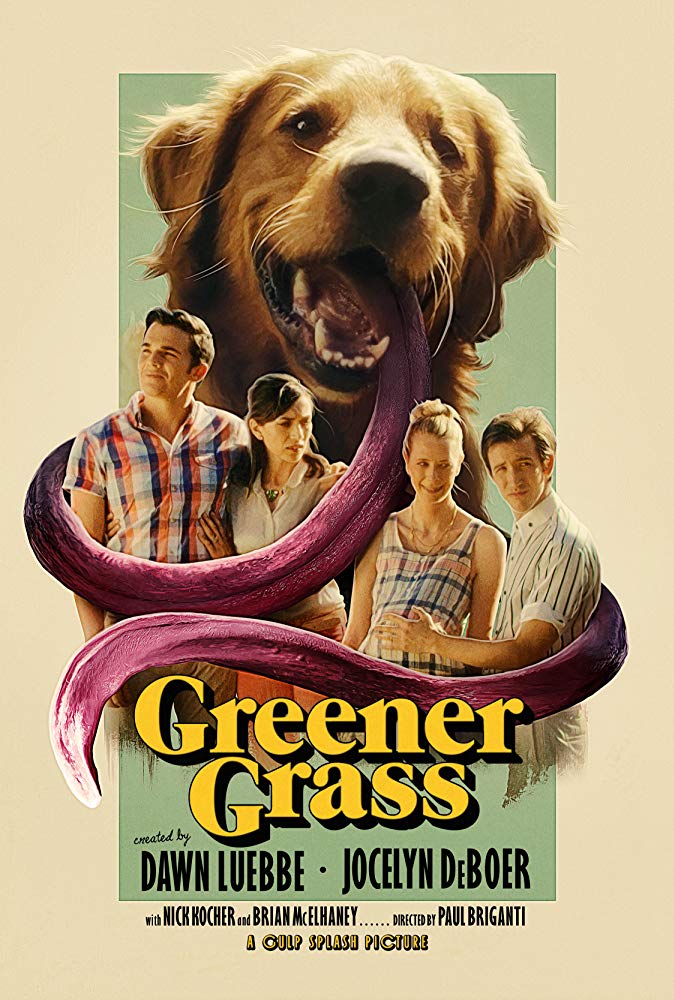
Written by Jocelyn Deboer and Dawn Luebbe and directed by Deboer and Luebbe, “Greener Grass” is almost like a movie, if you were on copious amounts of drugs and locked in a movie theater until the credits rolled. I don’t even feel as if I can call this experience a movie, that would be a disservice to the history of the medium. I don’t enjoy being harsh on films or filmmakers, it’s hard to make a movie- any movie for that matter, but this one threw me for a loop. Okay, so, if I were to describe this film it would be a sort of nightmarish “Stepford Wives“-like scenario drenched in sunny pastel hues wherein soccer moms Jill (Jocelyn Deboer) and Lisa (Dawn Luebbe) consistently make awkward small talk while casually tossing about major life choices with the fickle and capricious nature of children under the age of six. At the opening children’s soccer game Lisa notices Jill’s newborn and notes how cute she is. Jill responds with “Oh, do you want her? She’s great.” and she cheerily hands her baby over to Lisa- not to hold- but for keeps. That’s Lisa’s child now. This is about less than thirty seconds into the movie, and that should clue you into the illogical slog you’re about to experience.

Jocelyn Deboer (left) and Dawn Luebbe (right)

There’s just not enough material for a feature, maybe a short film. Which, I discovered, is exactly what this concept was before being given the green-light for feature development. Which is perplexing to say the least. I don’t know what the percentage of scripts getting greenlit versus the untold amount that never see the light of production is, but I can’t help thinking that countless better ideas were overlooked when this got made instead. Don’t get me wrong, I’m not going to go out and protest this film or wage an online battle against anyone involved in bringing it to fruition- it just made me wonder how many other films were sitting unmade while this got produced.

It’s really just a series of sketches more tailored for adult swim than the movie theater. For example, Jill’s son Julian is dragged from practicing piano, soccer, and to school but the kid is painfully pathetic at literally everything. He screeches in abject terror every time he’s slightly jostled by a softly lobbed baseball or when loosely brushed by his fellow teammates on the field. About halfway through the film he passes out into the pool at a local gathering and transforms into a golden retriever. Why? Nobody knows. Everyone simply treats him as if he’s still perfectly human. There’s also a murderer running around in the background breathing heavily and watching Jill’s family and muttering about Julian and events in their lives. I assumed that maybe Julian was somehow the murderer- but no. That thread goes nowhere, Jill encounters the murderer later as she walks into her home after divorcing her husband because her friends randomly suggest it to her on a whim- sorry, there’s a lot of odd context that is hard to keep track of throughout the film. Anyways, Jill just finds a large woman cooking in her home who aggressively screams that this is her house now, Jill apologizes, and then pauses to double-check with the intruder to make sure that it really isn’t her house before being pushed out into the street. This film’s scenes are just a bunch of non-sequiturs that could be rearranged in any order and it would make just as much sense as it currently does.

What we would normally call the plot, is completely nonsensical, devoid of any and all structure or any narrative meaning whatsoever. If there were at least one connecting idea through the film then maybe there would be something, but none of it connects, the main character learns nothing and accomplishes nothing. She floats through life and plainly accepts decisions made for her by insane people as if these preposterous choices couldn’t be undone- no matter how painfully stupid they may be. Again, I feel conflicted at times when discussing “Greener Grass”, I’m supportive of everybody and anybody getting out there and creating something, anything, but with this one, I found almost nothing of value. I don’t ask for much, but I mean, any nugget of cohesion would have been appreciated. This film feels like someone that was raised in an extremely privileged setting grew up not knowing the value of money or narrative and thought, “I bet I can make a movie” with no supporting thoughts to back that up. The one thing I did laugh at though, was that after Julian transformed into a dog his father played catch with his new dog/son (dressed in children’s clothes by the way) and he was so proud of Julian- because he’s faster now. Later when Jill confronts him about missing Julian the way he used to be, he looks at Jill confusingly and says, “Miss him? He’s right here, and he’s awesome now.” I have to agree, Julian was far more entertaining as a dog.

Oh, and I get it, comedy is subjective. All art is subjective. If this experiment works for you- then great! Every movie is somebody’s favorite movie, but I have a feeling that this one may have less favoritism than most. Personally, I cannot recommend this one, but you’re welcome to give it a shot!

Final Score: 13 Kids with Knives

film

“The Wretched” Traverse City Film Fest Review (2019)

Written and directed by Brett and Drew Pierce, “The Wretched” is a throwback horror film that uniquely finds a balance between old school practical effects and an unnerving new wrinkle to the folklore of Witches. This was the last film that I caught at the Traverse City film festival this year, and it turned out to be my favorite film of the fest! Oddly enough, I was in line for another film earlier during the week with friends and we struck up a conversation with a couple of guys behind us after hearing them name-drop “Big Trouble in Little China” and “The Thing” as a few of their favorite films. They happened to be filmmakers from Michigan, now out in L.A., and had a film at one of the later Midnight movies during the week. That film was “The Wretched” and my friends and I made the move to get tickets for that film because of that short conversation, and we were better off for having done so!

This review will be more vague than usual as the film has only been screened a few times for audiences at this point, and the less plot details out there, the better, in my opinion. We follow Ben (John-Paul Howard), a seventeen-year-old visiting his father, Liam (Jamison Jones), for the summer in North Port Michigan, on the Leelanau peninsula. Over the summer Ben works with his father at the local docks teaching kids how to sail and clearing out the slips. He’s mostly concerned with garnering the attention of the local girls and trashing the petulant bullies’ boat after some uncomfortable humiliation. However his attention is soon turned to his fathers’ odd neighbors and their increasingly strange behavior. Ty (Kevin Bigley) and Abbie (Zarah Mahler) seem normal at first, and initially they are, but after a wander in the woods with her son Dillon (Blane Crockarell), Abbie begins to take on more… aggressive tendencies. Eventually evoking “Rear Window” in Ben’s obsessive paranoia over his neighbors’ strange actions, Mallory (Piper Curda) a quirky co-worker at the docks, joins him in investigating the truth. Kids start disappearing and everyone except Ben seems to have forgotten them, forcing him to action.

Piper Curda and John-Paul Howard in “The Wretched”

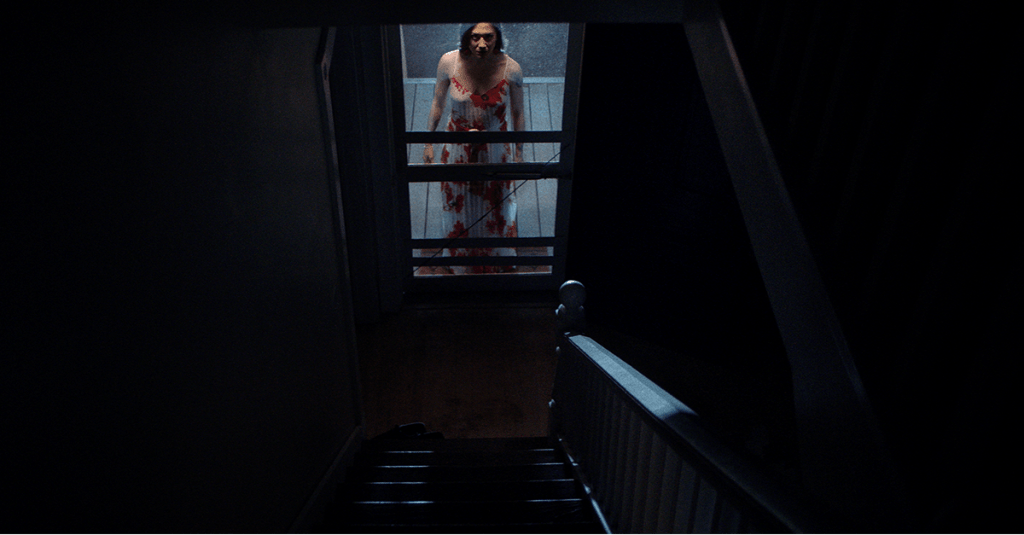
This film excels on several technical fronts. Firstly, the adherence to practical effects over the use of CGI in this film is not only admirable, but downright mesmerizing. I’m not sure how they crafted some of their scares, but they were highly effective in creating an atmosphere of disgusting, moody, tension. Which, by the way, is utilized perfectly in this film. Some modern day horror films overdo the heightened levels of tension throughout their run-time, but this film wisely gives the audience a false sense of security at times; allowing several scenes to breathe and the audience to get attached to these characters as people first and foremost- not just fodder for the supernatural villain to devour. These characters were also, delightfully, more intelligent than expected, they’re smarter than your average teenager stereotype from any given slasher flick. One character even removed his shoes before heading up a staircase to find the source of a few bumps in the night. They seemed like reasonable people approaching an unreasonable scenario, no comic relief characters blindly blundering into danger here! Oh, and the sound design has to get a mention as well, it was unsettling and perfectly set each scene to a mood that slowly evolves from creepy to outright terror nearing the third act!

Zarah Mahler as Abbie in “The Wretched”

Speaking of the third act, it gets pretty intense! Not to oversell the film, but the choice to stack several types of phobias on top of each other in the final sequence was brilliant! Forcing your characters to keep charging forward through a continued escalation of terror like that was, well, it was a damn good time at the cinema. This was a satisfying throwback to old tropes with refreshing new techniques and execution. Anyone that enjoys films like “The Witch“, “Evil Dead” (The Sam Raimi version), or “Halloween” (The John Carpenter version) will probably enjoy this one as I did. I highly recommend seeking this one out once the film makes it’s way through the festival circuit and distribution process. Keep your eyes peeled for this one!

Final Score: 1 Witch

*Below is a link to an interview with one of the directors, Brett Pierce, where he discusses the reasoning behind why they decided to shoot the film in Northern Michigan, check it out!

https://www.northernexpress.com/news/feature/evil-dead-descendant-bros-brett-and-drew-pierce-bring-the-wretched-1/