film

Review: Jurassic World (2) Fallen Kingdom

*** WARNING! SPOILERS! ***

Written by Derek Connolly and Colin Trevorrow and directed by J.A. Bayona, “Jurassic World; Fallen Kingdom” is the sequel to the 2015 smash hit reboot of the “Jurassic Park” franchise that Steven Spielberg began back in 1993. I saw this film over it’s opening weekend but I’ve been letting the movie brew in my headspace for the last week because it was such a mixed bag. I don’t know if I’ve ever seen a more Frankenstein-like film before to be honest. The direction, visuals, special effects, and suspense of the film were all impressive- but the writing, character choices, and plot of the film were completely off the rails! It felt as if there were two or three very separated and distinct flavors of attitude controlling this bucking beast of a sequel and no one knew how to handle it- with no cooperation across the disparate groups whatsoever. The film didn’t know what kind of story it wanted to tell.

I0NZOLfu_o

First of all, I feel that you should be warned going into this film- there is nowhere near as much Jeff Goldblum as this movie needs, or to the extent that the marketing implied there might be. If you’ve seen the trailers, that’s essentially his whole performance. However, as welcoming as a Goldblum addition is to any film- this use of the character of Ian Malcolm directly collides with the ideology (and thus the main driving force of the plot) of the main characters Owen (Chris Pratt) and Claire (Bryce Dallas Howard). It’s this exact fulcrum that the film has issues with. Are the dinosaurs of Isla Nublar myth made reality, conjured from wonder and awe? Or are they vicious monsters that mindlessly consume and terrorize? Should the humans save the ill-fated creatures from Isla Nublar’s awakened volcano? Or should we let Nature take it’s course and re-extinct these de-extinct animals? Goldblum’s Malcolm restates his thesis from the first film and of it’s sequel “The Lost World” in which he argues against saving the dinosaurs. After which we cut directly to Claire’s new job running an indie-sized organization to “save the dinosaurs!” A drastic evolution from the first film where the character viewed the lab grown creatures as assets, something from which to gain profit. Here she’s a fully fledged animal rights activist. Quite the leap. We’re then informed of John Hammond’s original financial partner (Who we’ve never heard of until now, the fifth movie) for the first park in Benjamin Lockwood (James Cromwell), who’s in need of a well informed crew to make a last ditch effort to salvage his old friend’s creations.

ZZ3956C8F2.jpg

Beyond the philosophical and moral whiplash, the characters make stupid, convenient, and foolish choices throughout the film. Granted, the franchise has been built on the ill-fated decisions of humanity before- but they were never this outlandishly dumb about it. From the military minded Wheatley (Ted Levine AKA Buffalo Bill from “Silence of the lambs”) unclasping the Indo-Raptor cage purely to add another dino tooth to his collection, to the enormously lazy writing choice that the young Maisie (Isabella Sermon) commits to in the final scene- the writing is clunky and unfocused. The script tries to obtain specific outcomes for further franchise building- but in doing so it wastes the opportunities that the current story could have created. There are ways to get the outcome that the ending of “Fallen Kingdom” sets up- but the way they got there was painfully stupid. I won’t spoil the exact ending, but trust me, it’s bad. It’s also a weak excuse to pin the fallout of this film on a young girl when there are so many other ways they could have played it. An immediate easy fix would be to let Mills (Rafe Spall), Lockwood’s assistant with ulterior motives, make that major dooming choice as he’s dying to spite the main characters instead of just using his death as a visual callback to a death in “The Lost World”.

_thumb_7bcbb48f-1eea-4f47-b2bb-fa86640311cc

That’s not to say that the film doesn’t have some value to it. The imagery and direction, along with the mood, sense of suspense, and entertaining set-pieces all combine to smooth out the film and lessen the extent of mistakes that engulfed the rest of the story. The way Bayona uses scale, lighting, and framing all collectively raise the content above the level of quality expected with these movies by now (excluding the original- obviously). In fact the second half of the film taking place inside a giant mansion was a fun diversion and there were some good ideas that they could have expanded on. An illegal dinosaur auction has its merits in theory, but the film took a cartoonish mind of villainy at this point. One shot even has Mills face being lit up by a computer screen as counters and bars load while numbers skyrocket- a necessary shot to remember that the villains are greedy and evil. There was a few good half baked ideas in this script, and it might have turned out great eventually, but there just wasn’t enough to get a score better than “Passable” from me honestly. I was entertained with this film, but the more I think about it, the less I appreciate it retroactively.

Final Score: 11 Jurassic species and a few half-baked ideas


film

Review: The Witch

Written and directed by Robert Eggers, “The Witch” is A New England Folktale set roughly in the 1630’s that follows the story of a family cast out from society in the new American colonies for being accused of “prideful conceit”. While we never get the exact details about what William (Ralph Ineson) and his family engaged in to receive a sentence as damning as banishment, that isn’t what the story is truly about anyways. We can surmise that William probably took his own interpretation of the bible to be more accurate than those of the colony. As he claims in the opening scene that he practiced only “the pure and faithful dispensation of the Gospels”. Thus the film begins as the family of seven treks out into the wilderness, firm in their decisions, unknowing of their doom to come.

maxresdefault

The family consists of Caleb (Harvey Scrimshaw) the eldest son- though he’s only about twelve, Mercy (Ellie Grainger) and Jonas (Lucas Dawson) the young twins that earn the title of creepiest kids in the film, and Thomasin the eldest daughter, a few years older than Caleb and easily the standout performance of the film- though all are great. Katherine (Kate Dickie) the Mother, who unravels psychologically and spiritually as the film progresses, is at a complete loss once the youngest child, Samuel the baby, is mysteriously abducted near the beginning of the film. It’s always a gamble with child actors, but this may be the best use of little performers since “Jurassic Park” (I’m not dying on that hill- I just rewatched the classic recently and it’s been rambling about in my headspace since). They’re all poise perfect in their period-accurate performances. Thomasin in particular is a fascinating role, as the family crumbles from within Witch accusations are aimed at her, and there is a bit of sly wit hidden subtly in her performance that makes you ask, Wait… is she actually the Witch? The paranoia of the family is infectious to say the least. Though Caleb makes an argument for the best, and most chilling, scene in the whole film- it certainly got to me in the moment.

TheWitch

See, the beautiful trick of the film is that while the title may indicate that the film is about “The Witch”, and there is indeed some supernatural underpinnings trifling about, it’s more about the effect that the Witch has on this family. They are torn apart as much by their superstitions and fears of damnation as they are of the titular creature’s actions. In fact it is this weaving of the supernatural with the sense of hard realism that makes the film stand out from it’s genre limitations to become something more than the sum of its parts. On a technical level, the film pays homage in cinematography and framing to old religious renaissance paintings, particularly of Goya’s work on the subject of Witches (Even though he lived a century later in Spain). The score is also worth mentioning as it fuels the sense of a tense and bellowing doom. Booming orchestral vocals against a moonlit forest paint the mood for the film, danger lies at the edge of the woods, damnation is afoot, and trust is cast aside.

the-witch-2015-black-phillip-goat-gores-father-review-600x300

Old religious imagery sprinkled in throughout the film with the age appropriate attitudes of the family combine to heighten the dread that would be nearly impossible within a modern setting. We don’t take everything in life as a seriously as those before us had. After giving this film a watch I haven’t been able to stop thinking about it, so I read up on what countless others had to say on the matter. There was something particularly unnerving about the film that I just couldn’t articulate efficiently, Was it the acting? The setting? Or simply the unabashed originality behind it? Then I gave the New Yorker’s review of the film a read and Anthony Lane perfectly exemplified what I was missing, “This is, to put it mildly, an uncommon state of affairs for anyone who frequents the cinema, the theatre, or the opera house. How many people, these days, heading out of ‘Don Giovanni,’ are honestly shaken by the mortal terror of the hero, in his final conflagration? Which of us treats ‘The Crucible,’ set sixty years or so after the events of ‘The Witch,’ as anything but a reflection on the political hysteria of the time in which it was written? The problem is simple: we can’t be damned. One gradual effect of the Enlightenment was to tamp down the fires of Hell and sweep away the ashes, allowing us to bask in the rational coolness that ensued. But the loss—to the dramatic imagination, at any rate—has been immense. If your characters are convinced that a single action, a word out of place, or even a stray thought brings not bodily risk but an eternity of pain, your story will be charged with illimitable dread. No thriller, however tense, can promise half as much.” The historical context and how accurately the characters were represented in their actions and fears gave the film an unshakable authenticity- we believe that the characters believe with a steadfast resoluteness. There are no jokes or irony in their performance, no release once the film has you in it’s grasp.

“The Witch” is a fascinating and unconventional horror film that preys upon our past to craft a finely tuned and chilling film. I definitely recommend it if you’re into unique offerings in this genre- though it is slow at times and will definitely not be for everyone (It wholeheartedly earns its ‘R’ rating). I wouldn’t recommend it to new parents- unless they enjoy fresh nightmare scenarios they hadn’t yet considered to keep them awake at night. It’s out on streaming services and physical media at this point, give it a watch if you can- it’s definitely a standout of the genre in my opinion.

Final Score: 1 Black Phillip & 1 damned family


Sources:

https://www.newyorker.com/magazine/2016/02/29/the-witch-review

film

Review: Hereditary

Written and Directed by Ari Aster, “Hereditary” is the latest horror movie from studio A24. This most recent offering continues A24’s tradition of releasing films that refuse to be average, which results in a storytelling boon for their audiences. “Hereditary” follows the lives of the Graham family as they navigate the loss of their Matriarch, Ellen. The film opens with her funeral as her daughter Annie (Toni Colette) gives a muted eulogy which perfectly preps us (but does not prepare us) with a foundation of paranoia. Ellen, it seems, was a very private person with private friends. So much so that her closest relatives know almost nothing about her life and its many secrets. The family dysfunction that stems outward from Ellen has produced a multitude of psychological and emotional issues in her offspring. Most notably affected by this is Annie, a miniature model creator, wife, and mother, who seems to be on the verge of a nervous breakdown- or at least close to one- right from the beginning of the film. Her husband Steve Graham (Gabriel Byrne) just tries to keep everything and everyone around him afloat amidst the cavalcade of creeps that’s about to descend into his family’s life. They have two children Peter (Alex Wolff), the older teenager, and Charlie (Milly Shapiro), the very unsettling young girl who makes those creepy clicking sounds that you’ve heard in the advertising of the film.

hereditary_GROUP_TABLE_029_3_rgb.0

I will do my best to avoid spoilers in this review, or at least keep them to a minimum. There are essentially two sides to this film. There’s the story you think you’re watching for the first half of the film, and then there’s the second story that you won’t likely fully grasp the details of until the film very deliberately tells you what’s happening in the final shot of the film. In retrospect, there’s a very well thought out string of breadcrumbs sprinkled throughout the film that do hint at the supernatural underpinnings that are taking place just out of frame. There’s a lot going on in the film, there’s throwbacks to classic horror cinema from the mood and tension building of “The Shining” to the wild shock and awe of certain scenes from “The Exorcist”. Granted, I wouldn’t recommend going into any movie with your expectations rampant and out of control- the film simply cleverly pulls from those icons while greatly remaining as its own unique experimentation.

heredite

The greatest thing the film accomplishes is its’ execution of tension and unsettling mystery. There’s one, maybe two, jump-scares in the entire film and that is a huge benefit. There is no release here, once the film has entrapped you, it has your undivided attention. There are words scrawled on the walls of the Grahams’ house, only ever seen by Annie who seems to become more and more untrustworthy and unraveled as the film progresses- which makes us question if she’s actually even seeing them. Not to mention Charlie, who is unquestionably disturbing in nearly every scene she’s in- and even in a few she’s not. Charlie has visions of her dead grandmother, cuts off a dead bird’s head for unknown reasons (a prelude to all the beheadings later in the film- there’s more than you would expect from this film’s pretenses), and she exponentially keeps making that freaky clicking sound that I keep thinking I hear when it’s too quiet around the house. Curiously Peter isn’t all that focused on in the first half of the story, until about the mid point when THAT SCENE happens and it affects Peter so much that he begins to slowly lose his mind. Then there’s these visual clues, symbols, and red herrings all over the film- everything that happens or is shown seems to have a reason and action behind it, but it does help to keep the audience out of the conversation and thereby cleverly distracting us to keep the intrigue high. It keeps building this ever creepy crescendo of madness until it reaches the boiling point.

hereditary-hdy_screenshot_6_crop_-_h_2018

Everything about “Hereditary” was crafted with horror loving hands. The score is effectively distressing and alarming when it needs to be, the way the film is edited is pure unease, and the progression of the characters is downright unnerving. There’s so much more I could discuss, but by doing so I would ruin the fun of the mystery. I highly suggest seeing this film if you enjoy good horror films. I don’t even really care all that much for the genre, but this film got to me. It still wanders into my mind days later and turns lovely afternoons into insidious hours of peeking around corners and occasionally getting scared by the cat.

Final Score: a Dozen creepy cult members

film

Review: Solo, a Star Wars Story

*Spoiler Warning*

Written by Lawrence Kasdan and Jon Kasdan and directed by Ron Howard, “Solo: a Star Wars Story” is the prequel origin story of a young Han Solo that wants you to know everything there is to know about the character, and I do mean ..Everything. I’ve been engaging in an internal debate as to whether or not I should even concern myself with writing this review. I felt as if it were, ironically, as unnecessary as the film in question… but here I am, pondering the film, so I might as well put ink to paper (you know what I mean). So much of “Solo” simply felt “fine“, but nothing about it felt as grand or had events as sweeping as the Star Wars films we’ve come to love (and despise). Granted, I know that wasn’t the intent of this film. It was pitched as a smaller story designed to reveal more of the grimy crime riddled underbelly of the Star Wars universe. However, the true nature of this film could be felt throughout the runtime, and it was to make money. That’s what I felt coming out of the theater more than anything else. This spinoff didn’t feel like I was getting tasty new morsels of story from the wider galaxy as a whole, it just felt like a filler episode, a distraction from the larger events at hand. It wasn’t particularly offensive or incredibly awful by most measures- we just didn’t need it. Sometimes the mystery of imagination is better than explaining the backstory of every item, catch-phrase, offhand comment, or star-ship. For example, when Han mentioned the Kessel run in “Star Wars” and in “The Force Awakens”, the way he talks about the event- it seemed like a race, not a race against time as depicted in Solo (with time-sensitive explosives being the driving factor of tension instead).

HanSolofilmcastphoto-1000x635-920x584

To be fair, all the noise surrounding the dismissal of the original directors of “Solo”, and the horde of production troubles that plagued the film, didn’t result in a disjointed final product. It was a more cohesive film than “Justice League”, the most recent similarly troubled tent-pole studio production. I guess what disappointed me most about this film is the feeling that came after leaving the theater, that “Star Wars” was now a product being spoon-fed to me by teams of writers rooms designed to give me what the masses claimed to have wanted most. Which I have to point out that a couple friends have said as much to me about the previous Star Wars films made by Disney, though the veil hadn’t yet been pierced for me. I still enjoy “The Force Awakens” and “The Last Jedi” to varying degrees, more good than bad I would say. “Rogue One” still feels like the standout of the bunch at this point, the one that most channels the magic of the original trilogy, at least for me.

Solo-Easter-Eggs-Featured

I almost feel bad for this movie, it wasn’t outright terrible, as I’ve already mentioned. The Han and Chewie (Joonas Suotamo) interplay was entertaining and actually was the most authentic thing about the film in my mind. So at least that came across well enough- if that didn’t work then the whole thing could have been written off from the beginning. Alden Ehrenreich did a decent enough job translating as a younger and not as grumpy version of Han Solo, but there was admittedly something about the performance that was missing. Maybe that was just something that only Harrison Ford could bring to the portrayal, but I can’t say that the woes of this film lay at Ehrenreich’s feet, he did probably as good a job as was possible without Ford headlining. Donald Glover was the other standout of the film. His version of a younger Lando Calrissian was pitch perfect. Capes, attitude, and swagger- all included and exuded without flaw.

solo-a-star-wars-story-lando

The major issues I have with the film are A) the overall production of the film as it appears in it’s current final cut, B) how overly produced and manufactured it feels as a whole, and C) how predictable it was with one notable exception. A) Production. The lighting of the film was so dim and murky that even in the theater it felt like you could hardly see what was taking place as most scenes were drenched in earthy browns and blacks or ocean depths’ blue, I wouldn’t point out lighting unless it was noticeably poor or lacking. (Not saying I could do a better job lighting though, that’s a confounding aspect of production for me). None of the locations felt particularly alien either, which maybe that’s just me, or maybe it’s that none of the locations were particularly memorable. Everyone can recall planets or locations from every other Star Wars film to date, but I’d be hard pressed to name any of the planets seen here. The cinematography was also very bland. It felt workman-like and practical in nature only. I can’t pinpoint it exactly, but it felt like it lacked artistry.

CaptainAmerica1_zps8c295f96

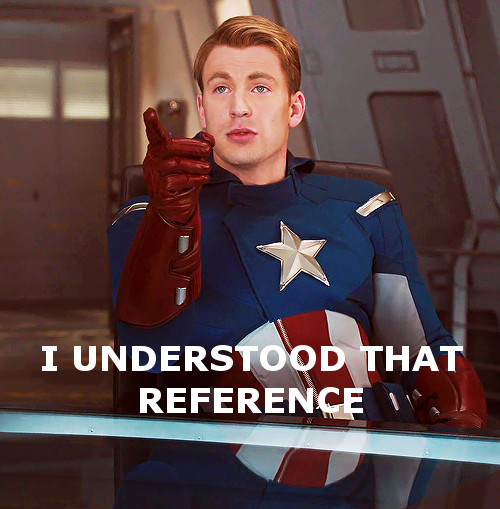
B) References. There are several points of contention here. How Han “got his name”, his blaster, the dice, and the cameo near the end of the film. Han getting his name from an Imperial drone when signing up for the Empire as a pilot was the most hamfisted and unneeded scene in the whole film. Why can’t Han have just had that name? Are we going to learn how the Skywalker name came to be in another spinoff in some other bland and useless way of storytelling too? It was just unneeded and way too obvious, robbing Han of the sprinkling of mystery surrounding him in the original trilogy. When Han was tossed a blaster from Woody Harrelson’s Beckett, the scene in itself wasn’t poorly constructed it just felt like an intentional wink and nod from Disney- stop it please, we don’t need to have an intimate knowledge of every item a classic character was known for using over thirty years ago. Speaking of which, the dice in this new era seem to have taken on far more meaning than they ever had in the original trilogy, at least in “The Last Jedi” it was used as a stand-in for Han’s memory when Luke returned to Leia for the first time in the new era of films. Here it feels like another intentional pulling of emotional strings, but it didn’t land here for me. It felt forced. The most forced scene in the entire film was that of Darth Maul’s cameo though. It’s nice to know that a fun character from the prequels actually isn’t dead, but it was how he was used that felt contrived. He doesn’t do anything in his moment onscreen, he is used for a reveal of “That character you know from the other movies”, and that is it. He even turns on his lightsaber threateningly in a Hologram, for no reason at all.

1441233752009

C) Predictability. This is the linchpin of the problem of this film. If you’re at all familiar with the first Star Wars movie then you’ll likely be able to predict a lot of the plot points of this film, the rest of the film’s predictability lies in age old movie tropes any well viewed audience member should be able to spot a mile away. Though admittedly reprocessing tropes from classic era Hollywood is an old Star Wars trait at this point. However, when approached with with a paint-by-numbers strategy Star Wars feels overly formulaic to the point of absurdism. Corellia (Han’s homeworld), The Kessel run, Han shooting first, Chewie ripping off an unlucky henchmen’s arms- every possible connective tissue from “A New Hope” is mined here with excruciating familiarity. What I loved about “Rogue One” was that the film very much lived in the world of the original trilogy and while it too had familiar aspects and characters littering it’s pages there was also a new exploratory sensation about it. The film added more mystery than it explained away. What happened to Jedha ages ago? There are only decayed Jedi monoliths carved into massive rock formations to hint at its past. Was Chirrut Imwe (Donnie Yen) force sensitive? Or just an extremely skilled fighter that believed deeply in the old Jedi religion? What was his connection to Baze Malbus (Wen Jiang) and how did they end up together on Jedha? I’m okay with not knowing the answers to those questions- in fact I’d prefer to not know those answers. The only part of “Solo” that was a legitimate surprise was that the earlier threats of the film, “Enfys nest” the marauders of the train heist from the second act, were actually a band of rebel children. This reveal only served to deliver another cringy wink and nod to the audience as Han decides to help them out in the end. They offer a place among their ranks in thanks but he declines, to which the tiny space pirate suggests “Maybe someday you’ll join a… rebellion” Okay it wasn’t exactly that, but the line was essentially that.

“Solo: a Star Wars Story” is the first major bump in the road of the new Disney era of Star Wars films. It has a few redeemable factors for sure, and the crew involved seems to have given it their all, but this film is more of a product than a story that needed to be told in a galaxy far far away…

Final Score: 2 smugglers, 1 falcon, and dozens of references…

film

Old School Review: “The Battleship Potemkin” (1925)

Written by Nina Agadzhanova and directed by Sergei M. Eisenstein “The Battleship Potemkin” is about a mutiny aboard the Russian battleship during the height of the Russian Revolution of 1905. It is also the first silent film I have reviewed on the blog thus far. This film is so infamous by this point that there is little I can add to the conversation other than regurgitating the film’s numerous technical achievements that so many others have touched upon. If you haven’t given the film a watch before and you’re invested in learning about the history of cinema then I encourage a viewing- especially since it’s only a brisk hour and fourteen minutes long. Otherwise most modern audiences will bore with the lack of dialogue and color, which can edge out one’s attention span, even I had to stay focused during my own viewing.

59cd211f15e9f96aa51f5725

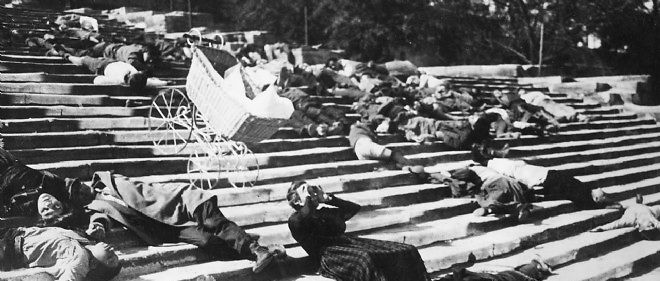
The film begins with the Russian ship returning home through the Black Sea from the recent war with Japan. The crew inspect the meat to be used that day and stir the captains and officers to complain of its quality. The ship’s doctor is sought to inspect it and when the camera gets a closer inspection to show the meat squirming with maggots he labels the meat satisfactory. Mutinous boiling rage fills the crew and they refuse to eat. This act of defiance comes to a head as the captain and officers round up the crew asking who is dissatisfied with the food, when a portion stand their ground they are ordered to be shot dead. Vakulinchuk, the voice of the ship’s imminent revolution, shouts above the clamor as the officers raise their guns “Brothers! Who are you shooting at?” and thus the raucous mutiny begins. After the crew is victorious the battleship heads to the port of Odessa where the locals have heard of the uprising and feel connected to the hardships of the sailors as the lower classes of society were engaged in revolutionary war. This prompts a swift damnation by the Czar’s elite guard as they march down the steps of Odessa shooting into the crowd creating one of early film’s most infamous scenes.

94d5786f-9085-46b1-95fb-8a97ce1be329

After this the crew aboard the Potemkin engage in debate over what to do with the supportive citizenry. Eventually they decide to help and target several locations of importance to the Czar’s government and fire away. This calls the attention of a nearby fleet of unknown allegiance and the remainder of the film is brilliantly played for anxiety with the score and inter-cutting of scenes of preparation for battle on the Potemkin as they go to meet the fleet. In the end the Potemkin glides through the approaching ships’ guard unscathed as they realize that they too are revolutionaries in arms. In doing some light research on the film’s history and how it helped to shape cinema nearly a century ago I read Roger Ebert’s 1998 review and he was right. I had already seen the parody of the massacre on the Odessa Steps years before (ie The Untouchables) seeing the source material. In fact, I will post a link below to his review of the film, which is far more in depth and personal of a review than what I have experienced with Potemkin.

cuirasse-potemkine-2929936-jpg_2563697_660x281

What is most impressive about the film in my opinion is the use of space in the film. Granted this may have simply been a side effect from having masses of people represent groups and ideals over individualized ‘characters’, but its still years ahead of its time and is even today a bit of a wonder as to how they accomplished this in 1925. This paired with the sheer choreography of hundreds of extras milling about the Odessa Steps and aboard the Potemkin makes for good eye-catching movement. Especially aboard the Potemkin, where the sailors can mill above and below where the main action is focalized- the staging makes for layered movement and gives the impression that the warship is gigantic in scope requiring a village of people for upkeep. The score was also incredibly important here, as the only sound in the film it helps to engage the viewer in the intended feelings of the characters onscreen. The brash and overbearing clash of orchestral audio waves crash as the Czar’s men advance with their rifles drawn, the inherent sadness and grief at the useless killing is portrayed in weeping stringed symphonies, and the finale assuages the audience’s anxieties with triumphant and victorious horns. Altogether “The Battleship Potemkin” is an important piece of cinema’s history while the film’s history itself is also quite fascinating given how many governments across the globe banned it fearing Potemkin‘s call to arms aimed at the masses. If you’re at all invested in cinema’s history, this is one you should see.

Final Score: a Mutiny and a Slaughter

Roger Ebert’s 1998 review of “The Battleship Potemkin”:

https://www.rogerebert.com/reviews/great-movie-the-battleship-potemkin-1925

film

Review: Avengers 3 Infinity War

*WARNING* This review will be full of spoilers, you have been warned!

Written by Christopher Markus and Stephen McFeely and directed by Anthony and Joe Russo, “Avengers: Infinity War” is the third superhero event film under the Marvel banner and the culmination of ten years of interconnected storytelling across all eighteen previous films. If you’ve been following these Marvel movies and are up to date then you will gleam the most out of the two and a half hour epic that is Infinity War. However if, by some chance, you’re just now considering a Marvel movie marathon and are curious as to which movies are most necessary for this latest Avengers movie, I believe about half of them are required viewing (Iron Man, Captain America: The First Avenger, Captain America: Civil War, The Avengers, Avengers 2: Age of Ultron, Guardians of the Galaxy Vol 1, Dr. Strange, Thor: Ragnarok, and Black Panther). The rest help to build upon the structure, and character development, of the cinematic universe, but that list will get you mostly acquainted with what’s going on.

Loki_041018-1.png

So, we’re finally here. After hearing about and seeing several of the infinity stones throughout these films, and with a couple cameos from the mad titan himself, does the film live up to the monumental expectations that Marvel Studios has built? Yes. I can answer that wholeheartedly with a resounding yes. Infinity War is a monumental feat of crossover film-making and it makes the once grandiose events of the first Avengers seem minuscule in comparison. The film follows the wake of destruction left by Thanos and his black order as they seek out the six infinity stones and crisscross the cosmos to implement the will of the mad titan. The opening scene perfectly showcases who Thanos is and why we should be afraid for the fate of our superheroes. After laying waste to Thor and the Asgardian refugees’ ship Thanos quickly bests the Hulk in a fistfight, takes the Tesseract from Loki before killing him, and completely destroys their ship leaving Thor to drift unconsciously through space. Heimdall was able to send the Hulk off to Earth before being murdered by the Black Order and as the incredible hero smashes through Dr. Strange’s staircase in New York City, Bruce Banner comes with a dire warning, “Thanos is coming..”

Empire-Avengers-Infinity-War-1

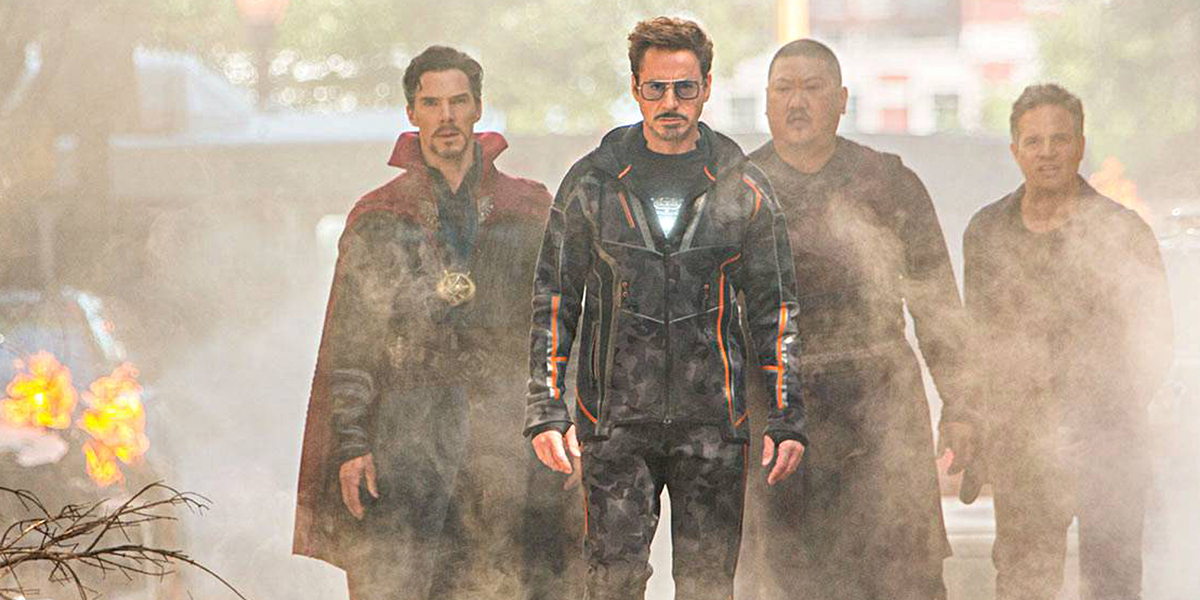
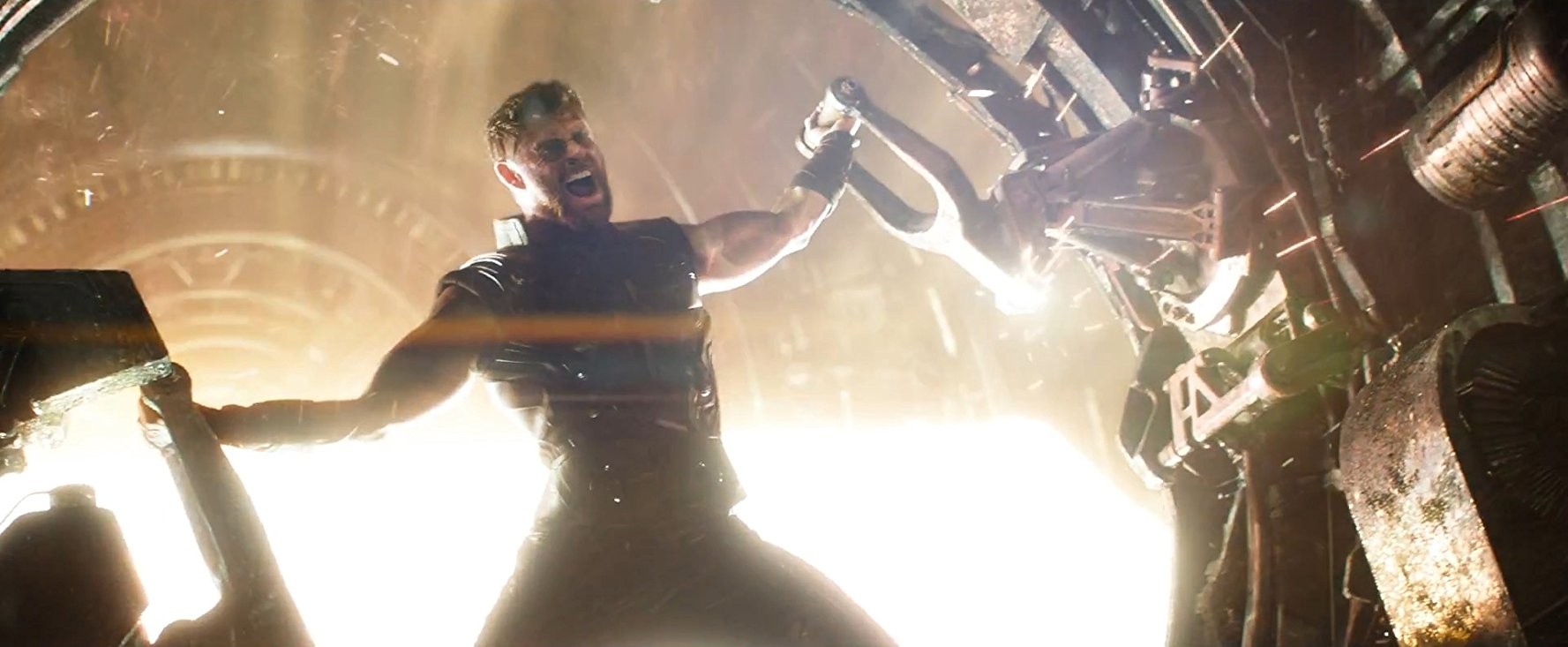
Dr. Strange quickly grasps the magnitude of the problem at hand as he grabs Tony Stark from a morning run with Pepper Potts, but it isn’t long before Thanos Black Order arrive to make a power grab for the Time stone in the doctor’s possesion. Spider-Man also gets in the mix and we’re off to the races! The movie moves at break neck speeds jumping across space and back to service all of the various storylines in play but the Russo brothers have outdone themselves with this installment as everything flows naturally with the needs of the story. Now I won’t go beat by beat and describe the whole movie, but instead give a general sense of the scale and the threat that comes with Thanos seeking to wield his infinity gauntlet. Not to mention how the movie cleverly utilized it’s massive cast by breaking the characters off into various factions in different locations to best suit the needs of the story. For example, the Guardians of the Galaxy bump into Thor when responding to their distress signal and then separate into two teams, one consisting of Thor, Rocket, and Groot in order to seek out a “Thanos killing weapon” while the rest head to ‘Knowhere’ from their first movie as it’s the last known location of the reality stone. Iron Man and Spider-Man hitch a ride on the ship that the Black Order arrived in to save Dr. Strange from Ebony Maw on his way to Titan, while Captain America, Falcon, and Black Widow stave off an attack on Vision and the Scarlet Witch thanks to a heads up by Banner and eventually head to Wakanda as a last stand to keep Vision’s Mind stone in his head and not on the gauntlet of Thanos.

thor_in_infinity_war

The central theme of the movie is that, when pressed by Thanos and his cosmic conquering, will you trade one life for another? Several characters have this grueling predicament pushed on them, some make choices out of love, others for the fate of the universe, but ultimately they fail when crossing that line. The moral center of the MCU, Steve Rogers (aka Captain America), never falters in his moral code. Several times throughout the movie he reiterates to others that, “We don’t trade lives”. He discards the math of the scenario in giving a life to save millions, nay billions. He saves lives, he doesn’t play that game. That right there, might be the absolute best aspect of this film. All of the characters are true to their nature as established in the previous films. There is a palpable consistency to their actions and reasoning. The Guardians all feel like themselves, still making jokes and acting on impulse. Black Panther and Captain America leap into battle first and have unwavering foundations. Thor feels the most evolved since the ramifications of ‘Ragnarok’ changed the game for his films and overall nature, a kingly warrior burdened with grief, yet still able to convey humor as a fish-out-of-water situation with the Guardians. Consistency paired with well thought out plot-points and a very clever villain, possibly the best the MCU has seen yet, add up to one hell of a Marvel movie.

Avengers-Infinity-War-Empire-05

With an ending as shocking as it is, I- and many other millions, cannot wait to see how these characters rebound and ultimately save the day. This is most definitely a part one, and with only two other films between now and (the still untitled) Avengers 4 that take place before the events of this movie, we’ll have to wait a year and see how this all unfolds. I cannot praise this movie enough, it was far more emotionally mature and full of dread than I expected. There were significant deaths, high stakes and excellent action, and on top of that the film still managed to be really funny at times. They did it. They really did it. The next challenge is to outdo themselves next year, which I have to say, is a tall order. I have faith in the Russo brothers though, their movies in the MCU have been some of the best entries in the superhero genre as a whole. Now all we have to do… is wait.

Avengers-Infinity-War-Gamora-Walks-With-Thanos


Final Score: Infinite Avengers

THE CAST:
Robert Downey Jr. as Tony Stark/Iron Man

Chris Hemsworth as Thor

Mark Ruffalo as Bruce Banner/Hulk

Chris Evans as Steve Rogers/Captain America

Scarlett Johansson as Natasha Romanoff/Black Widow

Don Cheadle as James Rhodes/War Machine

Benedict Cumberbatch as Doctor Strange

Tom Holland (II) as Peter Parker/Spider-Man

Chadwick Boseman as T’Challa/Black Panther

Zoe Saldana as Gamora

Karen Gillan as Nebula

Tom Hiddleston as Loki

Paul Bettany as Vision

Elizabeth Olsen as Wanda Maximoff/Scarlet Witch

Anthony Mackie as Sam Wilson/Falcon

Sebastian Stan as Bucky Barnes/Winter Soldier

Idris Elba as Heimdall

Danai Gurira as Okoye

Benedict Wong as Wong

Pom Klementieff as Mantis

Dave Bautista as Drax

Vin Diesel as Groot

Bradley Cooper as Rocket

Gwyneth Paltrow as Pepper Potts

Benicio Del Toro as The Collector

Josh Brolin as Thanos

Chris Pratt as Peter Quill/Star-Lord

William Hurt as Secretary of State Thaddeus Ross

Letitia Wright as Shuri

Peter Dinklage as Eitri

Samuel L. Jackson as Nick Fury

Cobie Smulders as Maria Hill

and Ross Marquand as Red Skull

film

Review: Super Troopers 2

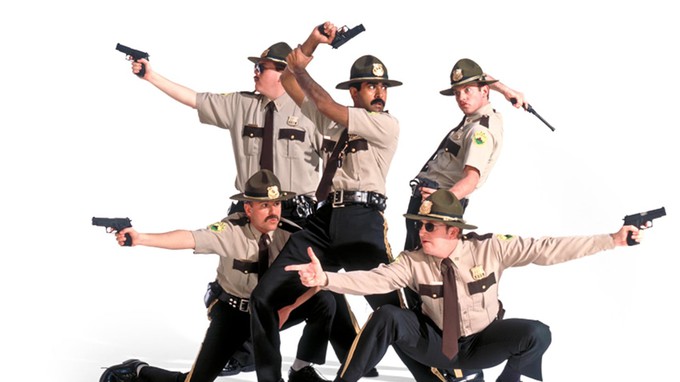
Written by Broken Lizard (Jay Chandrasekhar, Kevin Heffernan, Steve Lemme, Paul Soter, and Erik Stolhanske) and directed by Jay Chandrasekhar, “Super Troopers 2” is the cop comedy sequel sixteen years in the making. Meow I, like a lot of fans of the original film, found “Super Troopers” after it had hit the video market when I was younger. The slapstick humor, ridiculous prank nature, and general sense of a bunch of friends doing whatever they could just to make each other laugh- it connected with me and my friends. This material worked for us, and it still does. So I’m more than happy to say that this sequel still had what it takes to produce instinctual and immediate laughter from us. This was an event film for us, and it was momentous fun!

chandrasekhar-super-trooper-tease_large

Which was why I found the majority of reviews floating around the internet to be a surprising rejection of the film. Maybe the world is just too different of a place for a movie like this? A lot has happened since 2002 after all. Personally, I reject that notion. It’s more likely that this style of comedy is a bit more niche than it used to be, but hell, I’m okay with that. Screwball comedies and slapstick oddball humor can work for me in the right context- and it works splendidly here in “Super Troopers 2”. The Broken Lizard team played their hand exactly right in my mind. They cleverly played into some of the favorite old bits and jokes, but each with it’s own new spin- never simply regurgitating the same old thing. The plot itself played into some fun new territory, both figuratively and literally.

b5739df7d9894c47bbeb33cc0cb261c1_d5d119559bdc4a7bbf172c2e93957497_header

After being demoted due to the events of the first film to local street cops, and then fired from those jobs because of an incident involving Fred Savage, the five former state troopers work various jobs from construction to logging. Shortly after meeting up with the various members of the force they’re directed to an abandoned building by their old friend Captain O’Hagan (Brian Cox) for a supposed fishing trip in Canada. Once there O’Hagan reveals that the fishing trip was a ploy to get them together across the border. Their real purpose in Canada, as revealed by Governor Jessman (Lynda Carter), is to help the United States government transition the area over to US rules and regulations as the border was discovered to be incorrect after looking into the history of the boundary lines. Thus Arcot ‘Thorny’ Ramathorn (Jay Chandrasekhar), MacIntyre ‘Mac’ Womack (Steve Lemme), Robert ‘Rabbit’ Roto (Erik Stolhanske), Jeff Foster (Paul Soter), and Rod Farva (Kevin Heffernan) all don fresh uniforms and begin helping in the transition efforts.

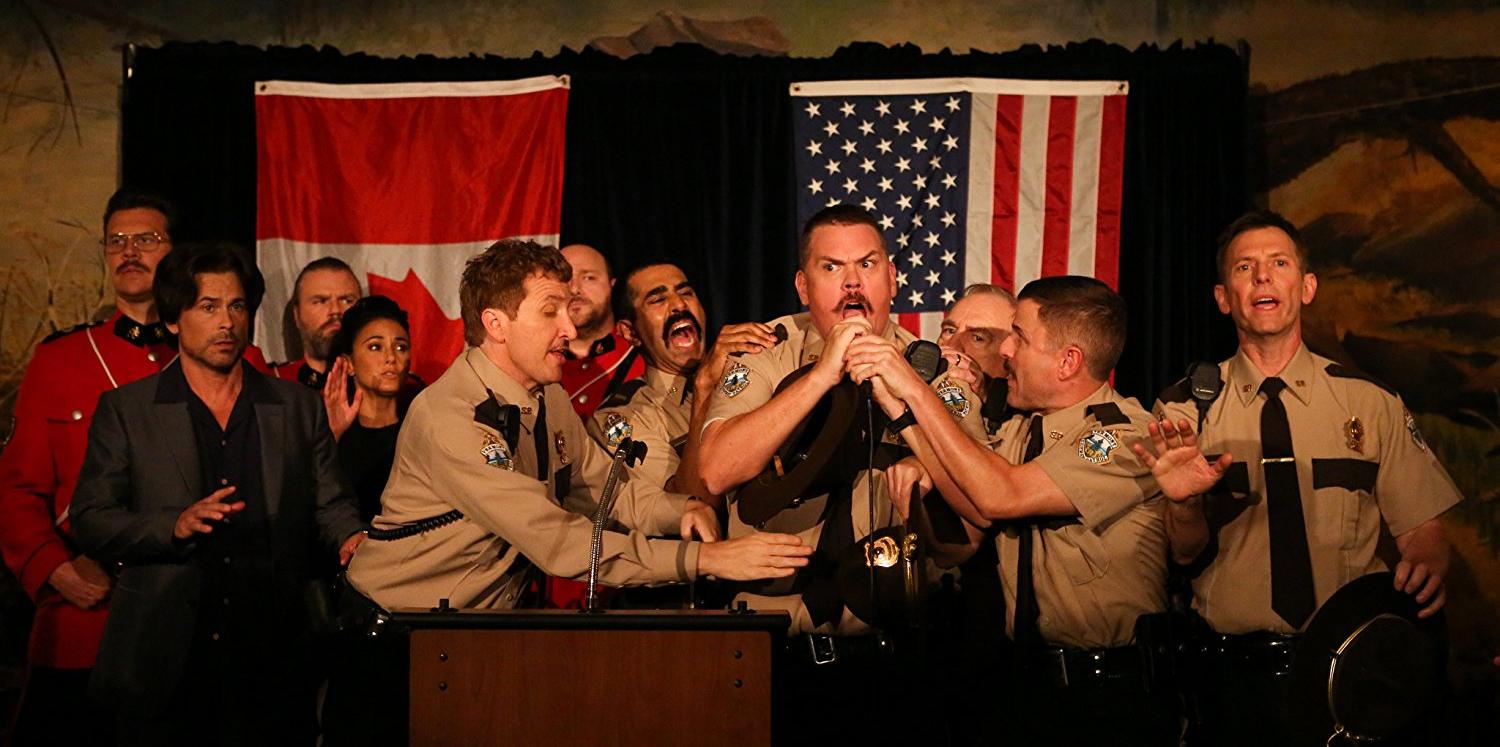
The troupe of troopers go to a town hall where they meet Guy LeFranc (Rob Lowe), the mayor of the town and former Hockey player, Genevieve Aubois (Emmanuelle Chriqui) a French/Canadian cultural attaché focused on relations with the U.S. through the transition, and three Canadian Mounties in Podien (Hayes MacArthur) Archambault (Will Sasso) and Bellefuille (Tyler Labine) that will assist them before heading north to a different outpost. From there the gang gets into all kinds of debauchery, mischief, and mystery including outrunning a live bear, taste testing an assortment of drugs, and impersonating Mounties. This is a sequel that not only lived up to my expectations, but surpassed them several times. Meow get out to the theater and give it a watch! It might be your kind of comedy too!

Final Score:  5 Troopers and 10 liters of cola!


film

Old School Review: Pather Panchali “Song of the Road” (Apu trilogy 1/3) (1955)

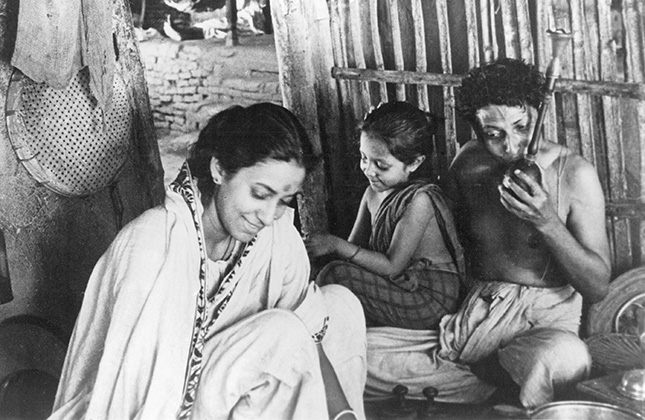
Written and directed by world renown Indian filmmaker Satyajit Ray, “Pather Panchali” is his first film and the initial story in the celebrated ‘Apu Trilogy’. I came upon “Pather Panchali” and the Apu trilogy after hearing that these films are prerequisites for Werner Herzog’s classes on film. If they’re held in such high esteem by one of the most prominent filmmakers over the last half century- well, that’s good enough for me. “Pather Panchali” is first and foremost Apu’s (Subir Banerji) story, it is of his beginnings and of the people and places that informed his childhood. We begin, however, with the young Durga (Runki Banerji), Apu’s older sister, traipsing about the local garden stealing fruits for herself and for her mischievous ‘auntie’ Indir Thakrun (Chunibala Devi). The elderly Indir lives with Durga and Apu’s family in their ancestral home in bengal, India. We see Durga’s mother Sarbojaya (Karuna Banerjee), pregnant with Apu, overhear other women from the village gossip and complain about Durga and her family as thieves- and poor thieves at that. Money is a constant anxiety for the family then as it is now, Sabojaya’s suffering has only begun though, as she is the foundation of the family and who keeps everyone together throughout the film. After Apu is born in the night, and his father Harihar (Kanu Banerji) proudly holds him, we fast forward several years.

patherpanchali1955.86373_092720130319

The film is a mirror held up to the human experience, it reflects daily life in it’s cyclical rhythms, humble and lyrical in nature. We see life through the young Apu and pre-teen Durga’s (Umas Das Gupta) eyes, delighting in the small treasures of waiting for the sweets merchant and running through a field to see a train for the first time. We also see the quiet and lonely moments, one of great sadness in particular is of Indir Thakrun alone on the stoop at night in the rain as she sings, lamenting her dead family and friends, essentially coming to terms with the end of her life and wishing to die. Her unceremonious death later is at once horrifying as she is found by Apu and Durga, but also it has a sense of relief and release about it.

Pather-Panchali-1955-01-21-49

One of the larger arcs across the story is that of Harihar, the dreamer. He envisions great fortune from his writings, eventually leaving the home to obtain consistent work and pay through his writing and practice as a Brahman priest. With Harihar’s head in the clouds and scraping to get by the duties of day-to-day life and structure for Apu and Durga fall to Sabojaya, and thus we spend a lot of time with her through Apu and Durga’s experiences. We witness her shame at the accusation of Durga stealing from another young girl, we see her resentment of having to share her home with Indir, who never listens to the rules and undermines her authority with the children. She has a lot to deal with. Mostly though we follow Apu and Durga simply experiencing life through childish awe and ambition. It’s a film that asks a lot of it’s audience, but it gives a window into another world removed from technology and modernity.

pp6

After spending too much time out in the rain after a spat with Apu over trivial toys Durga becomes ill and bedridden. She worsens after a visit by the doctor and during a raucous storm in the night, she eventually passes away. Harihar returns home shortly after the destructive storm has wrecked their home to find Sabojaya distraught and broken. Once he discovers what has happened there is a feeling of helplessness achieved in the film that stayed with me well after the credits rolled. Once they salvage what they can from the rubble, the three take a caravan to Benares (Now known as Varanasi, the spiritual capitol of India) to start anew. Sometimes you have to accept change as it happens and evolve with it. As a Brahman priest, Harihar could provide for his family there as many make pilgrimages to wash in the cleansing waters of the Ganges river.

rawImage

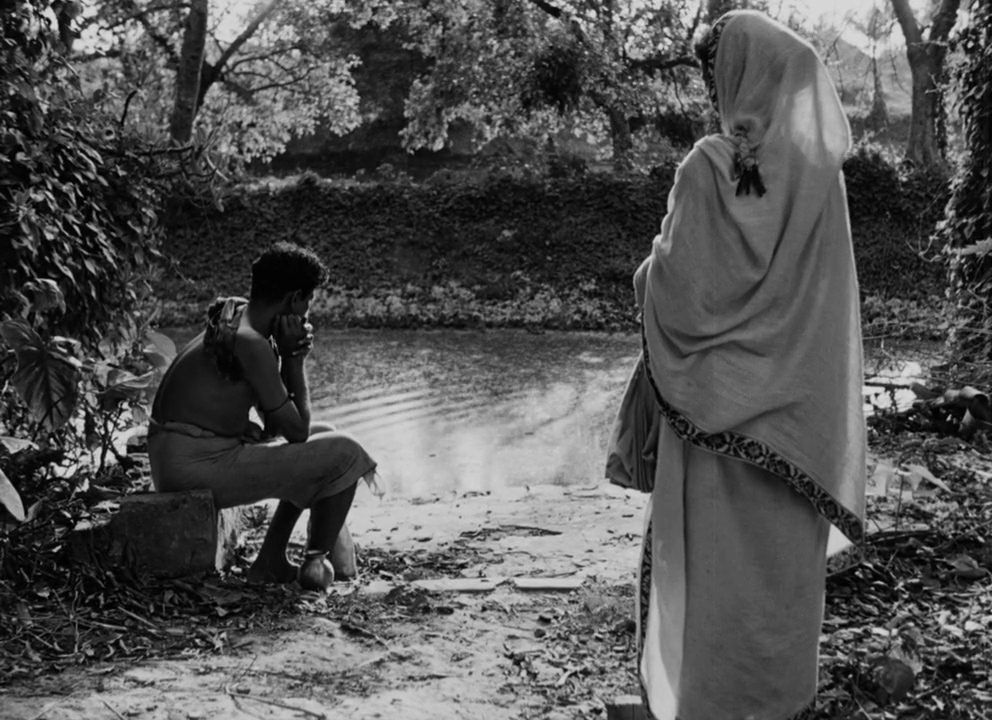
The film has been derided as slow, unfinished, unpolished, and raw. I would argue, as many have before me, that that rawness is what makes it so powerful. Satyajit Ray had never directed performances or blocked scenes on a film before this. Subrata Mitra, the cinematographer, had never previously shot a scene, or framed movement before. Even the (now legendary) sitarist Ravi Shankar, had never composed a film’s score before either. How they collected such natural and seemingly untouched performances from children will forever be amazing to me. “Pather Panchali” is a uniquely beautiful film because of how closely it reflects our own lives even though the setting of the film is near a century ago in a small village in Bengal, India. If time and place can become inconsequential to how relatable a story can be, then what you’ve got, dear reader, is something truly miraculous in cinematic form.

Though, admittedly this is an arthouse film. That may be a scary and insurmountable term for some, and a well known comfort for others, but if you have a love for cinema and storytelling you owe it to yourself to see this film and others like it at some point. This form of film isn’t necessarily the most profitable and consumable for the masses, and not everyone will sit through a subtitled black and white foreign film, but I’d suggest giving it your time if you love cinema. It has earned that much of you.

Final Score: 1 small family, 1 ancestral family home, and a lot of boiled milk

*Below is a video on the work the Academy did with the Criterion Collection to save the film stock of the Apu trilogy after a fire burned down the warehouse in London. Give it a watch to see the work and diligence put into restoring this piece of film history.


film

Review: Rampage!

Written by Ryan Engle, Carlton Cuse, Ryan Condal, and Adam Sztykiel and directed by Brad Peyton, “Rampage!” is an adaption of the arcade video game of the same name in which three giant monsters wreck a bunch of buildings. This movie is a giant monster B-movie with a budget that is as stupid as it’s concept. By now you’re probably sure whether or not this type of movie will work for you. While I enjoyed some of the action in the later half of the movie, most of it is mired by incredibly cringe-worthy dialogue and gigantic leaps in logic when it comes to the main characters’ problem solving abilities. Well, let’s dive in shall we?

https_%2F%2Fblogs-images.forbes.com%2Fscottmendelson%2Ffiles%2F2018%2F04%2Frampage-international-poster-4-1200x674.jpg

The only relationship this story is concerned with is that of primatologist Davis Okoye (Dwayne, The Rock, Johnson) and George, a large albino Gorilla at the Santa Monica Zoo. So, it’s good that this relationship actually works in the movie because almost everything else is either acted far too cartoonishly, or with a transformers level of ignorance. However, the third act is a good time- even if there is absolutely no regard for human life whatsoever. So the (very) basic premise is that an evil company, whose generic name you’ll never remember anyways, was funding science experiments on a space station that blew up due to the volatility of said experiments (their purpose? who knows) which resulted in three vials cascading down to North America and landing in Wyoming, Florida, and Southern California. These vials mutated the animals that interacted with them first and therefore we have three giant mutated animals running around causing all sorts of havoc. As you can imagine, one of those animals happens to be George the albino gorilla. There’s also a wolf, and an alligator. Eventually the Cartoonishly evil villains in Chicago, Malin Akerman and Jake Lacy as the Wyden siblings, decide to activate a low frequency beacon to draw the beasts to downtown Chicago so the military can kill them and they can salvage some of the mutated DNA for future evil-doings. Davis Okoye travels with the unnamed government agency that took George for study, he also brings along Dr. Kate Caldwell (Naomie Harris), a genetic editing scientist that used to work for the evil company. There’s also a blink-and-you’ll-miss-it cameo by Joe Manganiello as a gruff military badass who’s only there to be eaten by a giant wolf. What a waste.

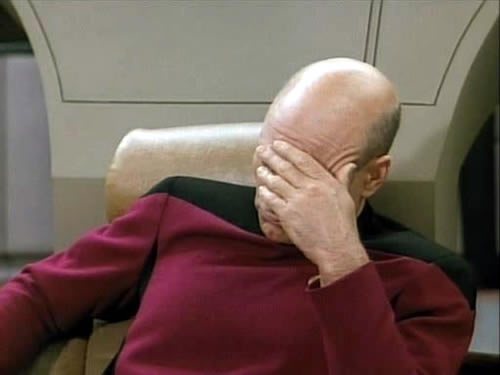
12-rampage.w710.h473 I have to admit, Jeffrey Dean Morgan seems to have been having a great time portraying Harvey Russell, the agent leading the unnamed government agency. His southern drawl is comically amusing throughout his time onscreen and he seems to be the most self aware character in acknowledging this very, very, dumb movie he’s in. However, dumb can be fun, and if that’s what you’re looking for, you’ll get it in “Rampage!” One such example that caught me off guard completely was when the chaos is unfolding in downtown Chicago (a city I’ve lived in) and the military is picking up movement in the Chicago river as the leading personnel seriously says, “That’s odd, we don’t have any submarines in the area..” I mean, really? You don’t say? No submarines in Lake Michigan huh? Well isn’t that just the oddest thi- OH MY GAWD IT’S A GIANT CROCODILE!
picard_ashamed

If the film wanted to add even an iota of depth to the story they could have chosen to actually follow the source material’s only nugget of storytelling by having the origins of the three monsters be humans that are mutated into the destructive threats instead of animals. That might be asking too much of this movie though. “Rampage!” can be fun at times, but it’s also incredibly dumb, the script is one of the worst I’ve seen in years. There’s lots of brazen assumptions, low brow humor, and aggressively stupid character decisions that go hand-in-hand with their cardboard thin characterization. However, if you’re willing to completely shut your brain off for a big dumb monster movie, this might work for you.


Final Score: 1 Kong, 1 Zilla, & 1 Werewolf

film

Review: Isle of Dogs

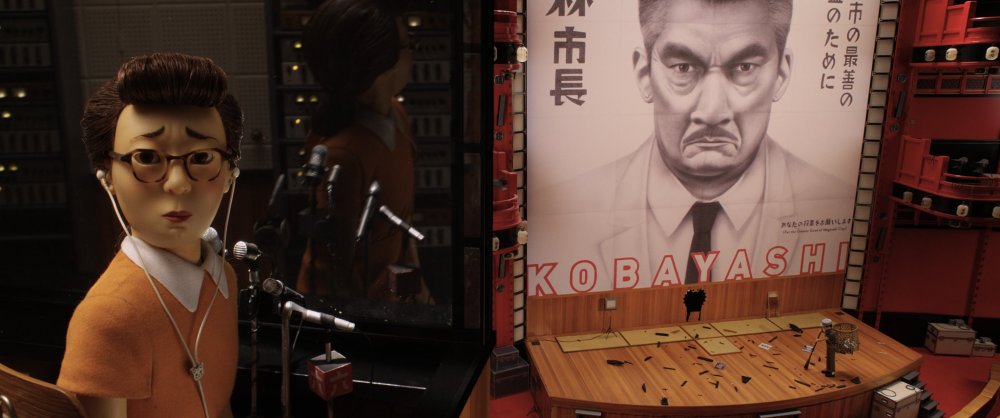
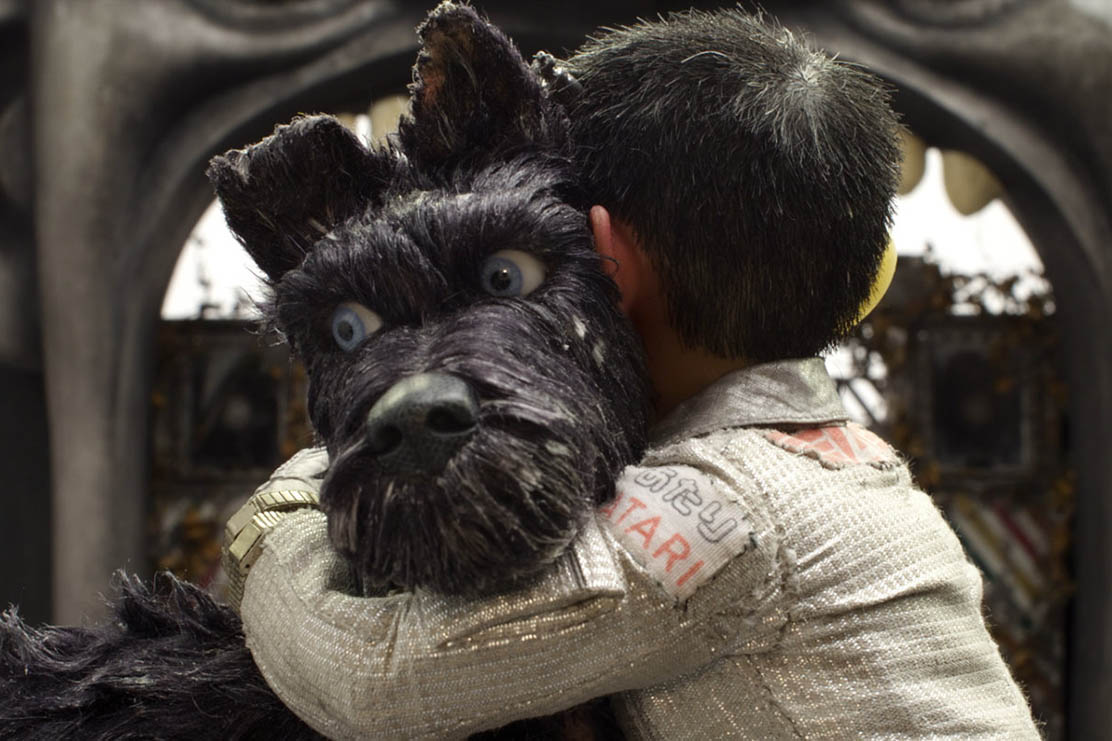
Written and directed by Wes Anderson, “Isle of Dogs” is a stop-motion animated film set in Megasaki City, a fictional Japanese city in the not so distant future, where a virus known as ‘Dog Flu‘ has devastated the pet populace and threatens to transfer to humans soon. In the face of this threat Mayor Kobayashi (Kunichi Nomura) declares an emergency order, exile all dogs to trash island. He begins with the public exile of his young nephew Atari’s (Koyu Rankin) dog/bodyguard Spots (Liev Schreiber). Six months later the decrepit isle is populated by every dog from Megasaki City and we focus on five particular pooches looking for food amongst the scraps, Chief (Bryan Cranston), Rex (Edward Norton), Duke (Jeff Goldblum), Boss (Bill Murray), and King (Bob Balaban). After a quick scrap over the available morsels with another gang of roving dogs they spot an incoming small plane that’s about to crash land. After they drag Atari from the wreckage and dub him, the little pilot, they figure out that he’s looking for his lost dog, Spots.

still_isle_of_dogs_copyright_2017_twentieth_century_fox-cropped

This little film was a joy to watch. I already have a proclivity towards stop-motion animation, so the film had already piqued my interest- but I really did enjoy the story of “Isle of Dogs” as well. At the heart of the film the story is about friendship and doing the right thing, but there were darker shades of conspiracy and a more realized threat for all of the four-legged companions than I was expecting. I won’t get into spoiler territory, but the film was more clever than I had expected and that was a nice surprise. The stellar voice cast cannot be ignored either as each dog had a major name behind their voice and their stylized performances, written for each celebrity, fit their larger than life personas which only added depth to their characterization. There’s also the visual treat of the film as a whole, the blocking and movement was tight and tactile while maintaining Anderson’s well worn Symmetry (with a capital S!) in all frames. This film might fall more on the niche side of his works than say “The Grand Budapest Hotel” but it won me over and I’ll definitely be adding it to my collection once the physical copy is released.


isle-of-dogs-cover

Now, to discuss the elephant in the room; the fact that Wes Anderson made a creative choice to have all human characters speak in their native tongues and deciding against subtitles. There are also translations through interpreters at events or machines that perform the same function. The untranslated Japanese speakers didn’t bother me in this film’s context, it felt more like a quirky choice that was an example of the difficulties with translation as a whole as used in the dogs versus humans, but yes this was clearly made for an English speaking audience. Personally, I’m of the mind that ‘cultural appropriation’ and those who like to throw the term about wildly, aren’t nearly as bad or mean-spirited as people might immediately assume. Obviously context matters here, ‘blackface‘ for example was not okay and we all understand that. However, today’s outrage culture seems poised to sniff out any little tidbit of possible offense and use it to lambaste those who might simply be fascinated by other cultures and their traditions. Just so long as the Japanese voice actors’ speech wasn’t derogatory or insensitive to the culture, which after doing some mild research- it seems to be a fairly innocent tactic, the filmmaker seemed invested in playing with a motif of Japanese culture while also attempting to do so respectfully.

isle-of-dogs-2018-008-radio-announcer-over-mayor-kobayashi-stage-clean-up

I just don’t understand the effort that goes into being that upset consistently. I don’t want to get too far into the weeds about this here as this is just a review for “Isle of Dogs”, but its relevant to the film. Injustice is important to seek and stamp out in society if possible, but if you’re so narrowly focused that you’re actively protesting a Wes Anderson film- well, there are more productive ways you could be helping society as it relates to injustice. As an example, I don’t get that incensed when I see a white person wearing dreads, however, I am upset by government agencies destroying the environment and further ruining the last patches of land and water left to our Native American peoples. Anyway, that’s the end of my miniature lecture.

Final Score: 5 guide dogs and 1 determined boy

*Below are two articles that further discuss the translations, and lack thereof in “Isle of Dogs”, and I encourage you to give them a read if you’re invested in the topic.

https://www.newyorker.com/culture/cultural-comment/what-isle-of-dogs-gets-right-about-japan

https://slate.com/culture/2018/04/what-its-like-to-watchisle-of-dogsas-a-japanese-speaker.html