film

Old School Review: Pather Panchali “Song of the Road” (Apu trilogy 1/3) (1955)

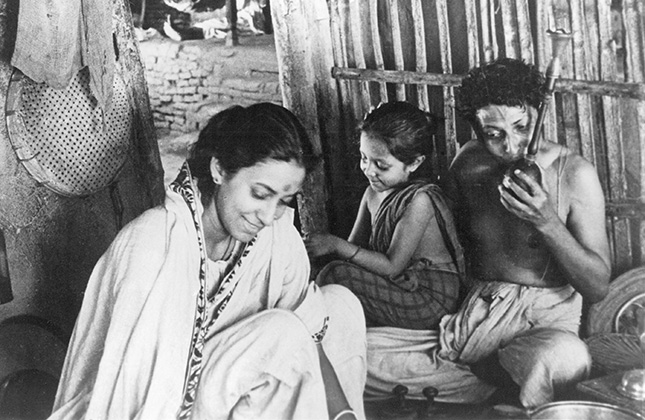
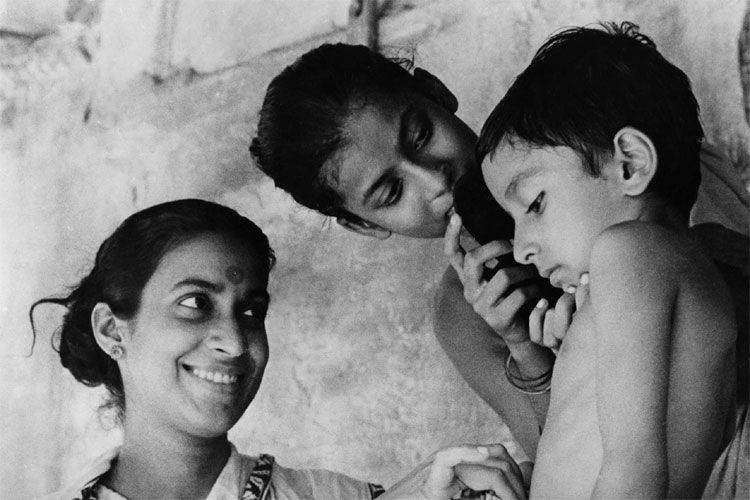
Written and directed by world renown Indian filmmaker Satyajit Ray, “Pather Panchali” is his first film and the initial story in the celebrated ‘Apu Trilogy’. I came upon “Pather Panchali” and the Apu trilogy after hearing that these films are prerequisites for Werner Herzog’s classes on film. If they’re held in such high esteem by one of the most prominent filmmakers over the last half century- well, that’s good enough for me. “Pather Panchali” is first and foremost Apu’s (Subir Banerji) story, it is of his beginnings and of the people and places that informed his childhood. We begin, however, with the young Durga (Runki Banerji), Apu’s older sister, traipsing about the local garden stealing fruits for herself and for her mischievous ‘auntie’ Indir Thakrun (Chunibala Devi). The elderly Indir lives with Durga and Apu’s family in their ancestral home in bengal, India. We see Durga’s mother Sarbojaya (Karuna Banerjee), pregnant with Apu, overhear other women from the village gossip and complain about Durga and her family as thieves- and poor thieves at that. Money is a constant anxiety for the family then as it is now, Sabojaya’s suffering has only begun though, as she is the foundation of the family and who keeps everyone together throughout the film. After Apu is born in the night, and his father Harihar (Kanu Banerji) proudly holds him, we fast forward several years.
patherpanchali1955.86373_092720130319

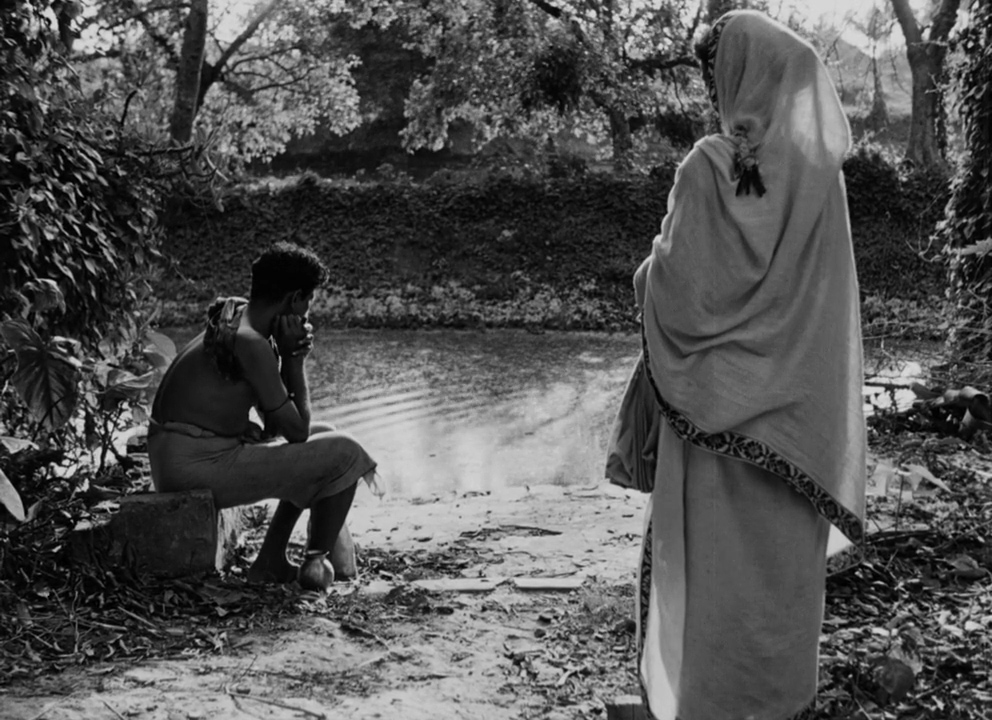
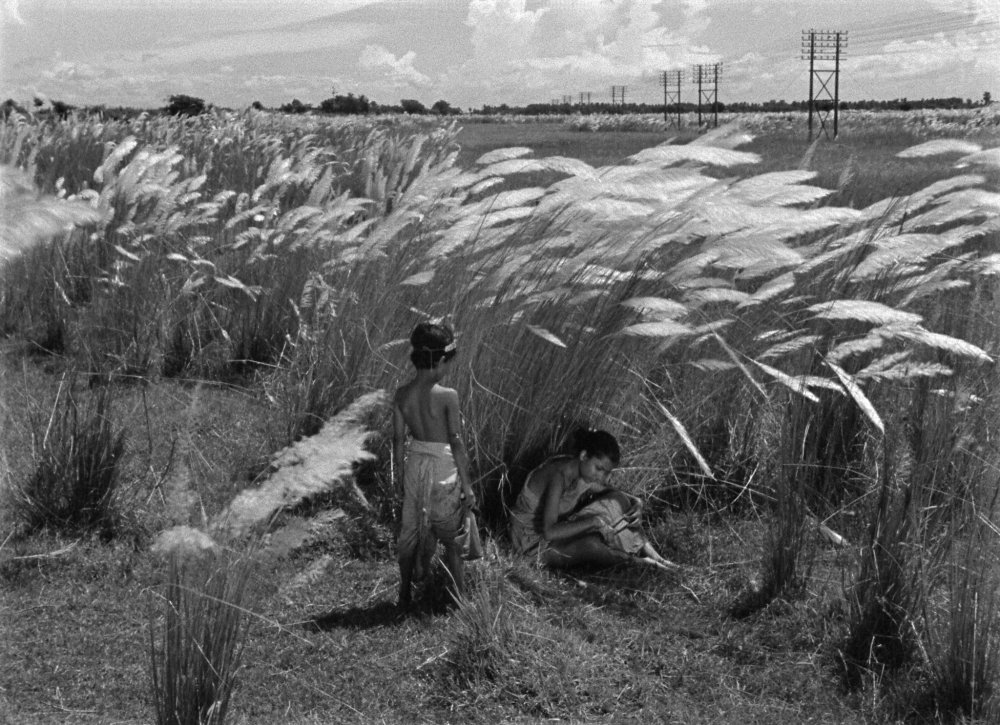
The film is a mirror held up to the human experience, it reflects daily life in it’s cyclical rhythms, humble and lyrical in nature. We see life through the young Apu and pre-teen Durga’s (Umas Das Gupta) eyes, delighting in the small treasures of waiting for the sweets merchant and running through a field to see a train for the first time. We also see the quiet and lonely moments, one of great sadness in particular is of Indir Thakrun alone on the stoop at night in the rain as she sings, lamenting her dead family and friends, essentially coming to terms with the end of her life and wishing to die. Her unceremonious death later is at once horrifying as she is found by Apu and Durga, but also it has a sense of relief and release about it.
Pather-Panchali-1955-01-21-49

One of the larger arcs across the story is that of Harihar, the dreamer. He envisions great fortune from his writings, eventually leaving the home to obtain consistent work and pay through his writing and practice as a Brahman priest. With Harihar’s head in the clouds and scraping to get by the duties of day-to-day life and structure for Apu and Durga fall to Sabojaya, and thus we spend a lot of time with her through Apu and Durga’s experiences. We witness her shame at the accusation of Durga stealing from another young girl, we see her resentment of having to share her home with Indir, who never listens to the rules and undermines her authority with the children. She has a lot to deal with. Mostly though we follow Apu and Durga simply experiencing life through childish awe and ambition. It’s a film that asks a lot of it’s audience, but it gives a window into another world removed from technology and modernity.
pp6

After spending too much time out in the rain after a spat with Apu over trivial toys Durga becomes ill and bedridden. She worsens after a visit by the doctor and during a raucous storm in the night, she eventually passes away. Harihar returns home shortly after the destructive storm has wrecked their home to find Sabojaya distraught and broken. Once he discovers what has happened there is a feeling of helplessness achieved in the film that stayed with me well after the credits rolled. Once they salvage what they can from the rubble, the three take a caravan to Benares (Now known as Varanasi, the spiritual capitol of India) to start anew. Sometimes you have to accept change as it happens and evolve with it. As a Brahman priest, Harihar could provide for his family there as many make pilgrimages to wash in the cleansing waters of the Ganges river.
rawImage

The film has been derided as slow, unfinished, unpolished, and raw. I would argue, as many have before me, that that rawness is what makes it so powerful. Satyajit Ray had never directed performances or blocked scenes on a film before this. Subrata Mitra, the cinematographer, had never previously shot a scene, or framed movement before. Even the (now legendary) sitarist Ravi Shankar, had never composed a film’s score before either. How they collected such natural and seemingly untouched performances from children will forever be amazing to me. “Pather Panchali” is a uniquely beautiful film because of how closely it reflects our own lives even though the setting of the film is near a century ago in a small village in Bengal, India. If time and place can become inconsequential to how relatable a story can be, then what you’ve got, dear reader, is something truly miraculous in cinematic form.

Though, admittedly this is an arthouse film. That may be a scary and insurmountable term for some, and a well known comfort for others, but if you have a love for cinema and storytelling you owe it to yourself to see this film and others like it at some point. This form of film isn’t necessarily the most profitable and consumable for the masses, and not everyone will sit through a subtitled black and white foreign film, but I’d suggest giving it your time if you love cinema. It has earned that much of you.

Final Score: 1 small family, 1 ancestral family home, and a lot of boiled milk

*Below is a video on the work the Academy did with the Criterion Collection to save the film stock of the Apu trilogy after a fire burned down the warehouse in London. Give it a watch to see the work and diligence put into restoring this piece of film history.


film

Old School Review: “Breathless” (1960)

Written by François Truffaut and directed by Jean-Luc Godard, “Breathless” is a classic French crime film that helped to form the New Wave style of films coming from French filmmakers at that time. The story centers on Michel Poiccard, (Jean-Paul Belmondo) a petty thief in Paris who frequently steals cars for joyrides and pickpockets cash from unsuspecting pedestrians. He reunites with an American girl, Patricia Franchini (Jean Seberg), who’s studying to become a journalist after he impulsively murders a police officer on one of his more casual grand theft autos in the countryside just outside of Paris. Most of the film is spent following these two in the streets of Paris, in cafes and hotels, almost always smoking while they discuss many aspects of life with whimsy through their opinions and fluttery definitions about everything from the opposite sexes to how one should drive while behind the wheel.

BREATHLESS-web2050

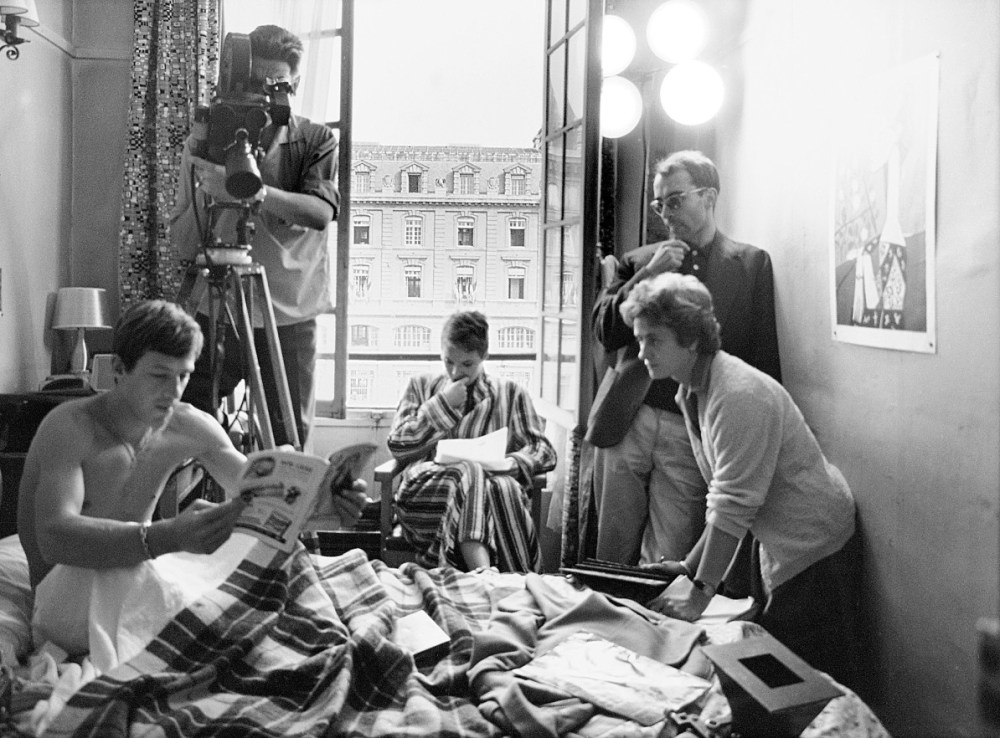
Now, admittedly, I wasn’t a gigantic fan of this film after giving it a watch, but I had to know what made it so renowned and gilded among cinephiles. Given the year the film was made I was surprised at the speed and abrupt use of jump-cuts in the film’s editing. However that didn’t seem enough to make it supposedly legendary, so I did some reading on the movie. The late 1950’s and early 1960’s in France were a rebellious era of filmmaking characterized by a coup of sorts against the established narrative form in French cinema. These new French filmmakers broke away from any sense of a studio system and shot their independent features on shoestring budgets, often without permission on locations, and usually focusing on characters that weren’t natural protagonists by the standard definitions. As for “Breathless” itself, filming took place anywhere between 15 minutes to 12 hours depending on what Godard had come up with that day. They filmed in Paris in stores and cafes mostly without being granted access in order to secure the spontaneous feel in the film that Godard was going for. There was a considerable amount of improvisation and Godard reportedly kept his journal of dialogue close and only shared what he believed to be necessary.

itemsfs_6194

In today’s world, the film may not seem all that special, but it did a lot to give independent filmmakers an origin, somebody had to be the first to get their shots without the permission from the gatekeepers, right? Indie film cred aside, the film may harbor some resentment from modern audiences for its characters’ opinions. I suspect that many American audiences today could be triggered by the subjects that the characters discuss and how they go about discussing them. To be fair, the perspective is from an entirely different culture and from a generation and a half ago. As we’re still very much embroiled in the #MeToo movement here in America, everything is still tender. Simply talking about sexuality and the roles of women and men in life and the workplace can be a careful tap-dance of attempting to recognize and listen to every person’s point of view, let alone expressing the viewpoints that this film does. The French culture approaches these topics in a fairly different manner, but especially so in the 1960’s, in a post war Paris, and given that the New Wave movement was focused on morally ambiguous characters to stand aside from the greater film structures of the time- so there’s a lot to dissect given all of the variables in play.

A-Bout-de-Souffle-bts

The film does have it’s place in celluloid history, but I wouldn’t say that its the most entertaining film out there. Which is fine, not every story works for every audience. I’d have to see more from the New Wave directors before making a final opinion on the select era and group of filmmakers’ work, but the making of this film was more interesting to me than the final product. Surprised by the international praise of the film, Jean-Luc Godard doesn’t regret making the film because they defied the power structures of the filmmaking process and he was glad that they had thrown all that aside and opened the process up. In the end, I’m glad I gave it a watch, another film can be checked off my list and my perspective widens because of it.

Final Score: 100 cigarettes and 50 cups of coffee

film

Old School Review: Akira Kurosawa’s “Yojimbo” (1961)

Spoilers will be included in this review. You have been warned.

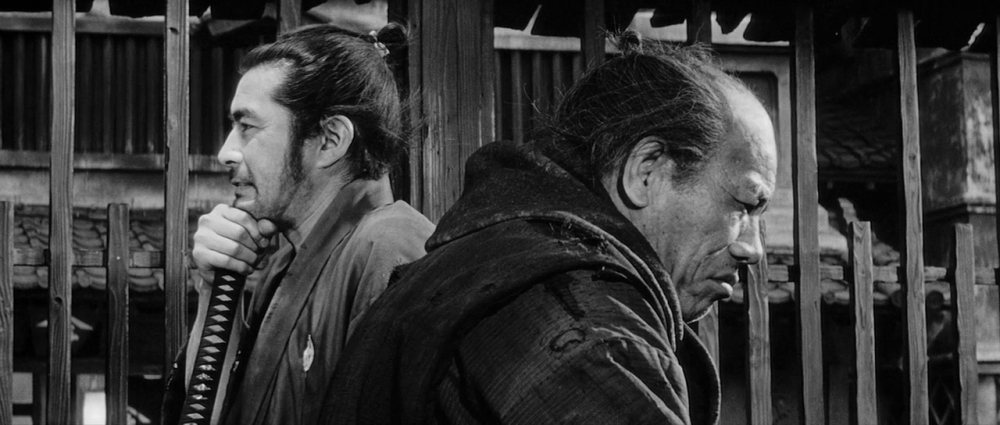
Written by Ryûzô Kikushima and Akira Kurosawa and directed by Kurosawa, “Yojimbo” is a Japanese Samurai film, set during the 1860’s, in which a lone Ronin (Toshiro Mifune) happens upon a small town that happens to be besieged by two warring clans with a blood feud. The Samurai then decides to play them against each other to free the town, and possibly make some money while doing so. As the opening credits scrawl by, our Ronin walks into frame as he wanders the countryside. He tosses a stick in the air when faced with a cross in the road, letting fate decide his path. He soon stumbles across a small farm in which he overhears an argument amongst a family. The son doesn’t want to work the hard but simple life of a silk farmer as his father before him and instead decides to join a gang as a hired warrior in a nearby town. The Samurai lets curiosity lead him and soon he’s sitting in a small tavern in that town ran by Gonji (Eijirō Tōno). The cantankerous old man lays out the situation for him and tells him he’s better off leaving town before everyone kills each other.

yojimbo22

Gonji reveals that Ushitora (Kyū Sazanka) and Seibei (Seizaburo Kawazu) are the heads of the two warring clans, though Ushitora used to be Seibei’s second in command until Seibei claimed that he’d eventually cede his land and power to his son Yoichiro (Hiroshi Tachikawa), a notoriously useless individual. Thus Ushitora broke away from Seibei and formed his own clan challenging the power structure of the town. Each patriarchal figure had made claims to power in the village, Seibei had the local silk merchant and mayor Tazaemon (Kamatari Fujiwara) in his pocket while Ushitora sought the local sake brewer, Tokuemon (Takashi Shimura), proclaiming him the new mayor instead. After listening to the current state of affairs in the town the Samurai decides that the whole town would be better off with both clans eradicated and begins to craft sly machinations between the two.

static1-squarespace

The Samurai then proves his violent worth by making a spectacle in the middle of town by killing three of Ushitora’s men and then aligning himself with Seibei. Seibei then decides that with the new Samurai on his side he must defeat Ushitora and his hired men that very day. When asked his name the Ronin happens to be looking out an open door and responds with Kuwabatake Sanjuro, the first name meaning Mulberry field (The same type of field he was looking at), and the surname being a wry definition of the thirtieth son, but he implies that it’s closer to a meaning of his age-though he admits he’s “..actually closer to forty”. After they agree on a price for his help in the coming battle Seibei goes to discuss logistics with his wife Orin (Isuzu Yamada), which Sanjuro secretly listens in on. Orin devises a plan to simply kill the Samurai once the fight is over so they don’t have to pay his high costs.

YOJIMBO

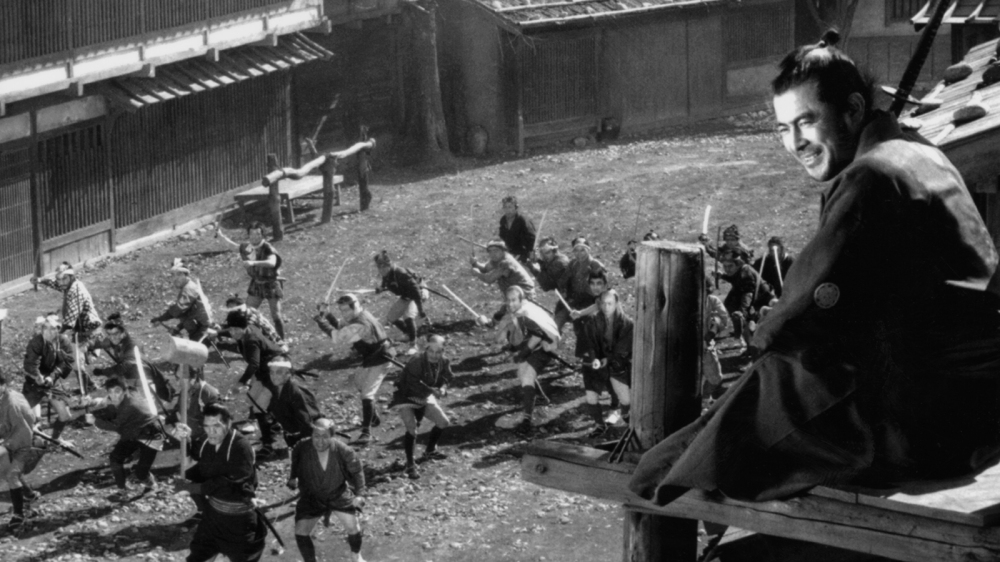
As both clans appear on the opposing sides of town, rabid and eager to end their feud in a bloodbath, Sanjuro walks across to Ushitora and announces that Seibei has offended him and that he declines the fight. Sanjuro then climbs the ramshackle tower in town to watch the two clans fight to the death with a gleeful smirk. Though before anyone can get the nerve to kill, a scout on a horse reels into town to warn that a government official is on his way to inspect the town and it’s wares of silk and sake. To the disappointment of Sanjuro everybody drops their swords and quickly rush to make the town appear as if everything is normal. The government official stays a grueling ten days until another government official is murdered a few towns away, forcing an early departure from the corrupted elite.

597id_78_022_w1600

Sanjuro overhears two drunken assassins talking too much at Gonji’s tavern shortly after this, revealing that it was Ushitora who hired them to commit the other official’s murder. Armed with this knowledge Sanjuro captures the killers and delivers them to Seibei for a price, after which he heads to Ushitora and tells him that it was Seibei’s men who captured the two. Ushitora, shocked by this reveal, pays off Sanjuro for the information and then orders the kidnapping of Seibei’s son Yoichiro. Things get out of hand quickly after this as Ushitora makes an offer for Seibei to retrieve his son in exchange for his two murderers, but instead he double-crosses Seibei by shooting the two killers before Seibei can reclaim his son. Seibei had expected this double-cross however and had preemptively kidnapped Ushitora’s claimed mayor Tokuemon’s prized prostitute, Nui (Yoko Tsukasa). Sanjuro later finds out that Nui isn’t truly a prostitute but a bargaining chip as her husband Kohei (Yoshio Tsuchiya) had owed a gambling debt to Tokuemon and couldn’t pay off his debts, so Tokuemon took Nui instead.

yojimbo_sake_spilling

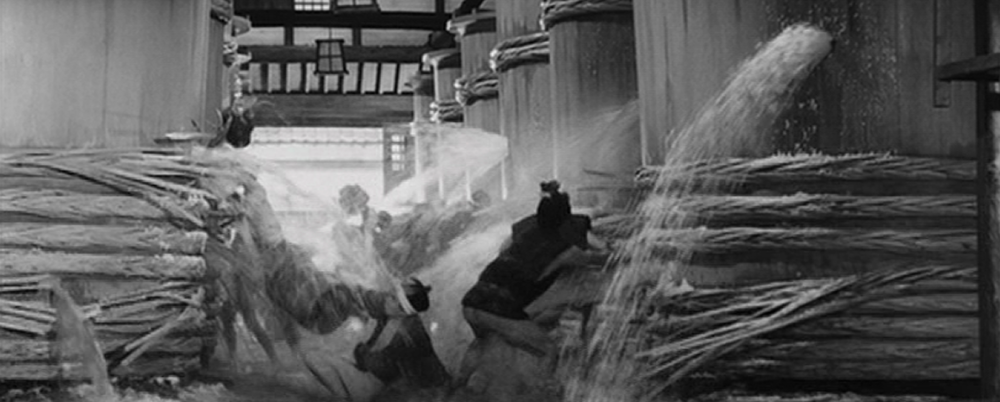
Sanjuro ponders this and eventually tricks Ushitora into revealing where Nui is kept and investigates with Ushitora’s younger, and far dumber, brother Inokichi (Daisuke Katō). Sanjuro quickly kills the guards, while distracting Inokichi, and then sends Nui, Kohei, and their child away into the night with the gold he received from both clans. He shows Inokichi the dead guards and sends him back to Ushitora to warn him of the attack and that Nui must have escaped or been captured back by Seibei’s men. This results in a fast escalation of violence and sabotage in the town. First Tazaemon’s silk stock is set ablaze, then Tokuemon’s sake barrels are destroyed as the town’s financial industry becomes ruined and unprofitable.

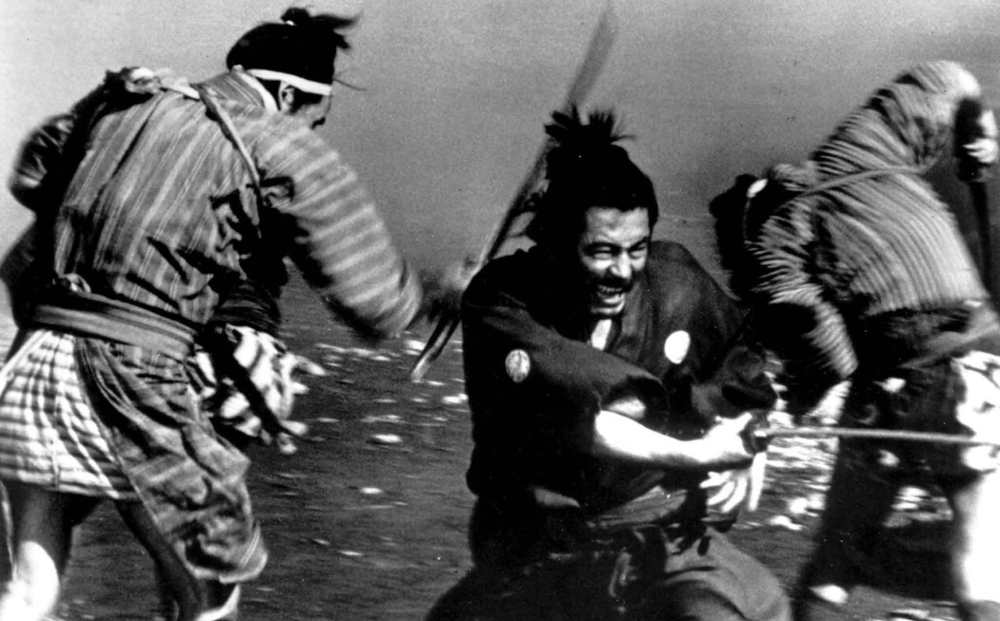
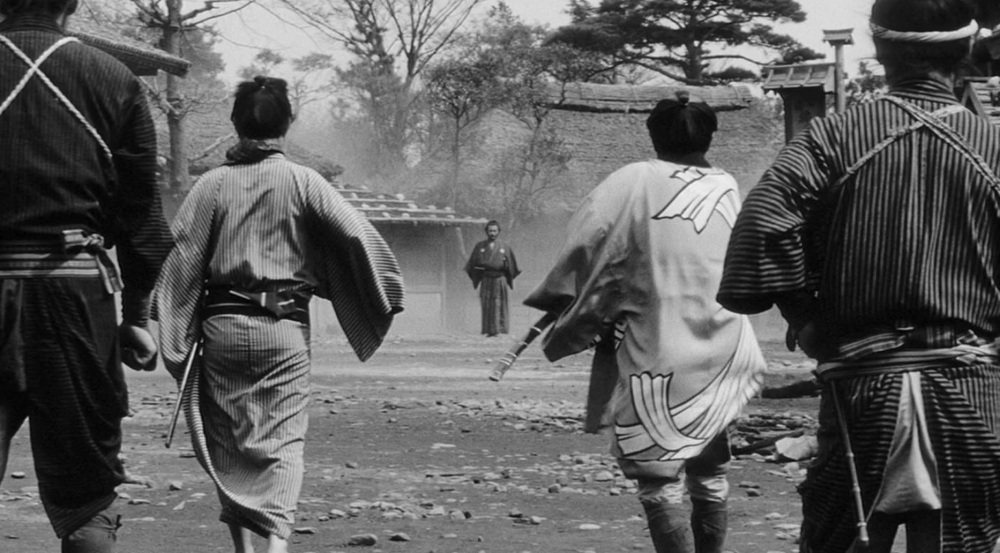
Eventually Ushitora’s youngest brother Unosuke (Tatsuya Nakadai), the only gun toting gangster among the bunch, becomes suspicious of Sanjuro’s role in all of this and discovers evidence of his double-cross against Ushitora and beats Sanjuro without his sword. Jailed and bloodied, Sanjuro outwits Ushitora’s guards and crawls to Gonji for help. Gonji enlists the casket maker’s (Atsushi Watanabe) help in transporting Sanjuro out of town to heal in a small shrine in the cemetery, but before they leave they stop to witness Ushitora’s final attack against Seibei as they slaughter the opposing clan in entirety. As he recuperates Sanjuro practices throwing knives, but is pulled back into town when he hears that Gonji, who had been delivering food and ointments to Sanjuro, has been captured by Ushitora and his men. The final showdown is very reminiscent of the classic western trope of a showdown through the street on opposing sides as Sanjuro precisely and efficiently kills Ushitora and his remaining forces, he even bests Unosuke and his pistol, with his throwing knife. The final moment is given to Tazaemon though, who appears from the rubble beating a prayer drum, seeking his prey. Finally he finds Tokuemon and kills him, thereby ending the blood feud and violence. Happy with this conclusion, Sanjuro exits the town to the beginning of the credits roll.

yojimbo-crop-2

This was a great Samurai film from Akira Kurosawa. There was a lot to love with this film. The framing, cinematography, the performances and action, everything was a tightly knit piece of genre entertainment and I genuinely loved it. I started with this Samurai film after finding out that Sergio Leone’s first film in his infamous “dollar trilogy” A Fistful of Dollars (starring Clint Eastwood) was a remake of this film. You can definitely see the love of this film in Leone’s remake, and I really enjoyed recognizing how that transition was made between the two. If you’re looking for a classic Samurai film from one of the best filmmakers of the twentieth century, you can’t find much better than this!

Final Score: One Samurai, two clans, & a dog

film

Old School Review: “Stalker” (1979)

 (As this film is more than thirty-five years old, there will be spoilers. You have been warned)

Written and directed by Andrei Tarkovsky with screenwriting cowriters Arkady and Boris Strugatsky, who also wrote the novella “Roadside Picnic” on which the film is based upon, “Stalker” is the final film that Tarkovsky made under the banner of the Soviet Union. It’s quite the meditative quest with dashes of science fiction amid the philosophical and theological musings that the three main characters debate about throughout their journey. In this indiscernible future of a post apocalyptic scenario there lives a Stalker (Aleksandr Kaydanovskiy), the main characters of the film are known only to us through their occupations, a man that specializes in the freelance guiding of various clientele into the mysterious and dangerous “Zone”. The Zone is an uninhabitable area near the cityscape that the remainders of humanity avoid, the heavily armed military guards the entrances to the Zone and stalkers must navigate past them in secret to gain access to the untouched land. Although nobody seems to know the truth of its origin, the urban myth surrounding the Zone cites a meteor that crash landed near there causing chaos decades earlier. Curiously the military sent in brigades of soldiers and armament to investigate the situation and were never heard from again. Hence the containment of the dangerous area. This time around the Stalker plans to transport two men, The Professor (Nikolay Grinko) and The Writer (Anatoliy Solonitsyn) into the Zone.

a3

So, you might ask, “Why would people want to go to the Zone if it’s so notoriously dangerous?” Well, word has it that within the Zone there lies a structure forgotten to the world, decaying and deteriorated, yet within that old building lies a specific room that supposedly grants the deepest desires of all who dare to enter. The Professor wants to win the Nobel prize while the Writer has lost his inspiration and wants to rid himself of his writer’s block.

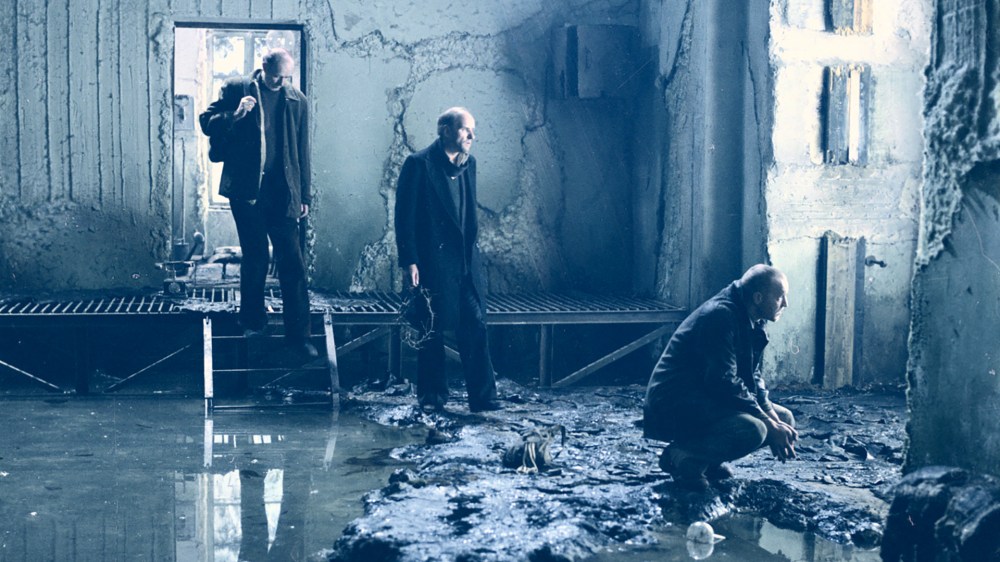
As the journey goes along, and it is a journey- a slow one at that, the film is full of incredibly long takes and shots of the three characters traversing the dangerous cityscapes, the railroads leading out of town, and the vast and green wilderness of the Zone. Anyways, as they travel about the Writer and the Professor wax poetic and casually lob sardonic insults at each other and their proposed fields of work while the Stalker constantly checks the landscape for danger. Much of the film inserts a mysterious tension brilliantly played on by Tarkovsky by alluding to the Zone as a nonlinear force, traps can ensnare unknowing people that traverse blindly into the tall grass, and the Stalker talks of the Zone as something that is in constant flux. Traps that used to exist are now safe paths while other routes that had been impassable before become the only ways through. He evens goes so far as to say that people bring these changes with them as they enter, its not that the Zone is actually changing at all, but that it is shaped by the intentions and thought patterns of those who enter it.

147

At nearly three hours, this is a beast of a film to get through if you’re an impatient viewer. There are no real actions sequences here friend, this is a different sort of film where a calm imagination and an adoration for dreamy visuals will do you some good. It’s also notorious for it’s incredibly long takes, “The film contains 142 shots in 163 minutes, with an average shot length of more than one minute and many shots lasting for more than four minutes.” While there are definite allusions to theological yearnings, I feel that this is a film where, much like the Zone itself, you bring most reflections of who you are to your understanding of the film and it’s story. I can understand where someone might see that the Stalker’s pains at the end of the film could be an expression of Tarkovsky’s feelings on a world without religion and hope, without people that believe in something greater than themselves. Though for myself it felt more along the lines of an allegory for the allure and humility of mystery versus the arrogance of believing that you know how the world works and that there are no such mysteries left to be discovered. There is some overlap in the ideas in a macro sense, but that’s just what I felt from my viewing of the film.

stalker3

The production of the film sounds like a disaster three times over if you know the details. Tarkovsky shot the entirety of the film on three separate occasions. The first failure was due to a Russian film studio not properly converting the film’s stock as Tarkovsky used a brand and type of film that they weren’t fluent in. I believe the second effort was mostly due to shooting location concerns and the hurdles of laws under the pressure from the Soviet Union’s specific requirements of art during that time. Over the course of the production they shot an alarming amount of footage, “..consuming over 5,000 metres (16,000 ft) of film.” There’s also the fact that this was the last film Tarkovsky made before leaving the Soviet Union, and through the main character of the Stalker we can see Tarkovsky’s torment over the notion of wanting to leave. To create, and live, more freely, or to stay with what he knows. Stalker even says that back home in the sepia tones of the city (versus the color footage of the Zone), he feels as though he is incarcerated throughout his everyday life. “Almost all the dreams recorded by Tarkovsky in the period 1974–77 seem to have been about being in prison—in one case, being in prison, escaping, and wanting to get back into jail again: 

     ‘At last, to my joy, I saw the entrance to the prison, which I recognized by the bas-relief emblem of the USSR. I was worried about how I was going to be received, but that was as nothing compared with the horror of being out of prison’ .”

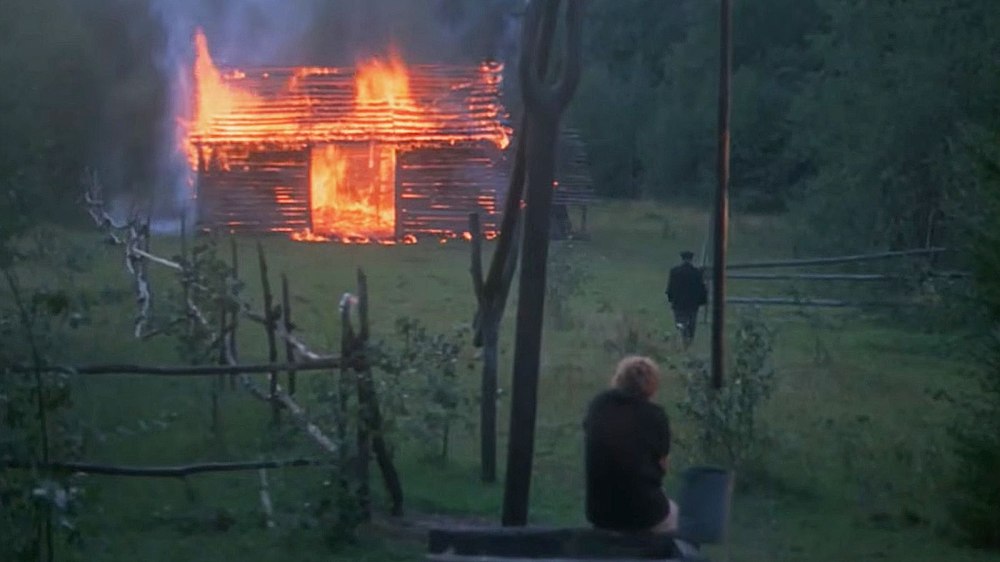
Getting even more meta about the topics in play, in the film the Writer and the Professor never even enter the room once they finally reach it, for the Stalker has warned of what happened to his former mentor, another stalker nicknamed Porcupine. Our main stalker tells us that while stalkers are forbidden from entering the room, Porcupine eventually did so after the death of his brother. He went and asked to reverse his brother’s death- but the room saw through to his subconscious desire to be wealthy and instead granted him wealth beyond reason. Porcupine hanged himself a week after this. Another analysis dives into this theory of deeper hidden desires within Tarkovsky about wanting to leave Russia. “Stalker at some level (pos­sibly even at the level of “deepest desire”) is about the wish to leave Russia for good: the first twenty min­utes enact a very recognizable Cold War fantasy of breaking through bar­riers. At the same time, there is the corresponding feeling that it would be impossible, and actually wrong, to do this. Thus, all the time that Tarkovsky was fretting against the “unbearable restraints” of the socialist bureaucracy he was fated to serve (and thinking that, perhaps, there might be a way out—for example, by accepting the invitation to come to Italy that had been sent by his friend Tonino Guerra), he was also “digging in,” preparing to stay.

stalker_2

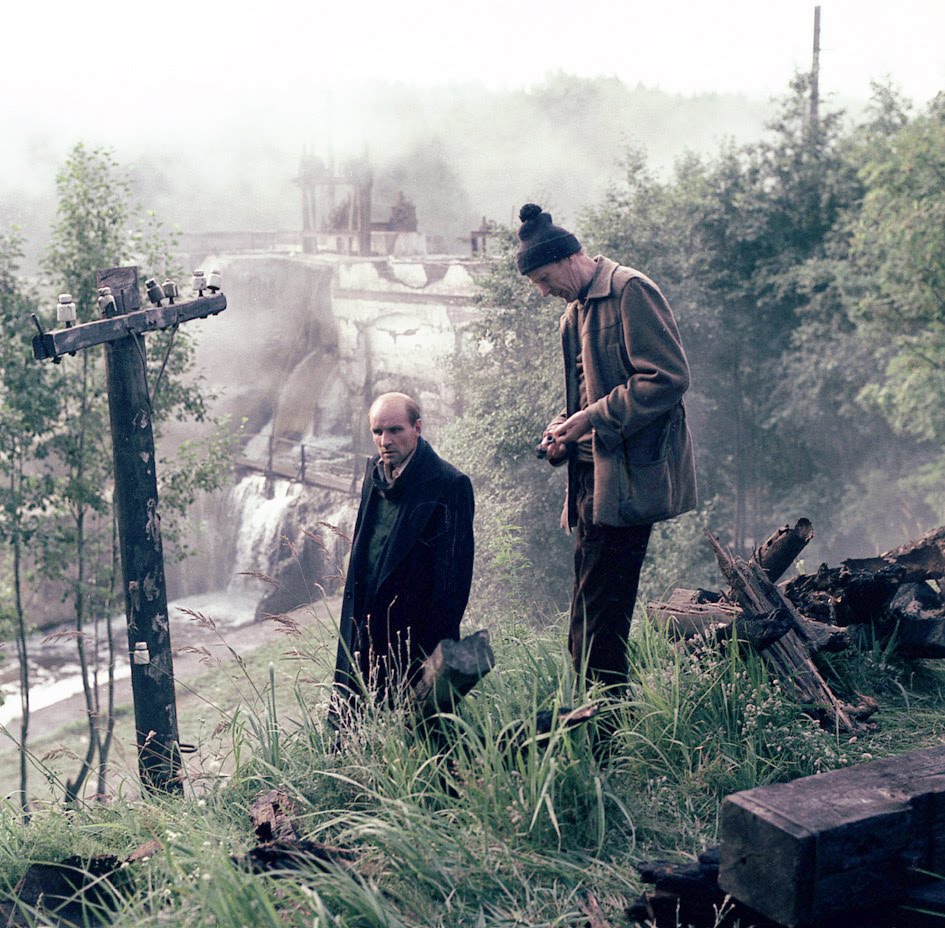
Allegories and musings aside, this is a very beautiful film to watch. If you are a viewer more inclined towards the visual arts over dialogue and actions in your storytelling, then this film may have something for you. Since my viewing of another Tarkovsky film in “The Mirror”, I’ve come to notice that the Russian filmmaker has a unique tendency to fill the screen with the natural world with a specifically unique voice. You might get the feeling that Tarkovsky himself was more at home in the forests and fields of Estonia rather than the bustling streets of Moscow. Though, he may have unintentionally sealed his, and other crew members’, fate while shooting on location for this film; “Several people involved in the film production, including Tarkovsky, died from causes that some crew members attributed to the film’s long shooting schedule in toxic locations. Sound designer Vladimir Sharun recalled:

We were shooting near Tallinn in the area around the small river Jägala with a half-functioning hydroelectric station. Up the river was a chemical plant and it poured out poisonous liquids downstream. There is even this shot in Stalker: snow falling in the summer and white foam floating down the river. In fact it was some horrible poison. Many women in our crew got allergic reactions on their faces. Tarkovsky died from cancer of the right bronchial tube. And Tolya Solonitsyn too. That it was all connected to the location shooting for Stalker became clear to me when Larisa Tarkovskaya died from the same illness in Paris‘ .”

This definitely falls more on the art-house side of cinema, but I think it’s good to constantly challenge your palate when it comes to the films you watch. How would you ever know whether or not you would enjoy a film such as this if you never give it the opportunity to challenge your assumptions? Stride towards a greater variety of art in every direction, besides, its more fun that way!

Final Score: 2 Elitists, 1 Stalker

(sources) The quotes I have inserted into this review came from these three articles on the film and I found them to be quite interesting, click the links and give them a look!:

https://www.vox.com/culture/2017/10/7/16418780/movie-of-week-stalker-tarkovsky-blade-runner

https://www.criterion.com/current/posts/4739-stalker-meaning-and-making

Stalker

film

Old School Review: “A Colt is My Passport” (1967)

Written by Shūichi Nagahara and Nobuo Yamada and directed by  Takashi Nomura “A Colt is My Passport” is a 1967 Japanese Yakuza noir film. The film focuses on hitman Shuji Kamimura (Joe Shishido) and his partner Shun Shiozaki (Jerry Fujio) when they’re hired by a Yakuza gang to kill the boss of their rival gang. The rival boss had scrapped a previous deal and gotten too greedy in their eyes, most of the story follows Kamimura and Shun while they try to leave the country after the job was finished.

download

At an hour and twenty minutes this crime caper keeps the pace light and the wit snappy. I was surprised by the speed of the cuts and the use of the camera, it was almost reminiscent of Edgar Wright in a way (though I know if anything it was the other way around). The way the film keeps flipping the tables on the team of assassins after they’ve been shown to be prepared and efficient accelerates the level of threat that they’re now under. A few double crossings later, and even a femme fatale in Mina (Chitose Kobayashi) a motel waitress they run into who has a few tricks up her own sleeve, and eventually we end in a good old fashioned shootout-albeit with a few modifications that warmed this cinephile’s celluloid heart.

Koruto-wa-ore-no-pasupooto-1967-1240x490.jpg

This film may not have been The Most Daring thing ever seen on The Silver Screen!, or a cultural touchstone, but I had fun with it. I really enjoyed watching another culture emulate our own creations in the noir genre. There may not have been any rain or trench coats, but it felt like a noir film. What I found to be rather impressive was the world building for such a Saturday night crime thriller. The two warring gangs feel as though they’ve long been a presence in the area and know where and when they can operate. In fact, I’m not sure if the character of Shuji Kamimura had more than one film appearance but I wouldn’t be surprised if he did, he functioned as a sort of Japanese James Bond with some Sam Spade mixed in for good measure. “A Colt is My Passport” was an entertaining crime flick, and I suggest giving it a watch if you come across it.

Final Score: a few good hitmen

film

Old School Review: “Ikiru” (1952)

*This film was released in 1952-There will be spoilers*

Written by Akira Kurosawa, Hideo Oguni, and Shinobu Hashimoto and directed by Kurosawa in 1952, “Ikiru” (translated as ‘To Live’) is a drama that is considered by many to be Kurosawa’s finest achievement from his lauded filmmaking career. The story follows Kanji Watanabe (Takashi Shimura), a middle-aged Japanese bureaucrat that discovers that he has stomach cancer, a death sentence that forces him to search for meaning as he reflects on a life that he’s wasted stamping forms that only serve to waste people’s time. The beginning of the film perfectly sets up the roundabout rigmarole that goes on in the local government departments, proving the inefficiency of bureaucracy. A group of mothers are trying to get a cesspool in their neighborhood cleaned up and made safe for their children, but each representative in turn says that such a project would be better serviced by the next department until they’re brought back to where they started. Finally they lambaste the clerks in Kanji’s office and leave discouraged.

Ikiru-3-600x450

Kanji learns that he indeed does have stomach cancer and initially tries to find meaning in the pleasures of life, but discovers in the midst of a nightclub that this is no solution. After befriending a young novelist (Yūnosuke Itō) in a bar Kanji admits that he’s worked his whole life for his savings, and now that he’s dying-he doesn’t know how to spend it. The novelist is entranced by Kanji’s story and whisks him away on a tour of the nightlife. Kanji enjoys himself for awhile, but at one of these parties a piano player asks for requests, and he responds with “Gondola no Uta”, or “The Gondola Song” an old romantic ballad, and the pianist begins to play as Kanji solemnly sings in a manner most soul crushing; “life is brief fall in love, maidens before the raven tresses begin to fade before the flame in your hearts flicker and die for those to whom today will never return.

Eventually Toyo (Miki Odagiri), the youngest member of Kanji’s section at the public works, tracks him down to get his stamp of approval for her to quit and move on to a more fulfilling occupation. They end up sharing the rest of the day in each other’s company as Kanji realizes that she despises the public works as much as he does. He clings to Toyo even after she leaves the public works because her youth and joy remind him of what he wants out of life. He eventually reveals his situation to her and she points out that she only gets happiness by working in a toy factory knowing she is making children happy-which is the realization that propels Kanji to do something meaningful with the remainder of his time on Earth. In one of the many perfect shots of the film Kanji rushes out of the cafe as a separate group sings Happy Birthday to a colleague as he descends a staircase in a representation of his rebirth, he has found his purpose.

2014-04-04-ikiru-rest-8-happy-birthday-chorus

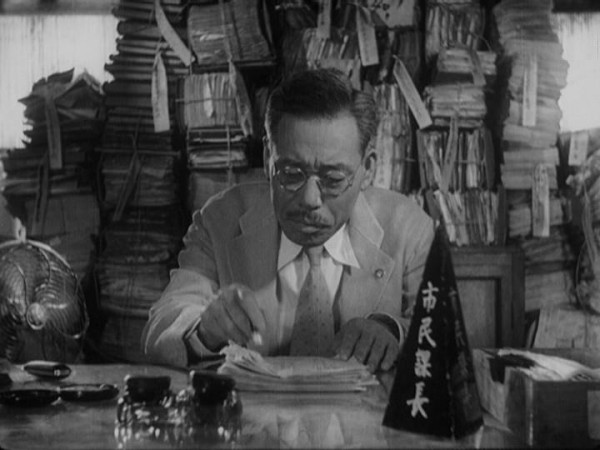
What I found to be particularly effective were the scenes without Kanji, where those closest to Watanabe, co-workers and family, talk and gossip about his actions and intentions. It brilliantly focuses on the reactions and suspicions of those in his orbit, who are unaware of his illness and the existential crisis that he is facing. Coworkers often cite the fact that the corporate world is full of competition and that many will likely look to fill Kanji’s seat at the head of the table after he misses his first day in thirty years. His son Mitsuo (Nobuo Kaneko) and his fiance are the unknowing culprits of the most painful things said to Kanji throughout the film. They are distant in nature and only seem to want to retrieve Kanji’s retirement funds to buy a house and start their own lives. Kanji even attempts to tell his son about his stomach cancer but the discussion turns sour upon misdirected assumptions about Kanji and Toyo. Which is all the more painful as earlier in the film there are several sequences that show the longing he has for Mitsuo as he was raising him, his wife and Mitsuo’s mother had died young, so Kanji provided for his son the only way he knew how. He worked long hours at a job filled with meaningless paperwork and never remarried for the sake of his son. Kanji clearly misses the closeness he once shared with his son and there are some effectively brutal scenes throughout the film that accentuate how far the divide has grown in that time. Once Kanji finds his purpose, to not only clean up the cesspool referenced earlier in the film, but to build a children’s park in its place, he effectively disappears from the film. We only see the fruits of his labor, and his path there, through flashbacks after his eventual death. Which leads me to the most satisfying portion of the film.

ikiru2

My favorite part of the film is when we jump five months in the future to Kanji’s wake after the park has been built. We are soon informed that the deputy mayor and his aides have also attended Kanji’s wake after giving a rather self serving speech at the park’s opening ceremony. The wake is interrupted by a slew of journalists waiting outside as the mayor discounts Kanji’s efforts to get that park made, they scoff at the reporters who assert the local citizens’ opinion that Kanji Watanabe built the park. “They don’t know how government works!” they proudly defend, and that no one man could build that park. Since Kanji didn’t tell most people that he had stomach cancer the claim is made that even he didn’t know that he had the illness, thus having no clear drive or motivation to complete the project and thereby discounting the claims that he deserved credit for getting the park built. The whole sequence is intercut with flashbacks from the last five months in which Kanji visited every person and department possible to push and plead for people to simply do their jobs. Efforts to paint him as intruding on the jurisdiction of other departments fall short after several people point out that Kanji was threatened when he got in the way of powerful people wanting to build a red light district there. Others also begin to remember Kanji referencing that he didn’t have time, that he seemed intent on his goals before his time ran out. This effectively sets the record straight for the remaining bureaucrats and Kanji’s family as they realize that he knew that he was going to die the entire time. We then see the final moments of Kanji Watanabe’s life as he swings in the park in the snow. He looks content, tired, and full with happiness as he sings “Gondola no Uta” one last time, but with a joyful heart this time.

life is brief.
fall in love, maidens
before the crimson bloom
fades from your lips
before the tides of passion
cool within you,
for those of you
who know no tomorrow

Final Score: 1 brand new hat & the satisfaction of fulfillment in life

Ikiru

film

Old School Review: “The Mirror” (1975)

Written by Andrei Tarkovsky and Aleksandr Misharin and directed by Tarkovsky in 1975, “The Mirror” is a hell of a head trip if you haven’t ever heard of the Russian filmmaker and dived headfirst into this film without any context like I did. The other day I was looking through the Filmstruck catalog and decided to look into more foreign films, it’s an area of storytelling that I’m rather lacking in to be honest, and found Russian filmmaker Andrei Tarkovsky. Skimming through his seven feature films I noticed “Solaris”, perhaps remembering the title from somewhere or sometime-but instead opted for “The Mirror” as it was an hour shorter. Ironically in an effort to save time I chose a film that required roughly two hours of light research and article skimming to understand.

Tar100MIRROR

“The Mirror” is an intensely personal film for Tarkovsky. The film is part autobiography, part fiction, and part pure visual storytelling. This film is very abstract. It plays with time, reality, and scenes sometimes play out in black and white, other times in sepia-tone, and sometimes just in plain old color. The film is told through three separate timelines, pre-war, war-time, and post-war in Russia with many sequences being directly lifted from the filmmaker’s life. Fleeing Moscow to live with relatives in the countryside in his youth was a big part of the pre-war phase. Tarkovsky’s father was a well known poet, and you can most definitely see that influence. There are many slow and meditative shots revealing nature and people intermingling, like in one of the opening scenes where the Doctor who asked for directions gazes back towards Tarkovsky’s mothers’ house in the countryside as wind sweeps and bellows along the fields of buck wheat that Tarkovsky had planted for the film. The main character-whose face remains unseen throughout the film and is to be a reflection of Tarkovsy himself- narrates from off-screen throughout many sequences, although there are a few narrations weaved into the film where Tarkovsky’s father recites his own poetry over select scenes.

Poetic-Harmony-The-Mirror

Tarkovsky here has essentially made a stream of consciousness film. It is about a man reflecting on his life as he lay dying from illness, and in that way you can absorb and view these scenes from this character’s perspective. Even though we are never properly introduced to the character we know him deeply by the time we see him caressing a bird before letting it fly away near the end of the film. What makes the film hard to digest on first viewing, besides it’s incredibly nonlinear narrative and plot structure, is that Tarkovsky had cast two actors to play two different roles. Margarita Terekhova plays Natalia, the ex-wife of the adult Aleksei (Tarakovsky’s representation of himself) and Aleksei’s Mother, Maria, in the pre-war era as well. On top of that Maria also goes by Masha or Marusya at times. The child actor, Ignat Daniltsev, plays the 12 year old Aleksei and also Aleksei’s son Ignat later in the post-war era as well. There’s also the fact that Tarkovsky inserts real newsreel footage of wartime with Russia, China and Germany depicting border spats with China and immensely crowded walkways and protests and other more mundane footage of Russian soldiers moving large floating structures piled high with perishables and goods through ankle high water with no destination in sight.

a13577-3

In my mild research of the film I came across a sentiment that perfectly said what I could not in how to approach this film, I have a link to the website at the bottom of the review if this has piqued your interest for more information about “The Mirror”, “I realised that the best approach when watching this film is a simple one. To not try to dissect what each scene means per say but to try to understand the underlying themes of the film which involve adolescent love, pain, abandonment and emotional trauma“(http://www.classicartfilms.com/mirror-the-1975). This was an interesting departure from what I normally view and I encourage others to go and watch something that you know you wouldn’t normally choose, it’s good to get a different perspective. “The Mirror” was captivating in a few ways for me personally, but this is definitely not a film that will fit everyone’s tastes. The director knew that when making the film. He cared not for the box office predictions or numbers, not for the critical response that he would receive good or bad, he just created, and that is something that I can appreciate. However if you viewed this film and still have no idea what was even going on, fret not, for even Tarkovsky himself wasn’t entirely sure of the purpose or meaning of some scenes, “There are many complications there which I don’t even completely understand myself. For example, it was very important for me to have my mother in some scenes. There is one episode in the film in which the boy, Ignat, is sitting…not Ignat…what was his name?…the author’s son, he is sitting in his father’s empty room, in the present, in our times….And as he is sitting there we hear the doorbell, he opens the door. This is my mother. And she is the grandmother of this boy who opens the door for her. But why doesn’t she recognise him, why doesn’t the grandson recognize her?…one has completely no idea. That is…firstly, this wasn’t explained by the plot, in the screenplay, and secondly…even for me this was unclear.” (http://www.classicartfilms.com/mirror-the-1975)

0L7Hz0slTgkIhXEtg

Final Score: The Dreams, Past, & Future of 1 man

*For more analysis check out this site below, it helped me immensely in sorting out the film’s themes and ideas in play:

http://www.classicartfilms.com/mirror-the-1975

film

Old School Review: “Burden of Dreams”

Written by Mike Goodwin and directed by Les Blank, “Burden of Dreams” is a documentary about the legendarily chaotic production of Werner Herzog’s film “Fitzcarraldo” that was shot on location in the South American jungles of the Amazon. Since its release “Burden of Dreams” has gathered notorious status as a documentary that is more daring and impressive than even “Fitzcarraldo” itself due to the massive setbacks and litany of problems that plagued the four year production. It also chronicles a parallel between Herzog and his film’s subject matter, the similarly stubborn and unrelenting real life rubber baron Carlos Fermín Fitzcarrald. Herzog was inspired by Fitzcarrald’s mettle in aspiring to move a steamboat from one river to the next at a precarious angle in the mud and thick jungles. However the real event wasn’t as plagued as Herzog’s, due in part to Herzog’s insistence of risk and difficulty and partly due to chance and circumstance. For example, Herzog demanded they move the whole ship in one piece when in reality Fitzcarrald had moved the real ship in pieces and it only weighed thirty tons in comparison to the three hundred and twenty ton boat that Herzog wanted to use.

Carlos Fermín Fitzcarrald was a lover of the Opera and had wished to fund the construction of an opera-house in the Amazon jungle, which is why he was attempting to traverse dangerous terrain in great pain and effort to reach a basin of rubber trees that had not yet been reaped of their resources. When things didn’t work out for Fitzcarrald he retired into becoming a wealthy rubber baron instead of following through on his dreams to bring the Opera to a new continent. Herzog would not give in so easily. In the beginning of the production Herzog had Jason Robards starring as Fitzcarraldo with Mick Jagger co-starring as his side-kick in the endeavor. In fact, they had shot forty percent of the intended film including both leads before Robards was rushed back to New York with amoebic dysentery and forbidden by his doctors to return to the location. Mick Jagger also had to leave the shoot shortly thereafter as he was scheduled to tour with the Rolling Stones and couldn’t be behind schedule with recording new music. So Herzog erased the sidekick character and sought a new lead, considering Jack Nicholson among others before settling on Klaus Kinski, an actor he had worked with before on previous films. Herzog started back from the beginning as nothing they had shot previously would now work.

3172-burden-of-dreams

Upon arrival in the Amazon the local tribes of natives were incredibly superstitious of the German film crew and things quickly escalated to the point that they had to move the production twelve hundred miles upriver as they had been in the middle of two warring tribes’ territories. Once there they had to traverse new problems and obstacles. The mishaps included plane crashes, disease, and attacks by unfriendly Indians to name a few of the many problems they encountered. Herzog had planned to shoot during the rainy season so the rivers would be deep enough for his three ships that he had collected for the shoot, but by the time they got to shooting any of these scenes time had run out and they were running into the dry season, the longest one on record at the time. Large amounts of time were stalled on the shoot due to the difficulties in getting supplies to their film camps, waiting on natives to go council with other neighboring tribes to assess their grievances of various ongoings, and waiting on parts to be delivered for the large tractor that they acquired to pull the boat up the arduous slope. Sometimes they received the wrong parts and had to then wait even more just to get the correct part.

This doesn’t even cover the grievances from the western actors and crew that had stayed far longer than any of their initial contracts had deemed necessary. Klaus Kinski in particular was notably difficult as time waned on. Kinski provoked many crises in the production, he fought virulently with Herzog and other members of the crew over increasingly trivial matters. Later in his documentary of the actor, “My Best Fiend”, Herzog notes that the native extras were greatly upset by the actor’s antics, even as Kinski claimed to feel close to them. Herzog states that one of the native chiefs offered in all seriousness to kill Kinski for him, but that he declined because he needed the actor to complete filming. Schedules being pushed back months and months at a time only put increased stress on the film crew. One cameraman even took injury when one of the boats crashed into the rocky facade of the river because Herzog had noted that due to heavy unexpected rainfall the rivers would be swollen to the levels they needed for the shoot-but only for several hours leveraging great risk for great reward. When it came time to sort out the logistics of filming the boat being pulled up the muddy slope (at a forty degree angle) to craft the illusion of the natives hauling the vessel without the aid of their frequently unreliable tractor, Herzog stood his ground and debated with the engineer they had hired to help them complete the shoot successfully and safely. Eventually the engineer quit the production as he believed the project to be too risky and that it would put people’s lives in unnecessary risk.

Burden-of-Dreams-3-2000-2000-1125-1125-crop-fill

Herzog persisted though, the linchpin of the film was shooting the three story boat being hoisted over an isthmus between two adjoining rivers. “Fitzcarraldo” was the story of a single-minded man obsessed with the notion of introducing opera to the jungles of the Amazon. Les Blank’s premise, that Werner Herzog became as obsessed as his lead character, needs no underlining. I found the documentary to be a fascinating examination of one of cinema’s most enduring personalities in Herzog. His determination and artistic integrity in shooting something so unfathomable is both humbling and astonishing. No special effects were used in any aspect of the production and in “Burden of Dreams” you get to see inside the creative process of one of the most fascinating documentary filmmakers we will likely ever witness. If you find film production to be a subject that you enjoy, I highly recommend seeing this. You probably won’t hear of many scenarios that have as good a story as this one.

Final Score: Three three-story steamboats & dozens of real life native Amazon tribesman turned actors

film

Old School Review: “Duel” (1971)

Written by Richard Matheson and directed by Steven Spielberg “Duel” has been at the top of my “To-Watch” list for some time now as it was Steven Spielberg’s directorial debut for feature length films. “Duel” stars Dennis Weaver as David Mann, a salesman on his way to a meeting on the southern California desert highways when he passes a large gasoline truck. Thinking nothing of it, Mann goes about his way until the truck gets dangerously close and begins a dangerous duel- to the death!

This may be a TV movie from 1972, but it still holds up as a solid suspense-driven thriller. Clocking in at a clean 89 minutes for the theatrical version “Duel” mainly works as well as it does due to Spielberg’s keen eye for direction and staging. Throughout the film you can see the kernels of skill developing into what will become synonymous with a certain great white shark a few years from this release. Spielberg himself cites Hitchcock as his main influence for this tale of attempted vehicular manslaughter, and you can tell- particularly in the diner sequence in which Mann tries to identify his would-be killer once he notices the gnarly tanker truck parked outside. The film relies on little dialogue, the story is mostly told visually and this showcases Spielberg’s obvious talent even further. What really impressed me though was the details of the production.

Spielberg had to fight to shoot on location, the studio wanted the genre thriller shot on a sound stage in Hollywood, but he argued that an on-location shoot would be far more compelling for the audience as shooting inside on a stage would be obviously fake and therefore lose inherent value i.e. money. They bargained on the more difficult location shoot but pressed Spielberg for time. They would only have ten days for their production. According to interviews with Spielberg the shoot ended up going two or three days over, but that the studio execs were impressed enough with the amount and quality of shots that he got initially that they allowed it, begrudgingly. Spielberg stayed in a motel during the production and had wrapped his room in a bird’s eye view map of the entire production that worked as his storyboard, he didn’t even get to see the dailies of film as he didn’t have enough time to go back to the studio and check the work. After finishing the production he hired five editors to scramble and piece the thriller together as they only had three weeks from production to the air date.

In the end “Duel” is a comparable genre thriller that exceeds expectation due to the capable hands it was in. If you haven’t seen this one, give it a shot, with as short as it is the film doesn’t overstay its welcome and you get to see Dennis Weaver lose his mind as he’s being chased down by a giant killer semi-truck. Which is pretty damn entertaining in my opinion.

Final Score: 1 red valiant and a box of rattlesnakes

film

Old School Review: “Dr. Strangelove or How I learned to stop worrying and love the bomb” (1964)

Occasionally in history what was once old can become new again. I’ve been revisiting older films as of late and I’ve found several to be incredibly relevant in their stories when compared to the headlines of today. One such story is “Dr. Strangelove (or how I learned to stop worrying and love the bomb)” by legendary film director Stanley Kubrick in 1964. “Dr. Strangelove” is a black comedy that satirizes the rampant paranoia of the cold war conflict between the United States and the Soviet Union.

On a lone military base United States Air Force Brigadier General Jack D. Ripper issues orders to his subordinate Captain Lionel Mandrake, a British Royal Air Force officer, to put the base on alert. He then issues an order for an unauthorized first strike nuclear attack on the Soviet Union and locks down the base. “Wing Attack Plan R” is received by the airmen in their bombers and they go about their orders utilizing their CRM 114 discriminator, a device that is programmed to only accept communications from general Jack D. Ripper in the form of a secret three letter code, also known only to the general. From there the film follows the President of the United States, his advisers, and the Joint Chiefs of Staff as they try to recall the bombers and prevent a nuclear apocalypse.

I honestly went into this not expecting to find a new favorite, but it became one nonetheless. It’s a brilliant ploy on the insane paranoia that the fear of the cold war instilled in people. In fact, I find it increasingly relevant in today’s world. The inherent insanity of our own headlines reflect what was once fantasy or farce into reality, I mean, we did elect a reality TV show host as the President. But anyhow, I do love the performances here, especially of George C. Scott (famously known for his role as infamous WW2 general George S. Patton) as general Buck Turgidson who tries to explain the practices of the military in such situations to the president. As he fumbles through, making jokes and getting caught up in his own bravado I couldn’t help but be tickled by the absurdity of it all. Nuclear holocaust being a possibility in real life is terrifying enough, but put the lens of satire on it and it becomes a brilliant sort of laugh factory. Peter Sellers also does a lot to play into the humor here as he plays three characters throughout the film; Lionel Mandrake, the RAF officer that tries to talk down the out-of-his-mind general Ripper, President Merkin Muffley, who has my favorite line in the movie “Gentlemen, you can’t fight in here, this is the war room!”, and Dr. Strangelove himself, the wheelchair bound nuclear war expert and ex-nazi scientist who has a case of diagnostic apraxia aka alien hand syndrome in which his lame limb lapses into the Nazi salute. Brilliant.

So if you’re looking to fill out your Stanley Kubrick flicks, or just hankering for a comedy satire that plays with real world issues, give this one a watch, it’s worth your time.

Final Score: 31 seats at the war room table (give or take)

*Check out this video on the history of the making of “Dr. Strangelove” on youtube: https://www.youtube.com/watch?v=iJ6BiRtGTAk