film

Review Catch-Up: Upgrade

Written and directed by Leigh Whannell, “Upgrade” is a revenge-thriller with a futuristic sci-fi setting not unlike that of “Blade Runner”s. My plan was to catch this one when it was in theaters this past summer, it just never materialized, but I am so glad I came back to find it after video release. This pulpy, body-horror, grindhouse, genre flick isn’t what I expected going in, but I immediately fell in love with the concept of the film after the hook.

Grey Trace (Logan Marshall-Green) is a simple man in a complex world. In a time of fully automated cars and advanced biomedical technologies Grey stands out. He’s a mechanic that works on classic American muscle cars with a deep-seated love for the analog ways of the past. With Laura (Belén Rueda), the love of his life, they lead a productive life together despite the technological gap between them. After putting the finishing touches on one of his sales cars, he brings Laura with him to drop it off to the buyer, a reclusive big-tech genius named Eron (Harrison Gilbertson). While there, Eron shows Grey and Laura his latest project set to revolutionize the world, STEM. A computer chip the size of a beetle, STEM is an A.I. capable of lightning fast processing power and immense data crunching ability. Grey, being the analog purist that he is, isn’t impressed by the reveal while Laura ogles over the new possibilities. On the way home, their automatic car disobeys orders and takes them into dangerous neighborhoods before quickly accelerating into a pole and flipping the car, killing Laura in the process. A gang of people flood the streets and pull Grey from the wreckage and shoot him in the back of the head, paralyzing him from the neck down.

Fast forward to Grey immobilized in a hospital bed when, surprise surprise, Eron waltzes into his room to offer him an.. Upgrade. Again, Grey turns down the offer. Seeing his partner die before his very eyes hasn’t exactly motivated him to want to live, and especially thrive, by technological augmentation. After he hits rock bottom emotionally and psychologically, he reconsiders and accepts Eron’s offer. After the surgery, Eron informs Grey of the need for secrecy surrounding STEM as the experimental tech isn’t exactly legal.
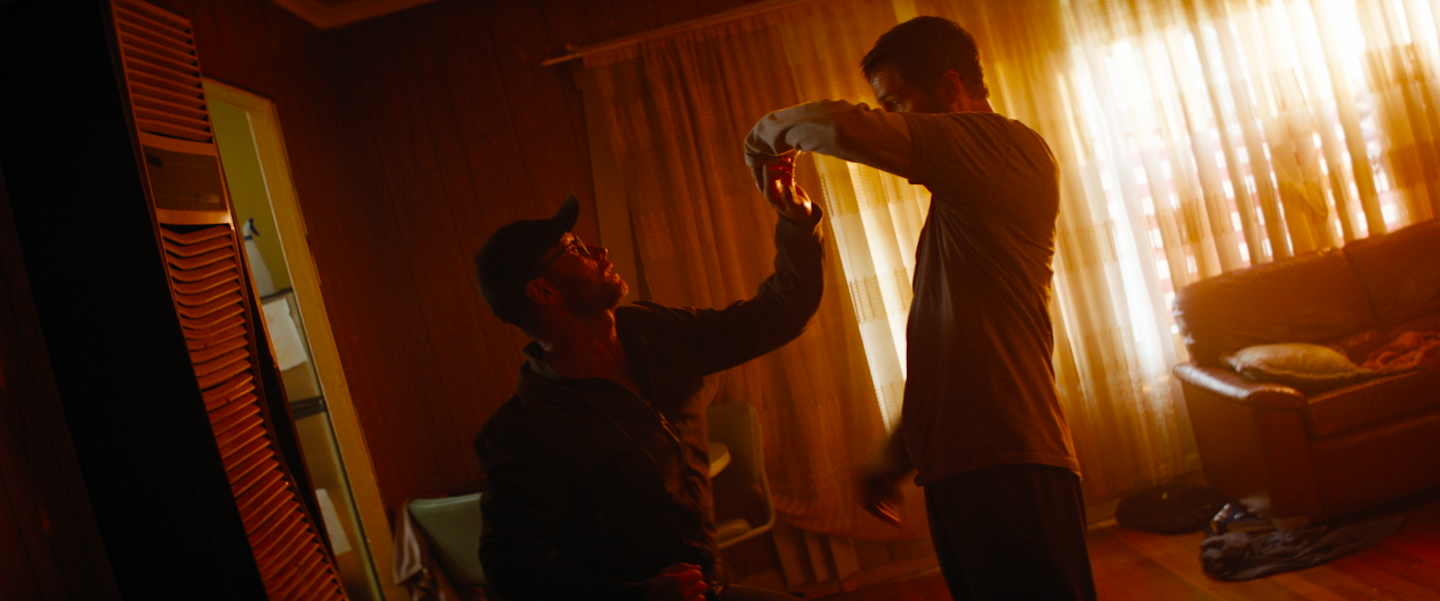
With his mobility regained Grey immediately goes into detective mode to find Laura’s killers. It is here that STEM (Simon Maiden) chooses to introduce itself to Grey by helping him follow the clues. STEM is also handy for a good fight. After verbally giving STEM permission, the A.I. takes control of his body and efficiently, brutally, attacks any opponents. The fight scenes in this movie are a great deal of fun! They, cleverly, have an extra layer of visual comedy in play. When Grey is fighting, his face reveals his horror to the actions of his own body with STEM at the wheel. He smashes plates over assailants heads while his face recoiles from the creative violence at hand. That’s just brilliant. Eventually a local cop, Cortez (Betty Gabriel) starts to sniff out Grey’s suspicious activities. She was fun as a threat for Grey in the film but there wasn’t a lot of characterization with her.
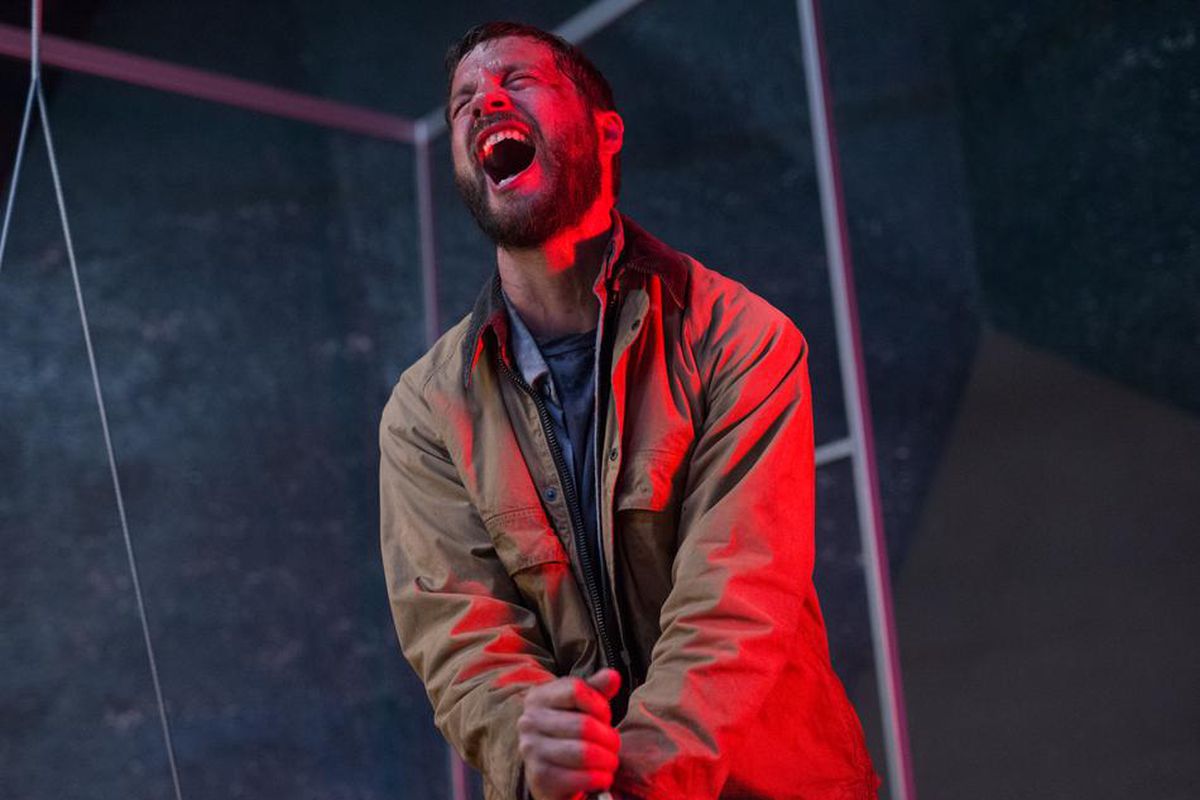
This film was exactly the kind of sci-fi that I enjoy. Thought provoking ideas mixed with paranoia about a changing world, and some extreme B-movie violence thrown in for good measure. It was funny, it was dark, it was just a damn good science-fiction film. I highly recommend it, but especially if you enjoy other modern sci-fi flicks like “Annihilation” or “Ex-Machina”.

Final Score: 2 Muscle Cars and 1 talkative A.I.

film

Old School Review: “Rashomon” (1950)

Written by Shinobu Hashimoto and Akira Kurosawa, and directed by Kurosawa, “Rashomon” is a film about the complexities of human nature surrounding a murder with four contradictory eye-witness accounts. In the film three men find solace from a torrent of rain under Kyoto’s Rashomon gate. In the opening a woodcutter (Takashi Shimura) and a priest (Minoru Chiaki) are discussing and processing the differing accounts of an event recently taken place nearby. A commoner (Kichijiro Ueda) comes in from the storm and joins the conversation. He’s brought up to date on the situation at hand; a samurai (Masayuki Mori) has been murdered, his wife (Machiko Kyo) raped, and a local bandit (Toshiro Mifune) is the suspect. The woodcutter happened upon the crime scene and was the first to report the incident.

What follows is a series of revolutionary flashbacks to describe the tale as each character remembers it. All retellings of the same event differ, while remaining both true and false. True in that it is how they remember the events, but false in objective truth. The only scenes that are objectively true in what they show us are the ones taking place at Rashomon. Every flashback is an amalgamation of fractured memories, every scene in the forest broke new ground by showing the audience unreliable retellings of the past. This wasn’t a new idea that “Rashomon” originated, but rather a storytelling device that the film popularized. In fact the film is so connected to the idea of contradictory interpretations of past events that they became entwined with each other until ‘The Rashomon Effect’ became part of the cultural zeitgeist.

Each suspect questioned by an unknown official, which leads into each one’s version of the truth. The bandit gives his testimonial first, then the wife, and then the dead samurai- who speaks through a spirit medium, with the woodcutter’s tale kept until the end. All claim to be guilty to varying degrees, and all describe the situation with varying representations of themselves and the others involved. The three men under the Rashomon gate have differing reactions to the events and various recollections of those involved. The commoner is the most cynical of the three, at one point he posits, “Is there anyone who is truly good? Maybe goodness is just make-believe.” The woodcutter is visually distraught by these stories as he tries to reassemble the truth of the matter, while the priest seems to be placing the weight of his faith in humanity upon the outcome of the tale.

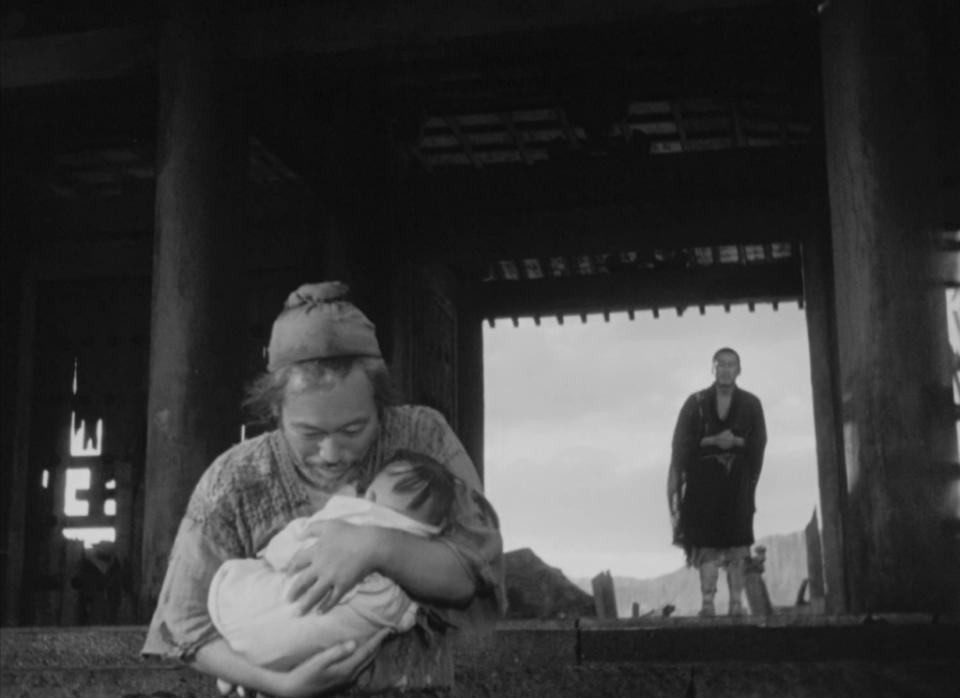
The film ends on a high note when the fog of ambiguity is lifted by the sounds of an abandoned child crying out. The woodcutter lifts his spirits and takes on the responsibility of this orphan, proving to the priest that humanity still has hope left in its spirit. The simple act of selflessness gives the film’s end a beacon to strive towards, even if humanity is muddled, complex, and not always truthful- we still strive to be better than our worst habits.

Human beings are unable to be honest with themselves about themselves. They cannot talk about themselves without embellishing.“- Akira Kurosawa

Final Score: 1 samurai ghost, 1 over the top bandit, and 1 woodcutter

film

Review Catch-Up: Paterson

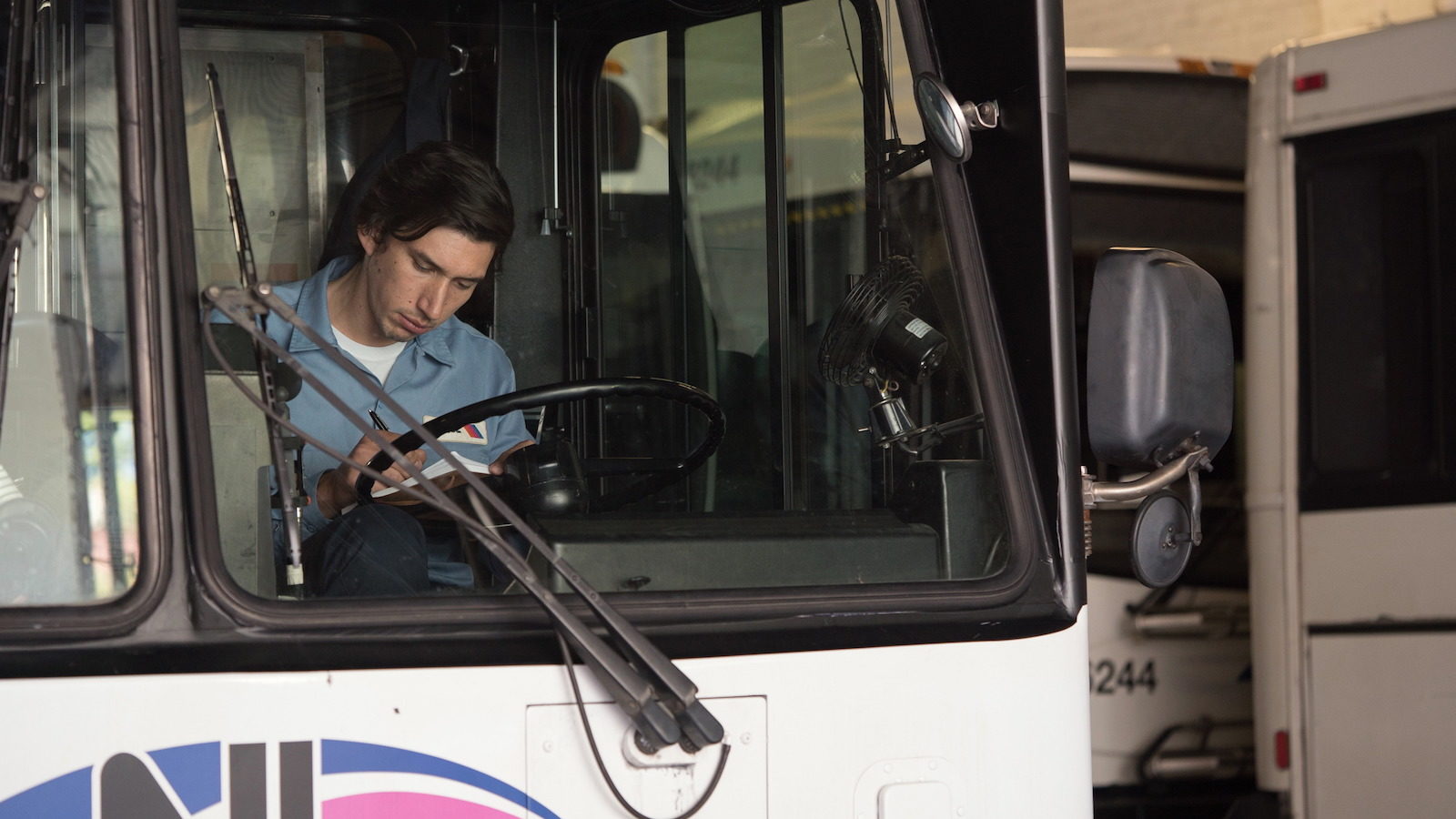
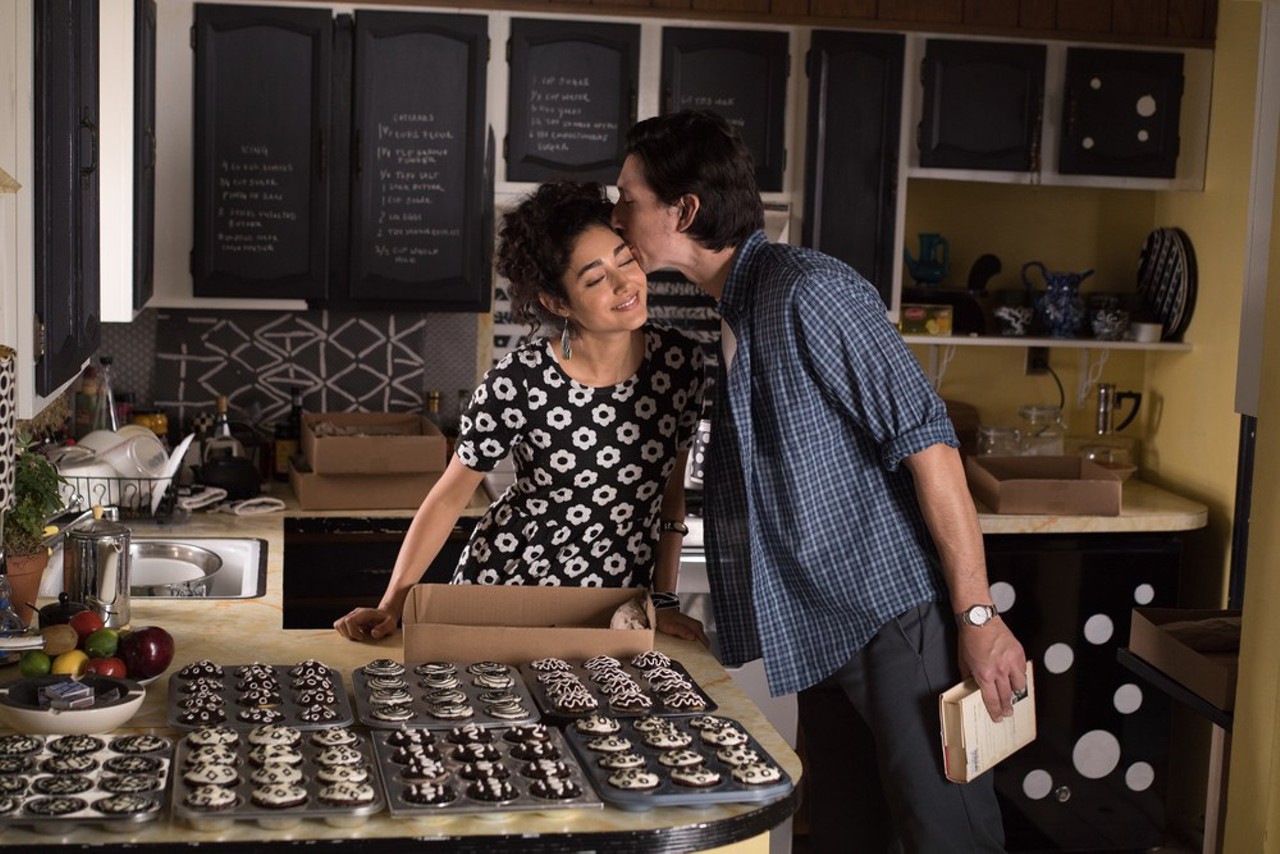
Written and directed by Jim Jarmusch, “Paterson” is a meditation on the struggle, lyricism, and poetry of everyday life. The film focuses on Paterson (Adam Driver), a bus driver in Paterson, New Jersey, who writes poetry in his fleeting free time. He lives with Laura (Golshifteh Farahani), the love of his life and the yang to his ying. While Paterson lives a life of simple routine with flourishes of artistry, Laura chases her dreams of artistic freedom through whichever flight of fancy that catches her imagination. From being the owner/chef of a cupcake bakery one evening to taking Spanish guitar courses online so she can pursue her latest dream of being a country music star.

Paterson (The film) is structured around a week in his life. From overhearing casual conversations on his routes to catching up on the latest developments of the local Romeo and Juliet of the neighborhood bar (William Jackson Harper as Everett and Chasten Harmon as Marie), the film isn’t concerned with anything other than the small, mundane, beat of it’s protagonist. One of the more poignant scenes of the film happens when Paterson is walking home and he decides to accompany a young girl until her mother returns from a nearby apartment. He sees that she has a notebook of writing too, she shares a poem of hers, and in that moment the film captures the beauty of such random acts of serendipity; two strangers sharing an appreciation for their craft.

I can’t guarantee that you’ll love this movie, it is “slow” and “nothing happens”, however if you find yourself needing a break from the noise, confusion, and chaos of your own every day life- then this film may just be what you need. I honestly went into this film not knowing if I would actually enjoy the experience or just be resentful of time spent on this whereas it may have been better spent on other priorities, I’ve seen Jim Jarmusch films films before and haven’t ever been really impressed or absorbed by them. (I’ve seen “Stranger than Paradise” “Dead Man” “Ghost Dog: The Way of the Samurai” and “Broken Flowers”) This is the only film of Jarmusch’s that has worked for me this far, though I can at least understand why some people enjoy “Broken Flowers”, but it’s not for me. This a solid Feel Good movie, perfect for a cold and blustery winter night.

Final Score: 7 days in Paterson, New Jersey

film

Old School Review: “The Wild Bunch” (1969)

Written by Walon Green and Sam Peckinpah, and directed by Peckinpah, “The Wild Bunch” is a Western following a gang of gunslingers and outlaws emerging into the twentieth century as they come to terms with the end of their era. If you’ve spent the last two months roaming the digital countrysides of “Red Dead Redemption 2” like I have, and you’re seeking more of that same grizzled cowboy violence, then “The Wild Bunch” will definitely satiate some of your old west woes. This movie shares many of the same themes and visual cues that the groundbreaking video-game western implements over it’s hours, upon hours, of storytelling.

After a botched heist devolves into a shootout in an excellent opening scene, the ragged outlaws finally reach a place to gather themselves and account for their losses. It’s here that Pike (William Holden), the gang leader, poises the terms of their next score and the core of their existential crisis, “We’ve got to start thinkin’ beyond our guns. Those days are closin’ fast.” Set during the global eve of World War One in 1913 with the modern world quickly encroaching on those tied to the ways of old, “The Wild Bunch” delivers us a nuanced and layered film that pairs its chaotic violence with real humanistic quality. It’d be an arduous task in finding a Western more concerned with tragedy and loss, or one so bathed in melancholy and savageness. The noble outlaws in this picture are exposed to some of the most uncensored violence of the day when it was initially released. While Sam Peckinpah thought the violence would shock people into the horrors of such a time, he would have no idea how much people might enjoy such cathartic carnage.

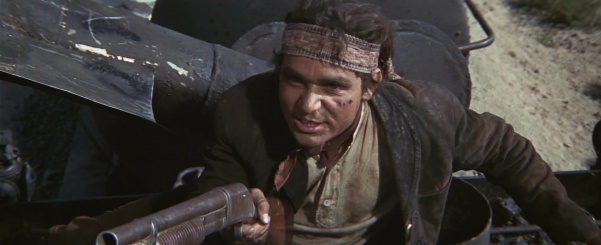
The driving force of the film lies in the pursuit of Pike’s gang by a posse led by a former outlaw and friend, Deke Thornton (Robert Ryan). Previously captured and coerced into hunting his fellow outlaws by an anonymous railroad tycoon, Deke detests the system he now works for and frequently talks down to his less than skillful hired help. Thus Pike’s gang flees to south of the border where they are plunged into another brand of chaos in the Mexican civil war as gun runners. While Deke may be coerced into tracking his former brothers, Pike’s gang has their own fair share of being forced into servitude by the Mexican army. Adherence to pressure by necessity, being forcibly made to adhere to the ways of others, is a major theme of the film as these outlaws get swept up by the progression of time.

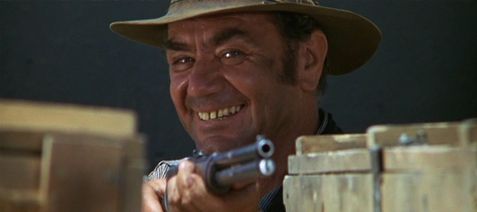
Peckinpah handles the individual gang members with such mythic, admirable, and poetic romanticism that you often forget about earlier sequences focusing on the deglamorization of warfare. It’s within this contradictory sensation of heroic admiration and frightening nihilism that Peckinpah allows his characters to shine. Angel (Jaime Sánchez), and Dutch (Ernest Borgnine [The Arthur Morgan of this film ironically]) in particular, are standouts among the gang. Dutch is one of the older outlaws and Pike’s second in command. With his wisdom from the school of hard knocks and a heart of gold to match, he pairs well with Angel’s youthful exuberance and itchy trigger finger. It’s all about balance, right?

The film is bookended by two large shootout sequences which weave chaotic violence with a romanticized nostalgia for times (and films) gone by. The film doesn’t necessarily glorify violence so much as it attempts to show the uglier and dirtier world of cinematic gunslingers. I honestly couldn’t say it better than the 1995 Chicago Tribune review of the restored director’s cut, “It’s a tale of demonic intensity, nightmare nihilism, cockeyed courage, outrageous compassion and savage grandeur.” 

Final Score: A few bags of washers and a train full of guns!

film

Old School Review: “Andrei Rublev” (1966)

Written and directed by Andrei Tarkovsky, “Andrei Rublev” is a medieval Russian epic loosely based on the real life Christianity icon painter of the same name. The Guardian (publication) ranked this film as the number one art-house film of all time, and while this film is indeed a master work by a filmmaker with an uncompromising vision- it ultimately wasn’t one that worked for me. “Andrei Rublev” is, like most of Tarkovsky’s works, a very long film. At other times this hasn’t hampered my interest in his films, and I wasn’t wholly uninterested here, but this film moves to the beat of its own drum and if you’re not tuned to its frequency then it will leave you in the dust. Tarkovsky was not one to bend, or compromise, his artistic vision for anyone and while I respect this notion, it’s made his films difficult to recommend- I do, but with a handful of asterisks attached.  

andrei-rublev-balloon

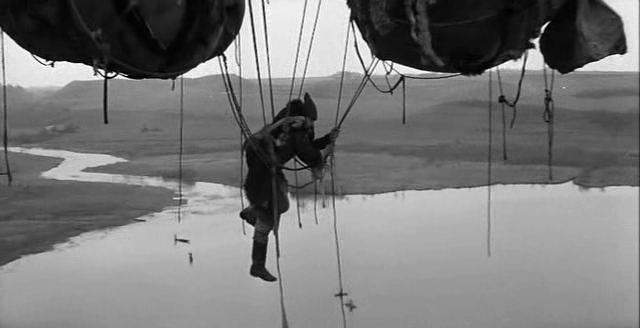
The film opens with a man trying to fly in a makeshift hot air balloon. He and a small dedicated group are stoking the flames, tightening ropes, and generally rushing to prepare this experimental pursuit. As the initial man weaves his way up to the top of the church, an angry mob forms below and actively tries to stop the men from taking flight. At the last second the man we’ve been following entangles himself in ropes hanging from the balloon and slowly soars away. He laughs as he floats above the people- but quickly crashes to the ground moments later. This scene sets the mood for the rest of the film and hints at Tarkovsky’s attitude towards the creative process in general. A few misunderstood people set out to forge dreams into something palpable, the masses don’t quite understand it and then try to quash these attempts seen as blasphemous or against the normal accepted behavior within the major established community. These misunderstood people strive for something more despite this, even if it kills them. Tarkovsky himself has spoken about the prologue with the balloon before, stating that the man in the balloon is.. “The symbol of daring, in the sense that creation requires from man the complete offering of his being. Whether one wishes to fly before it has become possible, or cast a bell without having learned how to do it, or paint an icon – all these acts demand that, for the price of his creation, man should die, dissolve himself in his work, give himself entirely.

andrei-rublev

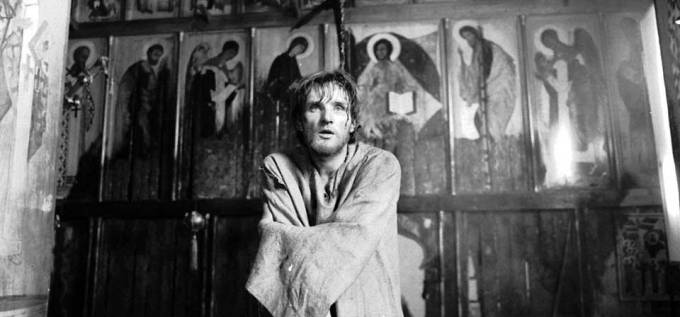
The film is separated into seven chapters in Andrei Rublev’s life, The Jester, Theophanes the Greek, The Holiday, The Last Judgement, The Raid, The Charity Winter, and The Bell. In the beginning Andrei (Anatoly Solonitsyn), Daniil (Nikolai Grinko) and Kirill (Ivan Lapikov) are three traveling monks looking for work as icon painters in the year 1400. Seeking shelter from a heavy rain, they enter a small barn full of local villagers being entertained by a jester whose sarcasm and bitter rebuke of the church and the state gets him arrested by nearby soldiers who knock him unconscious and smash his stringed instrument before carting him off. This scene in itself gets to the larger themes at hand, mainly the struggle of working as an artist under a repressive regime that cracks down on any and all dissidents. Openly exploring these ideas is most likely why it was shut down so quickly by the Soviet Union in the 1960’s.

andrei-rublev-1966-005-rublev-holding-paintings-00m-g9c

Throughout the rest of the film we get pieces of the icon painters life during different periods of his life, from his teachings under ‘Theophanes the Greek’ to his witnessing of a Tartar raid on the city of Vladimir. The Tartar raid was one of my favorite sequences in the film, partly because it showcased the madness of living at the time but also because it had some of the most active action and cinematography of the whole film. Oh and horses, Tarkovsky loves his horse imagery in film, and he uses them to great effect here. From a man being dragged by horse through a chaotic scene inside the church to the general chaos of soldier-less horses navigating wooden staircases, to their aimless wandering amongst the scenery; Tarkovsky made some unique choices here as a director that elevated the immersion for me throughout this scene. In fact, this whole sequence has essentially the only direct action that Rublev takes as a character in the whole of the film- he saves an uneducated woman from the clutches of a Tartar soldier, and even this happens just outside of the frame so that we are clued into this uncharacteristic burst of character action. Which is all well and good, but brace yourself for the return of inactivity and passivity as our main character goes on a vow of silence for a majority of the remainder of the film. 

Rublev11-1366x768

For me, “Andrei Rublev” is the least engaging film of Tarkovsky’s that I’ve seen thus far (Only “The Sacrifice” and “Nostalghia” remain), but this could be the result of many factors. At this point my favorite Tarkovsky films have been “Stalker” and “Solaris”, and I think it’s because in those films Tarkovsky uses science fiction to pose long and thoughtful debates about philosophical ideas with characters that hold well defined positions. In Rublev, Tarkovsky is more experimental, relies less on dialogue, and created a story that’s heavily steeped in Russian history- a subject with which I am terribly unfamiliar with. Which isn’t to say that any of this is bad or that the film deserves marks against it- it’s just what contributed to my personal lack of fascination with the film. Even the cinematography on display in Rublev lacks the tactile and dreamlike composure that was present in “Ivan’s Childhood” and later used to great effect in “Stalker” and “The Mirror” in particular. This may just be a film that I need to digest further and give another viewing or two to really immerse myself in the story at hand and the execution of that plot on display.

Final Score: 1 Bitter Jester & 3 Monks

film

Review Double Feature: “Halloween” (1978) & “Halloween” (2018)

halloween-movie-screencaps.com-

Written by Debra Hill and John Carpenter and directed by Carpenter, “Halloween” is a cinematic pillar of the Horror genre and typically recognized as the first film in what would become the Slasher sub-genre that would dominate horror films over the next decade. Since there’s a new sequel out now that ties itself so directly to the DNA of the original haunting film, I figured now would be as good a time as any to squeeze in a quick recap of the first night he came home.

laurie

Admittedly, there’s not much more I can add to the long gestating conversation surrounding the original “Halloween”. It’s a brilliantly simple premise executed with precision and a deft guiding hand with Carpenter at the wheel. Michael Myers instantly became iconic and inspired hundreds, if not more, of homages and send-ups from across the country and the world over time. The tale of Laurie Strode (Jamie Lee Curtis), the first “final girl”, is one buried in anxiety and nightmarish fear. The film ingrains in the audience a slow burning sensation of being watched, pursued, and hunted by the shape of evil in human form. Carpenter’s cinematography, sound design, and score all heavily add to the thick atmosphere that permeates the frame.

Loomis-in-front-of-Myers-house.png

The two performances that ground the film, while simultaneously elevating it, are that of Jamie Lee Curtis’ Laurie and Donald Pleasence’s Dr. Loomis. In a somewhat ironic event Curtis imbued Strode with enough character and personality that she escaped what would become the tropes of becoming what her character inspired in so many slasher horror genre films over the next twenty years. Maybe she was more memorable because she was one of the first of her kind in cinema, but I like to think there’s more to it than that. The addition of Jamie Lee Curtis to the cast also brought a bit of film royalty to the production as her mother was Janet Leigh, most well known for her starring role as Marion Crane in “Psycho” eighteen years prior. Pleasence himself was an English actor with a lengthy and prestigious career, he was the original Blofeld in the James Bond films after all. Much like “Star Wars” casting several well known prolific English actors in Alec Guinness and Peter Cushing in their first film, “Halloween” benefits greatly from his contributions. As Dr. Loomis, Pleasence is mostly cornered into exposition and giving dire warnings about the threat of Michael Myers, but damn, he does it with a serious yet tempered skill. His concern of the potential threat really gives us pause the next time Myers appears onscreen.

Final Score: 1,978 carved pumpkins

Halloween-2018-banner

Written by Jeff Fradley, Danny McBride, and David Gordon Green, and directed by Green, “Halloween” sets itself up as the direct sequel to Carpenter’s initial haunt with The Shape. Getting Jamie Lee Curtis and Nick Castle to reprise their roles as Laurie Strode and Michael Myers was the absolute core of this film, if this hadn’t happened- this sequel would plainly not exist in any serious fashion. The seven original sequels and two remakes by Rob Zombie in the forty year interim have been completely disregarded and cast aside by this latest film in the seemingly never-ending franchise. Gone are the explanations and reasoning behind why Michael Myers does what he does. He is no longer the brother to Laurie, he isn’t a cursed soul, no Celtic mysticism, and Laurie isn’t dead either. This film was an attempt to return to the simple and powerful nature of that first film and I think it captures that spirit fairly well. It’s probably the best of everything that came after Carpenter’s original film.

landscape-1540290133-halloween-sequel-jamie-lee-curtis-lead

This isn’t to say there aren’t some weak links here though. Some characters exist only to literally move the plot along at times, and some won’t like the twist that takes place somewhere near the beginning of the third act (no spoilers here), and although I’ve heard that many had issues with the humor in the film- most of it worked for me. I don’t want to over-explain this film because it’s simplicity keeps things moving at a relatively quick pace and going into too many details would be a bit of a disservice, on my part. What I can say is that when the movie is firing on all cylinders, it works magnificently. It’s raw, unnerving, and brutal. The score, once again crafted by John Carpenter with some help from his son as well, is insanely effective here. There are flashes and rhythms of the original score with the iconic theme but it’s never over utilized. Jamie Lee Curtis is the framework of the film- her dedicated performance ties everything together with realistic portrayals of decades of anxiety and traumatic paranoia. She’s effectively crafted a layered person under all the nightmare fueled preparation that Laurie’s been up to these forty years. Nick Castle returning as Myers was the other necessary pillar of the film, and while this may be a character without a voice- his physicality speaks volumes. He made the horror icon a terror again. If you haven’t seen the new “Halloween” yet, this is the perfect weekend to give it a shot- especially if you’re a fan of the original film as the filmmakers themselves were and they’ve thrown in plenty of visual throwbacks to that first Slasher film. Happy Halloween everyone!

Final Score: 2,018 Bloodied knives

film

Review: Bad times at the El Royale

Written and directed by Drew Goddard, “Bad times at the El Royale” is a thriller set at the El Royale, a hotel that straddles the state lines between California and Nevada, while housing a number of guests with pasts as mysterious as the hotel itself. It’s a shame this film didn’t find its audience at the box office, it grossed only a pittance over seven million during its opening weekend, because I loved this film. The cast is the single greatest asset of the film, but the writing, cinematography, and twisty turns that the plot takes are also incredibly well executed. Much like Quentin Tarantino in the compartmentalization of the story beats with reveals and flashbacks, not to mention some classy stylistic choices, Goddard perfectly poises the seven strangers that collide into each other’s lives that day at the past-its-prime establishment. Each character has a past that clearly identifies their motivations and intent- but the film strings along it’s secrets at the perfect pace to keep the audience on edge and curious as to what the hell is happening at any interval.

10c3062184ec4d04aea5a8afa45f26d5_31a3e14987ee4e0fb8134d5866706e3c_header.jpeg

Set in the late 1960’s, the film opens with motown R&B singer Darlene Sweet (Cynthia Erivo) and Father Daniel Flynn (Jeff Bridges) making small talk on their way into the hotel. Upon crossing the threshold they find an empty lobby, with the exception of fast-talking vacuum salesman Laramie Seymour Sullivan (Jon Hamm) searching the cupboards for coffee. Eventually the young and anxious concierge Miles Miller (Lewis Pullman) is successfully summoned and begins to dole out room keys before the last guest, Emily Summerspring (Dakota Johnson), arrives abruptly- with a hearty nonchalant attitude.

Once everyone is introduced and acquainted the film is split into vignettes concerning each room and its tenants. Every character has their own goals throughout the film and as each is unveiled the timeline of overlapping events becomes clearer. The standout performances of the cast were Jeff Bridges as Father Flynn and Cynthia Erivo’s Darlene Sweet. Erivo was a breakout talent here with heart and a crystalline wit about her- she won’t suffer any fools, not anymore. Bridges’ tragic Flynn has more to his tale then he lets on, but then again every character involved does. Chris Hemsworth’s Billy Lee steals the show once he enters the frame, though he isn’t present until the third act is underway. A self absorbed cult leader channeling the likes of Jim Jones and Charles Manson, Billy Lee’s appearance is due to the actions of Ruth (Cailee Spaeny), a younger woman in her late teens seemingly obsessed with the cultist, who also appears to be kidnapped by the ever cynical Emily.

Bad-Times-El-Royale-CastBAD-TIMES_img-3_photo-credit-Kimberley-French-e1538081712530

I don’t want to dive too deep into the plot details, mainly because I believe that this is one of those films that’s better with less information going into the movie, but also because there’s a lot to unpack with each new character’s introduction and all of the secrecy that accompanies them. If you enjoy a good mystery based in the world of a crime thriller, you’ll probably enjoy your time with this film. This is the kind of movie that I tend to gravitate towards, but not everyone will appreciate the slow burn approach to this tale either. At roughly two and a half hours, this film is a bit beefier than most concerning runtime- but I personally thought the pacing and intrigue was executed well enough to never lose interest. I can only speak to my own experience though, as I’ve heard the runtime negatively effected some viewers opinions.

Final Score: Seven strangers meet under serendipitous circumstances

film

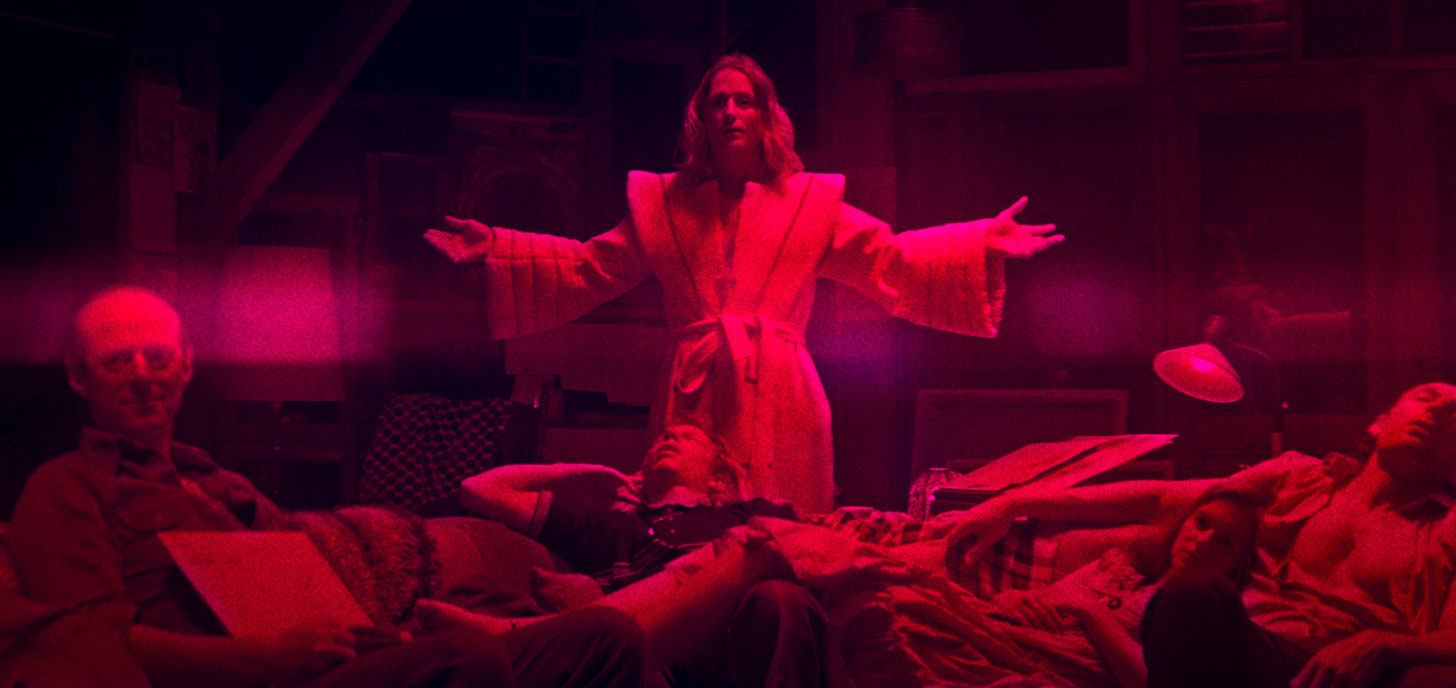
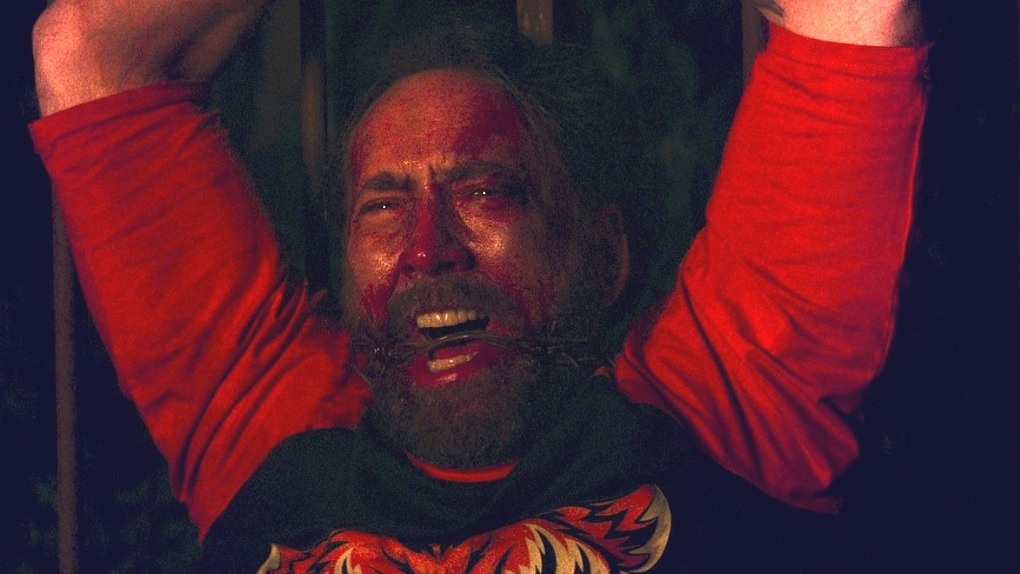
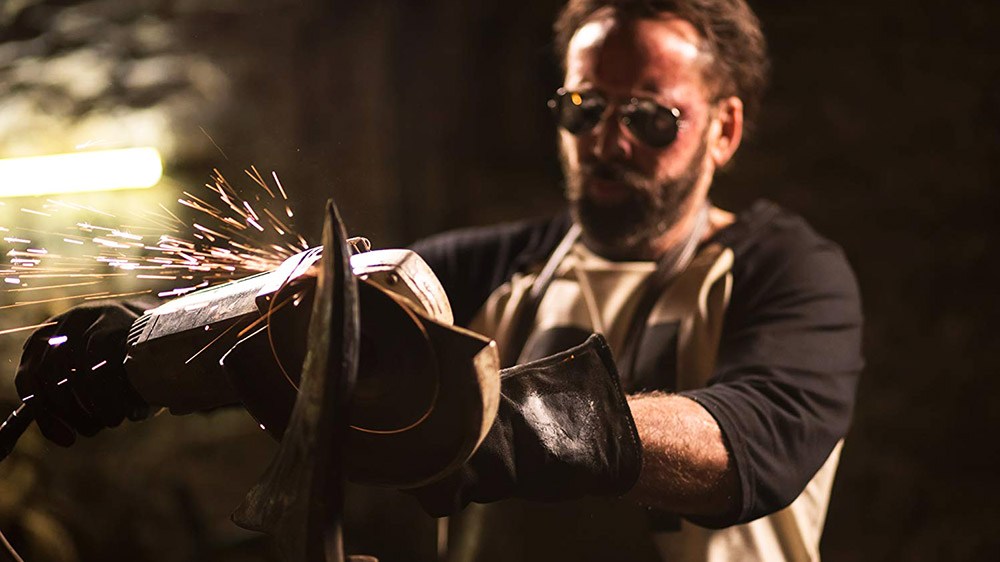
Review: Mandy (2018)

Written by Aaron Stewart-Ahn and Panos Cosmatos, and directed by Cosmatos, “Mandy” is a revenge movie drenched in cosmic horror. Starring in the lead is well documented cinematic mad man Nicolas Cage as Red Miller, a simple logger and heavy metal admirer living deep in the forested Shadow Mountains in 1983 with his fantasy artist lover Mandy (Andrea Riseborough). Together they lead a quiet, small, life in their cabin watching late night movies or burying their noses in pulpy fantasy paperbacks. Thus it isn’t long before a chaotic evil enters their lives, perhaps sensing the coming doom Red articulates this aloud one night mumbling, “Sometimes I wonder if we should leave this place..

oqRvCppr102As9yf5KMgng


Enter the Children of the new Dawn. Led by the fanatically deranged Jeremiah Sand (Linus Roache), the hippy zealots happen to pass Mandy on her walk to work one day and after Jeremiah eyes her, he decides that she’s his. He gives several monologues that are typical of a cult leader, because he is “special”– only Jeremiah can be the conduit between man and gods, who have told him that everything on the earthly plane belongs to him for his servitude. So, he sends out a few followers to summon demons, or inter-dimensional cenobites (or whatever you’d like to call them), riding black motorcycles, adorned in costumes with leather spikes, and leaking some disgusting fluid. After the metal bikers from another dimension arrive, Jeremiah and his zealots overpower Red and Mandy in a home invasion. Jeremiah’s followers heavily drug Mandy and bring her to Jeremiah where upon hearing his musings and master plan, she denies him with cackling laughter. A few scenes later after some intense motivation building for Red, he’s finally given the reigns of the story and we follow him on his journey of vengeance into madness.

YXJ0aWNsZU1haW4vMjIxNDY5

The rest of the film is fairly straightforward from this point on, with things getting progressively stranger the closer Red gets to exacting his revenge on Jeremiah. So this film, I have to say, probably has the most unique vision I’ve seen all year (Admittedly I haven’t seen some summer flicks like “Sorry to Bother you” and “Black Klansman” yet). This is the first film I’ve seen from Panos Cosmatos, but his directorial style reminded me most of a Heavy Metal and Fantasy spin on David Lynch’s slow moving and painterly methodology. This film is far more art-house than the marketing indicates, and thus those seeking an action filled thriller could be greatly disappointed. This is a film that demands your patience, and it isn’t necessarily going to hold your hand through the bog of heavy metal insanity. Those willing to grant the film a watch will get some of the ridiculously violent tone that the trailers and marketing hinted at, just at a much slower pace, and far less of it than may be expected. This is a slow, brooding, film that doesn’t sacrifice vision for marketability- which is admirable in today’s world of cinema.

mandy-1

I think the two most salient aspects of the film are the color palette and the score, or at least those are the two most overwhelming senses. After all, what is film but light and sound? The film is awash in bellowing reds, deep shimmering blues, and flashes of brilliant greens. The score itself is a major aspect of the mood of the film. The near constant grumble of heavy chords echo Red’s boiling rage and primal instincts as his quest for vengeance evolves throughout the story. This film is as close as you could get to walking into a Heavy Metal album cover art and milling around the disparate wastelands and otherworldly landscapes. There may be hundreds of revenge flicks out there, but I assure you- there are none quite like “Mandy”.

cage-mandy

Final Score: There’s only 1 Cheddar Goblin!

film

Old School Review: “I live in Fear” (1955)

Caution: There will be spoilers..

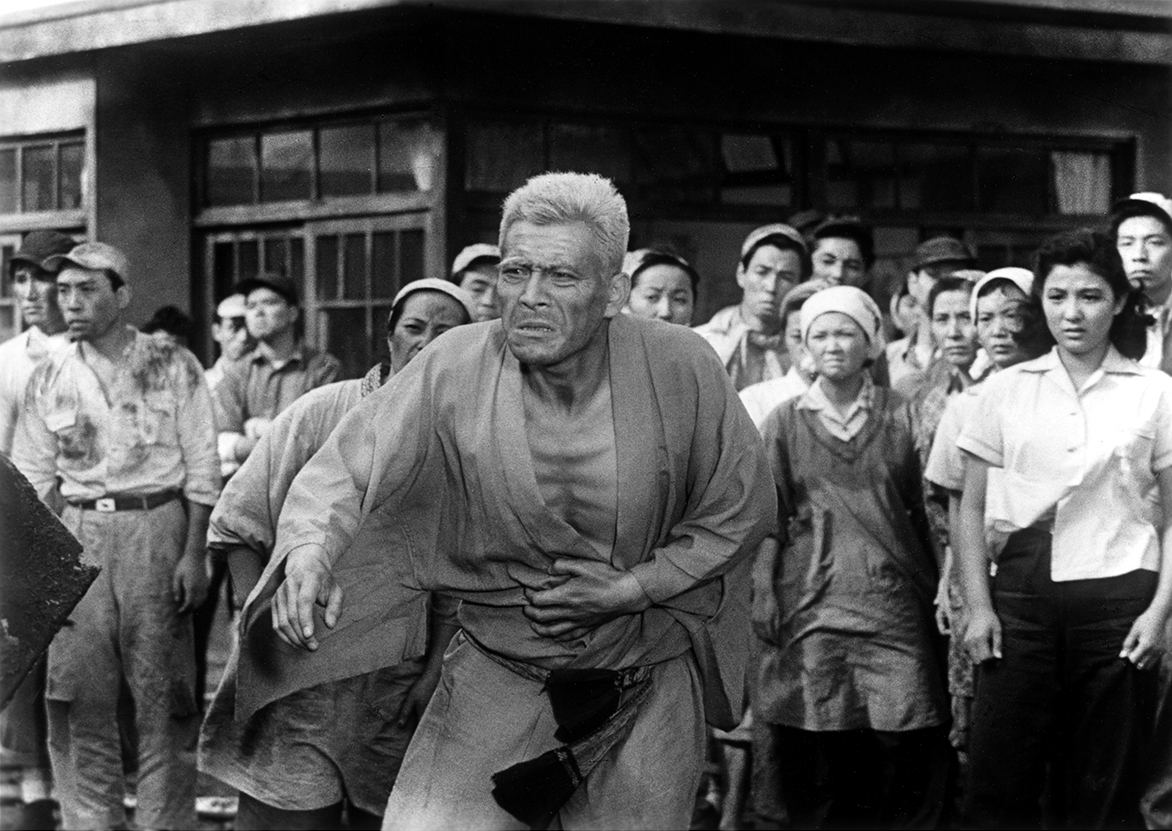
Written and directed by Akira Kurosawa, “I Live in Fear” is the legendary filmmaker’s most direct attempt at fictionalizing the very real social anxieties sweeping Japan post World War Two. The film opens on an unfolding case being discussed in family court. Kiichi Nakajima (Toshiro Mifune) is a successful, elder, Japanese industrialist that has been taken to court by his family for the unreasonable use of his funds to secure land in Brazil, the only place on earth Mr. Nakajima believes to be safe from Nuclear Annihilation. He wishes to purchase a farm in the South American country and to bring his family with him- to which the whole family objects. Granted, most of the family doesn’t want to uproot their entire lives just to assuage the fears of Kiichi, but as the film progresses we get the impression that the family would have gone on without acknowledging the man’s paranoia and mental health IF he hadn’t begun to use his wealth, their inheritance, to fund several projects that he thought would protect his loved ones from an irradiated doom.

9b149e5d3e00a9441b40519bb66681ff

After much deliberation the family court approves the family’s petition, that Mr. Nakajima’s actions and intentions deem him mentally unfit. Naturally he appeals the notion and as the court machinations move forward Mr. Nakajima only becomes more frenzied with each passing hour. As he unravels, he fails to understand why everyone around him can be so calm when the very fact that the H bomb exists at all should concern every living soul with grave danger. One of the more powerful scenes in the film, in my opinion, happens during a visit to one of his mistresses (the film doesn’t shy away from the fact that our lead isn’t perfect) as he mistakes lightning and thunder to be another bomb dropping- he dives for his youngest son and startles him awake, at which point the mistress snatches her child up and looks at Kiichi with fearful eyes. Eventually he is so distraught by a son-in-law’s suggestion that even Brazil wouldn’t be safe from the fallout of nuclear war, that Kiichi takes drastic measures and sets the family foundry ablaze. The foundry was the source of the family’s wealth- which Kiichi eventually only saw as a deterrent to moving to safety.

ILIVEINFEAR

Throughout the film Kurosawa wisely placed Takashi Shimura as the moral center, and therefore soul of the film, in Dr. Harada. In the role as a dentist that’s been accepted by the local community to be on the board of the family court, Dr. Harada is often the one individual to question the group’s assumptions and point out when Mr. Nakajima makes logical points of contention. After Shimura’s spellbinding performance in Kurosawa’s “Ikiru” in 1952, it was a cinematic pleasure seeing two of Kurosawa’s most lauded performers onscreen together. Granted, I’m watching Kurosawa’s films out of order, so this may not be as momentous as it felt to me at the time. The two actors play off of each other brilliantly, with Shimura’s reserved and quiet performance set against the rigidity and barely contained anger of Mifune’s Kiichi- it’s an excellent pairing of personalities.

897id_336_020_w1600

Kurosawa presents an argument in the film, which party is the sane one? Mr. Nakajima, who’s trying to save lives and avoid nuclear disintegration? Or the World around him that neglects his worries as trivial and misguided. Sirens wail in the background throughout the film and most of the characters have a sort of laissez-faire attitude about the whole idea of nuclear annihilation. Several even acknowledge that while Mr. Nakajima had gone too far- they couldn’t accurately articulate why he should be deemed mentally incompetent. The film’s final scene encapsulates this dichotomy visually with Mr. Nakajima institutionalized in a psychiatric ward. Dr. Harada leaves the institution, having just witnessed a man broken by paranoia, just as Nakajima’s daughter enters and both are anchored in a mourning and uneasiness as they each enter a world that harbors curious intent.

iliveinfear12

In reading what others have said about this film I came across the perfect summary of where the film’s head-space lives. In an article from Slate in 2008, by Fred Kaplan, he extrapolates that if someone were to make a similar film on the American psyche post 9/11 “[they] might cover and somehow dramatize: the line between obsession and obliviousness, between whimpering terror and blithe denial; the undeterminable toll on our ‘unconscious minds’ from embracing either course; and the question of whether it’s possible to lead a fully conscious, sane life on some road in between“. All of which is crafted here exquisitely by Akira Kurosawa and his crew. This tragedy is worth a watch, if only to recognize how the outcomes of war can affect a society and it’s people.


Final Score: Two minutes, ’til midnight

film

Old School Review: “Wings of Desire” (1987)

Caution: This movie is over thirty years old- there will be spoilers!

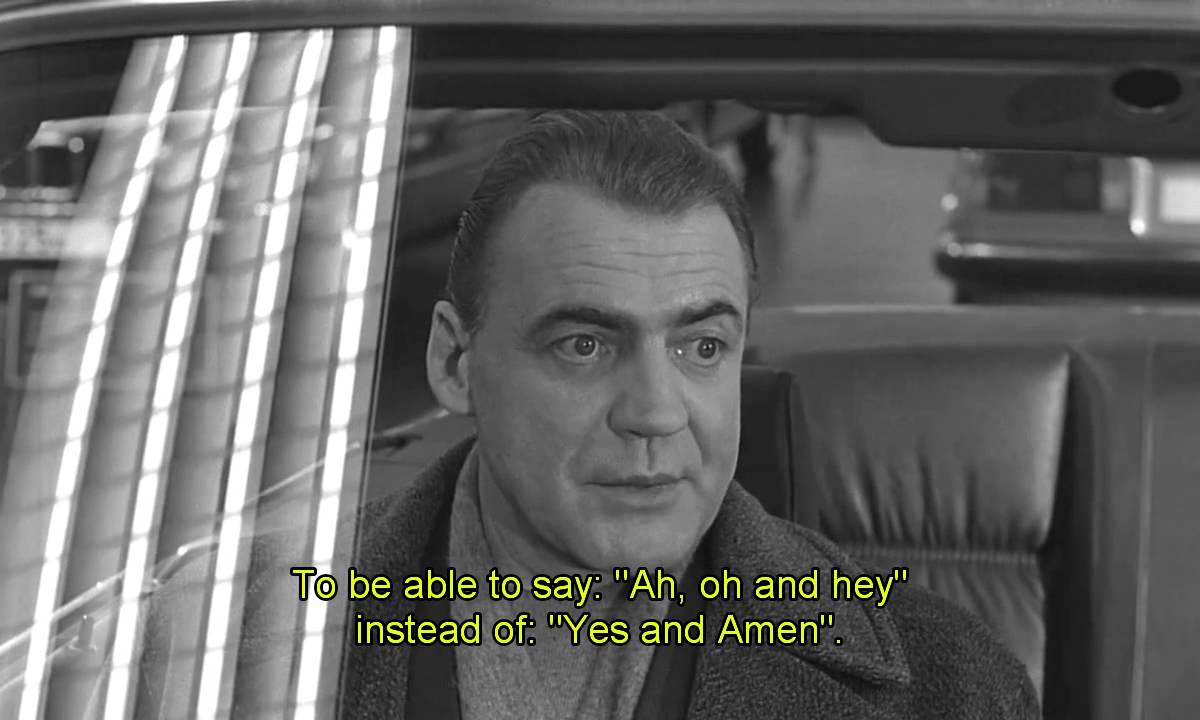
Written by Peter Handke and Wim Wenders and directed by Wenders, “Wings of Desire” is a German arthouse fantasy film about two angels stationed in Berlin that observe the inner thoughts and outer actions of the many citizens they choose to monitor at any given moment. The film can be understood in two parts in my opinion. The first half of the film consists of an introduction to how the angels go about their unending time, who they choose to listen to, and who to comfort in small and almost unnoticeable ways. This half illuminates the musings of the soul that these angelic figures eavesdrop on as they witness, observe, and record the thoughts and feelings of thousands in Berlin. The second half comes when Damiel (Bruno Ganz) wanders upon a circus and begins to fall in love with the female trapeze artist Marion (Solveig Dommartin). Afterwards Damiel,  whose been observing humanity for thousands of years now, becomes enraptured by the idea of leaving immortality behind for the bittersweet, romantic, and melancholic nature of life. He discusses this idea at length with his angelic counterpart Cassiel (Otto Sander), who seems to dismiss his friend’s fascination with the possibility of living a life with risk in it.

maxresdefault

What I love most about this film is it’s balance between the solemn deadpan nature of the Angels’ existence (shown exclusively in black and white) set against the multifaceted and blended world of the living- which is shot in waves of color. This is one of those films that you admittedly have to be in the right mood to digest. It’s more about absorbing the moving imagery and pondering the larger than life questions and ambiguities of life rather than a focused narrative, though there is a through-line of thought taking place. Poetic in nature and more interested in what people aren’t saying, “Wings of desire” shows an angel that is more concerned with what makes a life worth living rather than his own heavenly duties. Or to put it more bluntly, he’s gotten bored and uninterested in the angelic listening gig after a few thousand years. Marion triggers something in him, something that ultimately drives him to give it all up to be with her, to aide her in navigating her own sadness and to be a more present guardian.

asas-do-desejo-1

In some light prep for this review, another reviewer referenced this film as being a “modern fairy tale about the nature of being alive” and I couldn’t agree more. This comes mostly from what we hear, alongside the angels, from the minds of everyday people. One particularly fascinating character was that of Homer (Curt Bois), an elderly author or historian of some fashion. His comparisons with the Berlin of old, with the empty spaces or new buildings that have replaced the locations of memory are enlightening. Back in the library, with Cassiel peering over his shoulder listening and watching, Homer wonders about the nature of war and peace and the obsession that is paired with War- but not peace, “My heroes are no longer the warriors and kings.. but the things of peace, one equal to the other. The drying onions equal to the tree trunk crossing the marsh. But no one has so far succeeded in singing an epic of peace. What is wrong with peace that its inspiration doesn’t endure.. and that its story is hardly told?” Homer considers himself mankind’s storyteller, though this idea as expressed by the actor suggests that the self appointed title goes hand in hand with his humility- not pride. As this old man reflects on life and it’s mysteries in the library, his monologue is juxtaposed against footage from the chaos and death that besieged Berlin after/during the third Reich’s fall. This kind of storytelling seems to be a product of societies that have gone through incredible pain and loss on grand scales. There are similar, at least it seems to me, creative machinations at play in artists trying to sort out their country’s faults or miscalculations amid a general sense of nihilism, or existential crisis. This can be found in filmmakers in comparable situations, like Akira Kurosawa and his string of post-war films in Japan for example.

tumblr_oe0jdoZiVK1v4a8wfo1_500
wings-of-desire (1)

Peter Falk (best known for his TV detective character Columbo) has a playful role here as a convincing version of himself. He too gets to muse in some hypnotic inner dialogue, preoccupied with his upcoming role in Berlin on the flight from America. It’s not until he reveals to both Damiel and us the audience, that he can feel the presence of Damiel the angel, and he knows that Damiel can hear him. This being due to the fact that Falk too was once an angel that gave it all up thirty years prior in New York City. This could have broken the immersion and illusion of the story but it’s wisely played down and not focused on too heavily. In the end if you’re looking for a somber stroll through late 1980’s Berlin while heavy with thoughts spiraling from anti-war nihilism to the nature of love and the awe in simply living- then I would certainly recommend it.

Final Score: Two Angels and a Circus