film

Review Double Feature: “Halloween” (1978) & “Halloween” (2018)

halloween-movie-screencaps.com-

Written by Debra Hill and John Carpenter and directed by Carpenter, “Halloween” is a cinematic pillar of the Horror genre and typically recognized as the first film in what would become the Slasher sub-genre that would dominate horror films over the next decade. Since there’s a new sequel out now that ties itself so directly to the DNA of the original haunting film, I figured now would be as good a time as any to squeeze in a quick recap of the first night he came home.
laurie

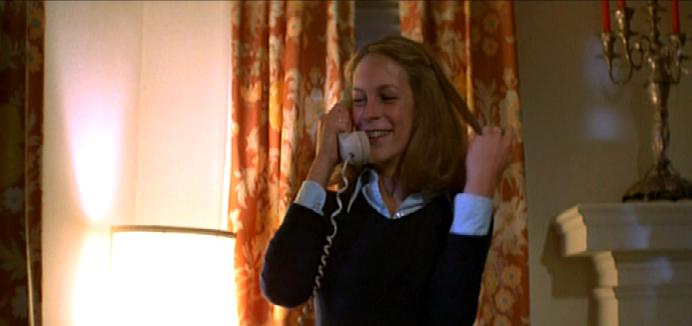
Admittedly, there’s not much more I can add to the long gestating conversation surrounding the original “Halloween”. It’s a brilliantly simple premise executed with precision and a deft guiding hand with Carpenter at the wheel. Michael Myers instantly became iconic and inspired hundreds, if not more, of homages and send-ups from across the country and the world over time. The tale of Laurie Strode (Jamie Lee Curtis), the first “final girl”, is one buried in anxiety and nightmarish fear. The film ingrains in the audience a slow burning sensation of being watched, pursued, and hunted by the shape of evil in human form. Carpenter’s cinematography, sound design, and score all heavily add to the thick atmosphere that permeates the frame.
Loomis-in-front-of-Myers-house.png

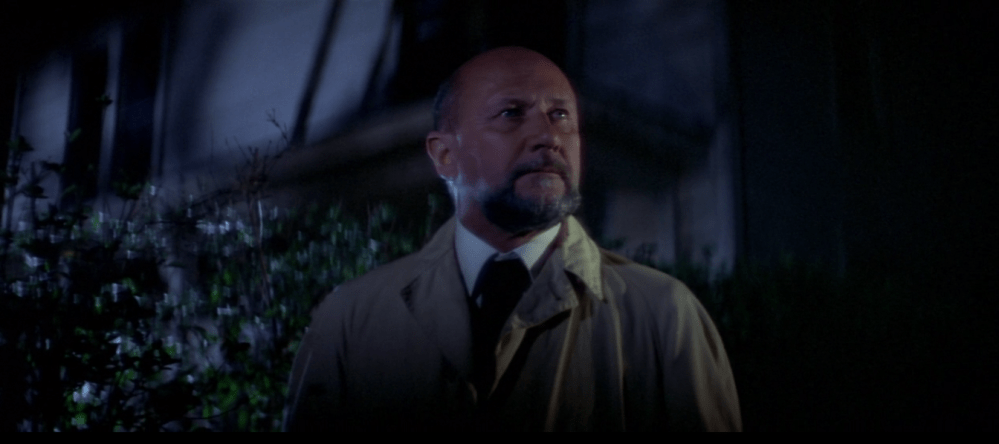
The two performances that ground the film, while simultaneously elevating it, are that of Jamie Lee Curtis’ Laurie and Donald Pleasence’s Dr. Loomis. In a somewhat ironic event Curtis imbued Strode with enough character and personality that she escaped what would become the tropes of becoming what her character inspired in so many slasher horror genre films over the next twenty years. Maybe she was more memorable because she was one of the first of her kind in cinema, but I like to think there’s more to it than that. The addition of Jamie Lee Curtis to the cast also brought a bit of film royalty to the production as her mother was Janet Leigh, most well known for her starring role as Marion Crane in “Psycho” eighteen years prior. Pleasence himself was an English actor with a lengthy and prestigious career, he was the original Blofeld in the James Bond films after all. Much like “Star Wars” casting several well known prolific English actors in Alec Guinness and Peter Cushing in their first film, “Halloween” benefits greatly from his contributions. As Dr. Loomis, Pleasence is mostly cornered into exposition and giving dire warnings about the threat of Michael Myers, but damn, he does it with a serious yet tempered skill. His concern of the potential threat really gives us pause the next time Myers appears onscreen.

Final Score: 1,978 carved pumpkins

Halloween-2018-banner

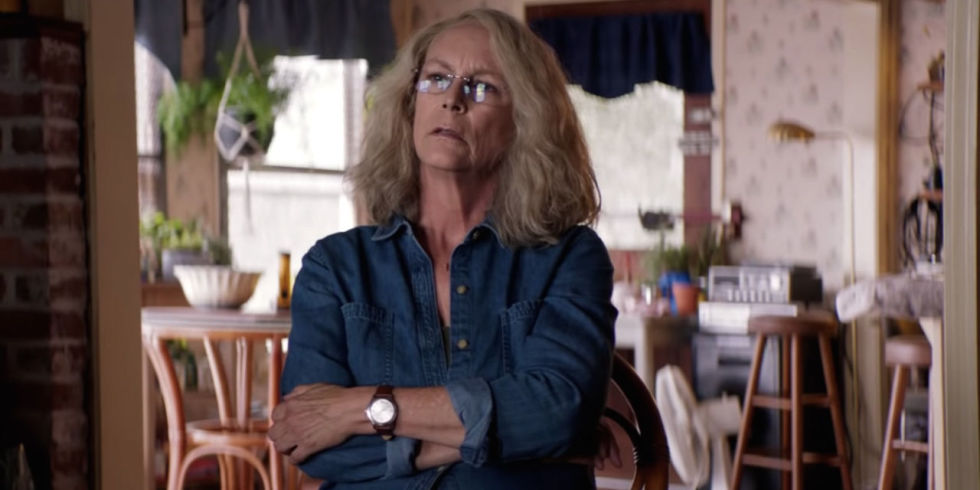
Written by Jeff Fradley, Danny McBride, and David Gordon Green, and directed by Green, “Halloween” sets itself up as the direct sequel to Carpenter’s initial haunt with The Shape. Getting Jamie Lee Curtis and Nick Castle to reprise their roles as Laurie Strode and Michael Myers was the absolute core of this film, if this hadn’t happened- this sequel would plainly not exist in any serious fashion. The seven original sequels and two remakes by Rob Zombie in the forty year interim have been completely disregarded and cast aside by this latest film in the seemingly never-ending franchise. Gone are the explanations and reasoning behind why Michael Myers does what he does. He is no longer the brother to Laurie, he isn’t a cursed soul, no Celtic mysticism, and Laurie isn’t dead either. This film was an attempt to return to the simple and powerful nature of that first film and I think it captures that spirit fairly well. It’s probably the best of everything that came after Carpenter’s original film.
landscape-1540290133-halloween-sequel-jamie-lee-curtis-lead

This isn’t to say there aren’t some weak links here though. Some characters exist only to literally move the plot along at times, and some won’t like the twist that takes place somewhere near the beginning of the third act (no spoilers here), and although I’ve heard that many had issues with the humor in the film- most of it worked for me. I don’t want to over-explain this film because it’s simplicity keeps things moving at a relatively quick pace and going into too many details would be a bit of a disservice, on my part. What I can say is that when the movie is firing on all cylinders, it works magnificently. It’s raw, unnerving, and brutal. The score, once again crafted by John Carpenter with some help from his son as well, is insanely effective here. There are flashes and rhythms of the original score with the iconic theme but it’s never over utilized. Jamie Lee Curtis is the framework of the film- her dedicated performance ties everything together with realistic portrayals of decades of anxiety and traumatic paranoia. She’s effectively crafted a layered person under all the nightmare fueled preparation that Laurie’s been up to these forty years. Nick Castle returning as Myers was the other necessary pillar of the film, and while this may be a character without a voice- his physicality speaks volumes. He made the horror icon a terror again. If you haven’t seen the new “Halloween” yet, this is the perfect weekend to give it a shot- especially if you’re a fan of the original film as the filmmakers themselves were and they’ve thrown in plenty of visual throwbacks to that first Slasher film. Happy Halloween everyone!

Final Score: 2,018 Bloodied knives
film

Review: Bad times at the El Royale

Written and directed by Drew Goddard, “Bad times at the El Royale” is a thriller set at the El Royale, a hotel that straddles the state lines between California and Nevada, while housing a number of guests with pasts as mysterious as the hotel itself. It’s a shame this film didn’t find its audience at the box office, it grossed only a pittance over seven million during its opening weekend, because I loved this film. The cast is the single greatest asset of the film, but the writing, cinematography, and twisty turns that the plot takes are also incredibly well executed. Much like Quentin Tarantino in the compartmentalization of the story beats with reveals and flashbacks, not to mention some classy stylistic choices, Goddard perfectly poises the seven strangers that collide into each other’s lives that day at the past-its-prime establishment. Each character has a past that clearly identifies their motivations and intent- but the film strings along it’s secrets at the perfect pace to keep the audience on edge and curious as to what the hell is happening at any interval.
10c3062184ec4d04aea5a8afa45f26d5_31a3e14987ee4e0fb8134d5866706e3c_header.jpeg

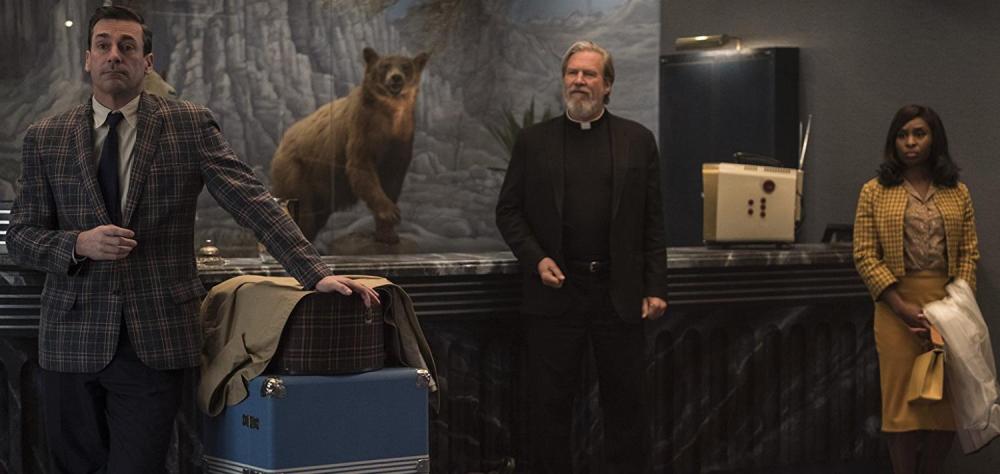
Set in the late 1960’s, the film opens with motown R&B singer Darlene Sweet (Cynthia Erivo) and Father Daniel Flynn (Jeff Bridges) making small talk on their way into the hotel. Upon crossing the threshold they find an empty lobby, with the exception of fast-talking vacuum salesman Laramie Seymour Sullivan (Jon Hamm) searching the cupboards for coffee. Eventually the young and anxious concierge Miles Miller (Lewis Pullman) is successfully summoned and begins to dole out room keys before the last guest, Emily Summerspring (Dakota Johnson), arrives abruptly- with a hearty nonchalant attitude.

Once everyone is introduced and acquainted the film is split into vignettes concerning each room and its tenants. Every character has their own goals throughout the film and as each is unveiled the timeline of overlapping events becomes clearer. The standout performances of the cast were Jeff Bridges as Father Flynn and Cynthia Erivo’s Darlene Sweet. Erivo was a breakout talent here with heart and a crystalline wit about her- she won’t suffer any fools, not anymore. Bridges’ tragic Flynn has more to his tale then he lets on, but then again every character involved does. Chris Hemsworth’s Billy Lee steals the show once he enters the frame, though he isn’t present until the third act is underway. A self absorbed cult leader channeling the likes of Jim Jones and Charles Manson, Billy Lee’s appearance is due to the actions of Ruth (Cailee Spaeny), a younger woman in her late teens seemingly obsessed with the cultist, who also appears to be kidnapped by the ever cynical Emily.

Bad-Times-El-Royale-CastBAD-TIMES_img-3_photo-credit-Kimberley-French-e1538081712530

I don’t want to dive too deep into the plot details, mainly because I believe that this is one of those films that’s better with less information going into the movie, but also because there’s a lot to unpack with each new character’s introduction and all of the secrecy that accompanies them. If you enjoy a good mystery based in the world of a crime thriller, you’ll probably enjoy your time with this film. This is the kind of movie that I tend to gravitate towards, but not everyone will appreciate the slow burn approach to this tale either. At roughly two and a half hours, this film is a bit beefier than most concerning runtime- but I personally thought the pacing and intrigue was executed well enough to never lose interest. I can only speak to my own experience though, as I’ve heard the runtime negatively effected some viewers opinions.

Final Score: Seven strangers meet under serendipitous circumstances

film

Review: Mandy (2018)

Written by Aaron Stewart-Ahn and Panos Cosmatos, and directed by Cosmatos, “Mandy” is a revenge movie drenched in cosmic horror. Starring in the lead is well documented cinematic mad man Nicolas Cage as Red Miller, a simple logger and heavy metal admirer living deep in the forested Shadow Mountains in 1983 with his fantasy artist lover Mandy (Andrea Riseborough). Together they lead a quiet, small, life in their cabin watching late night movies or burying their noses in pulpy fantasy paperbacks. Thus it isn’t long before a chaotic evil enters their lives, perhaps sensing the coming doom Red articulates this aloud one night mumbling, “Sometimes I wonder if we should leave this place..

oqRvCppr102As9yf5KMgng


Enter the Children of the new Dawn. Led by the fanatically deranged Jeremiah Sand (Linus Roache), the hippy zealots happen to pass Mandy on her walk to work one day and after Jeremiah eyes her, he decides that she’s his. He gives several monologues that are typical of a cult leader, because he is “special”– only Jeremiah can be the conduit between man and gods, who have told him that everything on the earthly plane belongs to him for his servitude. So, he sends out a few followers to summon demons, or inter-dimensional cenobites (or whatever you’d like to call them), riding black motorcycles, adorned in costumes with leather spikes, and leaking some disgusting fluid. After the metal bikers from another dimension arrive, Jeremiah and his zealots overpower Red and Mandy in a home invasion. Jeremiah’s followers heavily drug Mandy and bring her to Jeremiah where upon hearing his musings and master plan, she denies him with cackling laughter. A few scenes later after some intense motivation building for Red, he’s finally given the reigns of the story and we follow him on his journey of vengeance into madness.

YXJ0aWNsZU1haW4vMjIxNDY5

The rest of the film is fairly straightforward from this point on, with things getting progressively stranger the closer Red gets to exacting his revenge on Jeremiah. So this film, I have to say, probably has the most unique vision I’ve seen all year (Admittedly I haven’t seen some summer flicks like “Sorry to Bother you” and “Black Klansman” yet). This is the first film I’ve seen from Panos Cosmatos, but his directorial style reminded me most of a Heavy Metal and Fantasy spin on David Lynch’s slow moving and painterly methodology. This film is far more art-house than the marketing indicates, and thus those seeking an action filled thriller could be greatly disappointed. This is a film that demands your patience, and it isn’t necessarily going to hold your hand through the bog of heavy metal insanity. Those willing to grant the film a watch will get some of the ridiculously violent tone that the trailers and marketing hinted at, just at a much slower pace, and far less of it than may be expected. This is a slow, brooding, film that doesn’t sacrifice vision for marketability- which is admirable in today’s world of cinema.

mandy-1

I think the two most salient aspects of the film are the color palette and the score, or at least those are the two most overwhelming senses. After all, what is film but light and sound? The film is awash in bellowing reds, deep shimmering blues, and flashes of brilliant greens. The score itself is a major aspect of the mood of the film. The near constant grumble of heavy chords echo Red’s boiling rage and primal instincts as his quest for vengeance evolves throughout the story. This film is as close as you could get to walking into a Heavy Metal album cover art and milling around the disparate wastelands and otherworldly landscapes. There may be hundreds of revenge flicks out there, but I assure you- there are none quite like “Mandy”.

cage-mandy

Final Score: There’s only 1 Cheddar Goblin!

film

Old School Review: “I live in Fear” (1955)

Caution: There will be spoilers..

Written and directed by Akira Kurosawa, “I Live in Fear” is the legendary filmmaker’s most direct attempt at fictionalizing the very real social anxieties sweeping Japan post World War Two. The film opens on an unfolding case being discussed in family court. Kiichi Nakajima (Toshiro Mifune) is a successful, elder, Japanese industrialist that has been taken to court by his family for the unreasonable use of his funds to secure land in Brazil, the only place on earth Mr. Nakajima believes to be safe from Nuclear Annihilation. He wishes to purchase a farm in the South American country and to bring his family with him- to which the whole family objects. Granted, most of the family doesn’t want to uproot their entire lives just to assuage the fears of Kiichi, but as the film progresses we get the impression that the family would have gone on without acknowledging the man’s paranoia and mental health IF he hadn’t begun to use his wealth, their inheritance, to fund several projects that he thought would protect his loved ones from an irradiated doom.

9b149e5d3e00a9441b40519bb66681ff

After much deliberation the family court approves the family’s petition, that Mr. Nakajima’s actions and intentions deem him mentally unfit. Naturally he appeals the notion and as the court machinations move forward Mr. Nakajima only becomes more frenzied with each passing hour. As he unravels, he fails to understand why everyone around him can be so calm when the very fact that the H bomb exists at all should concern every living soul with grave danger. One of the more powerful scenes in the film, in my opinion, happens during a visit to one of his mistresses (the film doesn’t shy away from the fact that our lead isn’t perfect) as he mistakes lightning and thunder to be another bomb dropping- he dives for his youngest son and startles him awake, at which point the mistress snatches her child up and looks at Kiichi with fearful eyes. Eventually he is so distraught by a son-in-law’s suggestion that even Brazil wouldn’t be safe from the fallout of nuclear war, that Kiichi takes drastic measures and sets the family foundry ablaze. The foundry was the source of the family’s wealth- which Kiichi eventually only saw as a deterrent to moving to safety.

ILIVEINFEAR

Throughout the film Kurosawa wisely placed Takashi Shimura as the moral center, and therefore soul of the film, in Dr. Harada. In the role as a dentist that’s been accepted by the local community to be on the board of the family court, Dr. Harada is often the one individual to question the group’s assumptions and point out when Mr. Nakajima makes logical points of contention. After Shimura’s spellbinding performance in Kurosawa’s “Ikiru” in 1952, it was a cinematic pleasure seeing two of Kurosawa’s most lauded performers onscreen together. Granted, I’m watching Kurosawa’s films out of order, so this may not be as momentous as it felt to me at the time. The two actors play off of each other brilliantly, with Shimura’s reserved and quiet performance set against the rigidity and barely contained anger of Mifune’s Kiichi- it’s an excellent pairing of personalities.

897id_336_020_w1600

Kurosawa presents an argument in the film, which party is the sane one? Mr. Nakajima, who’s trying to save lives and avoid nuclear disintegration? Or the World around him that neglects his worries as trivial and misguided. Sirens wail in the background throughout the film and most of the characters have a sort of laissez-faire attitude about the whole idea of nuclear annihilation. Several even acknowledge that while Mr. Nakajima had gone too far- they couldn’t accurately articulate why he should be deemed mentally incompetent. The film’s final scene encapsulates this dichotomy visually with Mr. Nakajima institutionalized in a psychiatric ward. Dr. Harada leaves the institution, having just witnessed a man broken by paranoia, just as Nakajima’s daughter enters and both are anchored in a mourning and uneasiness as they each enter a world that harbors curious intent.

iliveinfear12

In reading what others have said about this film I came across the perfect summary of where the film’s head-space lives. In an article from Slate in 2008, by Fred Kaplan, he extrapolates that if someone were to make a similar film on the American psyche post 9/11 “[they] might cover and somehow dramatize: the line between obsession and obliviousness, between whimpering terror and blithe denial; the undeterminable toll on our ‘unconscious minds’ from embracing either course; and the question of whether it’s possible to lead a fully conscious, sane life on some road in between“. All of which is crafted here exquisitely by Akira Kurosawa and his crew. This tragedy is worth a watch, if only to recognize how the outcomes of war can affect a society and it’s people.


Final Score: Two minutes, ’til midnight

film

Old School Review: “Wings of Desire” (1987)

Caution: This movie is over thirty years old- there will be spoilers!

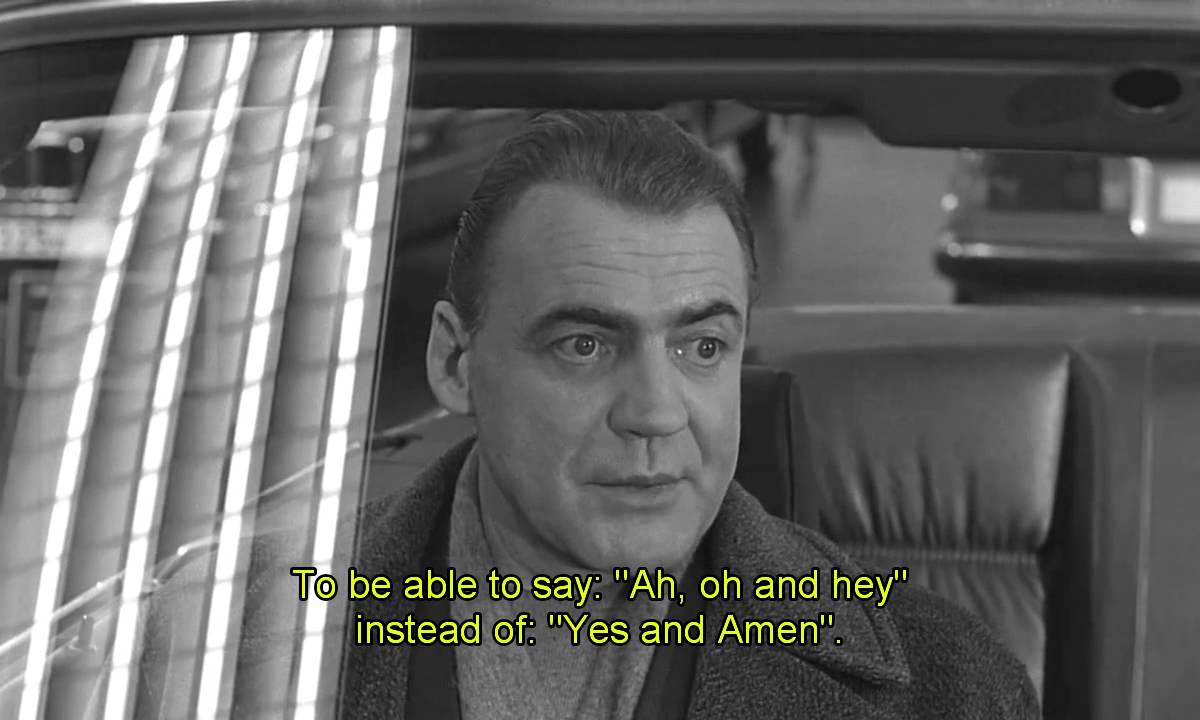
Written by Peter Handke and Wim Wenders and directed by Wenders, “Wings of Desire” is a German arthouse fantasy film about two angels stationed in Berlin that observe the inner thoughts and outer actions of the many citizens they choose to monitor at any given moment. The film can be understood in two parts in my opinion. The first half of the film consists of an introduction to how the angels go about their unending time, who they choose to listen to, and who to comfort in small and almost unnoticeable ways. This half illuminates the musings of the soul that these angelic figures eavesdrop on as they witness, observe, and record the thoughts and feelings of thousands in Berlin. The second half comes when Damiel (Bruno Ganz) wanders upon a circus and begins to fall in love with the female trapeze artist Marion (Solveig Dommartin). Afterwards Damiel,  whose been observing humanity for thousands of years now, becomes enraptured by the idea of leaving immortality behind for the bittersweet, romantic, and melancholic nature of life. He discusses this idea at length with his angelic counterpart Cassiel (Otto Sander), who seems to dismiss his friend’s fascination with the possibility of living a life with risk in it.

maxresdefault

What I love most about this film is it’s balance between the solemn deadpan nature of the Angels’ existence (shown exclusively in black and white) set against the multifaceted and blended world of the living- which is shot in waves of color. This is one of those films that you admittedly have to be in the right mood to digest. It’s more about absorbing the moving imagery and pondering the larger than life questions and ambiguities of life rather than a focused narrative, though there is a through-line of thought taking place. Poetic in nature and more interested in what people aren’t saying, “Wings of desire” shows an angel that is more concerned with what makes a life worth living rather than his own heavenly duties. Or to put it more bluntly, he’s gotten bored and uninterested in the angelic listening gig after a few thousand years. Marion triggers something in him, something that ultimately drives him to give it all up to be with her, to aide her in navigating her own sadness and to be a more present guardian.

asas-do-desejo-1

In some light prep for this review, another reviewer referenced this film as being a “modern fairy tale about the nature of being alive” and I couldn’t agree more. This comes mostly from what we hear, alongside the angels, from the minds of everyday people. One particularly fascinating character was that of Homer (Curt Bois), an elderly author or historian of some fashion. His comparisons with the Berlin of old, with the empty spaces or new buildings that have replaced the locations of memory are enlightening. Back in the library, with Cassiel peering over his shoulder listening and watching, Homer wonders about the nature of war and peace and the obsession that is paired with War- but not peace, “My heroes are no longer the warriors and kings.. but the things of peace, one equal to the other. The drying onions equal to the tree trunk crossing the marsh. But no one has so far succeeded in singing an epic of peace. What is wrong with peace that its inspiration doesn’t endure.. and that its story is hardly told?” Homer considers himself mankind’s storyteller, though this idea as expressed by the actor suggests that the self appointed title goes hand in hand with his humility- not pride. As this old man reflects on life and it’s mysteries in the library, his monologue is juxtaposed against footage from the chaos and death that besieged Berlin after/during the third Reich’s fall. This kind of storytelling seems to be a product of societies that have gone through incredible pain and loss on grand scales. There are similar, at least it seems to me, creative machinations at play in artists trying to sort out their country’s faults or miscalculations amid a general sense of nihilism, or existential crisis. This can be found in filmmakers in comparable situations, like Akira Kurosawa and his string of post-war films in Japan for example.

tumblr_oe0jdoZiVK1v4a8wfo1_500
wings-of-desire (1)

Peter Falk (best known for his TV detective character Columbo) has a playful role here as a convincing version of himself. He too gets to muse in some hypnotic inner dialogue, preoccupied with his upcoming role in Berlin on the flight from America. It’s not until he reveals to both Damiel and us the audience, that he can feel the presence of Damiel the angel, and he knows that Damiel can hear him. This being due to the fact that Falk too was once an angel that gave it all up thirty years prior in New York City. This could have broken the immersion and illusion of the story but it’s wisely played down and not focused on too heavily. In the end if you’re looking for a somber stroll through late 1980’s Berlin while heavy with thoughts spiraling from anti-war nihilism to the nature of love and the awe in simply living- then I would certainly recommend it.

Final Score: Two Angels and a Circus

film

Review: Jurassic World (2) Fallen Kingdom

*** WARNING! SPOILERS! ***

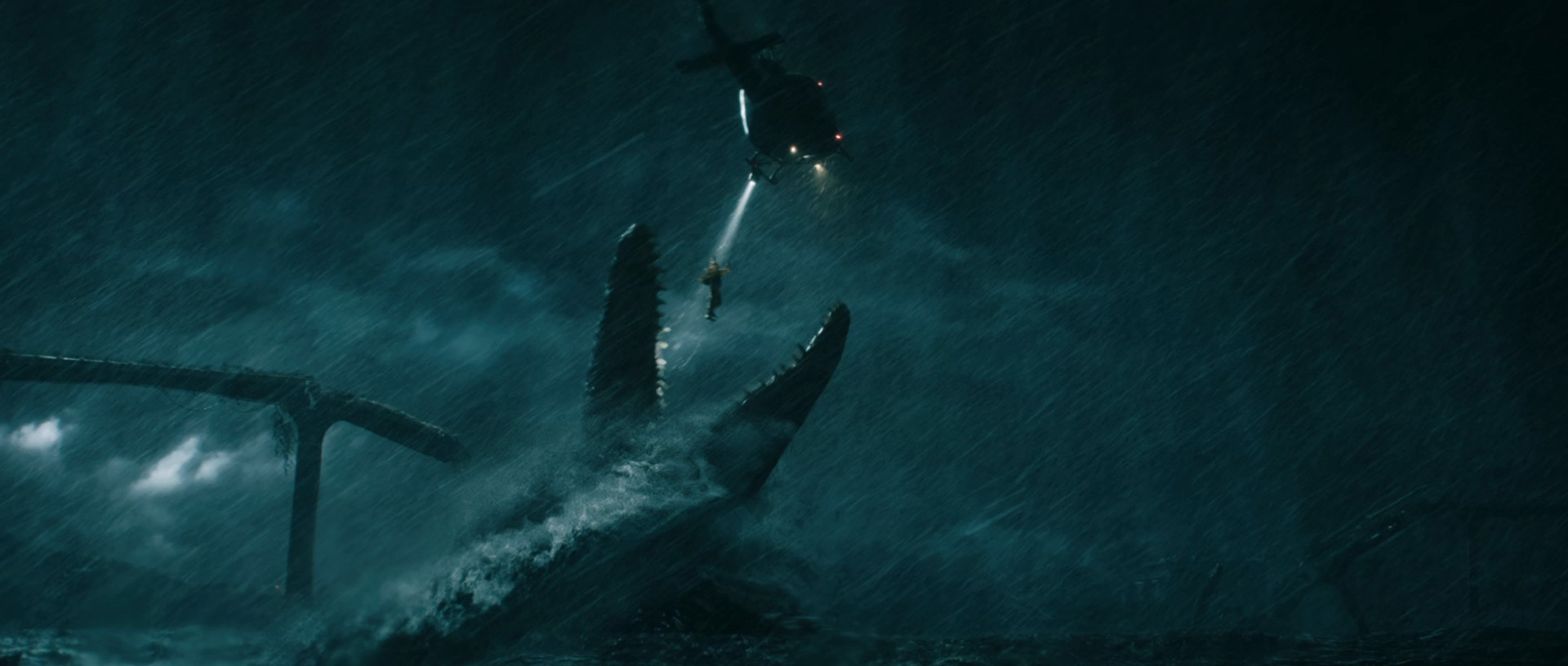
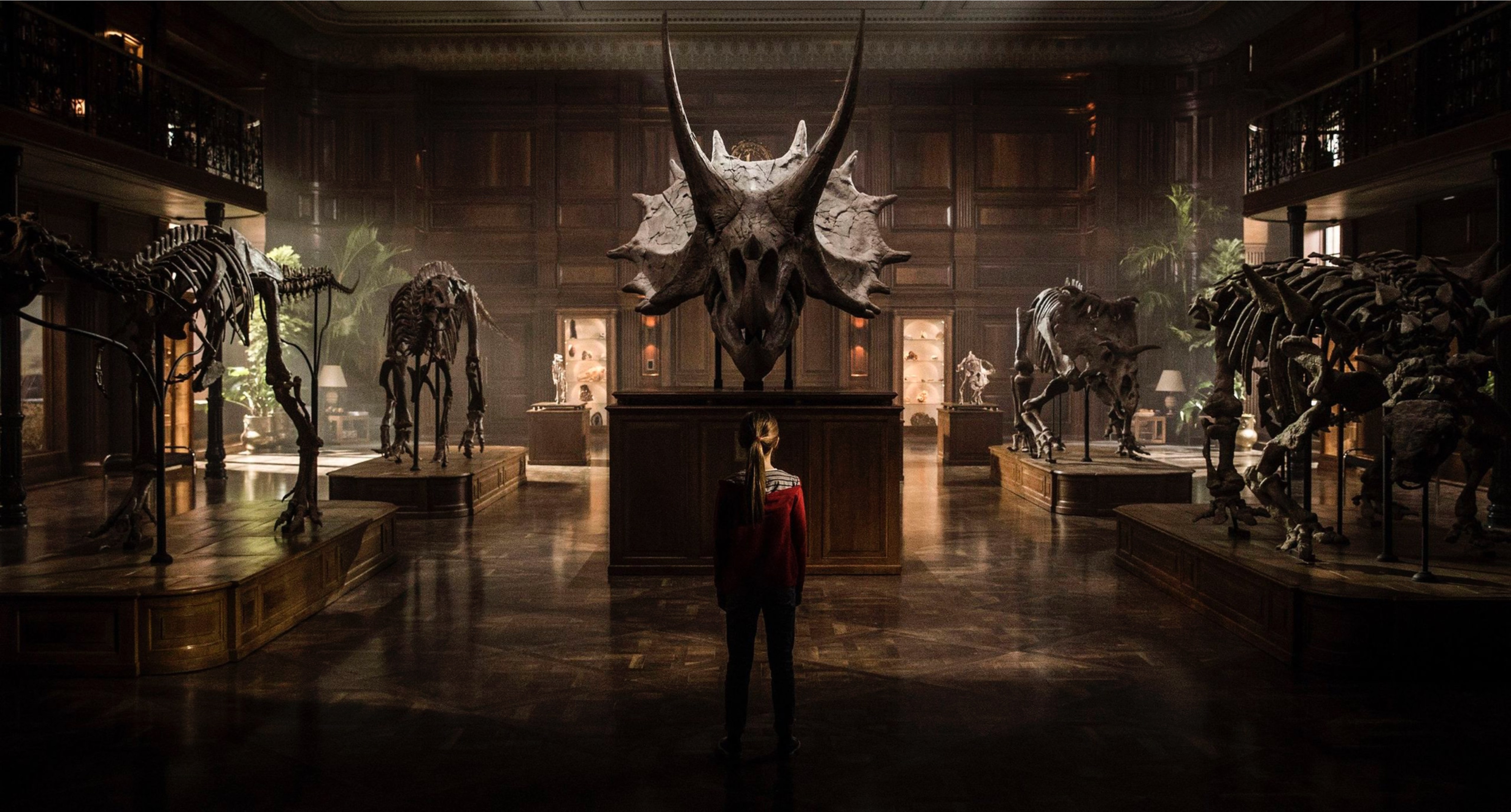
Written by Derek Connolly and Colin Trevorrow and directed by J.A. Bayona, “Jurassic World; Fallen Kingdom” is the sequel to the 2015 smash hit reboot of the “Jurassic Park” franchise that Steven Spielberg began back in 1993. I saw this film over it’s opening weekend but I’ve been letting the movie brew in my headspace for the last week because it was such a mixed bag. I don’t know if I’ve ever seen a more Frankenstein-like film before to be honest. The direction, visuals, special effects, and suspense of the film were all impressive- but the writing, character choices, and plot of the film were completely off the rails! It felt as if there were two or three very separated and distinct flavors of attitude controlling this bucking beast of a sequel and no one knew how to handle it- with no cooperation across the disparate groups whatsoever. The film didn’t know what kind of story it wanted to tell.

I0NZOLfu_o

First of all, I feel that you should be warned going into this film- there is nowhere near as much Jeff Goldblum as this movie needs, or to the extent that the marketing implied there might be. If you’ve seen the trailers, that’s essentially his whole performance. However, as welcoming as a Goldblum addition is to any film- this use of the character of Ian Malcolm directly collides with the ideology (and thus the main driving force of the plot) of the main characters Owen (Chris Pratt) and Claire (Bryce Dallas Howard). It’s this exact fulcrum that the film has issues with. Are the dinosaurs of Isla Nublar myth made reality, conjured from wonder and awe? Or are they vicious monsters that mindlessly consume and terrorize? Should the humans save the ill-fated creatures from Isla Nublar’s awakened volcano? Or should we let Nature take it’s course and re-extinct these de-extinct animals? Goldblum’s Malcolm restates his thesis from the first film and of it’s sequel “The Lost World” in which he argues against saving the dinosaurs. After which we cut directly to Claire’s new job running an indie-sized organization to “save the dinosaurs!” A drastic evolution from the first film where the character viewed the lab grown creatures as assets, something from which to gain profit. Here she’s a fully fledged animal rights activist. Quite the leap. We’re then informed of John Hammond’s original financial partner (Who we’ve never heard of until now, the fifth movie) for the first park in Benjamin Lockwood (James Cromwell), who’s in need of a well informed crew to make a last ditch effort to salvage his old friend’s creations.

ZZ3956C8F2.jpg

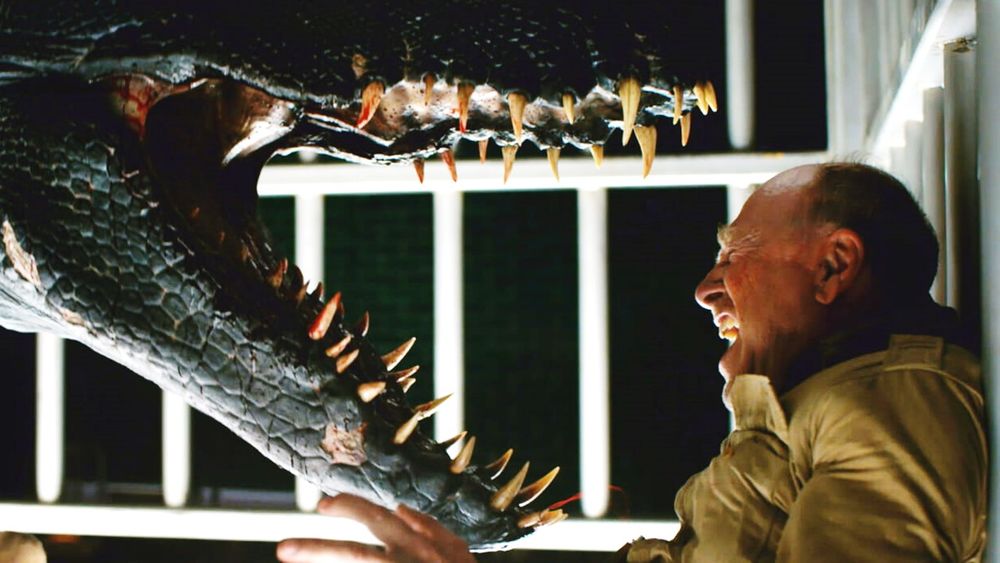
Beyond the philosophical and moral whiplash, the characters make stupid, convenient, and foolish choices throughout the film. Granted, the franchise has been built on the ill-fated decisions of humanity before- but they were never this outlandishly dumb about it. From the military minded Wheatley (Ted Levine AKA Buffalo Bill from “Silence of the lambs”) unclasping the Indo-Raptor cage purely to add another dino tooth to his collection, to the enormously lazy writing choice that the young Maisie (Isabella Sermon) commits to in the final scene- the writing is clunky and unfocused. The script tries to obtain specific outcomes for further franchise building- but in doing so it wastes the opportunities that the current story could have created. There are ways to get the outcome that the ending of “Fallen Kingdom” sets up- but the way they got there was painfully stupid. I won’t spoil the exact ending, but trust me, it’s bad. It’s also a weak excuse to pin the fallout of this film on a young girl when there are so many other ways they could have played it. An immediate easy fix would be to let Mills (Rafe Spall), Lockwood’s assistant with ulterior motives, make that major dooming choice as he’s dying to spite the main characters instead of just using his death as a visual callback to a death in “The Lost World”.

_thumb_7bcbb48f-1eea-4f47-b2bb-fa86640311cc

That’s not to say that the film doesn’t have some value to it. The imagery and direction, along with the mood, sense of suspense, and entertaining set-pieces all combine to smooth out the film and lessen the extent of mistakes that engulfed the rest of the story. The way Bayona uses scale, lighting, and framing all collectively raise the content above the level of quality expected with these movies by now (excluding the original- obviously). In fact the second half of the film taking place inside a giant mansion was a fun diversion and there were some good ideas that they could have expanded on. An illegal dinosaur auction has its merits in theory, but the film took a cartoonish mind of villainy at this point. One shot even has Mills face being lit up by a computer screen as counters and bars load while numbers skyrocket- a necessary shot to remember that the villains are greedy and evil. There was a few good half baked ideas in this script, and it might have turned out great eventually, but there just wasn’t enough to get a score better than “Passable” from me honestly. I was entertained with this film, but the more I think about it, the less I appreciate it retroactively.

Final Score: 11 Jurassic species and a few half-baked ideas


film

Review: The Witch

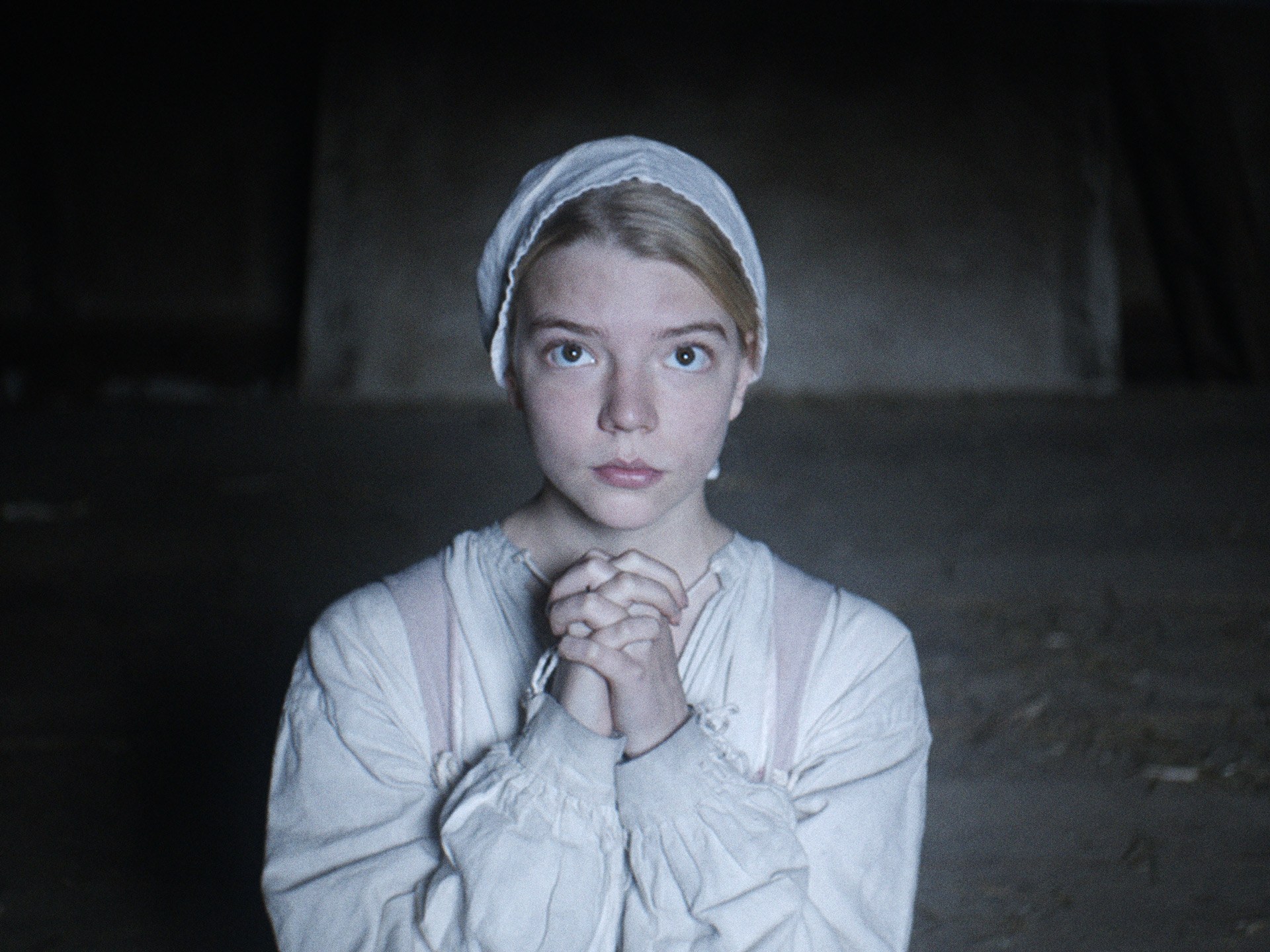
Written and directed by Robert Eggers, “The Witch” is A New England Folktale set roughly in the 1630’s that follows the story of a family cast out from society in the new American colonies for being accused of “prideful conceit”. While we never get the exact details about what William (Ralph Ineson) and his family engaged in to receive a sentence as damning as banishment, that isn’t what the story is truly about anyways. We can surmise that William probably took his own interpretation of the bible to be more accurate than those of the colony. As he claims in the opening scene that he practiced only “the pure and faithful dispensation of the Gospels”. Thus the film begins as the family of seven treks out into the wilderness, firm in their decisions, unknowing of their doom to come.

maxresdefault

The family consists of Caleb (Harvey Scrimshaw) the eldest son- though he’s only about twelve, Mercy (Ellie Grainger) and Jonas (Lucas Dawson) the young twins that earn the title of creepiest kids in the film, and Thomasin the eldest daughter, a few years older than Caleb and easily the standout performance of the film- though all are great. Katherine (Kate Dickie) the Mother, who unravels psychologically and spiritually as the film progresses, is at a complete loss once the youngest child, Samuel the baby, is mysteriously abducted near the beginning of the film. It’s always a gamble with child actors, but this may be the best use of little performers since “Jurassic Park” (I’m not dying on that hill- I just rewatched the classic recently and it’s been rambling about in my headspace since). They’re all poise perfect in their period-accurate performances. Thomasin in particular is a fascinating role, as the family crumbles from within Witch accusations are aimed at her, and there is a bit of sly wit hidden subtly in her performance that makes you ask, Wait… is she actually the Witch? The paranoia of the family is infectious to say the least. Though Caleb makes an argument for the best, and most chilling, scene in the whole film- it certainly got to me in the moment.

TheWitch

See, the beautiful trick of the film is that while the title may indicate that the film is about “The Witch”, and there is indeed some supernatural underpinnings trifling about, it’s more about the effect that the Witch has on this family. They are torn apart as much by their superstitions and fears of damnation as they are of the titular creature’s actions. In fact it is this weaving of the supernatural with the sense of hard realism that makes the film stand out from it’s genre limitations to become something more than the sum of its parts. On a technical level, the film pays homage in cinematography and framing to old religious renaissance paintings, particularly of Goya’s work on the subject of Witches (Even though he lived a century later in Spain). The score is also worth mentioning as it fuels the sense of a tense and bellowing doom. Booming orchestral vocals against a moonlit forest paint the mood for the film, danger lies at the edge of the woods, damnation is afoot, and trust is cast aside.

the-witch-2015-black-phillip-goat-gores-father-review-600x300

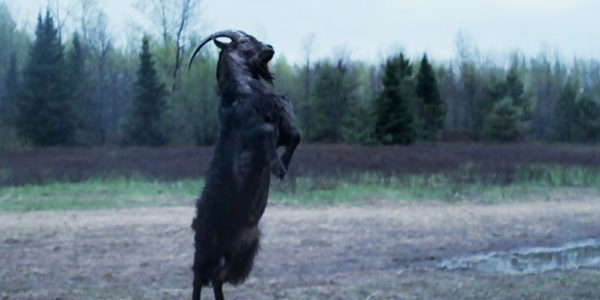
Old religious imagery sprinkled in throughout the film with the age appropriate attitudes of the family combine to heighten the dread that would be nearly impossible within a modern setting. We don’t take everything in life as a seriously as those before us had. After giving this film a watch I haven’t been able to stop thinking about it, so I read up on what countless others had to say on the matter. There was something particularly unnerving about the film that I just couldn’t articulate efficiently, Was it the acting? The setting? Or simply the unabashed originality behind it? Then I gave the New Yorker’s review of the film a read and Anthony Lane perfectly exemplified what I was missing, “This is, to put it mildly, an uncommon state of affairs for anyone who frequents the cinema, the theatre, or the opera house. How many people, these days, heading out of ‘Don Giovanni,’ are honestly shaken by the mortal terror of the hero, in his final conflagration? Which of us treats ‘The Crucible,’ set sixty years or so after the events of ‘The Witch,’ as anything but a reflection on the political hysteria of the time in which it was written? The problem is simple: we can’t be damned. One gradual effect of the Enlightenment was to tamp down the fires of Hell and sweep away the ashes, allowing us to bask in the rational coolness that ensued. But the loss—to the dramatic imagination, at any rate—has been immense. If your characters are convinced that a single action, a word out of place, or even a stray thought brings not bodily risk but an eternity of pain, your story will be charged with illimitable dread. No thriller, however tense, can promise half as much.” The historical context and how accurately the characters were represented in their actions and fears gave the film an unshakable authenticity- we believe that the characters believe with a steadfast resoluteness. There are no jokes or irony in their performance, no release once the film has you in it’s grasp.

“The Witch” is a fascinating and unconventional horror film that preys upon our past to craft a finely tuned and chilling film. I definitely recommend it if you’re into unique offerings in this genre- though it is slow at times and will definitely not be for everyone (It wholeheartedly earns its ‘R’ rating). I wouldn’t recommend it to new parents- unless they enjoy fresh nightmare scenarios they hadn’t yet considered to keep them awake at night. It’s out on streaming services and physical media at this point, give it a watch if you can- it’s definitely a standout of the genre in my opinion.

Final Score: 1 Black Phillip & 1 damned family


Sources:

https://www.newyorker.com/magazine/2016/02/29/the-witch-review

film

Review: Hereditary

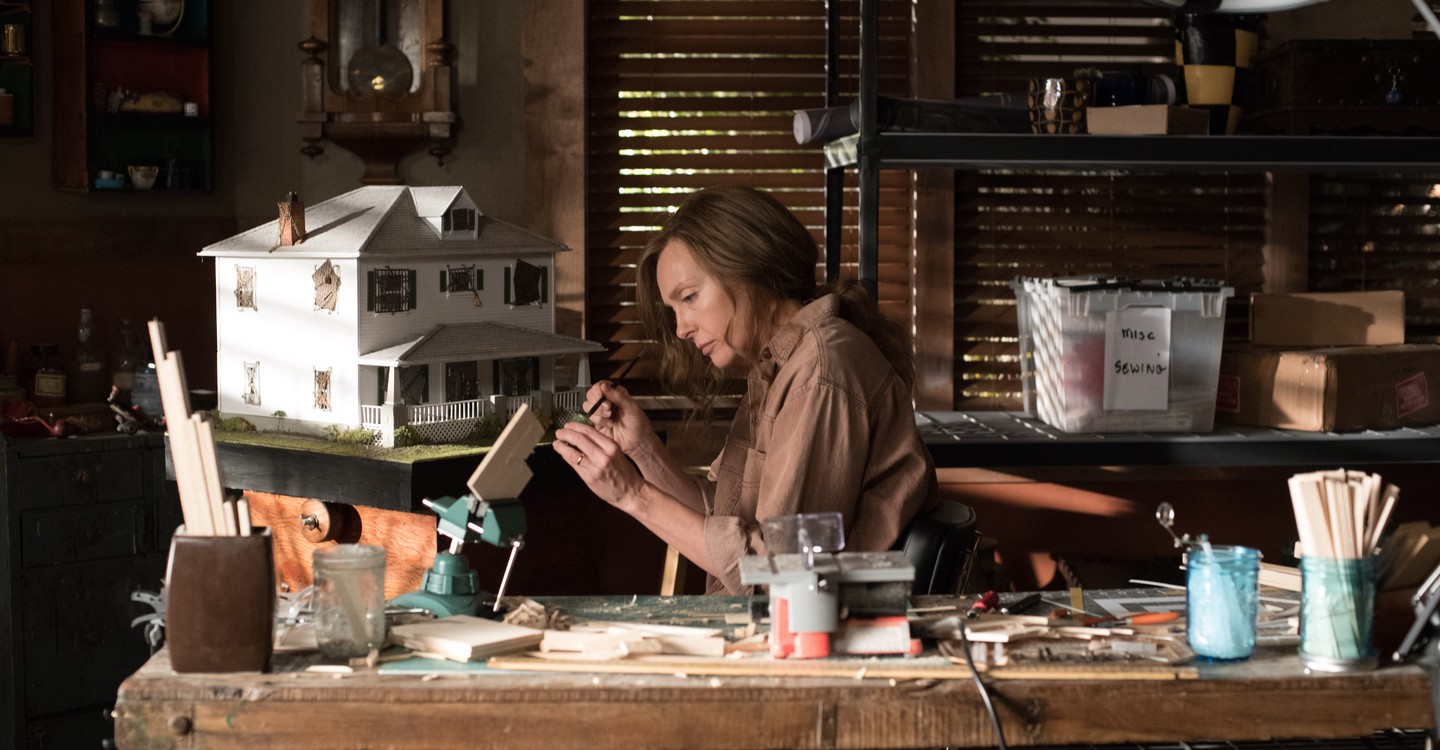
Written and Directed by Ari Aster, “Hereditary” is the latest horror movie from studio A24. This most recent offering continues A24’s tradition of releasing films that refuse to be average, which results in a storytelling boon for their audiences. “Hereditary” follows the lives of the Graham family as they navigate the loss of their Matriarch, Ellen. The film opens with her funeral as her daughter Annie (Toni Colette) gives a muted eulogy which perfectly preps us (but does not prepare us) with a foundation of paranoia. Ellen, it seems, was a very private person with private friends. So much so that her closest relatives know almost nothing about her life and its many secrets. The family dysfunction that stems outward from Ellen has produced a multitude of psychological and emotional issues in her offspring. Most notably affected by this is Annie, a miniature model creator, wife, and mother, who seems to be on the verge of a nervous breakdown- or at least close to one- right from the beginning of the film. Her husband Steve Graham (Gabriel Byrne) just tries to keep everything and everyone around him afloat amidst the cavalcade of creeps that’s about to descend into his family’s life. They have two children Peter (Alex Wolff), the older teenager, and Charlie (Milly Shapiro), the very unsettling young girl who makes those creepy clicking sounds that you’ve heard in the advertising of the film.

hereditary_GROUP_TABLE_029_3_rgb.0

I will do my best to avoid spoilers in this review, or at least keep them to a minimum. There are essentially two sides to this film. There’s the story you think you’re watching for the first half of the film, and then there’s the second story that you won’t likely fully grasp the details of until the film very deliberately tells you what’s happening in the final shot of the film. In retrospect, there’s a very well thought out string of breadcrumbs sprinkled throughout the film that do hint at the supernatural underpinnings that are taking place just out of frame. There’s a lot going on in the film, there’s throwbacks to classic horror cinema from the mood and tension building of “The Shining” to the wild shock and awe of certain scenes from “The Exorcist”. Granted, I wouldn’t recommend going into any movie with your expectations rampant and out of control- the film simply cleverly pulls from those icons while greatly remaining as its own unique experimentation.

heredite

The greatest thing the film accomplishes is its’ execution of tension and unsettling mystery. There’s one, maybe two, jump-scares in the entire film and that is a huge benefit. There is no release here, once the film has entrapped you, it has your undivided attention. There are words scrawled on the walls of the Grahams’ house, only ever seen by Annie who seems to become more and more untrustworthy and unraveled as the film progresses- which makes us question if she’s actually even seeing them. Not to mention Charlie, who is unquestionably disturbing in nearly every scene she’s in- and even in a few she’s not. Charlie has visions of her dead grandmother, cuts off a dead bird’s head for unknown reasons (a prelude to all the beheadings later in the film- there’s more than you would expect from this film’s pretenses), and she exponentially keeps making that freaky clicking sound that I keep thinking I hear when it’s too quiet around the house. Curiously Peter isn’t all that focused on in the first half of the story, until about the mid point when THAT SCENE happens and it affects Peter so much that he begins to slowly lose his mind. Then there’s these visual clues, symbols, and red herrings all over the film- everything that happens or is shown seems to have a reason and action behind it, but it does help to keep the audience out of the conversation and thereby cleverly distracting us to keep the intrigue high. It keeps building this ever creepy crescendo of madness until it reaches the boiling point.

hereditary-hdy_screenshot_6_crop_-_h_2018

Everything about “Hereditary” was crafted with horror loving hands. The score is effectively distressing and alarming when it needs to be, the way the film is edited is pure unease, and the progression of the characters is downright unnerving. There’s so much more I could discuss, but by doing so I would ruin the fun of the mystery. I highly suggest seeing this film if you enjoy good horror films. I don’t even really care all that much for the genre, but this film got to me. It still wanders into my mind days later and turns lovely afternoons into insidious hours of peeking around corners and occasionally getting scared by the cat.

Final Score: a Dozen creepy cult members

film

Review: Solo, a Star Wars Story

*Spoiler Warning*

Written by Lawrence Kasdan and Jon Kasdan and directed by Ron Howard, “Solo: a Star Wars Story” is the prequel origin story of a young Han Solo that wants you to know everything there is to know about the character, and I do mean ..Everything. I’ve been engaging in an internal debate as to whether or not I should even concern myself with writing this review. I felt as if it were, ironically, as unnecessary as the film in question… but here I am, pondering the film, so I might as well put ink to paper (you know what I mean). So much of “Solo” simply felt “fine“, but nothing about it felt as grand or had events as sweeping as the Star Wars films we’ve come to love (and despise). Granted, I know that wasn’t the intent of this film. It was pitched as a smaller story designed to reveal more of the grimy crime riddled underbelly of the Star Wars universe. However, the true nature of this film could be felt throughout the runtime, and it was to make money. That’s what I felt coming out of the theater more than anything else. This spinoff didn’t feel like I was getting tasty new morsels of story from the wider galaxy as a whole, it just felt like a filler episode, a distraction from the larger events at hand. It wasn’t particularly offensive or incredibly awful by most measures- we just didn’t need it. Sometimes the mystery of imagination is better than explaining the backstory of every item, catch-phrase, offhand comment, or star-ship. For example, when Han mentioned the Kessel run in “Star Wars” and in “The Force Awakens”, the way he talks about the event- it seemed like a race, not a race against time as depicted in Solo (with time-sensitive explosives being the driving factor of tension instead).

HanSolofilmcastphoto-1000x635-920x584

To be fair, all the noise surrounding the dismissal of the original directors of “Solo”, and the horde of production troubles that plagued the film, didn’t result in a disjointed final product. It was a more cohesive film than “Justice League”, the most recent similarly troubled tent-pole studio production. I guess what disappointed me most about this film is the feeling that came after leaving the theater, that “Star Wars” was now a product being spoon-fed to me by teams of writers rooms designed to give me what the masses claimed to have wanted most. Which I have to point out that a couple friends have said as much to me about the previous Star Wars films made by Disney, though the veil hadn’t yet been pierced for me. I still enjoy “The Force Awakens” and “The Last Jedi” to varying degrees, more good than bad I would say. “Rogue One” still feels like the standout of the bunch at this point, the one that most channels the magic of the original trilogy, at least for me.

Solo-Easter-Eggs-Featured

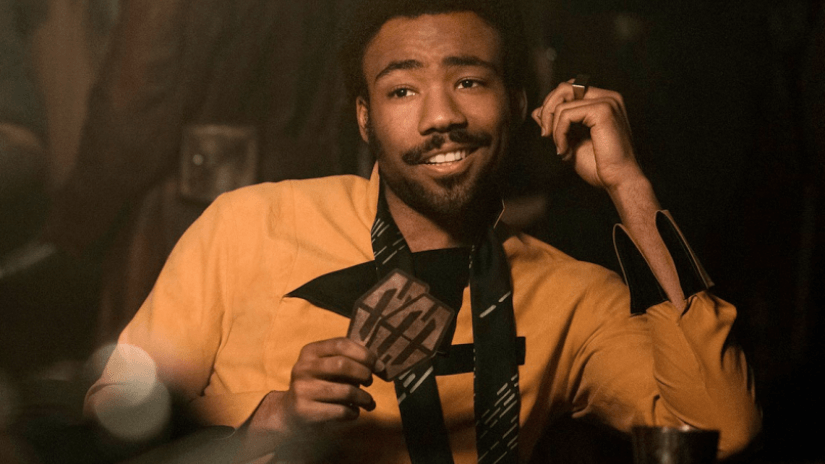
I almost feel bad for this movie, it wasn’t outright terrible, as I’ve already mentioned. The Han and Chewie (Joonas Suotamo) interplay was entertaining and actually was the most authentic thing about the film in my mind. So at least that came across well enough- if that didn’t work then the whole thing could have been written off from the beginning. Alden Ehrenreich did a decent enough job translating as a younger and not as grumpy version of Han Solo, but there was admittedly something about the performance that was missing. Maybe that was just something that only Harrison Ford could bring to the portrayal, but I can’t say that the woes of this film lay at Ehrenreich’s feet, he did probably as good a job as was possible without Ford headlining. Donald Glover was the other standout of the film. His version of a younger Lando Calrissian was pitch perfect. Capes, attitude, and swagger- all included and exuded without flaw.

solo-a-star-wars-story-lando

The major issues I have with the film are A) the overall production of the film as it appears in it’s current final cut, B) how overly produced and manufactured it feels as a whole, and C) how predictable it was with one notable exception. A) Production. The lighting of the film was so dim and murky that even in the theater it felt like you could hardly see what was taking place as most scenes were drenched in earthy browns and blacks or ocean depths’ blue, I wouldn’t point out lighting unless it was noticeably poor or lacking. (Not saying I could do a better job lighting though, that’s a confounding aspect of production for me). None of the locations felt particularly alien either, which maybe that’s just me, or maybe it’s that none of the locations were particularly memorable. Everyone can recall planets or locations from every other Star Wars film to date, but I’d be hard pressed to name any of the planets seen here. The cinematography was also very bland. It felt workman-like and practical in nature only. I can’t pinpoint it exactly, but it felt like it lacked artistry.

CaptainAmerica1_zps8c295f96

B) References. There are several points of contention here. How Han “got his name”, his blaster, the dice, and the cameo near the end of the film. Han getting his name from an Imperial drone when signing up for the Empire as a pilot was the most hamfisted and unneeded scene in the whole film. Why can’t Han have just had that name? Are we going to learn how the Skywalker name came to be in another spinoff in some other bland and useless way of storytelling too? It was just unneeded and way too obvious, robbing Han of the sprinkling of mystery surrounding him in the original trilogy. When Han was tossed a blaster from Woody Harrelson’s Beckett, the scene in itself wasn’t poorly constructed it just felt like an intentional wink and nod from Disney- stop it please, we don’t need to have an intimate knowledge of every item a classic character was known for using over thirty years ago. Speaking of which, the dice in this new era seem to have taken on far more meaning than they ever had in the original trilogy, at least in “The Last Jedi” it was used as a stand-in for Han’s memory when Luke returned to Leia for the first time in the new era of films. Here it feels like another intentional pulling of emotional strings, but it didn’t land here for me. It felt forced. The most forced scene in the entire film was that of Darth Maul’s cameo though. It’s nice to know that a fun character from the prequels actually isn’t dead, but it was how he was used that felt contrived. He doesn’t do anything in his moment onscreen, he is used for a reveal of “That character you know from the other movies”, and that is it. He even turns on his lightsaber threateningly in a Hologram, for no reason at all.

1441233752009

C) Predictability. This is the linchpin of the problem of this film. If you’re at all familiar with the first Star Wars movie then you’ll likely be able to predict a lot of the plot points of this film, the rest of the film’s predictability lies in age old movie tropes any well viewed audience member should be able to spot a mile away. Though admittedly reprocessing tropes from classic era Hollywood is an old Star Wars trait at this point. However, when approached with with a paint-by-numbers strategy Star Wars feels overly formulaic to the point of absurdism. Corellia (Han’s homeworld), The Kessel run, Han shooting first, Chewie ripping off an unlucky henchmen’s arms- every possible connective tissue from “A New Hope” is mined here with excruciating familiarity. What I loved about “Rogue One” was that the film very much lived in the world of the original trilogy and while it too had familiar aspects and characters littering it’s pages there was also a new exploratory sensation about it. The film added more mystery than it explained away. What happened to Jedha ages ago? There are only decayed Jedi monoliths carved into massive rock formations to hint at its past. Was Chirrut Imwe (Donnie Yen) force sensitive? Or just an extremely skilled fighter that believed deeply in the old Jedi religion? What was his connection to Baze Malbus (Wen Jiang) and how did they end up together on Jedha? I’m okay with not knowing the answers to those questions- in fact I’d prefer to not know those answers. The only part of “Solo” that was a legitimate surprise was that the earlier threats of the film, “Enfys nest” the marauders of the train heist from the second act, were actually a band of rebel children. This reveal only served to deliver another cringy wink and nod to the audience as Han decides to help them out in the end. They offer a place among their ranks in thanks but he declines, to which the tiny space pirate suggests “Maybe someday you’ll join a… rebellion” Okay it wasn’t exactly that, but the line was essentially that.

“Solo: a Star Wars Story” is the first major bump in the road of the new Disney era of Star Wars films. It has a few redeemable factors for sure, and the crew involved seems to have given it their all, but this film is more of a product than a story that needed to be told in a galaxy far far away…

Final Score: 2 smugglers, 1 falcon, and dozens of references…

film

Famous Filmmakers’ Firsts: Andrei Tarkovsky’s “Ivan’s Childhood” (1962)

*This film came out in 1962, so obviously, spoilers will be involved in this review*

Written by Mikhail Papava and directed by Andrei Tarkovsky, “Ivan’s Childhood” is an adaption of Vladimir Bogomolov’s 1957 short story “Ivan” which follows an orphaned twelve year old Russian boy that scouts for the Russian Army on the front lines of the German invasion. This is the most straightforward narrative I’ve seen from Tarkovsky as I haphazardly serpentine through his filmography, it’s also one of his shorter films coming in at a brisk hour and thirty-four minutes. From the beginning dream sequence Tarkovsky is already playing with the surreal nature of dreams that would later become a pillar of his stylistic choices in his grander and more iconic films like “Stalker” and “The Mirror”. In it Ivan, ‘the carefree child’ (Nikolai Burlyaev), observes a spiderweb on a tree branch and a butterfly taking flight, after which he too soars through the air laughing, full of wonder. It doesn’t last long however and we’re soon introduced to Ivan ‘the soldier’ in a violent awakening. He’d been camped out in a dark and decaying windmill and soon wades through a murky swamp shrouded by trees and flares in the distance. The title credits begin to roll and the brooding bleak mood of the film sets in.

IVAN'S CHILDHOOD

Tarkovsky’s first film steeps us in the director’s philosophy of nature being a respite from the burdens of reality, and his utter despise of war- which is why he pursued the idea of having a war film seen through the eyes of a child, as it was the furthest juxtaposition from war. Ivan makes his way into the Russian military encampment and demands to make contact with high ranking officials. The Lieutenant there, Galtsev (Evgeny Zharikov)- himself a young man no older than twenty-five, makes the call despite his suspicions. Lt. Col. Gryaznov (Nikolai Grinko) answers and corroborates Ivan’s story. The boy had been a scout for their military on an earlier mission across the river and behind enemy lines. From there the film follows Ivan’s determined quest for revenge, refusing to be shipped off to military school or a children’s home, making extra work for the officers taking care of him- though they do genuinely seem to admire the boy.

ivans-childhood-02

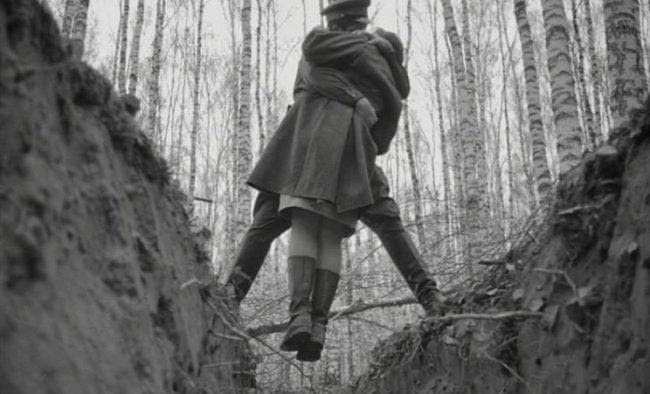
The story also follows a romantic side plot involving a love-triangle of sorts. Galtsev seems to have an unspoken admiration for one of the female military nurses, Masha (Valentina Malyavina). Captain Kholin (Valentin Zubkov) also takes a liking to the quietly defiant field nurse and aggressively pursues her in the birch-wood forest. I was wary of this scene as it was happening, fearing a rape scenario, but luckily it never goes that far. We get the infamous image of Capt. Kholin holding Masha over a trench and kissing her as she reluctantly goes along, but I believe this is simply a case where the scene at hand just hasn’t aged very well, though it doesn’t appear to have malevolent intent as initially assumed. It is, simply put, a product of it’s time.

la infancia de ivan3

The most fascinating aspects of the film for me though are Ivan’s dream sequences. There are four in the film, the opening scene with the butterfly being the first. The next dream sequence comes after Ivan has met Galtsev, been washed and fed, and finally when he can no longer stay conscious enough to keep up his tough guy bravado he falls into a slumber in which we get a brief look into his core philosophy of being. In it the camera flows freely, which is already a visual indicator that we’re in dream territory as the camera is always poised and precise when Ivan is awake. It floats along to a fire of white birch wood before panning back to a bucket near Ivan’s hand laying off the bed as water drips on it. This provokes the camera to tilt upward as if he were at the bottom of a well. Ivan then reappears with his mother, peering over the edge from above and Ivan’s mother tells him something along the lines of “The brightest stars shine best in the blackest of nights.” Ivan tries to reach into the water’s reflection to grab the star and then, after a cut, lies at the bottom of the well again. We quickly see a bucket fall down towards Ivan as he screams for his mother but before we see the bucket fall into the water we cut again to see his mother’s dead body next to the well being splashed with the water from the bottom of the well. This scene is the epitome of why I am fascinated with Tarkovsky’s films. How he uses space and dream logic is endlessly fascinating to me. Reality becomes distorted and spatial relationships are in a state of confusion. Yet all while we’re getting pertinent character information about Ivan and why he is so motivated get revenge.

ivans5

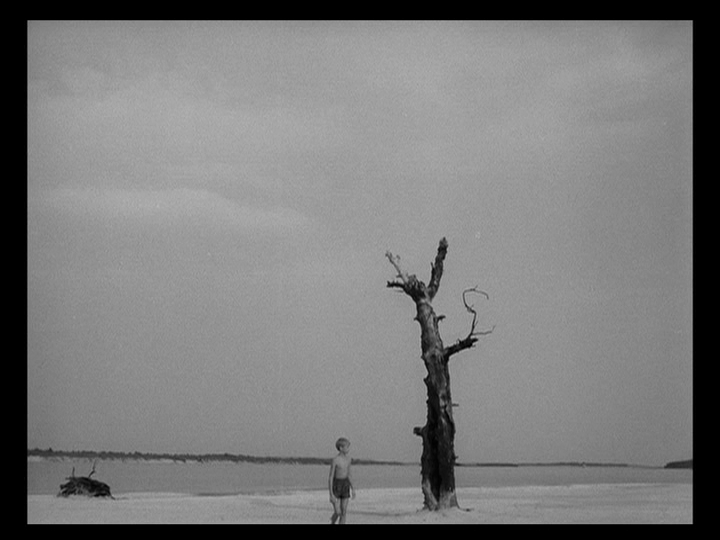
The third scene, which is possibly the most strange, depicts Ivan and his sister riding upon a cart filled with apples in a pouring thunderstorm. Here Ivan smiles, he only does this in his dreams, while being surrounded by an abundance of food and family. We see what feels like a camera pan past his sister’s face three times, but only she is moving from right to left within the frame, and she’s completely dry (even in the rain) the third time she passes by. The dream ends as the cart continues to ride off the path and onto a beach leaving a trail of apples. The camera slows and lets the cart fade away as we focus on wild horses feasting on the spilled fruit in the foreground. The final dream sequence connects all to the three previous ones all while poetically reinforcing the idea that Ivan never had a real childhood during his life, it only existed in his dreams. After the audience learns that Ivan’s final mission scouting across the river with Galtsev and Kohlin ended with his death, the dream sequence gives us an abstract and symbolic send off. I believe this scene begins from Galtsev’s perspective during his frantic retrieval of Ivan’s death documents when raiding a German stronghold in Berlin after the fall of the third Reich months later. After he discovers that Ivan had been captured and hung Galtsev runs to another room where he sees wire nooses hung from railings and the camera begins to spin out of control and we see Ivan’s, presumed, dead body rolling along the floor before a hard cut. From a low angle we see Ivan’s mother smiling down at him and he smiles back, now on the beach from the third dream. He rises, shirtless and drinking from the bucket in the second dream, as his mother picks up the bucket and walking back into the water as she waves goodbye to him. Ivan then goes and plays with other children on the beach, it looks like a game of hide-and-go-seek, and he goes to a lone burnt, dead, tree standing in the sand and counts as the other children leave the frame. Even the tree bookends the film visually from the opening dream sequence. When Ivan returns he only finds his sister, and the remainder of the scene is the two of them running wildly into the shallow waters of the ocean laughing heartily- before a hard cut to black ending the film.

tree

This film was the beginning of Tarkovsky’s film career, and in it you can see the rumblings of a unique cinematic voice forming. While the plot and action of the film are thinner and slower than most, this movie is a good indicator for whether or not you will enjoy the infamous Russian filmmaker’s style. If the abstract sequences turned you off from the story the film was telling, then I must say, you probably won’t enjoy his later works. I approach Tarkovsky’s films with the same mentality that I bring into museums. His films seem to be more akin to seeing visually arresting artwork that plays with the fabric of reality and bends it to whichever way the story feels it should take. It is more about the mood that the images evoke from you than the initial meaning of each scene or the momentum of the story beats.

Final Score: 4 dreams and 1 war